All posts by IEEE Robotics and Automation Society (RAS)

Robots in society, business and culture: August 2026

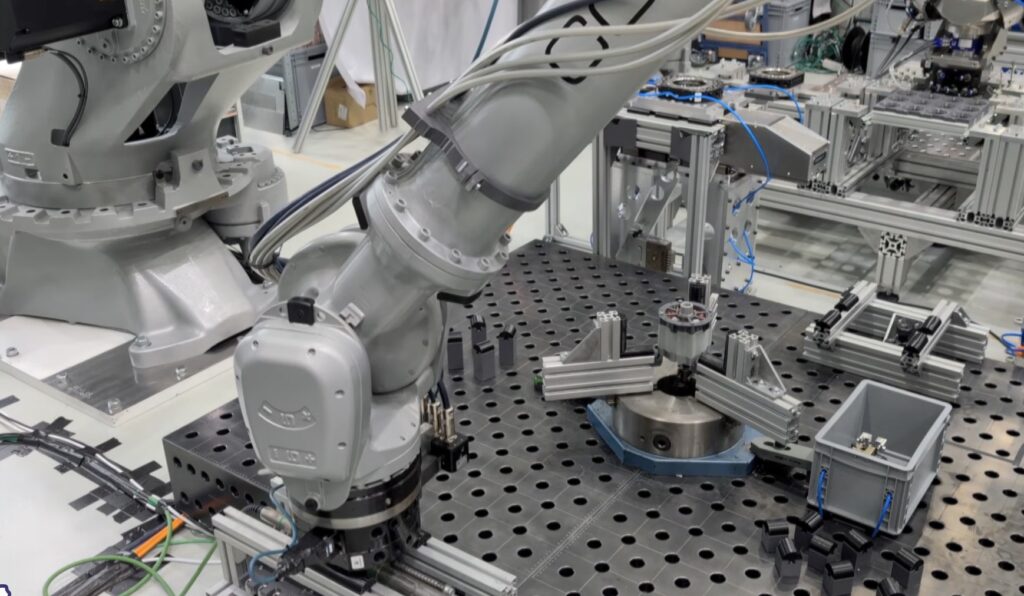
Credit: Baumis Robots (Karlsruhe Institute of Technology).

By Emmet Cole

In our new monthly series, we showcase a selection of robotics stories from society, business, research, and culture, as we track the field’s ongoing journey from specialized industrial machines to an increasingly visible social phenomenon.


Reshoring reimagined?

In early August, The Information published an article that claimed U.S.-based founders, investors and startups, are travelling to an electronics market in Shenzhen to buy servomotors, sensors, controllers and gimbals. The report also claimed that Unitree and Zhiyuan robots are being bought intact, then stripped down into parts and carried back to the USA in suitcases.

By late August, in a separate development, reports emerged that a US Department of Energy lab is investigating whether Chinese LiDAR sensors pose a security risk, if widely used on vehicles in the United States. According to TechCrunch, the research is being funded by one or more companies in the electric and autonomous vehicle industries.

Together, the stories highlight the ongoing tension between US security concerns and its robotics industry’s continuing dependence on Chinese hardware.

Motorless shape shifters

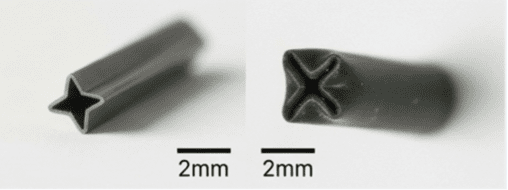
Don’t cancel any Shenzhen travel plans just yet, but engineers at Princeton have unveiled a motorless, origami-inspired robot that can roll, crawl, and change shape through a combination of magnetic control and multistable geometry.

Project lead Glaucio Paulino told Princeton Engineering:

Geometry is the real actuator here. Instead of relying on complicated mechanisms, we use mathematical principles to encode multiple stable configurations directly into the structure. That opens a new pathway for designing lightweight, adaptable systems.

Managing expectations

Robot deployments can fail for many reasons, making expectation management a key part of successful robotics projects. This might mean explaining that although collaborative robots can sometimes be deployed without fencing, that is not appropriate for every application, and a risk assessment is still required.

It might mean explaining that although robot-assisted radical prostatectomy typically reduces blood loss and shortens hospital stays compared with open surgery, longer-term outcomes depend heavily on the patient, the cancer and the surgeon.

In the humanoid space, where expectations are often formed by spectacle and driven by anthropomorphism and millions of years of evolution, the effects can be particularly acute.

A Drexel-led study involving 50 adult men that measured brain activity, hormones, self-reported attitudes and behaviour in order to assess trust in human-humanoid interaction, found that participants formed stronger initial connections with an expressive Pepper robot than with a stationary version that gave no nonverbal cues.

But when the expressive robot made errors, the participants’ brains responded as they would to a person breaking a social norm, rather than a machine making a technical error.

Counterintuitively:

[…] levels of “the bonding hormone,” oxytocin, which is typically present in higher amounts among friends, relatives and romantic partners, actually rose in participants as the engaging robot made mistakes. This led [researchers] to believe that the hormone functions as a warning signal, rather than a sign of connection, in human-robot interactions.

Read the full Science Robotics paper here.

Beyond automotive

For decades, the automotive sector has been the leading segment for robotics adoption. That’s still the case, but as the latest North American Q2 figures from the Association for Advancing Automation (A3) show, automotive OEM’s share is continuing to slide as robots diversify across other industry segments.

Notably, North American companies ordered 8,940 robots valued at US$622 million in the second quarter of 2026, a 4.3% increase in units ordered and a 21.3% increase in revenue, according to A3’s numbers.

Recycling robots

IEEE Spectrum profiled an automated recycling system developed by researchers at Germany’s Karlsruhe Institute of Technology. The system uses CAD data, physical observations and a predictive algorithm to predict defects in products and adapt its disassembly strategy while protecting valuable components.

All eyes on China

As August came to a close, the eyes of the robotics world (and the general public) turned to Beijing, China as the city played host to both the World Robot Conference (WRC) and the World Humanoid Robot Games.

The WRC, primarily a showcase of Chinese products, brought together ~300 companies exhibiting more than 2,000 products. These included robots for parcel sorting, manufacturing, surgery and domestic work.

Unitree supplied much of the spectacle with its remarkably fast “Superman” humanoid and an extraordinary stock-market debut. Its shares closed 460% above the IPO price, although by August 28 they had fallen almost 30% -another lesson in managing expectations. CEO Wang Xingxing also predicted that robotics is approaching a “ChatGPT moment”.

The World Humanoid Robot Games brought the theme of spectacle versus reality to another level. Robots kick-boxed, played table tennis, performed gymnastic routines, and played football. There were moments of hilarity…

…and some genuinely impressive technology demonstrations.

After watching several hours of livestreams from the games across several days, and looking at the print media coverage, I began to wonder whether events like these help people manage expectations around robots much.

The media focus on spectacle doesn’t help. Yes, a humanoid ran at Usain Bolt-like speeds and then into a wall. Yes, the kickboxing humanoids had an endearing Mr. Magoo-like quality. Technology demonstration aside, there isn’t much call for either in industrial applications.

Blink and you’d miss it -and much of the media coverage did- but the games also hosted multiple competitions centred around industrial manufacturing, logistics, household services and emergency response.

In the industrial “assembly and material supply” contest, for example, robots had to move containers onto shelves, identify and sort differently packaged components, and insert intake and exhaust valves into the correct openings in an engine cylinder head.

Other contests tested packaging and warehouse intake, while eight dexterous-hand challenges included screw fastening, unpacking boxes, connecting cables and picking up beans with tweezers. Some competitions required autonomous robots and others tested teleoperation capabilities.

These slower, less spectacular competitions tested the precision, perception and adaptability humanoids will need before they can perform useful work in factories and warehouses.

All that said, everybody needs a humanoid riding a giant quadruped.

Robotics roadmaps from around the world spotlight of the month: United States of America

US robotics researchers and industry are looking for a cohesive national robotics strategy that will maintain basic research and innovation while improving domestic production and adoption of robots.



By Ellen H. Rumley and Allison Okamura

A leader in tech innovation

Robots are a crowd-pleasing example of American innovation and global technological leadership. The latest press release of Boston Dynamics’ Atlas executing the ‘Ghost Rabona’ soccer kick highlights the increasingly natural movements of humanoids (1). At the other end of the spectrum, academic researchers are redefining the limits of miniaturization and building robots at the micrometer scale (2). Private and government funding propel foundational research forward, leading to breakthroughs in both hardware and software across U.S. labs and corporations (3, 4). Such progress reaffirms the U.S. as an intellectual and innovative powerhouse, a reputation that carries large geopolitical weight.

But retaining a lead solely in the R&D phase yields diminishing returns if the U.S. fails to manufacture robotic hardware at scale within its own borders. Critics fear this dynamic prevents the U.S. from reaping the economic benefits of the very technology it pioneers (5, 6). Ramping up domestic production will require a heavily coordinated effort between government, industry, and academics – a pivot from traditional U.S. technology strategy.

Free market and military capital

Historically, the U.S. has maintained a laissez-faire approach to technological innovation, allowing corporate and private investors driven by the free market to shape the course of advancement. This innovation-first strategy is largely credited with fueling the growth of global tech giants and the rise of Silicon Valley, which altogether represents roughly 12% of the national GDP (7). America’s leadership in artificial intelligence can be largely attributed to this free-market engine, which prioritizes high projected profit margins and rapid scalability of software (8).

When it comes to U.S. robotics hardware, the Department of Defense/War (DoD/DoW) has stepped in as one of the primary catalysts for innovation and investment. The Pentagon’s fiscal year 2026 budget requested an unprecedented $13.4 billion for developing autonomous systems; a major increase from years prior. The DoD/DoW is requesting an additional $53.6 billion for autonomous systems and drones for 2027 (9). Private capital has quickly mirrored federal priorities; in the first quarter of 2026 alone, defense technology venture capital investments reached a record $19.8 billion. This surge is tightly bound to contemporary geopolitical conflicts, such as the hybrid warfare seen in Ukraine, where the U.S. plays a key role in funding drone production and in recent times deploying humanoids (10, 11). The significant role that autonomous systems have played in conflict zones like the Strait of Hormuz has also signaled the high dependency of strategic military operations on robotics (12).

A bottleneck for domestic manufacturing

While investment in robotic innovation does provide certain economic benefits, it does not support U.S. competitiveness in critical industries – specifically in physical manufacturing. Hardware inherently requires higher, long-term capital expenditures and yields lower short-term financial returns compared to software. Consequently, there could be less incentive to compete against other global manufacturing leaders. Furthermore, while the DoD funds early-stage R&D and specialized military platforms, its mandate stops short of supporting commercial scaling efforts necessary to implement technologies for broader civilian and industrial applications.

As a result, while the U.S. is the third-largest consumer of industrial robotics in the world (with industrial adoption surging by 11% just last year in sectors like logistics, packaging and automotive) (13), it lacks the infrastructure to build what it consumes. While a few prominent U.S. companies do manufacture application-specific robots (some examples being Intuitive Surgical, Amazon Robotics, and Agility), the U.S. mostly relies on foreign imports for baseline industrial robot installations (14). Contrast this with Japan, which relies on foreign imports for a mere 2% of its domestic installations (15).

The systemic under-development in domestic robotic manufacturing leaves the U.S. vulnerable to hardware dependencies and supply chain disruptions. While industrial leaders like Japan and Germany are reliable trade partners, the U.S. government increasingly views hardware dependencies as a national security vulnerability. In recent years, robots have been reclassified as a critical dual-use technology, considered central to 21st century technological sovereignty (16). This reality makes robotics manufacturing a target for foreign adversaries, since foreign supply chains introduce operational chokepoints.

Currently, the U.S. government responds to these vulnerabilities through aggressive export controls and protective procurement policies, which are designed to slow down adversary agendas by blocking their access to the U.S. IP and markets. As one example, in 2021 the President issued the NSPM-33 (a national security memorandum directed to executive agencies) mandating federally funded research institutions to establish strict internal compliance frameworks (17). While designed to allow the continued recruitment of international talent, it enforces rigid vetting protocols on researchers potentially associated with Malign Foreign Talent Recruitment Programs (MFTRP) or of dual national affiliation (18). As another example, in early 2026 lawmakers proposed the bipartisan American Security Robotics Act, a bill designed to ban the federal procurement and operation of unmanned ground vehicles and humanoids manufactured by foreign adversaries, specifically targeting China (19).

Getting by without a government-led national robotics strategy

Rising concerns over robotics supply chain vulnerabilities strongly echo the semiconductor anxieties that originally led to the CHIPS and Science Act of 2022, which marked a historical pivot for the U.S. towards an active state-supported industrial policy (20). Today, there is a similar pressure mounting for the federal government to coordinate a sovereign robotics pipeline via a unified national roadmap.

The challenge facing the U.S. does not seem to be a lack of federal funding, but rather how the funding is distributed across multiple agencies with different mandates (21). The National Science Foundation funds basic academic research; Department of Energy runs national research laboratories and funds external research programs developing robotics relating to energy infrastructure; National Institute of Health supports and conducts medical robotics research; NASA funds and develops robotics for space applications; the ARM Institute supports domestic manufacturing initiatives while satisfying dual-use funding criteria through the DoD/DoW; and DARPA funds robotic innovations relevant to national security. (The latter organizes the well-known DARPA Grand Challenges, robotics competitions for fueling research bridging fundamental science and military applications.) Because federal investments from these programs and agencies are confined to isolated, mission-specific niches, the U.S. remains one of the few leading industrial nations without a centralized robotics strategy.

This structural fragmentation may soon change as political attention shifts towards treating robotics as a critical sector (22). In 2025, four state representatives re-launched the bipartisan Congressional Robotics Caucus as a platform for members of Congress to stay informed over the diverse issues surrounding robotics policy (23). In June 2026, legislators formally introduced the bipartisan National Commission on Robotics Act, which calls for an independent commission of 18 robotics experts tasked with providing evidence-based policy to accelerate domestic development (24). This legislative momentum is reinforced by a series of recent Executive Orders (mandates from the US President) demanding a high-level federal coordination including the Unleashing American Drone Dominance Order (25), the Golden Dome for America Order (26), and the Launching the Genesis Mission Order (27).

Robotics strategies from non-government actors

In the absence of a centralized federal initiative, stakeholders in industry, NGOs, and academia are self-organizing and publishing their own robotics frameworks recommendations for the United States.

In 2025, A3 (Association for Advancing Automation) released their Vision for a U.S. National Robotics and Automation Strategy (28), which argues that the future of U.S. leadership in artificial intelligence is inextricably linked with its global robotics leadership. A3 provides actionable policy items, such as the formation of a governmental robotics office for coordinating federal robotics initiatives, the establishment new standards for nascent robotic hardware and software, and the introduction of tax incentives for rapid robotics adoption and creation of worker training programs.

Complementing these industry goals, in 2025 the nonpartisan thinktank, Special Competitive Studies Project (SCSP), has released their Memos to the President – National Robotics Strategy (29). This document couples the call for mass industrial robotics adoption with recommendations for more aggressive trade restrictions on Chinese technologies. Following this publication, SCSP launched its National Security Commission on Robotics for Advanced Manufacturing for implementing this comprehensive strategy; members include industry and academic players including GM, Boston Dynamics, Nvidia, AMD, the University of Michigan and MIT’s Industrial Performance Center (30).

Academics have similarly spearheaded their own national strategies. Once every four years, academics led by Professor Henrik Christensen (UC San Diego) publish a roadmap for U.S. robotics (31). Past editions directly catalyzed the creation of the National Robotics Initiative (NRI), a multi-agency federal program running from 2012 to 2022 that supported foundational research on robotics, specifically promoting collaborative robots for working alongside humans. (Christensen also recently published Global Robotics Technology Roadmap 2025–2035, an independent positions paper synthesizing government and industry strategies across Europe, Asia, and the United States (32).)

All three stakeholders share a common motivation for a national robotics strategy: the nation’s population and workforce are declining; There is a surplus of jobs fulfilling the 3 Ds (dull, dirty, dangerous); Robotics should become a national priority once more. In addition to funding and incentives, authors also discuss the need to consider the impact of technology on the workforce – a topic of large structural tension, with fear of robots displacing jobs and particularly outcompeting blue-collar and immigrant workers (33, 34). Christensen et al. delve deeper into the psychology of the workforce, and recommend a framework which balances technological growth with worker empowerment. They propose that prioritizing human-centered collaborative robots and wearable devices could shift the robotics narrative from a source of widening economic disparity towards heightening workplace satisfaction and production efficiency. However, recent mass layoffs amidst installations of collaborative robots reveal the complexity of this balancing act (35).

The U.S. is in the midst of a major shift regarding how it shapes robotics advancement. Because a formal federal strategy does not yet exist, private and academic stakeholders are proactively drafting the blueprints themselves. Consolidating these ideas into a unified national policy will have far-reaching consequences for national security, geopolitical influence, labor markets, and manufacturing sovereignty. The world watches carefully as this shift unfolds.

Thanks for reading. For our next article we will be delving into China’s national robotic strategies – stay tuned.


Ellen H. Rumley – Policy Analyst

Allison Okamura – Vice President

IEEE RAS Science & Technology Watch Board


References

  1. Boston Dynamics and Hyundai. School of Football | The Ghost Rabona | Boston Dynamics x Hyundai. YouTube, 2026.
  2. University of Pennsylvania School of Engineering and Applied Science. “Penn and UMich Create World’s Smallest Programmable Autonomous Robots.” Penn Engineering Today, 2024.
  3. “7 Cool NSF-Funded Robots That Are Advancing Science and Helping Society.” S. National Science Foundation, 7 Apr. 2021.
  4. “AI 50 List: Top Artificial Intelligence Companies.” Forbes, 2026.
  5. Atkinson, Robert D. A Time to Act: Policies to Strengthen the US Robotics Industry. Information Technology and Innovation Foundation (ITIF), 2025.
  6. Association for Advancing Automation (A3). Policy Recommendations and Advocacy Principles for the U.S. Automate.org, 2025.
  7. Consumer Technology Association. “Tech Sector Supports 18 Million US Jobs, Represents 12% of GDP, Says CTA.” CTA Press Releases, 2026.
  8. Brookings Institution. Hardware and Software: A New Perspective on the Past and Future of Economic Growth. Brookings, 2024.
  9. United States Department of Defense. Comptroller Budget Materials: Fiscal Year 2026. 2025.
  10. Marrow, Michael. “DoD Plans Largest-Ever Investment in Drones, Anti-Drone Weapons.” DefenseScoop, 21 Apr. 2026.
  11. Smith, Matt. “Humanoid Robots and Military AI Take the Field in Ukraine War.” CNBC, 30 May 2026.
  12. Reuters Defense Bureau. “Iran Could Disrupt Strait of Hormuz with Drones Within Months.” Reuters, 4 Mar. 2026.
  13. International Federation of Robotics. “US Robot Industry Returns to Double-Digit Growth.” IFR Press Releases, 2026.
  14. McKinsey Global Institute. Ramping Up Manufacturing in America? McKinsey & Company, 2026.
  15. International Federation of Robotics. “Japan Is World’s Number One Robot Maker.” IFR Press Releases, 2022.
  16. Stanford University. Stanford Emerging Technologies Review 2026. 19 Feb. 2026.
  17. National Science and Technology Council. Guidance for Implementation of National Security Presidential Memorandum 33 (NSPM-33). Jan. 2022.
  18. White House Office of Science and Technology Policy. Guidelines for Foreign Talent Recruitment Programs. Feb. 2024.
  19. United States, Congress, House. American Security Robotics Act. 119th Congress, H.R. 8189. Government Publishing Office, 2026.
  20. Center for Strategic and International Studies. Innovation Lightbulb: Tracking CHIPS Act Incentives. CSIS, 2025.
  21. Center for Strategic and International Studies. “Why the United States Needs Robots to Rebuild.” CSIS Strategic Technologies Blog, 2025.
  22. Politico Pro Staff. “White House and Congressional Frameworks Shift Toward AI and Robotics.” Politico, 3 Dec. 2025.
  23. United States, Congress, House of Representatives. “McGovern, Latta, Stevens, Obernolte Announce Re-Launch of Congressional Robotics Caucus.” Office of Congressman Jim McGovern, May 2025.
  24. United States, Congress, House. National Commission on Robotics Act. 119th Congress, June 2026, H.R. 7334.
  25. S. Army News Service. “Drone Dominance Program Receives First Order; Gauntlet II Gets Underway.” Defense Department News, 2026.
  26. Congressional Budget Office. Cost Estimate and Analysis of the Golden Dome Air Defense Framework. May 2026.
  27. S. Department of Energy. “Energy Department Advances Investments in AI and Robotics for Scientific Discovery.” DOE News, 2025.
  28. Association for Advancing Automation. “A3 Policy Recommendations and Advocacy Principles for the U.S.” April 2024.
  29. Special Competitive Studies Project. Memos to the President: National Robot Strategy. SCSP, 2025.
  30. “Boston Dynamics Joins U.S. Robot Strategy Think Tank Led by Ex-Google CEO.” Seoul Economic Daily, March 2026.
  31. Christensen, Henrik, et al. Robotics for a Better Tomorrow: 2024 US National Robotics Roadmap. UC San Diego / Academic Coalition, 2024.
  32. Christensen, Henrik. Global Robotics Technology Roadmap 2025–2035. Independent Position Paper, 2025.
  33. Appelbaum, Binyamin. “What Replaces Deported Immigrant Workers? Not Americans.” The New York Times, Feb. 2026.
  34. Pew Research Center. “Key Findings About How Americans View Artificial Intelligence and Automated Systems.” Pew Short Reads, 12 Mar. 2026.
  35. “Unions Furious as GM Replaces 1,000 Factory Zero Workers with 50 Robots.” Yahoo News, June 2026.

Surviving the paper deluge: Notes from an ICRA panel on publishing, LLMs, and the future of peer review

A recent ICRA panel titled “Surviving the Paper Deluge” brought together leading robotics researchers who have grappled with the overwhelming number of robotics papers being published today.

The discussion ranged from hard numbers on publication growth, through the promises and risks of large language models (LLMs), to radical proposals for reshaping peer review as we know it.

Panel chair Aude Billard pointed to rapid growth across major IEEE Robotics and Automation Society venues, with a roughly exponential curve beginning around 2017. An estimate for 2025 suggests around 70,000 papers containing the word “robotics.”

Billard noted that while in some fields, extreme specialization may be an acceptable survival strategy, robotics is inherently different. A robot is an integration of perception, control, manipulation, learning, hardware, interaction, safety, and deployment. If researchers can only stay current within narrow silos, the field risks losing one of its core strengths: the ability to connect ideas across domains.

Kunpeng Yao presented a case study funded by IEEE RAS Science and Technology Watch Board. The team tried to do something that borders on heroic in today’s publishing environment; that is, reading an entire subfield carefully over a single year.

Focusing on papers related to learning from demonstration, the team searched IEEE Xplore for relevant 2024 papers, screened the results manually, and identified 347 relevant papers. Of those, only 69, or about 20 percent, were judged to have made notable contributions.

According to the criteria used, ‘notable’ papers tended to offer new formulations, mechanisms, or theoretical guarantees; serious comparisons against strong state of the art; clear gains in robustness, transfer, or failure recovery; new teaching or data collection modalities; and convincing real-robot validation. Papers were less compelling when they simply relabelled existing approaches or failed to demonstrate their claims.

Yao summarized one lesson neatly: notability should be judged against the state of the art, not against “the newest vocabulary.”

That distinction is of particular importance in a field where new labels can travel quickly and a paper may sound fresh without actually moving the frontier. Conversely, useful work is sometimes hidden in less fashionable venues or written by less visible groups.

Degrees of hallucination

One question is whether large language models can help with literature review. Nadia Figueroa explained that LLMs can improve the mechanics of literature review. That is, they can help with search, retrieval, clustering, tables, summaries, and rough conceptual maps. Work that once took weeks or months can now sometimes be done in hours. For a new PhD student entering a field, that is a genuine reduction in the barrier to entry.

But Figueroa also identified hallucination as a major issue. First-order hallucination involves fake or incorrect references. More subtle is second-order hallucination, where the reference is real but the model misstates what the paper actually did. Also dangerous is third-order hallucination, where the LLM invents plausible but false commonalities across papers.

“The danger currently is not fake citations,” observed Figueroa. “It’s fake understanding.”

An LLM-based literature review can contain real papers and still misrepresent the field. It can be fluent, structured, and wrong. If researchers outsource not just the mechanics of reading but the cognitive act of comparison, judgment, and doubt, the field may produce more text while developing less understanding.

Salami and sandcastles

Meanwhile, Greg Dudek described the familiar problem of “salami slicing,” where a larger body of work is divided into “the thinnest possible slices” and spread across workshops, conferences, and journals.

For Dudek, the system rewards this behaviour. Students need papers to graduate. Early-career researchers need papers for jobs. Committees often face too much material to read deeply, so titles, venues, counts, and indices become tempting shortcuts.

But the result is costly for readers. Multiple papers repeat the same background, divide one contribution into fragments, and make it harder to reconstruct the full story.

His preferred remedy is simple in principle but difficult in practice: publish fewer, more integrated papers.

Dudek is under no illusion about how hard this will be. “There is no fix,” he said, if by fix we mean a return to a quieter world. Incremental reforms may help, but the flood is still rising. He compared small procedural fixes to building better walls around a sandcastle while “there’s a tsunami coming from the back of the room.”

Re-designing peer review?

Renaud Detry argued that the growth in publications partly reflects the growing presence of applied systems work in academic venues. That is not necessarily bad. Robotics advances through real systems, data, benchmarks, platforms, and the last-mile effort needed to make ideas work outside idealized settings.

The problem is that the same evaluation machinery often judges very different contribution types. A new algorithm, a carefully engineered system, a benchmark, a dataset, and an industrially relevant validation study should not all have to pretend to be the same kind of paper. Robotics may need clearer tracks for fundamental science, applications, infrastructure, benchmarks, and technical correctness.

Visibility is not value

Dongheui Lee addressed another vital part of the new publication ecosystem: arXiv, open-source releases, project pages, videos, blogs, and social media. These tools can broaden access, improve reproducibility, and help readers decide what to examine closely. But they also distort attention. Visibility can reflect institutional prestige, networks, speed, and self-promotion as much as scientific value.

Lee’s suggestion was pragmatic: keep expert peer review as a quality filter but use its signals better. Editorial boards and media teams could do more to promote strong papers that receive excellent reviews but do not come from famous labs.

Beyond the gatekeeper model

The most radical question came from Shigeki Sugano, who asked “What if we were to abandon peer review altogether?” In Sugano’s model, legitimate robotics and AI manuscripts would be uploaded first to an open archive, along with videos, code, and data.

Community evaluation, under verified identities, would happen in public. Journals and conferences would then certify high-value work rather than deciding what gets to exist.

“The question is not whether peer review is valuable,” he argued. “The question is whether it must remain the only gate to visibility.”

Not everyone agreed. Popularity bias, gaming, reputation effects, and low-quality papers flooding the system were highlighted by other panelists as possible risks. Still, Sugano’s radical proposal addressed real challenges around the ability of traditional accept-or-reject peer review models to scale to meet the deluge of papers flooding the robotics community’s information space.

No one on the panel pretended there was a clean fix. Instead, it emerged that the paper deluge is a tangle of volume, incentives, tools, evaluation, visibility, and culture.

Nevertheless, several useful principles emerged. LLMs may provide some mechanical support but carry risks of intellectual outsourcing. Read selectively and deeply. Reward quality before publication counts. Recognize different kinds of value in robotics research. Treat visibility as a possible indicator of worth, not as a verdict.

The open question

One major question remains: what happens to robotics research if papers continue to be published at the current rate?

There are clear benefits. More papers, more preprints, and more routes into publication can lower barriers to entry, help new researchers find a foothold, and make the field more open to a wider range of voices. Platforms such as arXiv have also made it easier for work to circulate before, or outside of, traditional publication channels.

But the risks are equally clear. Robotics is an integrative field, bringing together perception, control, manipulation, locomotion, hardware, safety, learning, and human-robot interaction. If researchers can only keep up with narrow slices of that landscape, the field may become more siloed. One result could be a growing reliance on off-the-shelf tools, including black-box commercial systems, without a deep understanding of the foundations on which those tools depend.

There is also the problem of memory. At a certain scale, no individual researcher can read far enough back, or broadly enough across adjacent domains. That increases the risk of duplicated work, overlooked insights, and important papers disappearing beneath the next wave of more fashionable topics.


This article originally appeared on IEEE RAS.

How green is your robot? And other awkward questions

This image is a collage with a colourful Japanese vintage landscape showing a mountain, hills, flowers and other plants and a small stream. There are 3 large black data servers placed in the bottom half of the image, with a cloud of black smoke emitting from them, partly obscuring the scenery.Deborah Lupton / Servers in a Landscape / Licenced by CC-BY 4.0

By Emmet Cole

Robots clean rivers and sort waste, monitor ecosystems, and inspect renewable-energy infrastructure. But even the greenest robot has an environmental footprint.

If robotics is going to help build a more sustainable world, the robotics community has to answer some potentially awkward questions, starting with this one: How sustainable are robots themselves?

Across a full lifecycle, from rare earth mineral extraction and manufacturing to operation and end-of-life, robots have an environmental impact. But the robotics community has, until now, lacked dedicated tools for calculating it.

The Robotics Eco-Label project, led by Bram Vanderborght at Belgium’s Vrije Universiteit Brussel, is an attempt to address that gap with a lightweight, web-based Toolkit that provides roboticists with a way to quantify robot sustainability.

Separating a robot’s core technologies into materials, energy sources, sensors, processors, actuators, design, and recyclability, the Robotics Eco-Label Toolkit then evaluates each based on five metrics: resource conservation, lifecycle extension, carbon footprint, energy efficiency, and circularity. The numbers are combined in a weighted matrix to yield a 0–100 Eco-Score for Robots. The weights used are not currently fixed; that will be one of the targets of further research and collaboration. (For an indicative score on your robot, try the project’s interactive self-assessment tool here.)

A low score in one area might point to energy-hungry actuators, limited repairability, hard-to-recycle materials, or a lack of end-of-life planning. A higher score, by contrast, suggests that sustainability has been considered across the system. One of the project’s stated goals is to make environmental trade-offs visible early enough in the development process to shape sustainable robot design choices.

The project also includes educational content and community features so researchers and developers can compare approaches, share case studies, and turn broad sustainability goals into improved design decisions. For companies, Eco-Label could well turn out to be a way to achieve competitive advantage, while it could also help buyers make more informed decisions.

Robotics Eco-Label is just one of the IEEE RAS Sustainability Grant-funded projects showcased at ICRA in June. The grants are a key component of IEEE RAS’ broader effort to make sustainability a more visible part of robotics research, education, design, and deployment.

Are you buying more robot than you need?

Sometimes, sustainable robotics starts with better purchasing decisions. This includes avoiding overspecification; that is, buying robots that are larger or more capable than necessary.

Matching robots to their intended workload can reduce unused capacity, avoid unnecessary material use, and cut wasted energy over a robot’s life cycle.

That principle underpins the work of an IEEE RAS-funded team, led by Antun Skuric, that has developed an open-source platform for assessing the sustainability of collaborative robots.

To use it, you define a required workspace, payload, and trajectory, and the platform identifies the minimum-mass robot that satisfies your application requirements.

The application features interactive tools that enable users to visualize and jog the robot, inspect task-related variables and requirements, view the reachable space, and observe important robot configurations. This enables robot performance to be calculated based on specific task conditions and requirements.

Can robots really help communities overcome energy poverty?

Energy poverty and inefficient solar energy utilization are major challenges in Nigeria, where more than 90 million people lack reliable electricity access.

The SolarPeer 360 project, led by Umar Adetola Abdulganiyy, a student at the Federal University of Technology, Minna, Nigeria, takes on this challenge through a combination of robotic solar tracking, AI-assisted optimization, and peer-to-peer energy distribution.

A timely reminder that robots can help support sustainability goals directly, SolarPeer addresses two connected problems, inefficient small solar installations and the lack of transparent, affordable mechanisms for sharing surplus renewable energy among households and small businesses.

According to the team, SolarPeer 360 is built on a sustainability logic in which “energy captured more efficiently can be shared more fairly, and energy shared more transparently can create local economic value while reducing waste and fossil-fuel dependence.”

SolarPeer links smart solar capture through tracking, controlled and metered distribution through embedded electronics, and behavior optimization through data, interfaces, and AI guidance.

Early results indicate meaningful gains: The team reported a 60.3 percent gain in average power in one tracked-versus-fixed solar comparison, with measured average power rising from 3.83 W to 6.14 W. Meanwhile, AI-guided energy advisory and optimization contributed to a ~25 percent reduction in energy wastage in the testing environment.

Beyond the lab, the team deployed five community mini-systems and ran a solar training and empowerment workshop that reached more than 500 students.

Can Caretta work faster?

Sustainability in robotics is not just a technical challenge. It’s also a cultural and educational challenge for the next generation of engineers, researchers, teachers, and users.

That’s part of the reasoning behind the ‘Caretta’ project, led by Mustafa Kemal Ambar, which brought robotics and sustainability education to students aged 8 to 16 on the island of Cyprus.

Inspired by the Caretta sea turtle, the project produced a functional robot prototype designed to reduce coastal pollution. Two successful coastal clean-up events were held and more than 30 students were engaged in the project through seminars and hands-on learning.

Treating the beach as both a test site and a classroom, students saw how engineering connects to local environmental problems and community needs.

During a field exercise, one student pointed to plastic debris near the water and observed: “Maybe turtles won’t eat this anymore if Caretta works faster.”

Can the robotics community work faster to build sustainability into its foundations and practices? Early results from IEEE RAS Sustainability Grant projects suggest that work is already underway.

Want to learn more?

RAS University now has a free new class on Sustainable Robotics, you can learn more here.

You can also follow activities from the Sustainability and Climate Change Committee, including upcoming grant calls here.


This article originally appeared on IEEE RAS.

Robotics roadmaps from around the world spotlight of the month: Japan

Robots have been a prolific theme in Japanese pop culture and media since the 1950s, which includes global icons like the Transformers, Astro Boy, and Doraemon (1). Perhaps not coincidentally, Japanese citizens have a positive outlook on robotic technologies and their use in the labor sector compared to many other nations (2); much to their advantage, as robotics continues to be a vital pillar for ensuring Japan’s economic resilience and future growth. Here, we discuss priorities and long-term agendas as presented in Japan’s national robotics strategies.

Natural disasters, aging, and economic competition

The combination of its geographic location, geologically active landmass, and topography renders Japan prone to frequent natural disasters. Although weather control is among Japan’s lofty research goals for the next 25 years (3), geological disturbances remain inevitable. As such, disaster mitigation and response are high priorities that serve as motivation for robotics development in Japan (4). Intelligent machines are expected to expedite disaster response and search-and-rescue, while minimizing exposure of workers and volunteers to unnecessary hazards – a notable reminder being the 2011 Fukushima Disaster (5).

Aging workforce is a second pressing issue. Japan is currently the oldest demographic nation, defined as of 2007 as a “super-aged” society with nearly a third of citizens aged 65 or older (6). According to government roadmaps (4), Japan views robotic development as a crucial tool for preventing a GDP collapse due to the rapid labor shortage, specifically in services like healthcare, elderly assistance, and manual labor. Unlike countries which opt for immigration reform for addressing fluctuation in labor markets, Japan maintains historically tight immigration regulations. A strong preference towards preserving traditional values may influence their massive investments towards shifting to a robotic workforce (7).

Japan has a mature robotics industry, claiming the title of the largest manufacturer and exporter of industrial robots for the last half century (8). 45% of the global supply originated from Japan in 2022, with nearly an 80% export rate to countries such as EU members, the USA, and China (9). However, the combination of economic decline and competition from oversea manufacturing present the challenge of maintaining leadership in the global value chain. Leveraging their specialty in robotics hardware design is crucial to maintain a competitive edge in the global economy.

Society 5.0

Japan is betting on bold technological solutions for ensuring the prosperity of their future society. To do so, the government proposes a streamlined effort towards technocentric “super-smart cities” (coined Society 5.0) (10). The directive is set by the Science and Technology Basic Plan, a large-scale roadmap updated every five years (with 2026 marking the transition into the 7th Plan). An additional Integrated Innovation Strategy is used as an annually-updated agile document for integrating urgent priorities into the larger Basic Plan.

Super cities

Japan is investing heavily into research on human-robot interactions, so that users are embedded early on into technological design considerations of Society 5.0. Accordingly, in 2020 the Japanese Parliament passed the Super City Amendment, which allows regulatory sandboxes for specific “super cities” (currently Osaka and Tsukuba) to bypass certain laws that otherwise impede the integration of technologies like AI-driven robots into the public space (11, 12). These large-scale tests are carried out preceding what they hope could become widespread implementation of robotics to mitigate issues such as labor shortage. Following suit, as of late September 2025, the automobile industry Toyota has launched their own version of a Super City, Woven City, which provides a campus for employees to work, live, and even raise a family (13).

Moonshot programs

Japan also utilizes high-risk, high-impact research roadmaps with 30-year timelines, called Moonshot Programs, to encourage bold technological solutions for the future (14). The authors of these programs are a blend of members from government, industry, and academia. Two of the current ten Moonshot Goals are directly related to robotics.

Goal 1 of the Moonshot Program is to Overcome Limitations of Body, Brain, Space, and Time, a goal largely focused on the creation of Cybernetic Avatars – the fusing of sensations and motions between human users and tele-operated robots. By 2050, they hope to create the technology and infrastructure to implement Cybernetic Avatars into everyday society. Goal 3 of the Moonshot Program is the Co-Evolution of Robots and AI. Sub-goals within Goal 3 include the creation of robots that 1) 90% of citizens will feel comfortable engaging with by 2030, 2) work in remote and dangerous locations by 2050, and 3) autonomously innovate by 2050.

Humanoids and physical AI

In December 2025, a strategic update has been made to Goal 3 of the Moonshot Program, which prioritizes the development of general-purpose autonomous humanoid robots which can adapt to human-centric environments (15). Japan had in fact led humanoid research decades back (16), already developing Honda’s famous Asimo in 2000 (17) – but despite these early successes, humanoids remained astronomically expensive to manufacture, impractical for real-world applications, and remained publicity tools for promoting other industrial products. These commercialization challenges have largely been overcome with advancements in low-cost and back-drivable actuation components, additive manufacturing, and generalizable AI. As countries like China and the USA have sparked a humanoids build-up race, Japan is playing catch-up to re-assert themselves in this arena, which is rapidly taking center stage in the tech world (18).

To keep up in this humanoids race, it is crucial for Japan to invest heavily in domestic AI. In line with this need, in the same month as the Moonshot Program update, the Japanese Ministry of Economy, Trade and Industry (METI) decided to quadruple its previous investments in AI to $8 billion USD (now the third highest expenditure for AI just after China and the USA), with approximately $2.5 billion USD of this fund allocated specifically for physical AI (robots) (19).

In March 2026, Japan has also included updates to their Integrated Innovation Strategy (20), with plans to install R&D hubs across its 16 sectors for training domestic AI-robots and recruit both local and international talent. Overall, it would seem that Japan is leveraging its expertise in precision hardware to perform large-scale physical training for high-precision AI-driven robots.

Strategic relations with the USA

For the better part of the last century, Japan and the USA have been allies and trading partners. Japan’s recent Moonshot Program, along with their National Defense Strategy from 2022, both state the importance of their continued partnership (21). Notably, the USA is a global leader in AI but lacks a government-backed robotic hardware strategy, which could ensure a symbiotic relationship with Japan’s mature hardware ecosystem (22).

Supply chain pressures have also incentivized Japan and the USA’s joint collaboration to conduct deep-sea rare-earth mining using advanced robotic systems off the coast of Japan, in line with Goal 3 of the Moonshot Program. The first successful mining test, which involved underwater autonomous vehicles, was conducted in February 2026 (23). The use of robotics for underwater monitoring will also surely become critical for monitoring the impact of deep-sea mining to the marine environment, a highly contested topic (24).

In a historical move amidst mounting geopolitical tensions, Japan has also recently introduced dual-use technologies as a priority for their revised 7th Basic Plan (25), which demands the ramp-up of domestic R&D and research on unmanned vehicles and drone technologies (a move strongly endorsed by the USA). This decision comes with the high expenditure commitment of 2% of the national GDP.

Japan has ambitious societal plans for the coming decades, and robotics will play an increasing vital role – from sustaining domestic services, to enabling the physical autonomy of citizens, and revitalizing the economy. Ultimately, Japan’s roadmaps reveal a future where robots are partners for shaping a resilient and human-centric society.

On that note – our next month’s article will feature robotics strategies from the USA. Thanks for reading, and stay tuned.


This is a continuation of a monthly series on international robotics roadmaps. We welcome questions, comments, and feedback for future editions at ras@ieee.org.

Ellen H. RumleyPolicy Analyst

Allison OkamuraVice President

IEEE RAS Science & Technology Watch Board


References

[1] Hornyak, T. N. (2006). Loving the Machine: The Art and Science of Japanese Robots. Tokyo: Kodansha International.

[2] Mitsubishi Research Institute. (2022). How different countries perceive robots: An original survey.

[3] Cabinet Office, Government of Japan. (2021). Moonshot Goal 8: Realization of a society safe from the threat of extreme winds and rains by controlling and modifying the weather by 2050. Bureau of Science, Technology and Innovation.

[4] Cabinet Office, Government of Japan. (2025). Integrated innovation strategy 2025. [5] Encyclopaedia Britannica. (2026, March 9). Fukushima accident.

[6] Cabinet Office, Government of Japan. (2024). Annual report on the state of the formation of a resilient society for an aging population: White paper on the aging society 2024.

[7] Speed, J. Japan aims to take in 1.23M foreign workers under labor migration programs. The Japan Times.

[8] Nasdaq. (2021, October 25). Japan’s robot dominance.

[9] International Federation of Robotics. (2022, March 10). Japan is world’s number one robot maker.

[10] Cabinet Office, Government of Japan. (2016). The 5th Science and Technology Basic Plan (2016–2020).

[11] Cabinet Office, Government of Japan. (2020). Act partially amending the Act on National Strategic Special Zones and the Act on Special Districts for Structural Reform (Act No. 34 of 2020).

[12] Cabinet Office, Government of Japan. (2022). Designation of the Super City type National Strategic Special Zones: Osaka Prefecture/Osaka City and Tsukuba City. Bureau of Regional Revitalization.

[13] Toyota Motor Corporation. (2025, September 25). Toyota Woven City officially launches as a test course for the future of mobility [Press release].

[14] Japan Science and Technology Agency. (n.d.). Moonshot R&D | TOP.

[15] Kuniyoshi, Y. (2025, October 28). Appendix 3: PD’s policy (Moonshot Goal 3). Japan Science and Technology Agency (JST).

[16] Waseda University. (2026, May 8). The robots of Waseda: A 50-year journey in humanoid innovation. Waseda University News.

[17] Honda Motor Co., Ltd. (n.d.). History of robotics development. Honda Global Corporate Website.

[18] Morgan Stanley Research. (2025, May). Humanoids: A $5 trillion market. Morgan Stanley Investment Management.

[19] Nohara, Yoshiaki, and Komaki Ito. “Japan to quadruple spending support for chips and AI in budget.” The Japan Times, 26 Dec. 2025.

[20] The Japan News. (2024, May 20). Japanese govt to set up global hubs for AI robotics research.

[21] Cabinet Secretariat. (2022, December 16). National security strategy of Japan [Provisional translation].

[22] Fujitsu. (2025, October 3). Fujitsu expands strategic collaboration with NVIDIA to deliver full-stack AI infrastructure [Press release].

[23] The Japan News. (2024, August 24). Japan deep-sea drilling ship Chikyu extracts rare earth mud; represents major breakthrough for domestic supply. The Japan News. [24] Lelyveld, M. (2024, September 10). Japan’s deep-sea gamble: A new rare earth frontier in the Pacific. The Diplomat.

[25] Cabinet Office, Government of Japan. (2026, March 27). The 7th science, technology, and innovation basic plan (FY2026–FY2030) [Cabinet Decision].

Robotics roadmaps from around the world

What’s a robotics roadmap, and why should we care?

Machines with pre-defined capabilities will soon be old-school. Future machines are expected to learn and adapt to unpredictability and to interact with the physical world with the ableness of our own bodies. Welcome to Industry 4.0 (1).

The reliance of modern societies on robots, from manufacturing to healthcare to agriculture to transportation (2), already suggests the magnitude of impact that recent innovations in robotic hardware could have once transferred from the laboratory to the market. Investment in robotics is a national priority in many countries (3). We are in fact in the midst of a global race to advance robots for physically embodying artificial intelligence, which is expected to have a dominating influence in global labor markets, immigration, military, commerce, and education (4).

Gaining familiarity with relevant stakeholders helps roboticists to understand their role in influencing the trajectory of their innovation. Roboticists can advise policymakers, for example, on the viability of their field and its potential to transform specific sectors. Government support in these areas enables academic institutes and industries to advance their technology, which can also reassure private investors to bet their money on related businesses. Done well, this process will expedite innovation where society needs it most.

We have a responsibility as a robotics community to discuss the collective milestones that we envision for a better society. What do we want robots to do in 10 years? Who should be the end users? And what resources do we need to transfer our technology into the real world? Though it feels removed from our typical day-to-day work as roboticists, grappling with these questions and reaching the right people could have far-reaching impact.

Roadmaps are an effective tool, especially for the interdisciplinary robotics community, to consolidate ideas and define a shared trajectory. They take many forms, depending on the target audience; a federal action plan can serve as a directive for research institutions while incentivizing investors to support an industry, an academic paper drafted by a coalition of robotics experts can serve as a beacon for innovators and ignite a common vision.

Influential robotics roadmaps have been authored by members of academia, industry, and government alike, often involving a combination of these entities to reflect their diverse perspectives and to propose objectives within realistic constraints. Some examples of these roadmaps include: The US National Robotics Roadmap–a bottom-up, academic-led roadmap that incentivizes major government investment towards innovations in collaborative robots (5,6); the industry-led ADRA Strategic Research, Innovation and Deployment Agenda–which successfully championed a ‘Physical AI’ funding track across the EU through the Horizon Europe innovation funding program (7); and Made in China 2025–a major government-driven plan including robotics development goals which helped transition China from low-cost workshops into a global high-tech leader over the course of a decade (8).

While internationally collaborative robotics roadmaps do exist (9), the majority of robotics roadmaps are highly country-specific, each having a set of unique priorities steeped in economics, geopolitics, and cultural values. A streamlined robotics agenda can help one country rise in the global value chain, while for another it may kickstart innovation needed for achieving technological sovereignty, particularly critical in an era where disruptive digital transformation can dictate shifts in global order.

In this monthly bite-size article series, we will untangle some of the latest information on roadmaps from leading robotics countries around the world. Each month will highlight one country and its robotics agenda.

Some topics we will delve into include:

  • the outstanding priorities and strategies of various country’s robotics roadmaps.
  • the potential target audiences and intended outcomes of their readership.
  • the influence of geopolitical tensions on roadmap strategies.

Thank you for reading this introductory article. Stay tuned for future additions. We would appreciate your opinions and feedback in the meantime, which you can send us at ras@ieee.org.


Robotics Roadmap Issue #1

Ellen H. Rumley – Policy Analyst
Allison Okamura – Vice President

IEEE RAS Science & Technology Watch Board


References

[1] Saurabh Vaidya, Prashant Ambad, Santosh Bhosle, Industry 4.0 – A Glimpse, Procedia Manufacturing, Volume 20, 2018, Pages 233-238, ISSN 2351-9789.
[2] International Federation of Robotics (2025). World Robotics 2025 – Service Robots.
[3] International Federation of Robotics. (2024). Executive summary: World robotics R&D programs (Version 4).
[4] Special Competitive Studies Project (SCSP). (2025). “Who’s Ahead, Who’s Behind, and Where We Are Headed Next in the U.S.-China Technology Competition?”
[5] D. J. Hicks and R. Simmons, “The National Robotics Initiative: A Five-Year Retrospective,” in IEEE Robotics & Automation Magazine, vol. 26, no. 3, pp. 70-77, Sept. 2019.
[6] Christensen, Henrik, et al. A Roadmap for US Robotics – Robotics for a Better Tomorrow. UC San Diego, Computing Community Consortium and Engineering Research Visioning Alliance, Apr. 2024.
[7] Fredrik Heintz, Nabil Belbachir, and Edward Curry, “Strategic Research, Innovation, and Deployment Agenda 2025-2027”, February 2024, Brussels, ADRA.
[8] State Council of the People’s Republic of China. (2015). Made in China 2025. Beijing: State Council.
[9] D. Araiza-Illan et al., “A Road Map for Responsible Robotics: Promoting Human Agency and Collaborative Efforts,” in IEEE Robotics & Automation Magazine, vol. 32, no. 4, pp. 12-24, Dec. 2025.

Robots in society, business and culture: July 2026

By Emmet Cole

This new monthly series from IEEE RAS showcases a selection of robotics stories from society, business, research, and culture, as we track the field’s ongoing journey from specialized industrial machines to an increasingly visible social phenomenon.


Technological isolationism or prudence?

On July 28, the United States’ Federal Communications Commission blocked new foreign-made “advanced robotic devices” from receiving the equipment authorization needed for sale in the United States, citing supply-chain vulnerabilities and cybersecurity risks.

The block applies to networked humanoids, quadrupeds, other qualifying mobile robots weighing more than 4.4 lb. In a parallel action, the FCC also restricted foreign-produced connected power inverters.

Existing authorized models are unaffected for now, and exemptions or conditional approvals may be available.

Reaction is predictably mixed. Georg Stieler, a global robotics advisor and managing director for Asia at STM, told The Robot Report:

“In the near term, the measure could slow U.S. physical AI innovation by cutting startups and researchers off from future low-cost Chinese platforms before comparable Western alternatives exist. It also opens opportunities for U.S. suppliers and allied manufacturers able to localize production in the U.S. or obtain conditional approval. Yet excluding foreign products is not the same as building a competitive industrial base.”

Meanwhile, John Moolenaar, a Michigan Republican who chairs the House ​Select Committee on China, told Reuters that the FCC move “protects our country and strengthens our nation’s robotics industry.”

On July 30, Reuters reported that China’s Commerce Ministry threatened to “resolutely retaliate” if the United States maintains the restrictions and urged the United States to immediately withdraw the ban.

Expect this story to run and run over the coming weeks, with many peaks and valleys for various stakeholders.

Speaking of peaks and valleys, Unitree Robotics’ newly launched Super Athlete AS2-W seems to handle them quite well…

Ghostly smudges, puffins & growing ivy

Researchers at Northwestern University have developed a drone that almost disappears while in plain view. Dubbed ‘Phantom Twist’, the drone spins up to 25 times per second, which is too fast for the human eye to see clearly. Instead, the drone becomes a “ghostly smudge” that blends into its environment.

The device could be used to monitor wildlife, survey the environment and inspect infrastructure with less visual disruption. Covert surveillance applications may be a little while off though, as the propellors announce the drone’s presence with great gusto.

Meanwhile, researchers at MIT and EPFL unveiled an ingenious 250-gram robot that can fly, dive beneath the water, swim and then launch itself back into the air using the same pair of flexible, flapping wings.

Inspired by diving birds including puffins and petrels, the Flapping-wing Aerial Aquatic Vehicle cruises through the air at 6.3 metres per second and swims at almost one metre per second. The team envisages future versions flying to remote or hazardous waters to monitor algal blooms, coral reefs, pollutants, fisheries and coastal erosion.

Have you ever been out cycling in the rain and found yourself wishing for a raincoat that could put itself on automatically while you ride? Kim Nam Gyun at South Korea’s KAIST did. And in July that thought culminated in the unveiling of a robotic technology, inspired by climbing ivy, that enables a person to suit up without using their ​hands or requiring aid from others.

The vine robot, which turns the clothing inside out as it moves up the body, was developed in collaboration with researchers from Stanford University, and could find applications in chip cleanrooms and among ‌emergency services personnel.

Humanoid, all too humanoid

Returning to the topic of valleys for a moment, it was uncanny valley time on social media in July following a showcase of the Origin F1 at WAIC 2026 in Shanghai.

Boasting “natural eye contact,” “subtle expressions,” and “new skins, new souls” [sic] the robot provoked both awe and revulsion, and often at the same time, as is the custom in that strange region of robot design.

LG Display provided a contrasting design vision at K-Display 2026, presenting a curved OLED “face” for humanoid robots that communicates through deliberately artificial expressions rather than attempting to pass as human.

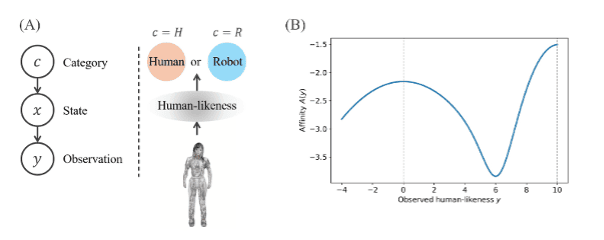
A new Bayesian model of the uncanny valley published in July might provide robot designers with a framework for handling uncanny valley design issues in future.

The team from the University of Tokyo note that existing guidelines, “such as adopting robot-like appearances, avoiding excessive realism, and reducing cross-modal mismatches, remain difficult to use for algorithmic design because they are not expressed as manipulable variables.”

The researchers propose a hierarchical Bayesian generative model that operationalizes these guidelines as mathematical design variables. In effect, the model attempts to turn broad advice such as “avoid excessive realism” into variables that designers can manipulate and test.

Separate from robot design questions and complexities, it is, as a general rule in life and robotics, better to keep your head while all around you are losing theirs. Although that message didn’t seem to get through a humanoid fighting robot at a recent event in China, with Pythonesque results…

Historic RoboCup match

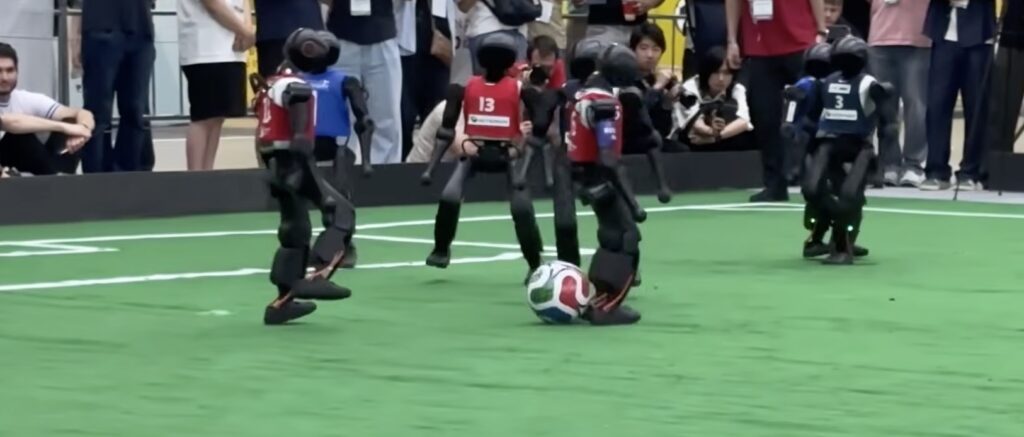
On July 5, at RoboCup 2026, two full teams of full-sized humanoid robots played an 11-vs-11 soccer match for the first time, bringing one of robotics’ most ambitious long-term visions closer to reality. The milestone match featured B-Human from Bremen, Germany vs HTWK Robots from Leipzig, Germany.

RoboCup’s long-term objective is gloriously ambitious:

By the middle of the 21st century, a team of fully autonomous humanoid robot soccer players shall win a soccer game, complying with the official rules of FIFA, against the winner of the most recent World Cup.

Do you think RoboCup’s objective is attainable? Will robots ever prevail over human tiki-taka? Drop us a line at ras@ieee.org.

Surviving the paper deluge: a one-year study in learning from demonstration

With the explosion of robotics research, staying current in fields like Learning from Demonstration (LfD) is a monumental challenge. Is AI the solution to the “paper deluge,” or is it part of the problem? Read the article preview below to learn more!

Download the full paper: Surviving the Paper Deluge.

Authors: Aude Billard, Renaud Detry, Nadia Figueroa, Maximilian Foriest, Dongheui Lee, Kunpeng Yao
Contributions: The five senior authors (A.B, R.D, N.F, D.L and K.Yao) collectively designed the study, read the papers, conducted the qualitative and quantitative analysis and writing of the paper. M. F. contributed scripts for LLM analysis and participated in LLM-Human comparison.


Summary

Scientists are expected to read newly published papers in their field to stay current and keep their work relevant. However, when faced with the massive number of publications, it may seem an overwhelming task to read all these papers, even if one were to reduce this to only a fraction related to one’s own area of research. As an example, in 2024 alone, IEEE published no less than 46,968 papers on “robotics” or “automation”, and IEEE publications represent only a fraction of the total research available online

To assess the magnitude of this challenge, as well as to evaluate how much genuine progress is reported in today’s publications, we undertook exactly this effort. For the task to be reasonable, we reduced our search to one particular subarea, learning from demonstration (LfD), that is methods whereby robots are taught by human experts. We monitor progress through both quantitative and qualitative metrics, offering a review on current trends and notable contributions. We also delineate areas of importance, but that seem to receive little attention and offer recommendations for promoting.

Our assessment was primarily based both on a human-eye assessment of all papers. We also explored the use of AI and other computing tools to do this task in our place. While scripts and large language models (LLMs) can be used fairly faithfully to provide general quantitative assessment, they fail when it comes to assessing the true importance of the research. They cannot recognize a paper revisiting a work that already had solutions. They fail to recognize when the abstract or claims of the paper are overstatements over the true contribution reported in the paper.

Our overall assessment led us to conclude that from a deck of more than 300 papers, only about 20% of the papers could be qualified as offering highly notable contributions, while the remainder of the papers offered a variety of incremental improvements over existing methods, or new domains of applications. The notable contributions did not correlate necessarily with a higher number of downloads or citations. Finding these gems is, however, essential to reduce the risk that novel work goes unnoticed and reduce duplication of efforts. We offer a few thoughts on how to best combine direct reading of the literature with automated approaches (scripts and LLMs) to streamline the review process. We close with a few recommendations: a) develop a research engine that restores the natural importance of work done by journal and conference editorial boards to rank papers based on evaluation scores and peer-reviewed status, in place of Google Scholar or IEEEXplore, that place all publications on equal footing, disregarding peer reviewing and the reputation of journals and conferences, b) consider establishing a blind publication model and topic-based social media posting, where authors’ name and institution are downplayed and become accessory to the paper to ensure that focus be on the content of the publication rather than secondary aspects, c) take a holistic approach to use of LLM in support of reviewing literature, using them for what they excel at, namely summarizing a piece of work and collecting precise quantitative information, but bearing in mind that, while today the tools cannot match expert capacity to assess true novelty, should they achieve this one day, this may have repercussion on our own ability to provide said expertise.

Publications growth

Over the past decade, the number of submissions to robotics journals has grown steadily on a yearly basis, with an explosive trend in 2023 (26%) and 2024 (31%), likely due to different factors, including growing interest in the public and private sectors and to the availability of AI tools supporting the writing of papers and code. The number of published papers has closely followed this trend, despite all efforts made by editorial boards to contain the growth by decreasing acceptance rates. Conferences have followed the same trend. For instance, ICRA doubled the number of papers it published in ten years, reaching approximately 1,800 in 2024. Simultaneously, the strong pressure exerted by the community to publish rapidly has led to a 50% decrease in the time window between the submission of a paper and its publication. The phenomenon is not particular to IEEE publications, and journals and conferences such as IJRR, RSS and CoRL have followed the same trend.

Clearly, it would be unrealistic to expect any researcher to read all of these publications. One might argue that researchers are typically interested in only a subset of the literature, for instance a specific domain or methodology, and would therefore read only a fraction of all published papers. Yet even this narrower scope may prove unmanageable. To assess how feasible it is for a researcher to stay current within their own area of expertise, we undertook the task of reading a large fraction of all papers published in our domain – learning from demonstration – over the course of a single year (2024).


This article originally appeared on IEEE RAS.

Pressure-free growing robots for soft medical robotics

Researchers at the University of Leeds and collaborators from the University of California San Diego won the Best Paper Award at RoboSoft, the leading international conference focused on soft robotics research. Soft robotics is gaining attention in medical applications because compliant machines can interact more safely with delicate objects and complex anatomy.

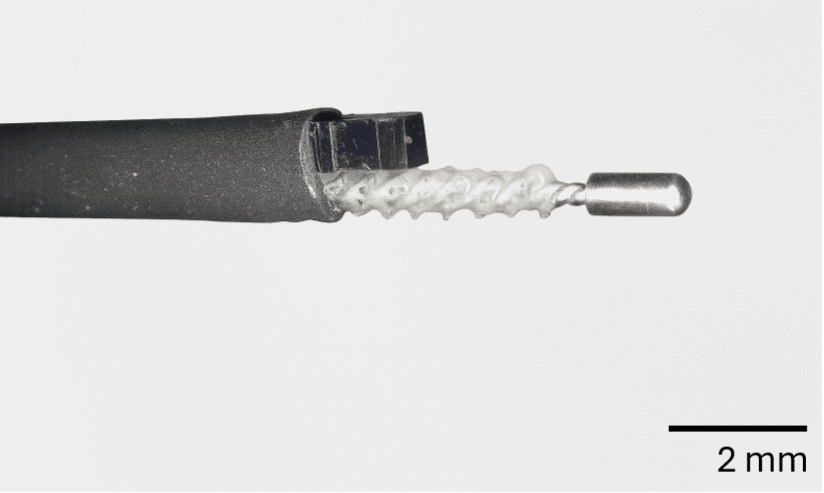
The award-winning paper describes a 1.8 mm soft growing robot that can be steered magnetically, sense its own shape in real time, and operate without internal pressure. These advances could help improve patient outcomes following minimally invasive procedures.

We spoke with lead author Benjamin Calmé about the team’s work.


Q: Congratulations to you and your team on winning the award. Before we get into the paper itself, could you tell readers a little about yourself and how you arrived in this field?

Benjamin Calmé: My path into robotics is a bit unusual. I’m from France and I actually started with a medical degree. Over time I realized I was more interested in research than in day‑to‑day clinical practice. In France, if you want a research and teaching career in medicine, you’re expected to get an equivalent engineering degree as well. That’s what pushed me toward engineering—and from there into robotics.

That led me into robotics labs in Paris and Strasbourg, where I worked on medical robotic platforms for applications such as needle insertion inside MRI scanners and technologies to help runners reduce injury risk. Through those projects I fell in love with robotics.

Staying in medical robotics was a natural extension of my previous work. It’s also why I was hired in Leeds. That is, you need someone who can translate between surgeons and engineers. Surgeons know what they want clinically, engineers know how they want to solve the problem, and those views don’t always match. My role is often to say, “This is what the surgeon actually wants, and this is how we can realistically help.”

I also help when systems move toward pre-clinical testing: designing study protocols, discussing workflows with clinicians, and helping them understand how a new platform behaves compared with conventional tools.

Q: For readers outside soft robotics, what is a “growing robot”?

Benjamin Calmé: It moves more like a plant than a traditional robot. Instead of pushing or dragging its whole body through the environment, it extends at the tip by bringing material from inside the robot outward. In effect, the robot grows into the space ahead of it.

We often call these ‘vine robots’ because the idea is inspired by climbing plants. The body is soft and compliant, so when it encounters obstacles, it can deform and follow paths of lower resistance.

That can be very useful inside the body, where space is constrained and tissues are delicate. Rather than forcing its way forward, the robot can adapt to the environment.

Q: What problems does this work address?

Benjamin Calmé: A central issue is friction. In many procedures, conventional flexible tools still rub against tissue as they are inserted and withdrawn. That can cause irritation or inflammation.

With a growing robot, the body sections already in place move far less because new material advances at the tip. That can significantly reduce friction along the path.

For patients, that can mean less discomfort and fewer side effects. It can also help clinicians attempt procedures in anatomical regions, such as the brain, where the margin for error is very small.

Q: Your paper highlights pressure-free growth. Why is this important?

Benjamin Calmé: Safety is one reason, and controllability is another.

Many earlier growing robots relied on internal air pressure. But if you are working in fluid-filled spaces near the spine, or inside blood vessels, introducing air because of a leak is unacceptable. By removing the need for internal pressure, that risk disappears.

There is also a practical control benefit. In some earlier prototypes, we used pressure to grow and magnetic fields to steer. That meant alternating between growth and steering steps rather than doing both together.

Now we can grow and steer simultaneously, which makes the system faster and more usable.

Q: What is novel about your approach compared with previous systems?

Benjamin Calmé: One key contribution is combining shape control and shape sensing in a structure that can still be miniaturized. Our current prototype has an outer diameter of just 1.8 mm. Many previous designs place separate actuators or sensors along the robot body. Those solutions can become slow, bulky, or difficult to shrink to catheter scale.

We instead embed magnetic functionality directly into the silicone body by mixing magnetic particles into the material, molding it, and then magnetizing regions in controlled directions.

You can think of that pattern as the robot’s magnetic DNA. When we apply an external magnetic field, the robot bends into predictable shapes. By tracking how those magnetized regions move, we can also estimate the robot’s shape in real time. So, with one integrated structure, we achieve both actuation and sensing.

Q: How does the real-time shape control system operate?

Benjamin Calmé: We first manufacture the internal tail section of the robot from silicone containing magnetic particles. That tail later everts and becomes the outer body as the robot grows.

Before that happens, we place the material in a coil and apply a strong magnetic field. By orienting the material carefully during magnetization, we assign different magnetic directions along its length and cross-section.

Once deployed, moving an external magnet around the robot creates specific deformations. Because the magnetic pattern is known, we can also infer shape as the robot moves, with sensing updates up to 500 Hz.

A subtle challenge was preventing unwanted attraction between inner and outer layers, which would increase friction. Designing patterns that gave useful control without causing sticking required significant optimization.

Q: The paper also demonstrates retroflexion and biome sampling in an ex vivo stomach model. Why are those meaningful milestones?

Benjamin Calmé: Retroflexion and biopsy in an ex vivo stomach are important because they show the robot can perform endoscopic maneuvers in a realistic anatomy, not just in bench-top tests. Retroflexion proves it can safely reach difficult angles without the high friction and tissue stress of conventional scopes, and successful sampling shows it can precisely position tools and carry out a core clinical task. Together, they’re a first demonstration that this pressure-free growing robot can do meaningful work in settings that resemble actual medical procedures.

Q: What were the biggest engineering hurdles?

Benjamin Calmé: Manufacturing at this scale was a major challenge. Our catheter has an outer diameter of about 1.8 mm, with wall thickness near 100 microns.

That required careful control of injection molding, vacuum processes, particle distribution, and defect prevention. Tiny bubbles or inconsistencies can affect both mechanical performance and magnetic behavior.

Q: What comes next, and how close is clinical use?

Benjamin Calmé: We are especially interested in neural and spinal applications, where precise placement of electrodes could help restore function after injury.

We are still early in development. A realistic near-term target is robust pre-clinical performance: safety, biocompatibility, and successful in-vivo demonstrations.

Clinical adoption takes much longer because regulation must be rigorous. That is appropriate when patient safety is involved.

Q: How would you explain this advance to a non-technical person?

Benjamin Calmé: I sometimes use the image of brain surgery done with chopsticks. Right now, your surgeon is often working around the most sensitive parts of your body with rigid tools that must be manipulated with extreme care. We’re trying to replace those chopsticks with a softer, more precise, less dangerous tool.

This soft growing robot can be very small and dexterous. It can reduce some types of human error, like tremor, and it doesn’t take much space, so there’s more room for other instruments and better imaging. Surgeons can also see and reach regions that used to be in blind spots.

In the simplest terms, we’re developing a new class of soft, growing robotic tools that can sneak into delicate spaces in the body, minimize damage along the way, and give surgeons more control and information than they have with today’s rigid instruments.


The paper, “Pressure-free Magnetic Soft Growing Robot with Real-Time Shape Control and Sensing for Biome Sampling,” appears in the proceedings of the 2026 IEEE 9th International Conference on Soft Robotics (RoboSoft).

Pietro Valdastri’s Plenary Talk – Medical capsule robots: a Fantastic Voyage

At the beginning of the new millennia, wireless capsule endoscopy was introduced as a minimally invasive method of inspecting the digestive tract. The possibility of collecting images deep inside the human body just by swallowing a “pill” revolutionized the field of gastrointestinal endoscopy and sparked a brand-new field of research in robotics: medical capsule robots. These are self-contained robots that leverage extreme miniaturization to access and operate in environments that are out of reach for larger devices. In medicine, capsule robots can enter the human body through natural orifices or small incisions, and detect and cure life-threatening diseases in a non-invasive manner. This talk provides a perspective on how this field has evolved in the last ten years. We explore what was accomplished, what has failed, and what were the lessons learned. We also discuss enabling technologies, intelligent control, possible levels of computer assistance, and highlight future challenges in this ongoing Fantastic Voyage.

Bio: Pietro Valdastri (Senior Member, IEEE) received the master’s degree (Hons.) from the University of Pisa, in 2002, and the Ph.D. degree in biomedical engineering, Scuola Superiore Sant’Anna in 2006. He is a Professor and a Chair of Robotics and Autonomous Systems with the University of Leeds. His research interests include robotic surgery, robotic endoscopy, design of magnetic mechanisms, and medical capsule robots. He is a recipient of the Wolfson Research Merit Award from the Royal Society.

Robert Wood’s Plenary Talk: Soft robotics for delicate and dexterous manipulation

Robotic grasping and manipulation has historically been dominated by rigid grippers, force/form closure constraints, and extensive grasp trajectory planning. The advent of soft robotics offers new avenues to diverge from this paradigm by using strategic compliance to passively conform to grasped objects in the absence of active control, and with minimal chance of damage to the object or surrounding environment. However, while the reduced emphasis on sensing, planning, and control complexity simplifies grasping and manipulation tasks, precision and dexterity are often lost.

This talk will discuss efforts to increase the robustness of soft grasping and the dexterity of soft robotic manipulators, with particular emphasis on grasping tasks that are challenging for more traditional robot hands. This includes compliant objects, thin flexible sheets, and delicate organisms. Examples will be drawn from manipulation of everyday objects and field studies of deep sea sampling using soft end effectors

Bio: Robert Wood is the Charles River Professor of Engineering and Applied Sciences in the Harvard John A. Paulson School of Engineering and Applied Sciences and a National Geographic Explorer. Prof. Wood completed his M.S. and Ph.D. degrees in the Dept. of Electrical Engineering and Computer Sciences at the University of California, Berkeley. His current research interests include new micro- and meso-scale manufacturing techniques, bioinspired microrobots, biomedical microrobots, control of sensor-limited and computation-limited systems, active soft materials, wearable robots, and soft grasping and manipulation. He is the winner of multiple awards for his
work including the DARPA Young Faculty Award, NSF Career Award, ONR Young Investigator Award, Air Force Young Investigator Award, Technology Review’s TR35, and multiple best paper awards. In 2010 Wood received the Presidential Early Career Award for Scientists and Engineers from President Obama for his work in microrobotics. In 2012 he was selected for the Alan T. Waterman award, the National Science Foundation’s most prestigious early career award. In 2014 he was named one of National Geographic’s “Emerging Explorers”, and in 2018 he was an inaugural recipient of the Max Planck-Humboldt Medal. Wood’s group is also dedicated to STEM education by using novel robots to motivate young students to pursue careers in science and engineering.