Page 2 of 5
1 2 3 4 5

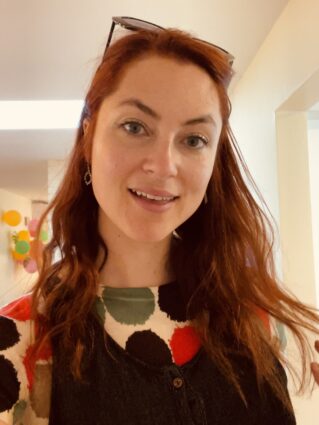
Robot Talk Episode 129 – Automating museum experiments, with Yuen Ting Chan

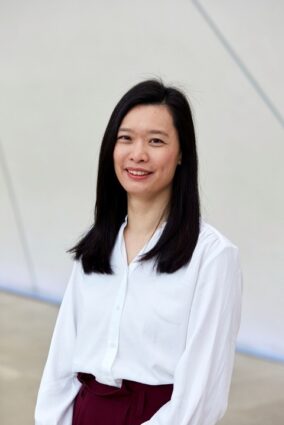
Claire chatted to Yuen Ting Chan from Natural History Museum about using robots to automate molecular biology experiments.

Yuen Ting Chan has nearly 20 years of experience working on translating, developing and optimising laboratory protocols, from DNA forensics to the biomedical field. She has brought automation to molecular laboratories for over 12 years, translating the laboratory protocols into bespoke scripts for a wide variety of liquid handling instruments. Her role at the Natural History Museum is to bring automation to the molecular laboratories, thus providing more opportunities for researchers to work on projects with large sample numbers for the wide variety of specimens within the museum.

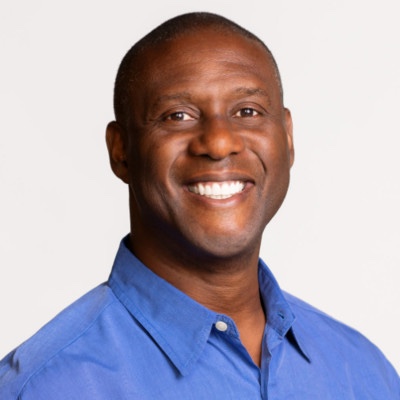
Robot Talk Episode 128 – Making microrobots move, with Ali K. Hoshiar

Claire chatted to Ali K. Hoshiar from University of Essex about how microrobots move and work together.

Ali Hoshiar is a Senior Lecturer in Robotics at the University of Essex and Director of the Robotics for Under Millimetre Innovation (RUMI) Lab. He leads the EPSRC-funded ‘In-Target’ project and was awarded the university’s Best Interdisciplinary Research Award. His research focuses on microrobotics, soft robotics, and data-driven mechatronic systems for medical and agri-tech applications. He also holds an MBA, adding strategic and commercial insight to his technical work.


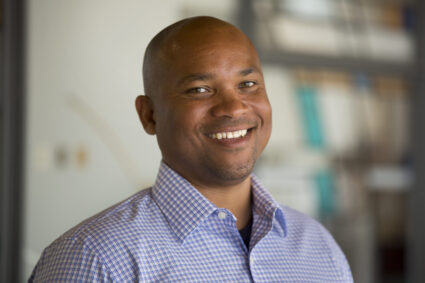
Robot Talk Episode 127 – Robots exploring other planets, with Frances Zhu

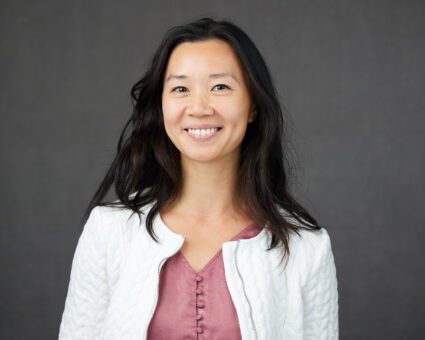
Claire chatted to Frances Zhu from the Colorado School of Mines about intelligent robotic systems for space exploration.

Frances Zhu has a degree in Mechanical and Aerospace Engineering and a Ph.D. in Aerospace Engineering from Cornell University. She was previously a NASA Space Technology Research Fellow and an Assistant Research Professor in the Hawaii Institute of Geophysics and Planetology at the University of Hawaii, specialising in machine learning, dynamics, systems, and controls engineering. Since 2025, she has been an Assistant Professor at the Colorado School of Mines in the Department of Mechanical Engineering, affiliated with the Robotics program and Space Resources Program.

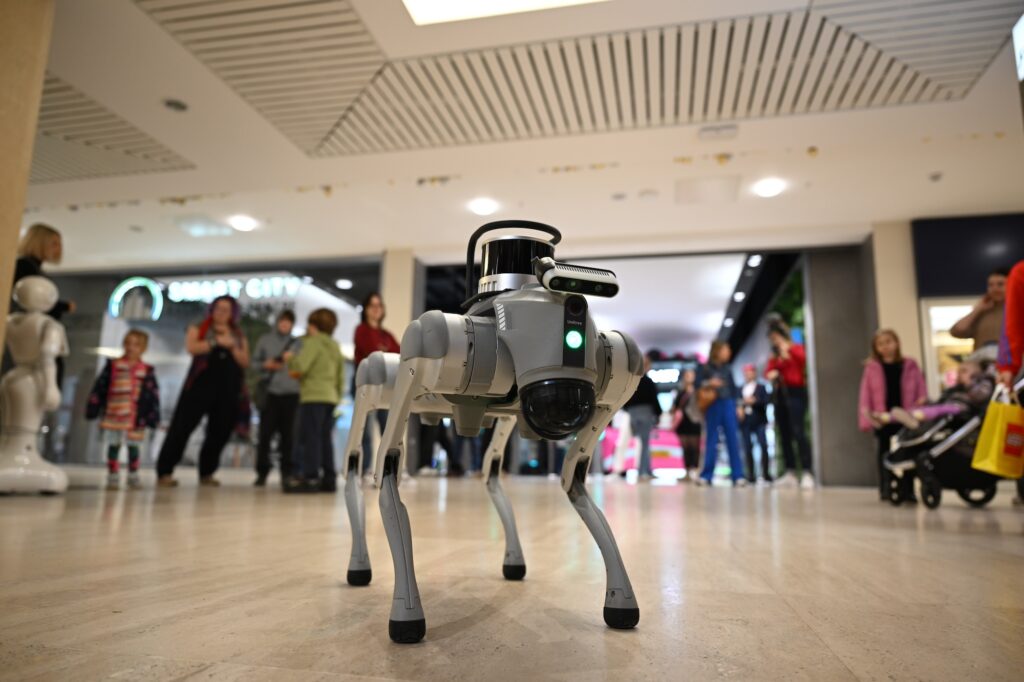
Robot Talk Episode 126 – Why are we building humanoid robots?

Research into humanoid robots is a rapidly advancing field, with companies around the world striving to produce robots that look and act more like us. But what is it about recreating ourselves in robot form that we find so captivating? Why do humanoid robots both enthral and terrify us? And is our obsession with robotic humans just vanity, or could they play valuable roles in our future society?

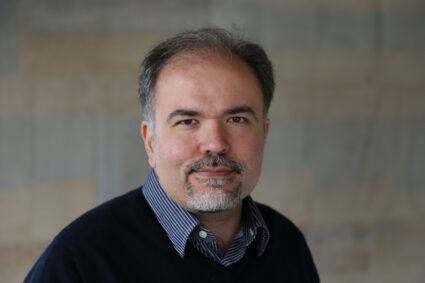
In this special live recording at Imperial College London as part of the Great Exhibition Road Festival, Claire chatted to Ben Russell (Science Museum), Maryam Banitalebi Dehkordi (University of Hertfordshire) and Petar Kormushev (Imperial College London) about humanoid robotics.

Ben Russell has been the Science Museum’s Curator of Mechanical Engineering since 2004. He has curated six permanent galleries and temporary exhibitions at the museum, including Engineers (2023), Robots (2017), Cosmonauts (2015) and James Watt’s Workshop (2011). He is the author of James Watt: Making the World Anew, (Reaktion Books, 2014), and editor of Robots (Scala, 2017), as well as numerous published and conference papers.

Maryam Banitalebi Dehkordi is a Senior Lecturer in Robotics and AI at the University of Hertfordshire. She has a master’s degree in Mechatronics and Automatic Control Engineering from the University Technology Malaysia and a Ph.D. in Perceptual Robotics from Scuola Superiore Sant’Anna in Italy. Her expertise spans assistive robots, mobile robots, agricultural robots, industrial robots, humanoid robots, parallel manipulators, navigation, and outdoor autonomous vehicles.

Petar Kormushev is Director of the Robot Intelligence Lab at Imperial College London and an Associate Professor in Robotics at the Dyson School of Design Engineering. His research focus is on reinforcement learning algorithms and their application to autonomous robots. Petar’s long-term goal is to create robots that can learn by themselves and adapt to dynamic environments. His machine learning algorithms have been applied to a variety of humanoid robots, including COMAN and iCub.
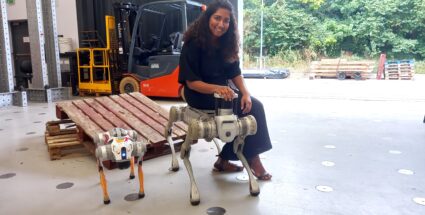
Robot Talk Episode 126 – Why are we building humanoid robots?

Research into humanoid robots is a rapidly advancing field, with companies around the world striving to produce robots that look and act more like us. But what is it about recreating ourselves in robot form that we find so captivating? Why do humanoid robots both enthral and terrify us? And is our obsession with robotic humans just vanity, or could they play valuable roles in our future society?

In this special live recording at Imperial College London as part of the Great Exhibition Road Festival, Claire chatted to Ben Russell (Science Museum), Maryam Banitalebi Dehkordi (University of Hertfordshire) and Petar Kormushev (Imperial College London) about humanoid robotics.

Ben Russell has been the Science Museum’s Curator of Mechanical Engineering since 2004. He has curated six permanent galleries and temporary exhibitions at the museum, including Engineers (2023), Robots (2017), Cosmonauts (2015) and James Watt’s Workshop (2011). He is the author of James Watt: Making the World Anew, (Reaktion Books, 2014), and editor of Robots (Scala, 2017), as well as numerous published and conference papers.

Maryam Banitalebi Dehkordi is a Senior Lecturer in Robotics and AI at the University of Hertfordshire. She has a master’s degree in Mechatronics and Automatic Control Engineering from the University Technology Malaysia and a Ph.D. in Perceptual Robotics from Scuola Superiore Sant’Anna in Italy. Her expertise spans assistive robots, mobile robots, agricultural robots, industrial robots, humanoid robots, parallel manipulators, navigation, and outdoor autonomous vehicles.

Petar Kormushev is Director of the Robot Intelligence Lab at Imperial College London and an Associate Professor in Robotics at the Dyson School of Design Engineering. His research focus is on reinforcement learning algorithms and their application to autonomous robots. Petar’s long-term goal is to create robots that can learn by themselves and adapt to dynamic environments. His machine learning algorithms have been applied to a variety of humanoid robots, including COMAN and iCub.
Robot Talk Episode 125 – Chatting with robots, with Gabriel Skantze

Claire chatted to Gabriel Skantze from KTH Royal Institute of Technology about having natural face-to-face conversations with robots.

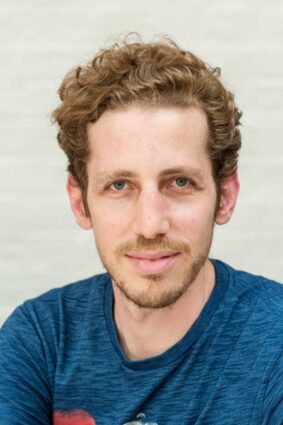
Gabriel Skantze is a Professor of Speech Communication and Technology at KTH Royal Institute of Technology. He specializes in conversational systems and leads several research projects on conversational AI and human-robot interaction. His work focuses on computational models of spoken interaction, integrating both verbal and non-verbal aspects such as prosody, turn-taking, feedback, and joint attention. In 2014, he co-founded Furhat Robotics, where he continues to serve part-time as Chief Scientist.

Robot Talk Episode 124 – Robots in the performing arts, with Amy LaViers

Claire chatted to Amy LaViers from the Robotics, Automation, and Dance Lab about the creative relationship between humans and machines.

Amy LaViers works at the intersection of robotics and dance. Her writing, choreography, and machine designs have been presented internationally at performing arts and engineering venues, including Merce Cunningham’s studios, the Performance Arcade, and universities like Berkeley and Brown. She is the founder of three startup companies, including AE Machines, which won “Product Design of the Year” at the 4th Rev Awards in Chicago. Amy runs the Robotics, Automation, and Dance (RAD) Lab, a non-profit for art-making, commercialization, education, outreach, and research.

Robot Talk Episode 123 – Standardising robot programming, with Nick Thompson

Claire chatted to Nick Thompson from BOW about software that makes robots easier to program.

Nick Thompson is CEO of BOW and exited founder of One Beyond Ltd, an international software development firm. His career started in 1997 as a software engineer, founded One Beyond in the early 2000’s and after 20 years in the business sold to a private equity firm. In 2022 he was recognised as one of the UK’s ‘Most Ambitious Business Leaders’ by LDC Private Equity Group.

Robot Talk Episode 122 – Bio-inspired flying robots, with Jane Pauline Ramos Ramirez

Claire chatted to Jane Pauline Ramos Ramirez from Delft University of Technology about drones that can move on land and in the air.

Jane Pauline Ramos Ramirez is a licensed engineer with a multidisciplinary background in bionics, mechanical, and aerospace engineering, and international research experience. Her life’s work is rooted in designing inclusive, socially accessible systems that work in synergy with nature and create meaningful impact in communities. As part of this mission, she has been developing nature-inspired drones that can move on both land and in the air — blending her appreciation for nature, design, and the mechanics of how things work.

Robot Talk Episode 121 – Adaptable robots for the home, with Lerrel Pinto

Claire chatted to Lerrel Pinto from New York University about using machine learning to train robots to adapt to new environments.

Lerrel Pinto is an Assistant Professor of Computer Science at New York University (NYU). His research is aimed at getting robots to generalize and adapt in the messy world we live in. His lab focuses broadly on robot learning and decision making, with an emphasis on large-scale learning (both data and models); representation learning for sensory data; developing algorithms to model actions and behaviour; reinforcement learning for adapting to new scenarios; and building open-source, affordable robots.

Robot Talk Episode 120 – Evolving robots to explore other planets, with Emma Hart

Claire chatted to Emma Hart from Edinburgh Napier University about algorithms that ‘evolve’ better robot designs and control systems.

Emma Hart is a computer scientist working in the field of evolutionary computation. Her work takes inspiration from the natural world, in particular biological evolution, and uses this to develop algorithms that ‘evolve’  both the design and control systems of a robot, customised  to a specific application. She was elected as a Fellow of the Royal Society of Edinburgh in 2022, and was awarded the ACM SIGEVO Award for Outstanding Contribution to Evolutionary Computation in 2023. She was invited to give a TED Talk on her work in 2021 that has over 1.8 million views.

Robot Talk Episode 119 – Robotics for small manufacturers, with Will Kinghorn

Claire chatted to Will Kinghorn from Made Smarter about how to increase adoption of new tech by small manufacturers.

Will Kinghorn is an automation and robotics specialist for the Made Smarter Adoption Programme in the UK. With a background as a chartered manufacturing engineer in the aerospace industry, Will has extensive experience in developing and implementing automation and robotic solutions. He now works with smaller manufacturing companies, assessing their needs, identifying suitable technologies, and guiding them through the adoption process.  Last year he released a book called ‘Digital Transformation in Your Manufacturing Business – A Made Smarter Guide’.

Robot Talk Episode 118 – Soft robotics and electronic skin, with Miranda Lowther

Claire chatted to Miranda Lowther from the University of Bristol about soft, sensitive electronic skin for prosthetic limbs.

Miranda Lowther is a PhD researcher at the FARSCOPE-TU Centre for Doctoral Training, a joint venture between University of Bristol, University of West of England, and Bristol Robotics Laboratory, where she is pursuing her passion for using soft robotics and morphological computation to help people in healthcare. For her PhD, she is investigating how soft e-skins and morphological computation concepts can be used to improve prosthetic user health, comfort, and quality of life, through sensing and adaptation.

Robot Talk Episode 117 – Robots in orbit, with Jeremy Hadall

Claire chatted to Jeremy Hadall from the Satellite Applications Catapult about robotic systems for in-orbit servicing, assembly, and manufacturing.

Jeremy Hadall has worked with robotics for his entire career, developing novel and innovative approaches for manufacturing and logistics industries. He’s now turned his experience into the development of robots that enable those tasks in the orbital environment. Prior to joining the Satellite Applications Catapult, he served as Chief Engineer for Intelligent Automation at the Manufacturing Technology Centre for over ten years. He has previously served as a Royal Academy of Engineering Visiting Professor at Cranfield University.

Page 2 of 5
1 2 3 4 5