Page 1 of 8
1 2 3 8

AI in Inventory Management Development

AI in Inventory Management Development: Detailed Guide 2026

Inventory management has been one of the supply chain success secrets. Artificial Intelligence (AI), to date in 2025, is not a trend but an industry disruptor that’s changing the way businesses monitor inventories, forecast demand, remain shortage-free, and cut waste. Let’s look at how AI is transforming inventory management in 2025, AI benefits in inventory app development, its limitations, and where it is heading.

What is AI in Inventory Management?

AI inventory management and tracking involves the use of machine learning, deep learning, natural language processing (NLP), and data analytics to best optimize the inventory’s entire life cycle, from purchasing, storage, monitoring, and forecasting to restocking.

Legacy systems are rule-based and information-static, whereas AI systems deal with massive volumes of real-time and historic data to generate dynamic decisions as well as predictions, which constantly improve in responsiveness as well as correctness. It helps companies to better predict demand, automate restocking, identify anomalies such as wastage or theft, and reduce overstocking or stockouts.

Top AI Technologies Used for Inventory App Development

 As companies aim to be data-driven, AI technologies are emerging as the bedrock of inventory management solutions. AI technology enables organizations to make demand forecasts, monitor stock in real-time, automate repetitive tasks, and react to changes in the market with unparalleled precision and speed. The following are a few leading AI technologies that are fueling innovation in inventory management app development: 

  1. Machine Learning (ML)

Machine Learning is at the heart of predictive inventory management. ML algorithms can scan massive databases of historical sales, seasonality patterns, promotions, and external weather or economic factors to predict with precision future requirements for inventory. By detecting anomalies and recognizing patterns, ML allows organizations to avoid stockouts, reduce excess inventory, and improve customer satisfaction. 

  1. Computer Vision

It is revolutionizing inventory monitoring in real-time. Through intelligent cameras, drones, and image recognition applications, inventory programs can be counted automatically, track defective items, and highlight order error placements across warehouses or within retail spaces. All of these steps do not require manual audit and considerably mitigate human errors. During app programming, Computer Vision can be infused to deliver in-life visual monitoring of inventory, automatic quality analysis, and even augmented reality for navigation across warehouse facilities. 

  1. Natural Language Processing (NLP)

Natural Language Processing makes simple, voice-based interaction with stock systems possible. Inventory managers or staff can retrieve quantities in stock, locate items, or order stock through simple voice commands or natural language queries. NLP also can analyze unstructured conversations, vendor emails or customer service call logs, to spot possible demand shifts or order modifications. NLP-based inventory applications bring processes nearer to end-users, especially non-technical ones, and facilitate faster, better decision-making.

  1. Robotic Process Automation (RPA)

Robotic Process Automation brings speed and efficiency to inventory operations through the automation of repetitive and rule-based activities. These include reconciliation of stock, reporting, matching invoices, processing orders, and communications with suppliers. With the integration of RPA into inventory management software, organizations can free manual effort, eliminate errors, and ensure consistent process execution. These bots can operate 24/7, improving response and freeing employees from tactical work to do strategic work.

  1. Internet of Things (IoT) and AI

Combined, these AI technologies and Internet of Things (IoT) are transforming the functionality of inventory management apps. These technologies not only improve visibility and accuracy but also build smart systems that learn and react to shifting demands in real time. As AI companies seek to expand operations and adopt digital transformation, the incorporation of these AI tools into inventory management software will be key to remaining competitive and resilient.

AI-Powered Inventory Management Use Cases 

  • Demand ForecastingArtificial Intelligence models have the ability to process multi-sourced data (news, social media trends, previous sales) and forecast peak or trough demands with greater accuracy than human planners.
  • Inventory Optimization-AI dictates optimum stock quantities, minimizing stockouts or overstocking. AI allows just-in-time stocking, keeping minimum holding costs but ensuring customer needs.
  • Automated Refill-Automated restock orders can be triggered by AI systems when the stock reaches set limits. Complementing such systems with lead times from the supplier prevents stockouts.
  • Warehouse Automation-AI manages robots and drones in intelligent warehouses for picking, sorting, and storing. It optimizes storage and minimizes manual labor.
  • Dynamic Pricing and Promotions-AI is able to shift pricing models according to inventory levels and demand in the market. Overstocked products can be dynamically discounted to sell off inventory.
  • Fraud and Anomaly Detection-AI algorithms track inventory data to identify anomalies, like sudden loss of merchandise or record discrepancies and actual stock, which could be signs of theft or system malfunction.

AI-in-Inventory-Management

Top Benefits of AI in Inventory Management App Development 

Artificial intelligence is transforming inventory management application development by implementing smart automation, real-time intelligence, and data-based decision-making. Through the implementation of technologies such as machine learning, computer vision, and IoT, organizations are able to become more accurate, efficient, and responsive in their inventory functions. 

  1. Increased Accuracy: AI inventory software enhance accuracy with the help of real-time data and predictive algorithms to forecast demand and track stock levels with precision.
  1. Reduced Cost: AI inventory applications save costs by lowering overstock and stockouts due to accurate demand prediction.
  1. Improved Customer Satisfaction: Shorter delivery times and accurate order fulfillment result in higher customer retention and satisfaction.
  1. Improved Visibility: AI-powered dashboards offer real-time visibility into warehouse operations, supply chain performance, and inventory levels.
  1. Sustainability: Minimizing waste, especially in perishables, supports environmental sustainability and ESG targets. 

AI Inventory Management Development Implementation Steps 

Step 1: Evaluate Your Existing Inventory System

Audit existing processes, software, and methods of data collection. Determine inefficiencies and gaps in data.

Step 2: Establish Business Goals

Establish specific goals, do you wish to enhance forecasting accuracy, minimize carrying costs, or automate replenishment?

Step 3: Gather and Consolidate Data

Quality of data is essential for AI success. Combine data from POS, ERP, CRM, and external sources into a single database to make data process seamless.

Step 4: Select Appropriate AI Tools

Use tools like TensorFlow, PyTorch, or Scikit-learn for forecasting, and OpenCV or Amazon Rekognition for visual tracking. For NLP and automation, integrate Dialogflow, UiPath, and IoT platforms like AWS IoT for real-time monitoring.

Step 5: Train the Model and Test

Begin with pilot projects in a single warehouse or product category. Iterate models according to real-world outcomes.

Step 6: Scale and Refine

Deploy the app across business units or product categories, and regularly monitor AI performance to fine-tune models as needed. 

The Future of AI in Inventory Management App Development 

The AI wave will go on to change the supply chain and logistics industry. The combination of blockchain and AI will improve traceability and visibility of inventory processes, especially in industries such as luxury and pharmaceuticals where traceability of product origin and history is essential.

Digital twins are increasingly being developed as potent solutions, establishing digital copies of warehouses to allow advanced scenario planning, performance assessment, and operating efficiency. The virtual worlds allow organizations to try before they adopt in the real environment, reducing risk and enhancing decision-making.

Simultaneously, Autonomous Mobile Robots (AMRs) are becoming increasingly advanced with AI capability that allows them to navigate warehouse spaces with little human intervention. AMRs enhance productivity, lower labor expenses, and are able to adjust to changing conditions in real-time.

Moreover, voice-AI assistants are simplifying warehouse operations and reducing inventory management pressure on resources. It enhances accessibility and accelerates mundane tasks without the need for advanced training.

Finally, generative AI is being applied in logistics to mimic intricate supply chain reactions and create optimized reorder policies. Anticipating disruptions and simulating different scenarios, businesses can make more proactive, better-informed decisions. All these innovations collectively herald a more intelligent, agile, and responsive future for world supply chains.


Conclusion 

Inventory management with AI is not something that exists in the future, it’s already here today. From forecast demand to automated replenishment to stockout prevention, AI results in unparalleled accuracy, efficiency, and responsiveness in managing stock.

Companies in 2025 that utilize AI most effectively are not merely streamlining their supply chain, they’re reshaping customer satisfaction, reducing expenses, and establishing strong, smart operations. As a small store or as an international maker, incorporating AI into your stock plan is a matter of becoming and surviving today’s marketplace.

Are you looking to develop AI-powered inventory management app? Get in touch.


[contact-form-7]

How AI Consulting Can Help You Identify Opportunities for Automation?

How AI Consulting Can Help You Identify Opportunities for Automation?

With the age of fast-paced technology development and decision-making based on data, automation is arguably the most essential driver of operational scalability, efficiency, and innovation. Figuring out what to automate and how to do it right requires skills that most organizations may not have. It is where AI consulting shines through.

AI consultants offer not only technology recommendations but also strategic recommendations on how artificial intelligence can be leveraged to automate, reduce costs, and generate new revenue streams. In this article, we will describe how AI development companies allow organizations to unlock unseen opportunities in automation, how it is done by AI consultants, and what real benefits are achieved.

What Is AI Consulting and What It Covers?

AI consulting assists organizations in assessing, designing, and implementing artificial intelligence technology suitable for their requirements. It would typically involve

  • Audit of current workflows and data pipeline
  • Automating repetitive and rule-based tasks
  • Suggesting AI-powered tools and platforms
  • Creating proof of concepts (PoCs)
  • Successful AI solutions scaled across departments

The AI consulting companies typically employ data scientists, Machine Learning engineers, business analysts, and process optimization experts who collaborate to deliver customized automation solutions. 

Why Businesses Struggle to Identify Automation Opportunities?

Prior to proceeding with what an AI development company does, it is important to know why companies often overlook automation opportunities:

  • Insufficiency of AI talent: Most organizations are deficient in-house AI talent.
  • Limited visibility: Teams are often separated and ignorant of duplicate manual tasks.
  • Fear of disruption: People are afraid to disturb existing processes.
  • Cost issues: Companies feel that AI is too costly or difficult to adopt.

But, AI development companies can bridge the gaps by bringing in an outside-in perspective and the capability to discover the hidden inefficiencies. 

How AI Consulting Identifies Automation Opportunities?

The below is a step-by-step process on how AI consultants establish where automation will be of greatest benefit:

  1. Business Process Evaluation

AI app development companies start with a thorough examination of your existing procedures. Consultants trace flows to trace:

  • Repetitive work
  • Low-complexity, high-frequency tasks
  • Inefficient hand movements

With the help of stakeholder interviews and process mining software, they can view where automation will provide the most ROI

  1. Data Audit and Readiness Check 

AI automation depends on information. AI consultants consider

  • Availability and nature of unstructured and structured data
  • System integration points (ERP, CRM, HRMS, etc.)
  • Data privacy and data governance law

A readiness audit ensures the business is prepared to automate efficiently and safely.

  1. Use Case Identification 

From facts, there are specific applications where automation is preferable in terms of cost, speed, and accuracy. Common locations are

  • Customer service bots
  • Invoice processing
  • Inventory control
  • Predictive maintenance
  • HR onboarding
  • Targeted marketing

All the application areas are prioritized based on impact and feasibility. This helps AI application development companies analyze your industry and build tailored solutions.

  1. Technology Recommendation 

AI software development consultants evaluate and suggest the most suitable tool and platform. They can be:

This process guarantees that chosen technologies are in line with business goals and meets IT infrastructure automation needs.

  1. Proof of Concept (PoC) and Pilots

AI solution experts create pilot rollouts, or PoCs, prior to mass rollout, ensuring the project meets industry standards as well as ensures security and innovation across organization. Experts assist companies to:

  • Test pilots in a low-risk environment
  • Report on KPIs
  • Gain internal stakeholders’ support.

It is an important stage of risk management and strategy formulation prior to mass rollouts.

  1. Change Management and Training

Change management in IT is common. AI development companies build solutions that can scale with your future business needs. Automating is not a technology revolution it’s culture. Consultants help company businesses:

  • Trained staff for new workflow
  • Provide training in AI tools.
  • Oversee job loss fears
  • Develop an innovation culture.

Successful change management creates future success.


Real-World Applications of AI-Based Automation

  1. Customer Support Automation

One major e-commerce company retained an artificial intelligence consulting firm to lower the call center volumes.

  • Employed AI chatbots for FAQs
  • Applied NLP for distribution of tickets wisely.
  • Employed sentiment analysis for angry customer labelling

Outcome: 40% reduction in response time and 30% fewer support tickets.

  1. Accounts Payable Automation

The accounts receivable of a manufacturing firm can be automated with AI software solutions. Manufacturing units can reduce invoice processing by 70% and achieve accuracy up to 90% with AI automation. AI applications in manufacturing are

  • Digitalized and scanned paper bills
  • Imported relevant domains through ML
  • Used by ERP to facilitate automated approval cycles
  1. HR and Recruitment Optimization

AI recruitment solutions help organizations completely automate hiring processes, from resume screening to interview scheduling and grade analysis.

Implementation of an AI-powered recruitment platform and HR processes automating solutions can decrease 50% of process times and improve operational efficiencies of the departments. AI can automate:

  • Parsing of resumes by NLP.
  • List the candidates’ work availability in order
  • Bot is scheduling interviews 

Top Benefits of AI Consulting for Automation 

  • Objective Assessment

AI consultants offer a fresh perspective that identifies inefficiencies that homegrown teams might miss.

  • Faster ROI

Concentrating on high-impact opportunities through automation offers quicker value realization.

  • Custom Solutions

AI development companies in India and USA can create automation plans tailored to your business, company size, and objectives, ensuring that the custom AI solutions meet your future needs.

  • Technology Skills

They stay up to date with all the new trends, hardware, and platforms that AI is using in an attempt to provide the best possible suggestions that they can.

  • Risk Mitigation

With rollouts sequenced and pilots to showcase applications, implementation risk decreases by consultants.

How to Choose the Right AI Consulting Firm? 

To achieve the best possible automation, choose AI consultancy services that:

  • Is solidly based in your field
  • Provides turnkey solutions from design to installation
  • acquainted with business processes and AI technologies
  • Provides training and change management assistance
  • Departmental and geographic scalability solutions
  • Verify AI partner environment (i.e., Microsoft, AWS, Google Cloud), customer success stories, and case studies.

Future-Proofing Your Business Through AI Automation

AI automation is no longer about saving human effort it’s a question of business model transformation, customer experience, and competitiveness. Your best guides on this transformation are AI consultants, who will guide you to unlock and capitalize on AI opportunities that help you drive automation and innovation across processes. Whether you are just starting to explore test automation or need to accelerate what you are already doing, AI consulting firms provides you with the strategy, tools, and confidence to make the transition.

What Could Be The cost of AI development in 2026?

The cost of AI development depends on the project’s size, complexity, and specific technology and integration requirements. Basic projects, such as AI chatbots or simple automation tools that use standard AI models and limited integration, typically range from $10,000 to $50,000.

On the other side, mid-level AI projects, like fraud detection systems or AI recommendation engines, cost between $50,000 and $250,000. These AI initiatives involve more sophisticated algorithms, data, cloud deployment, and multiple integrations.

Enterprise-level AI solutions, such as generative AI models, large-scale predictive analytics, or computer vision systems, can cost anywhere from $250,000 to over $2 million. Because, these AI projects needs custom development, data infrastructure, and continuous monitoring and updates.

Other factors that influence overall costs include data acquisition and cleaning, the use of cloud platforms like AWS or Azure, the availability and cost of experienced AI developers and data scientists, regulatory compliance needs, and long-term maintenance and model retraining.


AI consulting helps organizations identify where automation will have the greatest impact by combining process analysis, data readiness assessment, and technology recommendations. Rather than starting with a tool, consultants start by auditing existing workflows and data pipelines to find repetitive, rule-based tasks that are good automation candidates.

Why businesses miss automation opportunities on their own:

  • Lack of in-house AI talent
  • Siloed teams unaware of duplicate manual work across departments
  • Fear of disrupting existing processes
  • Perception that AI is too costly or complex to adopt

How AI consultants identify opportunities — a typical process:

  1. Business process evaluation — mapping workflows to find repetitive, high-frequency, low-complexity tasks
  2. Data audit and readiness check — assessing data quality, system integrations, and governance/privacy requirements
  3. Use case identification — prioritizing candidates like customer service bots, invoice processing, inventory control, predictive maintenance, and HR onboarding by impact and feasibility
  4. Technology recommendation — matching use cases to RPA, NLP, machine learning, or computer vision as appropriate
  5. Proof of concept and pilots — testing in a low-risk environment before full rollout
  6. Change management and training — preparing staff and addressing concerns about job impact

Example outcomes cited: a 40% cut in response time and 30% fewer support tickets from AI-driven customer support; up to 70% faster invoice processing with 90% accuracy in accounts payable automation; and roughly 50% faster hiring cycles through AI-assisted recruitment.

Typical costs (2026): basic automation projects run $10K–$50K; mid-complexity projects (e.g., fraud detection, recommendation engines) run $50K–$250K; enterprise-scale AI (generative AI, large predictive systems) can exceed $250K–$2M+.

Conclusion

Artificial intelligencebased automation is changing how companies operate but unlocking its full value is about something more than tech. It is a thoughtful, evidence-based response that AI consultants are best placed to give. Through identifying the appropriate opportunities, developing intelligent workflows, and pushing organizational change, AI consulting allows you not only to improve operations but also to build enduring strategic value.

Get in touch.


[contact-form-7]

Role Of RPA In Healthcare Industry

Role Of RPA In Healthcare Industry: Applications, Use Cases and Benefits

Robotic Process Automation (RPA) For Healthcare

The healthcare industry is one of the sectors which is highly vulnerable to various risks, such as data management, privacy and security, and regulatory issues. To ensure qualitative services and swiftness in delivering instant care operations as primary objectives, the healthcare industry is investing heavily in revolutionizing technologies.

RPA, Artificial Intelligence, and Machine Learning like innovative technologies are playing a key role in transforming the healthcare industry. For reducing operational costs, increasing productivity, automating admin, and augmenting care delivery services, AI and RPA are widely adopted by healthcare companies. Let’s take a glance at the benefits of using RPA in healthcare industry.

Key Benefits Of RPA In Healthcare Industry 

  • Robotic Process Automation-enabled solutions automate appointment scheduling, insurance claiming, and billing processes
  • The adoption of RPA in the healthcare industry is increasing for reducing manual errors in data
  • RPA, with a blend of intelligent AI capabilities, improves patient experiences
  • RPA technology in healthcare offers assist physicians in accessing and monitoring patients’ health information
  • RPA applications in healthcare ensure increased automation and workflow efficiency
  • Next-generation RPA-enabled solutions automate repetitive tasks and enhance customer services
  • The role of RPA applications in healthcare is vital in the telemedicine services
  • RPA-based healthcare apps or systems or devices can perform minimally invasive surgeries with 100% success results. 

Top Use Cases Of RPA In Healthcare Industry 

RPA use cases in Healthcare

RPA has become a trend in the healthcare industry. The healthcare industry is a complex sector that deals with highly confidential patient records. RPA technology is the best solution for healthcare companies for digitizing processes and increasing the effectiveness of front-office support.  

Let’s take a look at the amazing ways that RPA can be used in Healthcare. Here are the 7 best RPA Healthcare use cases:

  1. RPA For Automatically Scheduling Consultations

It is one of the best use cases of RPA in the healthcare industry. The use of RPA-based healthcare solutions or applications makes patient scheduling digital. Hospitals and healthcare service providers can increasingly benefit from using RPA applications in this aspect.

RPA apps will track doctors’ calendars and schedule appointments automatically. It will partially erase the need for a workforce for scheduling and maintaining patients’ appointment data.

  1. RPA In Healthcare For Automating Insurance Claims 

RPA technology helps healthcare service providers better manage insurance claims.  It helps insurers to scan and upload insurance documents digitally and make the process faster. So, from data upload, verification, credit eligibility, processing, and claiming, every step would be scrutinized through RPA-powered software. Such tech-powered insurance claiming procedures reduces the chances of data errors and improves the process efficacy.

  1. RPA In Healthcare Sector For Electronic Records Management

It is one of the best use cases of using RPA solutions for the healthcare sector. Health records management is a crucial part in the healthcare industry. Healthcare databases are highly prone to intruder attacks as the data can be sold for dollars in the international markets.

But, AI and RPA-based systems increase data privacy and prevent data risks and let the hospital management access and share the reports seamlessly.

  1. RPA In Healthcare Sector For Billing

The use of RPA applications in healthcare streamlines the entire invoicing and billing process. Intelligent RPA solutions scan bar codes, record patients’ medical expenses and makes online payments and billing smooth and faster.

  1. RPA Systems Best For Robotic Surgery

Robotic surgery or robot-assisted surgery is gradually adopted by multinational healthcare service providers. RPA-infused medical devices and systems perform surgeries with minimal incisions. Intelligent healthcare robots, leveraging the power of deep learning, machine learning, and natural language processing-like technologies, will understand the surgeon’s voice commands and performs operations seamlessly.

  1. RPA Healthcare Software For Tracking Assets

Software developed using RPA, AI, IoT (the Internet-Of-Things), and cloud technologies is an incredible solution for the healthcare sector. These types of applications of RPA in healthcare will help hospital management in monitoring and tracking the location and conditions of assets.

Get The Cost Of RPA App Development For Asset Tracking!

[contact-form-7]
  1. RPA Mobile Apps For Remote Assistance

RPA-enabled applications are the most useful assets for providing post-treatment care services. Intelligent applications send reminders to post-discharge patients about their medication and other information. Hence, such virtual nursing or personal assistants will help patients to get updated on medications and recovery soon and assist doctors in monitoring their health conditions from remote locations.

These are the top 7 use cases of RPA in the healthcare sector. Hence, RPA integrations take telehealth services to the next level and aids healthcare service providers streamline the diagnostic processes.

Final Words

AI and RPA’s role in the healthcare industry are not limited to the above use cases or applications. RPA applications in healthcare are anticipated to drive the significance and assist service providers in implementing cost-effective process automation strategies. If you are running a business out of AI, it’s time to invest and reap the benefits of intelligent automation solutions like RPA in healthcare.

Hire An AI App Development Company & Get Your App Developed Within Your Budget!   

[contact-form-7]


Useful Links:

Top 10 Mobile App Development Companies In Miami, Florida

What is Natural Language Processing? Applications & Future Possibilities

Top 10 Healthcare App Development Companies In The USA

What Is An MVP App and What Are The Benefits Of MVP Development?

The Best 13 AI App Development Companies List

Top 25 Mobile App Development Companies in The USA


How Much Does It Cost to Develop a Chatbot Like ChatGPT?

How Much Does It Cost to Develop A Chatbot Like ChatGPT? 

What is ChatGPT and How It Is Useful?

ChatGPT (Chat Generative Pre-Trained Transformer) is a breakthrough in the field of Artificial Intelligence (AI) and Generative AI. Since its introduction into the tech world in 2022 by OpenAI, ChatGPT has been a buzz in the tech world and across social media. Leveraging Natural Language Processing (NLP) and Machine Learning like major subfields of AI technology, ChatGPT is well-trained to interpret user queries and generate accurate content that the users look for. Initially, OpenAI launched ChatGPT in Noven 2022 for the Android mobile app version in the USA and witnessed great attention soon.

Later, upgrading the version and adding the latest advanced tech features like GPT4 integration, OpenAI released the newest version of GPT on March 2023 and made it available for iOS users. Surprisingly, with its first month of launch, the app has generated approximately four million downloads in the USA in its first month itself. This newest language model-based AI Chatbot has its applications in many areas. From supporting students in preparing essays and other materials to assisting software developers in writing code, ChatGPT has its significance. 

Additionally, ChatGPT is also popularizing in the field of Marketing and sales, where it is supporting marketing people to create compelling digital campaign content and also giving suggestions to write SEO-friendly website content. Further, for sales teams, ChatGPT’s contributions are incredible. It is helping sales personnel to write crispy introductions and follow-up emails faster. Likewise, the ChatGPT use cases are enormous. On top of all top applications, AI-powered ChatGPT is a great assistant tool for graphic designers, where it accurately interprets user queries and recommends ideas for video or image designs. 

Since the hype of ChatGPT is incredible, why don’t come up with an app like GPT? USM Business Systems has best practices in designing and developing of ChatGPT-like similar AI chatbot. In this article, with our experts’ input, we have given the estimated cost to develop an app like ChatGPT. Our app development consultants have also given insights into cost optimization strategies and how to create an AI Chatbot within your budget.

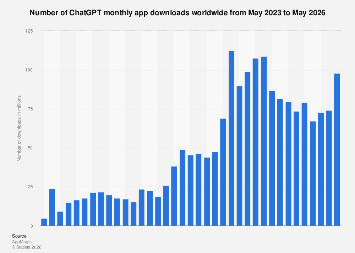
AI ChatGPT Chatbot Downloads Per Month from May 2023 to 2026

chatgpt downloads

Since the renowned ChatGPT mobile app launch into the U.S. iOS market on May 2023, the application generated approximately four million downloads within one month. When expanded to other global markets, the app reported total downloads of 12.5 million in July. Additionally, the Android version release propelled total downloads to almost 16 million in August. These numbers indicate the rapid growth and quick evolution of ChatGPT AI and GenAI’s implementation. This is the right time to invest and attract user attention towards ChatGPT-like AI innovations. Let’s look at how much it costs to create a ChatGPT clone app for Android and iOS.  

The Cost to Make an AI Chatbot Like ChatGPT App

The ChatGPT app development costs will depend on multiple technical factors, such as the language learning model it deploys (Either GPT 3 or GPT 4), the database which is used to train the algorithm, and agile methodology implementation will all take an essential part of the development cost of ChatGPT AI app. 

Further, the cost of developing a ChatGPT-like AI app will also be impacted by the complexity of the User interface and the other computational and analytical potentialities of this innovative software solution. Accordingly, the expertise, location, and team size of the AI development company will also be significant cost-impacting factors in ChatGPT clone mobile app development. The hourly rate of mobile app development agencies will vary based on their industry experience and team capabilities. 

For instance, a top AI app development company in the USA will cost much more than the cost of hiring AI developers from India. Considering all these factors, we estimate that the cost to build an app like ChatGPT will fall between $90,000 to $450,000. The cost might increase beyond the estimated range because ChatGPT is purely a novel and advanced revolution of AI.

Recommend To Read: The Best 13 AI App Development Companies List

Tips To Reduce the Cost Burden of ChatGPT App Development

By seeing the above-estimated cost figure, you might be concerned about the budget to kick start the development process of ChatGPT AI Chatbot. Being one of the biggest AI mobile app development companies in the USA, we would like to share a few tips to optimize the cost of ChatGPT clone app development.

  • Hire The Top AI App Developers 

This is one of the most significant cost-cutting strategies when stepping ahead of ChatGPT like AI app development. An expert AI app development company will deliver fully advanced software solutions like ChatGPT on-demand. Top mobile app development companies with their vast industry expertise and required skill sets in their development team, will ensure quick development without compromising on quality. A faster development process will consume less time for app developers and help you save costs.

  • Partnership With Cloud Service Providers

According to the research analysts, training a large language model such as GPT-3 and GPT-4 will cost millions of dollars. ChatGPT-like AI chatbot requires huge data to train the algorithm. Hence, to reduce the burden of ChatGPT-like chatbot mobile app development expenses, partnership with cloud companies is a good strategy to access the information legally and train GPT.

  • Go-To-Market with MVP Approach

Here is another best strategy to lower mobile app development costs. Minimum Viable Product (MVP) development with primary features and user-friendly UI design will help you reduce the development costs. The release of MVP will also help you get the user feedback about the application performance and how your app is fulfilling their desired requirements. Hence, eliminating the development of advanced features does not add any value to the application, organizations can reduce AI-based app development costs. Top mobile app development companies perform extensive research to match your application requirements with the ChatGPT trends, release MVP faster, make the application qualitative, and test GPT modules multiple times to ensure efficiency.

Recommend To Read: How Can Startups Reduce the Mobile App Development Costs?


Conclusion

Technology developments continue to emerge with the innovations in AI, such as the evolution of GenAI. Hence, GPT-like applications will need to be customized according to the business objectives. Currently, the ChatGPT Enterprise version using advanced GPT4 and GenAI capabilities is a hot topic now. Businesses across the industries are in plans of integrating GPT 4 like complex LLM and GenAI to create accurate images, videos, and content in response to user prompts. Such advanced Enterprise ChatGPT development cost might go beyond $500,000 as it needs more development time, a huge database, and fully generative capabilities. Hire the best AI developers and get expert guidance to Introduce your new version of an AI Chatbot app like ChatGPT.


Let’s discuss your AI app idea and get a free quote!

[contact-form-7]

AI-Powered Video Streaming: Turn Your Viewers into Loyal Fans

AI-Powered Video Streaming: Turn Your Viewers into Loyal Fans

Artificial Intelligence (AI) has emerged as a transformative force, enabling video streaming platforms to deliver personalized experiences, enhance content discovery, and drive user engagement. As the media and entertainment industry continues to expand, integrating AI into video streaming services has become essential for remaining competitive and meeting the growing demands of viewers.

The Impact of AI on User Engagement

Harness next-gen streaming with AI, where growth and user engagement meet. AI technologies such as Machine Learning and Natural Language Processing have revolutionized the dynamics of how streaming services interact with users. Through big data set analysis, AI provides customized recommendations for content that increase user satisfaction and retention. The top video streaming applications, including Netflix and YouTube, leverage AI to suggest videos based on watch history, behavior, and interests, leading to increased watch time and user engagement.

Furthermore, AI-powered features such as voice search, auto-subtitles, and live language translation have enhanced the availability of content to a broader international audience. These innovations not only enhance the user experience but also expand the reach of streaming services to diverse demographics.

Driving Growth Through AI Integration in Video Streaming Apps

AI Integration into video streaming apps and platforms has been at the forefront. According to a Grand View Research report, the video streaming market globally is projected to grow to USD 416.84 billion by the year 2030 with a compound annual growth rate (CAGR) of 21.5% between 2025 and 2030.

Increasing AI adoption is the major driver that improve the consumption of content, optimize advertising, and enhance user engagement.

AI can also contribute significantly to content creation and curation. It automates processes such as video editing and metadata tagging, accelerating automated content creation and reducing the operational costs. Additionally, AI analytics provide insights into viewers’ interests and actions, enabling platforms to personalize their content strategies.

Interesting AI Features Transforming Video Streaming Apps

AI is transforming how viewers interact with video content. From personalized recommendations and real-time subtitles to predictive streaming and immersive AR/VR, these features boost engagement, retention, and revenue. Key features include:

  • Personalized Recommendations: AI analyzes viewing habits, search history, and engagement patterns to suggest content uniquely tailored to each user.
  • Real-Time Content Moderation: Automatically detects and flags inappropriate content, ensuring safer streaming experiences.
  • Smart Thumbnails & Previews: AI generates eye-catching thumbnails and short previews optimized for higher click-through rates.
  • Automated Subtitles & Translation: Real-time captioning and multilingual support make content accessible to global audiences.
  • Dynamic Ad Personalization: AI delivers targeted ads based on viewer behavior, boosting monetization and user satisfaction.
  • Predictive Bandwidth Optimization: AI predicts user demand and optimizes streaming quality dynamically, reducing buffering and improving playback experience.
  • Interactive & Immersive Features: Integration with AR/VR, voice search, and gesture-based navigation for next-level engagement.

 Recommended To Read: Best Video Streaming Apps in the USA 

The Average Development Cost of AI Video Streaming Applications

The AI-powered video streaming app development would require an initial investment of $80,000 to $250,000+. AI features like personalized recommendations, dynamic ad targeting, predictive bandwidth optimization, and real-time content moderation not only enhance user engagement but also increase subscription retention and ad revenue.

Recommended To Read: How Much Does It Cost To Develop An App Like Netflix?

 Factors That Impact AI App Development Cost

 The cost of developing an AI-powered video streaming app depends on several factors, including the complexity of AI features, platform choice (iOS, Android, or Web), design, backend infrastructure, and scalability requirements. Key cost drivers include:

  • AI Features: Personalized recommendations, real-time content moderation, subtitles, translations, predictive bandwidth optimization, and AR/VR integration can increase development complexity and cost.
  • Backend Infrastructure: Cloud storage, content delivery networks (CDNs), and server architecture for smooth streaming and scalability.
  • UI/UX Design: Intuitive and engaging interfaces tailored for a wide range of devices.
  • Security & Compliance: Protecting user data and adhering to regional regulations adds development overhead.
  • Maintenance & Updates: Ongoing AI model training, app updates, and feature improvements.

Partnering with an experienced AI development company like USM Business Systems ensures cost-effective solutions that balance advanced features with performance and scalability, delivering maximum ROI.

Conclusion

AI is no longer a luxury but a necessity in the video streaming industry. By harnessing the power of AI, platforms can offer personalized experiences, optimize operations, and drive growth. For businesses looking to stay ahead in this competitive landscape, integrating AI into their video streaming services is a strategic move that promises substantial returns.

For businesses in the video streaming industry, partnering with AI development experts can unlock new opportunities for innovation and growth. AI solutions can be customized to address specific business needs, whether it’s enhancing content discovery, improving user engagement, or optimizing monetization strategies.

At USM Business Systems, we specialize in developing AI-driven solutions tailored for the video streaming industry. Our expertise in machine learning, data analytics, and cloud technologies enables us to create scalable and efficient AI applications that drive business success.

The Top AI Agent Development Companies for Manufacturing

The Top AI Agent Development Companies for Manufacturing & Supply Chain in 2026

Finding the Right Partner in a Crowded Market

The agentic AI market is projected to reach $7.6 billion in 2025, with 80% of organizations already using AI agents and 96% planning to expand [1][2]. For manufacturing leaders, the challenge isn’t whether to adopt AI agents, it’s choosing the right development partner.

Not all AI agent development companies are created equal. Platform vendors offer tools you implement yourself. Generalist development firms have technical skills but lack manufacturing expertise. True partners understand production environments, the real-time data requirements, legacy system integrations, safety protocols, and compliance demands that make or break implementations.

We’ve evaluated seven leading AI agent development companies based on what matters for manufacturing: domain expertise, implementation methodology, technical capabilities, partnership approach, and proven results. Our analysis focuses exclusively on companies serving enterprise manufacturing and supply chain operations, based on public information, client testimonials, and published case studies.

The stakes are high. Failed implementations waste 6-12 months and significant budget. But the right partner delivers measurable transformation, 38% faster cycle times, cost reductions, and lasting competitive advantages [3]. Let’s find the right partner for your enterprise.

How We Evaluated: Criteria That Matter for Manufacturing?

Before diving into the comparisons, here are the six criteria we used and why they matter for manufacturing:

  1. Manufacturing & Supply Chain Expertise – Proven experience in manufacturing environments with understanding of MES, ERP, and SCM systems. Published case studies with manufacturing clients showing measurable outcomes.
  1. Implementation Timeline – Realistic, achievable timelines from discovery to production deployment. We prioritized honest estimates over aggressive promises.
  1. Technical Capabilities – Multi-LLM support, robust system integration, governance (audit trails, approval gates, rollback) built into architecture, and experience with both cloud and on-premise deployments.
  1. Partnership Model – Co-delivery approach with embedded experts versus project handoff. Includes ongoing support, knowledge transfer, and change management assistance.
  1. Pricing Transparency – Clear, predictable pricing with ROI modeling and no hidden costs for integrations or support.
  2. Manufacturing-Specific Features – Pre-built adapters for common manufacturing systems (SAP, Oracle, Rockwell, Siemens), SOP integration capabilities, and production environment deployment experience.

Feature Comparison: Top AI Agent Development Companies

This table compares seven leading AI agent development companies across key capabilities that matter for manufacturing enterprises. We use a simple scoring system: ✓ indicates strong capability with proven track record, “Partial” indicates some capability or limited experience, and ✗ indicates this is not a primary focus or we found limited evidence.

Company Manufacturing Expertise MES/ERP Integration Pre-Built Adapters Governance & Compliance Co-Delivery Model Production Environment Experience Best For
USM Business Systems Manufacturing & supply chain enterprises seeking a true partner with 25 years of industry experience and proven ROI
SoluLab Partial Partial Partial Companies seeking to combine blockchain technology with AI agents, or needing cross-industry expertise
Deviniti Partial Partial Partial European manufacturing enterprises or US companies with strict GDPR and data residency requirements
Markovate Partial Partial Mid-market companies with lighter requirements, strong internal technical teams, or budget constraints
Master of Code Global Partial Partial Partial Companies primarily seeking customer service automation or conversational AI, not production operations
10Clouds Partial Partial Organizations building customer-facing AI products where design is as important as functionality
Azilen Technologies Partial Partial Partial Partial Healthcare or fintech companies with some manufacturing operations, seeking cross-industry perspective

Key Insight: Only USM Business Systems demonstrates strong capabilities across all six critical areas for manufacturing, reflecting their 25-year focus on manufacturing and supply chain enterprises.

Ranked Comparison: Overall Value for Manufacturing Enterprises

This table ranks each company on a 1-5 scale across our six evaluation criteria, with 5 being exceptional and 1 being weak or absent. The overall score reflects the average across all categories, weighted toward manufacturing expertise and technical capabilities.

Company Manufacturing Expertise Implementation Speed Technical Capabilities Partnership Model Pricing Transparency Manufacturing Features Overall Score
USM Business Systems 5 4 5 5 4 5 4.7
Deviniti 3 4 5 4 4 3 3.8
SoluLab 3 3 5 3 3 3 3.3
Azilen Technologies 3 3 4 3 3 3 3.2
Markovate 2 4 4 3 4 2 3.2
10Clouds 2 3 4 3 3 2 2.8
Master of Code Global 2 3 3 3 3 2 2.7


Scoring Key:

5 = Exceptional, industry-leading | 4 = Strong capability | 3 = Adequate, meets basic requirements | 2 = Limited capability | 1 = Weak or absent

Key Insight: USM Business Systems leads significantly with a 4.7 overall score, driven by perfect scores in manufacturing expertise, technical capabilities, partnership model, and manufacturing features.

Detailed Company Profiles

1. USM Business Systems – Top Choice for Manufacturing

Overview: Next-generation IT services company specializing in AI/ML and enterprise applications for manufacturing and supply chain with 25 years of industry experience.

Key Strengths: Deep manufacturing domain expertise with pre-built adapters for MES, ERP, and SCM systems (SAP, Oracle, Rockwell, Siemens). Co-delivery partnership model embeds experts with your team. Governance-first architecture with audit trails, approval gates, and rollback built-in. Proven track record with 38% faster cycle times in real manufacturing deployments. Realistic 4-6 month implementation timelines.

Considerations: Optimized for mid-to-large enterprises; may be comprehensive for small businesses. Custom pricing requires discovery process.

Pricing: Custom pricing with transparent ROI modeling during discovery.

Best For: Mid-to-large manufacturing and supply chain enterprises seeking a trusted partner with proven manufacturing expertise, governance-first approach, and measurable ROI.

2. SoluLab

Overview: Technology development company specializing in blockchain, AI/ML, and IoT with cross-industry experience.

Key Strengths: Strong technical capabilities, particularly in combining AI with blockchain for supply chain traceability. Good for companies needing multi-technology solutions.

Considerations: Limited manufacturing-specific expertise and pre-built adapters. More project-based than partnership-oriented.

Pricing: Project-based, varies by scope.

Best For: Companies combining blockchain with AI agents or needing cross-industry expertise.

3. Deviniti

Overview: European-based AI and data science consultancy with strong GDPR compliance expertise.

Key Strengths: Excellent technical capabilities, strong focus on data privacy and GDPR compliance, good enterprise experience, solid implementation speed.

Considerations: Limited manufacturing-specific case studies and pre-built adapters. European time zone may challenge US-based operations.

Pricing: Transparent hourly or project-based pricing.

Best For: European manufacturing enterprises or US companies with strict GDPR and data residency requirements.

4. Markovate

Overview: Digital transformation company offering AI agent development with agile methodology.

Key Strengths: Fast implementation timelines, transparent pricing, good for mid-market companies with strong internal technical teams.

Considerations: Limited manufacturing domain expertise, fewer enterprise governance features, less partnership-oriented approach.

Pricing: Clear project-based pricing, competitive rates.

Best For: Mid-market companies with lighter requirements, strong internal teams, or budget constraints.

5. Master of Code Global

Overview: Specializes in conversational AI, chatbots, and customer service automation.

Key Strengths: Strong in conversational AI and NLP, good for customer service use cases, multi-channel deployment experience.

Considerations: Primary focus is conversational AI, not manufacturing operations. Limited production environment experience and MES/ERP integration.

Pricing: Project-based, varies by complexity.

Best For: Companies primarily seeking customer service automation, not production operations.

6. 10Clouds

Overview: Product development company offering design and development services including AI solutions.

Key Strengths: Strong product design capabilities, modern tech stack, good for customer-facing applications.

Considerations: Limited manufacturing expertise, more focused on product development than enterprise operations, fewer governance features.

Pricing: Project-based with design and development bundled.

Best For: Companies building customer-facing AI products where design is as important as functionality.

7. Azilen Technologies

Overview: Software development company with AI capabilities across healthcare, fintech, and manufacturing.

Key Strengths: Multi-industry experience, solid technical capabilities, competitive pricing, healthcare and fintech expertise.

Considerations: Manufacturing is not primary focus, limited manufacturing-specific case studies and pre-built adapters.

Pricing: Competitive project-based pricing.

Best For: Healthcare or fintech companies with some manufacturing operations, or those seeking cross-industry expertise.

Decision Framework: Choosing the Right Partner

Choose USM Business Systems if:

✓ You’re a mid-to-large manufacturing or supply chain enterprise
✓ You need deep domain expertise in MES, ERP, and SCM systems
✓ You value a true partnership model with co-delivery and knowledge transfer
✓ Governance, compliance, and audit trails are critical requirements
✓ You want proven manufacturing case studies with documented ROI
✓ You prefer realistic timelines over aggressive promises
✓ You need pre-built integrations that accelerate deployment


USM is the clear choice for manufacturing enterprises that want to minimize risk, accelerate time-to-value, and partner with a firm that speaks their language.

Choose Other Companies if:

SoluLab – You want to combine blockchain with AI agents or need cross-industry expertise
Deviniti – You’re in Europe or have strict GDPR/data residency requirements
Markovate – You’re mid-market with strong internal teams and budget constraints
Master of Code Global – Your primary use case is customer service automation
10Clouds – You’re building customer-facing AI products with design focus
Azilen – You operate in healthcare/fintech with manufacturing overlap

Key Questions to Ask Any AI Agent Development Company

Before making your final decision, ask these critical questions:

  1. Do you have manufacturing-specific case studies? Ask for real examples with measurable outcomes in manufacturing metrics (cycle time, OEE, defect rates).
  1. What’s your implementation methodology? Look for realistic timelines with clear milestones. Be wary of 60-90 day promises for complex use cases.
  1. How do you handle governance and compliance? Ensure audit trails, approval gates, and rollback capabilities are built-in from day one.
  1. What does your partnership model look like? Understand if they embed with your team or just hand off the solution.
  1. Do you have pre-built integrations for our systems? Ask specifically about your MES, ERP, and SCM systems. Pre-built adapters save months.
  1. What does ongoing support look like? AI agents require monitoring, tuning, and updates. Understand what’s included and what costs extra.
  1. Can you provide client references in our industry? Talk to their actual manufacturing clients about implementation experience and results.

Why Manufacturing Expertise Matters?

Manufacturing environments have unique requirements that generic AI development firms often underestimate:

Production Environment Complexity: Real-time data processing, integration with legacy systems, costly downtime (thousands per minute), and non-negotiable safety and compliance requirements. Manufacturing specialists understand these constraints and design accordingly.

Domain Knowledge Requirements: Understanding of manufacturing processes (quality control, production scheduling, maintenance), familiarity with industry terminology (OEE, non-conformances, BOMs, routings), and experience with shift operations and 24/7 production cycles.

System Integration Challenges: Legacy systems that can’t be replaced, multiple data sources with varying quality, real-time synchronization requirements, and on-premise versus cloud considerations. Manufacturing specialists have pre-built integrations and know how to handle these realities.

Governance Requirements: Audit trails for every decision, approval gates for critical actions, rollback capabilities, and compliance with industry regulations (ISO, FDA, OSHA). Manufacturing specialists build these in from day one.

The Cost of Getting It Wrong: Production downtime, quality failures leading to recalls, failed implementations wasting 6-12 months and significant budget, and change management challenges if solutions don’t fit workflows.

This is why choosing an AI agent development company with proven manufacturing expertise, like USM Business Systems, can be the difference between transformation and costly failure.

Making the Right Choice for Your Manufacturing Enterprise

Choosing the right top AI agent development company for your manufacturing enterprise isn’t just about technical capabilities, it’s about finding a partner who understands your industry, your challenges, and your goals.

Key Takeaways

  1. Manufacturing expertise matters significantly. Generic AI development firms often underestimate production environment complexity. Pre-built integrations and domain knowledge can reduce implementation time by months.
  1. Partnership model is critical for long-term success. Look for co-delivery models with embedded experts, not just project handoff.
  1. Governance must be built-in from day one. Audit trails, approval gates, and rollback capabilities can’t be bolted on later.
  1. Realistic timelines protect your investment. Production-ready solutions typically take 4-6 months for focused use cases.
  1. Pre-built integrations save months and reduce risk. Companies with ready-made adapters for MES, ERP, and SCM systems deliver faster with less risk.

Why USM Business Systems Stands Out?

Among the seven AI agent development companies we evaluated, USM Business Systems emerges as the clear leader for manufacturing and supply chain enterprises:

  • 25 Years of Manufacturing Focus: USM has spent 25 years exclusively serving manufacturing and supply chain enterprises, translating to faster discovery and solutions that fit how manufacturing actually works.
  • Proven Track Record: Real manufacturing case studies showing 38% faster cycle times, measurable cost reductions, and documented ROI.
  • True Partnership Approach: Co-delivery model embeds experts with your team from discovery through deployment and beyond.
  • Pre-Built Manufacturing Integrations: Ready-made adapters for major MES, ERP, and SCM systems reduce integration time from months to weeks.
  • Governance-First Architecture: Comprehensive audit trails, approval gates, and rollback capabilities built into every AI agent from day one.
  • Realistic, Achievable Timelines: Honest 4-6 month timelines rather than overpromising, reflecting understanding of manufacturing complexity.

Take the Next Step

Ready to explore how agentic AI can transform your manufacturing operations? Don’t settle for a vendor who will learn manufacturing on your dime. Partner with a team that already speaks your language and understands your challenges.

Book an Agent Readiness Assessment with USM Business Systems

In this complimentary assessment, we’ll help you:

✓ Identify your highest-value use case based on your specific pain points
✓ Assess your data and system readiness for AI agent deployment
✓ Develop a realistic implementation roadmap with clear milestones
✓ Model expected ROI, timeline, and resource requirements
✓ Understand governance and compliance requirements for your use case

Schedule Your Agent Readiness Assessment →

The manufacturers who are winning today didn’t wait for the perfect moment, they started with a single, practical use case and partnered with experts who understood their industry. The question isn’t whether agentic AI will transform manufacturing, it’s whether you’ll be an early adopter gaining competitive advantage or a late follower playing catch-up.

References

[1] Warmly. (2025). “35+ Powerful AI Agents Statistics: Adoption & Insights.” Retrieved from https://www.warmly.ai/p/blog/ai-agents-statistics

[2] Multimodal. (2025). “10 AI Agent Statistics for Late 2025.” Retrieved from https://www.multimodal.dev/post/agentic-ai-statistics

[3] USM Business Systems. (2025). “Manufacturing Quality Agent Case Study.” Internal documentation.

[4] Moveworks. (2025). “The Best AI Agent Development Companies & Key Considerations.” Retrieved from https://www.moveworks.com/us/en/resources/blog/ai-agent-development-company

[5] Lindy AI. (2025). “Top 10 AI Agent Companies to Look Out for in 2025.” Retrieved from https://www.lindy.ai/blog/ai-agent-companies

[6] Sendbird. (2025). “A review of the top 13 agentic AI companies (2025).” Retrieved from https://sendbird.com/blog/agentic-ai-companies

[7] McKinsey & Company. (2025). “One year of agentic AI: Six lessons from the people doing the work.” Retrieved from https://www.mckinsey.com/capabilities/quantumblack/our-insights/one-year-of-agentic-ai-six-lessons-from-the-people-doing-the-work

[8] World Economic Forum. (2025). “Why should manufacturers embrace AI agents now?” Retrieved from https://www.weforum.org/stories/2025/01/why-manufacturers-should-embrace-next-frontier-ai-agents/

[9] Gartner. (2024). “Predicting AI-Driven Quality Control Adoption in Manufacturing.” Industry research report.

[10] ManoByte. (2025). “Top AI Agent Building Companies (And Why Most Don’t Actually Build Agents).” Retrieved from https://www.manobyte.com/growth-strategy/top-ai-agent-building-companies-and-why-most-dont-actually-build-agents

Frequently Asked Questions

How much does it cost to work with a top AI agent development company?

Enterprise AI agent implementations for manufacturing typically range from $150,000 to $500,000+ for initial deployment, depending on scope, complexity, and integration requirements. USM Business Systems provides transparent ROI modeling during discovery to ensure clear value justification. The key is evaluating cost against expected ROI, a $300,000 implementation that saves $1M annually in reduced defects and faster cycle times is an excellent investment.

How long does AI agent implementation really take?

Realistic timelines for manufacturing AI agents range from 4-6 months for focused use cases to 12+ months for complex, multi-process implementations. Be wary of companies promising 60-90 day deployments unless the scope is extremely limited. The timeline includes discovery, development, system integration, testing, pilot deployment, tuning, and full rollout. Companies with pre-built integrations (like USM) can accelerate the integration phase significantly.

Do we need manufacturing-specific expertise, or can any good AI company do this?

Manufacturing expertise is critical for success. Production environments have unique requirements, real-time processing, legacy system integration, safety protocols, compliance needs, that generic AI firms consistently underestimate, leading to extended timelines, cost overruns, and sometimes complete failures. Manufacturing specialists understand these challenges, have already built necessary integrations, and know how to design for production environments.

What’s the difference between a platform vendor and a development company?

Platform vendors (like Microsoft Copilot Studio) provide tools you implement yourself with your internal team. Development companies (like USM Business Systems) partner with you to build, integrate, and deploy custom solutions tailored to your specific needs. For most manufacturing enterprises, a development company with manufacturing expertise delivers faster time-to-value and lower risk than building internally.

Can AI agents integrate with our legacy MES and ERP systems?

Yes, with the right partner. Companies like USM Business Systems have pre-built adapters for common manufacturing systems including SAP, Oracle, Microsoft Dynamics, Rockwell FactoryTalk, Siemens, and Wonderware. They can also build custom integrations for proprietary systems. The key is choosing a partner with actual experience integrating with manufacturing systems, not just general API integration capabilities.

What happens after deployment? Do we need ongoing support?

Yes, AI agents require ongoing support, monitoring, and optimization. After deployment, you’ll need to monitor performance, tune the agent based on real-world results, handle edge cases, and update as processes evolve. Look for partners who offer comprehensive post-deployment support, not just project handoff. USM’s co-delivery model includes knowledge transfer so your team can handle routine management while maintaining access to expert support.

How do we measure ROI from AI agents in manufacturing?

ROI should be measured using manufacturing-specific metrics: cycle time reduction, error rate decrease, labor cost savings, throughput improvement, quality improvement, and inventory optimization. The best AI agent development companies help you define success metrics during discovery, baseline current performance, and track improvements throughout implementation. USM provides regular scorecards showing progress toward business outcomes, not just technical milestones.

What if the AI agent makes a mistake in our production environment?

This is why governance is critical and must be built-in from day one. Properly designed AI agents include approval gates for high-stakes decisions, comprehensive audit trails, confidence thresholds (escalating to humans when uncertain), and rollback capabilities. Implementations should start with a pilot phase where the agent runs with human oversight before full autonomous operation. Manufacturing specialists like USM design with these safeguards as core architecture.



 Top Use Cases Of ChatGPT In The Healthcare Industry

 Top Use Cases of ChatGPT in the Healthcare Industry

Exceptional Virtual Assistance Is Expecting from ChatGPT in Healthcare Industry 

If you are a techie, you must hear about ChatGPT. Though it was not yet fully rolled out into the app stores to download and can only be used through Chrome or Safari-like browsers, the popularity of this application is increasing across industries.

In this article, let’s look at the top applications of ChatGPT software in the healthcare industry and a rough estimation of the development cost of ChatGPT development.

What Is ChatGPT & How Does It Work?

ChatGPT (Chat Generative Pre-trained Transformer) is an all-new Artificial Intelligence (AI)-based virtual assistant app developed by OpenAI. It was introduced into the market in 2022 with basic features and functionalities. It’s incredible and intelligent capabilities in processing input text/voice and generating human-like conversations making it too popular recently.

Since it uses complex machine learning and deep learning language models to interpret human languages or text messages and generate accurate responses instantly. It can be used for code development, software code testing, and a range of content writing. Further, ChatGPT is also a fantastic buddy for making workout plans, getting diet tips, and reaching fitness goals.

This AI-powered ChatGPT, by giving accurate input will create compelling content in seconds and helps people accomplish their tasks faster. It can also translate text from one language to another language and hence improves user experiences and the app’s personalization.

Like these, the benefits of ChatGPT are infinite for industries and individuals. Let’s look at the few major applications of ChatGPT in healthcare.   

Recommend To Read: Top 50 AI Companies in US, India & Europe

 Top Use Cases Of ChatGPT In The Healthcare Industry

 ChatGPT is in its early stages of complete adoption in the healthcare sector. Currently, the basic version is offering potential advantages to medical professionals, clinical researchers, healthcare service providers (admins and management), and also to patients. Here are the top benefits of conversation AI chatbots in healthcare sector.       

Best ChatGPT Applications in Healthcare Industry

  1. Guidance On Health Topics

One of the significant and potential applications of ChatGPT is its content writing capabilities. It can provide a piece of useful information about health, wellness, and other clinical topics.

On the other hand, it can support patients on healthcare issues, recommended treatments, and tips to lead a healthy lifestyle. Hence, ChatGPT-like AI Chatbot software has a bright scope in the future of the Healthcare industry for medical education.

  1. Clinical Research Support

It is one of the top use cases of ChatGPT AI chatbot in healthcare industry. By analyzing the clinical trial information, ChatGPT like an advanced conversational AI-powered bot can provide required information and clarify queries on clinical trials.

Moreover, ChatGPT is being used for enrolling patients for clinical trials in oncology. Since, it uses Machine Learning and Deep learning technologies, based on the clinical criteria, this intelligent chatbot can seamlessly match the patients for oncology clinical trials.

On the other hand, as ChatGPT uses natural language processing potentialities, it can start more engaging human-like conversations with patients to check their eligibility for clinical trials. Such automated process saves a lot of time for researchers and helps in making the clinical processes faster and more efficient.

  1. Automate Treatment and Discharge Summaries 

ChatGPT is an advanced and intelligent AI-powered medical assistant that can generate discharge summaries by analyzing data on healthcare and treatment reports. Further, on examining the previous history of treatments, ChatGPT can also generate medical billing reports.

Hence, the adoption of ChatGPT can streamline operations and assists healthcare service providers in reducing the time to deliver services and improve productivity.     

  1. Insights into Medical Records 

Evaluating medical and sales records, deriving patterns, generating insights, and making improved strategies might be complex if you choose manual resources. But, it can be done in minutes with ChatGPT-like an intelligence AI tool.

On uploading or feeding medical records to ChatGPT, healthcare service providers can get insights into their medical processes and deliver optimum care services. Adoption of ChatGPT-like AI-based applications in healthcare industry helps medical professionals detect potential problems and deliver optimized care services.     

  1. Virtual Health Assistance

ChatGPT is upgrading its features and functionalities to constantly send reminders on prescribed medications, calorie intake alerts, and 24*7 monitoring services. By integrating ChatGPT in Fitbit-like IoT-enabled Health and fitness mobile apps, patients can continuously check vital signs of their health. Accordingly, physicians also can monitor the health conditions of patients who are under their observation.

  1. Personalized Healthcare Recommendations

In a user-friendly conversation, ChatGPT asks questions related to the potential health issues and symptoms of patients and advises treatment suggestions for better health management. Hence, in the years ahead, with the implementation of ChatGPT AI-based medical diagnosis applications will have a great scope.

These are a few top applications of ChatGPT-like AI chatbot development for healthcare organizations. ChatGPT is a static model and needs the assistance of a medical practitioner to handle it. Upon proper use of ChatGPT-like AI apps, operational time can be reduced, admin tasks can be streamlined, treatment decisions can be optimized, and virtual support is offered.

How Much Does It Cost For AI-powered ChatGPT Mobile App Development For Healthcare? 

The cost of ChatGPT-like AI chatbot development will be as low as $50,000 to $150,000. However, factors such as type, design, functionalities, and data processing capability will impact the cost of ChatGPT-like mobile app development.

Further, the geographical location of AI app development companies, their experience, and team size will also impact the final cost of ChatGPT clone app development. Because, industry experience and the app developer’s location will decide the hourly rate of software development. For instance, the hourly rate of top app developers in the USA will be high compared to the best mobile application development companies in India.

Hence, hiring the best mobile app developers (Android developers / iPhone developers) who offer budget-friendly AI chatbot app development services.

USM Business Systems is one of the best mobile app development companies in the USA with vast proven experience in the design and development of ChatGPT-like advanced and intelligent applications. 

Let us know your app requirements and get a free quote for AI app development!


Final Words 

Artificial intelligence will accelerate automation and streamline business processes. Siri, Alexa, and ChatGPT are the best AI apps are transforming communication methods and accelerating virtual interactions.

Intelligent AI-based ChatGPT applications will take the healthcare and medical domains to the new heights with their incredible features and functionalities. Yes, investments on ChatGPT-like conversational AI-powered chatbot application development, helps healthcare organizations significantly reduce the time required to accomplish tasks that we discussed in this article.

Let’s connect with USM- a leading AI development company for ChatGPT clone app development!


How Much Does It Cost To Develop ML-based Healthcare App?

How Much Does It Cost To Develop ML-based Healthcare App?

Machine Learning in Healthcare: The Future Of Healthcare Will Be Around ML 

ML In Healthcare: Application, Benefits, and App Development Cost

Machine Learning (ML) is one of the trending concepts in the field of Artificial Intelligence (AI). Driven by its automation and predictive analytics, ML technology is being used for creating intelligent software solutions that offer more accurate analysis of data.

Banking and finance for Fraud detention, Marketing & sales business for predicting market scope and user interests, Healthcare organizations for improving patient care services, and Fintech organizations for estimating stock trends, ML is widely used across diversified industries.

Be it the purpose of forecasting the market dynamics, analyzing & optimizing equipment performance, determining customer behaviors, or making deep analyses of sales data, ML-powered and AI-based mobile apps have the highest scope in the years ahead. The industries will increasingly gain a lot of operational and financial benefits from using ML’s automation and predictive potentialities.

Among all other industries, the healthcare industry is one of the top sectors that is an early adopter of AI and ML-like advanced technological innovations. Whether you are a startup or a fully developed brand in the healthcare industry, ML app development ensures streamlined business operations. Let’s start our session with the top applications of ML in the healthcare sector.

Today, in this article, we would like to discuss the top use cases of ML in healthcare, the significant benefits of ML in the healthcare industry, and how much will it cost to develop ML-based healthcare apps.

Cost-To-Develop-ML-based-Healthcare-App

Top Use Cases Of AI/ML In Healthcare Industry

The significance of machine learning in healthcare is extending with the continuous developments in the field of AI. Speed and accuracy as the core features, and ML technology is making a buzz in the digital world. Let’s take a look at the significant applications of ML in the Healthcare industry.

Here are the best answers for How AI is used in healthcare.

  1. Disease Prediction

Disease prediction is one of the top ML use cases in the healthcare industry. The use of AI and ML-based applications in the healthcare service sector is increasing for predicting life-threatening diseases and improving patient care services.

The predictive modeling feature of ML algorithms derives patterns into the patients’ health reports efficiently and predicts the disease seniority. It helps physicians make immediate and better decisions to improve the patients’ outcomes.

  1. Streamlines The Process

One of the major roles of ML technology in healthcare sector is process automation. Intelligent ML applications in healthcare sector, automatically processes data (patient data analysis), minimizes manual interaction, and maintain quality and accurate information. Hence, it will improve the operational efficiencies, optimize the resources productivity, and reduce the costs.

  1. Research and Drug Development

It is the best use case of ML in the healthcare sector. Incredible predictive capabilities of Artificial Intelligence and Machine Learning are making drug discovery & development, candidate scope analysis, and patient data analysis for clinical trials faster and easier.

Further, ML technology is also being used for making faster decisions in drug design and development.

Moreover, besides research works, drug manufacturing companies are also increasingly investing in ML application development for forecasting the side effects of a drug candidate. It means ML apps in drug development are used for detecting the toxicity of a medicine before the clinical trial stage and improving its quality.

  1. Efficient EHR Management

The need for ML in healthcare, especially for streamlining the cloud management and accessibility of patients’ data is going to drive more opportunities for ML healthcare applications in the future.

Features-rich ML-based applications in healthcare will help healthcare service providers and physicians access the Electronic health records of patients anytime from anywhere.

While ensuring the privacy of the patient’s health records, ML applications allow physicians to access previous medical treatments and the current status of their health condition. It was proved that AI and ML applications can help doctors predict the diseases that going to affect them in the next coming 5-10 years.

Hence, ML software solutions in healthcare play a key role in saving a lot of manual time in recording patient’s manual data and improving health outcomes.

  1. Improve Diagnostic Accuracy

AI and ML-based medical image processing applications offer 99% accurate analysis on blood samples, DNA sequences, and radio images. Faster but accurate data analysis and patterns recognition will helps doctors to provide the best care and diagnosis services for reducing the health risks.

  1. Treatment Suggestions

The use of machine learning applications or tools in healthcare makes the diagnosis process efficient and helps doctors to find multiple treatment or medicine suggestions to improve the patients’ health conditions. Based on the previous medication history and health conditions, AI and ML applications offer personalized treatment ways that ensure potential health outcomes.

  1. Medical Device Performance Analysis

Intelligent ML applications make an impact in healthcare in many ways and medical device performance monitoring and analysis is one of them. AI/ML-enabled medical devices advance the accuracy of findings and improve therapeutic efficiency, thus patient care level will be boosted.

  1. Virtual Nursing Assistants

ML-based virtual nursing assistants help hospital staff monitor the conditions of multiple patients at once. It is not possible to manage or view the vital health signs of many patients at once manually, but AI and ML-based software solutions do it efficiently. Hence, it will assist the staff to send immediate alerts to the physicians and make them aware of patients’ health conditions and improve care level.

  1. Robotic Surgical Procedures

With unimaginable precision and adaptiveness, ML and AI-powered surgical robots have been making a buzz in the digital healthcare industry. Well-trained AI and ML-based surgical robots infused with the capabilities of professional surgeons are involved in minimally invasive surgeries. These AI and ML-based robot-assisted surgical robots will offer surgeons and ensure better visualization to perform surgeries with very small incisions.

These are a few significant applications of ML technology in the healthcare industry. Machine Learning like advanced analytical technology will benefit in terms of saving time, reducing operational costs, streamlining medical records management operations, and overall transforming the traditional healthcare operations from front-desk record keeping to complex surgeries.


How Much Does It Cost to Develop ML-based Healthcare App?

The cost of healthcare app development depends on various factors. There are so many types of healthcare apps available in the app stores. Virtual trackers, Diet planners, fitness & wellbeing apps, telemedicine apps, database management apps, medical networking apps, ePrescription apps, insurance claiming, and billing/invoice preparing apps, etc.

Based on the type the healthcare application, the features and design complexity will vary and this impacts the final cost of a healthcare mobile app.

Further, the application development platform, UX/UI design, technology stack used for mobile application development, and team size of the app developers will impact the final cost of the healthcare application. Moreover, the region and hourly rates of top app developers (Android app developers or iPhone app developers) will decide the actual cost of healthcare app development.

On a rough estimate, the cost of a healthcare application with a minimum level of design complexity and a set of the most required features will cost somewhere around $45,000 to $88,000. However, based on all the above factors, the cost of a healthcare application development might fall in the estimated range or exceed the limit as per your app specifications.

Are you looking for Top Healthcare app developers?

Let’s discuss your project requirements and get a free app quote!

[contact-form-7]


Final Words!

The benefits of Artificial intelligence in healthcare or Machine Learning in the healthcare industry are numerous. AI and ML applications reshape the way healthcare service providers deliver services.

As we discussed in this article, AI-powered administrative and ML-based patient care solutions will be the future of the healthcare industry. AI and ML applications automate the front-office tasks and helps doctors improve care level.

Get In Touch!


[contact-form-7]

Artificial Intelligence (AI) In Cybersecurity

Artificial Intelligence (AI) In Cybersecurity: Applications, Future, and Real Examples

AI In Cybersecurity

Cyberattacks are big threats to information systems, organizational infrastructure, and connecting networks. Since the processes and workflows have transformed into digital, Information Technology, banking and financial, healthcare and other industries are often susceptible to data thefts or cyberattacks. Identifying malicious viruses and protecting data assets is the primary task of companies in this virtual world.

Adoption and implementation of Artificial Intelligence in cybersecurity is the perfect solution to overcome the risks like data leaks and network security attacks.

How Is AI Used In Cybersecurity?

Artificial Intelligence in Cybersecurity is not a new topic, it has been used for many years. Cybersecurity is one of the most significant applications of AI. The role of AI in cybersecurity is to reduce data risks and refine the security levels of an organization.

In this digital age, AI-based cybersecurity solutions will help organizations and individuals stay ahead of malware attacks. AI solutions in cybersecurity will analyze enormous data sets, detect irregular patterns, and predict the possibility of data risks. Hence, leveraging the power of intelligent AI software solutions for cybersecurity, the companies can augment the security processes and blocks cyber activities.

The use of AI for cybersecurity, along with Machine Learning (ML), deep learning, and predictive analytics, will add value to your security processes as it determines the probability of attacks and prevents unauthorized access to information systems or networks.

One more interesting thing is that the entire bug detection and insights delivery will be done automatically without once interaction within fraction of minutes. It will drastically reduce response times and improve security levels across the processes.

Though AI technology can be used in many ways, here we have listed the best AI applications in cybersecurity.

5 Best Applications of AI In Cybersecurity

  1. AI In Cybersecurity for Anomaly Detection

Using Artificial Intelligence in cybersecurity, organizations can automatically detect abnormalities, such as undefined network access, suspicious user behavior, multiple systems unlocking attempts, etc.

Leveraging ML and deep learning techniques, AI solutions in cybersecurity will assist organizations in automatically identifying vulnerabilities, analyzing user behaviors, and triggering alerts on malware attacks.

  1. AI For Cybersecurity Network Security

It is one of the popular AI Applications in Cybersecurity. AI-powered cybersecurity solutions will continuously monitor the company’s network infrastructure and block access if they are considered suspicious.

This is why the popularity of AI-powered threat detection and response applications has increased in the IT, FinTech, Banking, and Healthcare industries. They help companies stay safe from sudden network breakdowns and productivity.

Get an app quote for AI App Development!

[contact-form-7]
  1. AI for Cybersecurity For Spam Filtering

AI-based cybersecurity applications will detect spam mail and prevent its reach to your mail inbox. Learning from previous experiences, Artificial Intelligence tools will recognize fraudulent emails and protects users’ accounts from malicious malware.

  1. AI In Cybersecurity For Defense

Here is another significant benefit of using AI for cyber defense. A blend of AI, ML, deep learning, predictive analytics, and data analytics capabilities will ensure incredible performance in forecasting terrorist threats.

AI-powered systems and self-configuring applications will find software bugs and execute an immediate response to vulnerable incidents automatically. This potential application of AI is gaining popularity in the Defense sector for safeguarding systems and applications from opponents.

  1. AI In Cybersecurity For File Protection

Ransomware is risky software that blocks the user’s access to their systems or documents. AI technologies will play a key role in preventing illegal entry into your systems. Hence, AI decision intelligence tools track the patterns of users, predict frauds based on irregular behaviors of users, and protect personal systems from attacks.

These are the top five AI use cases in cybersecurity. AI-based tools, applications, and systems can identify threats, prioritize, and solve complex security issues automatically.

From small to mid-size companies to multinational organizations that serve across government and private must invest in AI technologies to secure their information assets from hackers and firewall their brand value in this virtual environment.


How Will AI Impact Cybersecurity In The Future?

Artificial Intelligence will transforms human lives. The impact of AI in cybersecurity will anticipated to grow with profitable results. AI solutions analyzes patterns and detects malicious hidden threats faster in seconds. Hence, the future of AI in cybersecurity will automate the time-consuming tasks and reduce the need of cybersecurity professionals.

The analysts from one of the global largest technology conglomerates like IBM are estimating that a single data breach will leads to million dollar business loss for companies in the coming years.

However, compared to 2021, the average cost of a data breach has reached to USD 4.35 million in 2022, up by 2.6% from the previous year. Hence, deployment of AI security tools is the best cost-mitigating approach for organizations to ensure security to their systems or assets.

On the other side, Statista-like world’s most popular database companies says that artificial intelligence (AI) will be widely used for protecting sensitive information systems against phishing attacks and ransomware attacks in the future. Such market trend will derive more value to the AI in cybersecurity and anticipated to generate USD 46.3 billion dollar business by 2027. Take a look at the market growth of AI in cybersecurity:

market-growth-of-AI-in-cybersecurity


The above figure depicts the market growth of AI in cybersecurity. From USD 10 billion in 2020, the size of AI is forecasted to increase to nearly USD 46 billion by 2027.

Hire #AI app developers and build potential AI-enabled solutions that ensure high-level security and retain your business assets safe from cyber-attacks!


Conclusion

It has been proved that AI tools are the greatest assets for cybersecurity. Data breaches, malware attacks, system or file crashes, network leaks, password hacking bots, everything can be prevented by integrating AI technologies into your systems. Hence, invest in AI development and protect before hackers damage systems and triggers security alerts.

Get in Touch!

[contact-form-7]

How Much Does IT Cost to Develop a Medical Chatbot?

How Much Does IT Cost To Develop A Medical Chatbot?

Medical Chatbot: Top Use Cases, Benefits, and Development Cost

Implementation of conversational AI in Medicine and Healthcare has been a trend in the healthcare industry to deliver outstanding care services ever like before. Yes, Artificial Intelligence (AI) has become a promising technology to transform the Patient Care Industry.

The healthcare and medical sector is accelerating digital services and optimizing patient care, especially in emergency conditions, healthcare companies are adopting conversational AI applications like chatbots to monitor and provide 24/7 care services to their patients.

Be it for in-patients or out-patients, AI-powered Healthcare Chatbots are increasingly using across healthcare companies for ensuring better experiences for patients. Today, herein, we have compiled a list of the top benefits of investing in AI chatbots for healthcare and medical services.

What Is A Medical Chatbot?

For delivering convenient and instant care and support services to patients, healthcare service providers are widely using AI-powered medical chatbots. Yes, a medical chatbot is an intelligent and collaborative AI solution developed for better managing routine healthcare functions and delivering virtual care services to patients.

Let’s see a few top applications of medical chatbots:

What Are The Top Use Cases Of Healthcare/Medical Chatbots?

The role of AI-based chatbot solutions for healthcare is prominent for automating various regular tasks like recording logs, reminding medications, generating invoices, and monitoring patients’ health, etc. Offering their patients 24/7 non-stop care services and responding to them instantly on their issues about care services.

  1. 24/7 Virtual Support

It is one of the key roles of AI-based medical and healthcare chatbots. 85% of healthcare service providers are investing in AI chatbots for keeping care services available for patients all the time.

Using Natural Language Processing (NLP) or text-to-speech techniques, interactive and conversational AI chatbots deliver outstanding digital services. Appointment scheduling apps are the best examples that we must discuss here.

Based on the user’s preferred time and specialty, AI chatbots will automatically recommend an available list of doctors and makes booking faster. Hence, such intelligent processes through AI chatbots will make the process virtual and improve the patient experience.

Likewise, top AI chatbot apps in healthcare will also help service providers virtually respond to patient’s issues if any. 

  1. Reduces Caseloads and Improves Productivity 

It is one of the significant healthcare chatbots use cases that we must discuss. By deploying an AI-enabled chatbot in place, healthcare service providers can virtually monitor a few cases anywhere at any time. It will save the physicians valuable time and improves their productivity in handling other emergency cases.

  1. Proper Medication Management

Reminders on medicine intakes and refills are the best Chatbot use cases in the healthcare industry. A conversation AI chatbot plays significant in monitoring and tracking the patient’s medication schedules. Hence, AI medical bots play a key role in sending notifications on medicines intake, dosage, and refills.

Further, a few chatbots are also designed for sending auto reminders on the time to get their kid’s vaccinations and stay on top of the health risks.

  1. Symptom Tracking Chatbots

Here are other advanced healthcare chatbots that are making disease detection functions seamlessly. The conversational bots are designed and developed to analyze the symptoms and recommend a proper diagnosis for patients on booking time slots for the required specialists.

These type of chatbots have shown their potential during the COVID season. AI apps with real-time tracking of self-reported symptoms features have assisted many people in predicting the probable infection and saved their lives from hazardous viral diseases.

  1. Automating Front-Desk or Back-Office Tasks

On the other hand, chatbot applications in healthcare are used for automating front-desk and back-office support functions. OP data management, payments management, and invoice management functions are automated by deploying AI-powered medical & healthcare chatbot applications. It will lower operational cost and improves business efficiency.

  1. Healthcare Insurance Management

AI and machine learning-based healthcare apps with in-built chatbots play a major role in online insurance claiming and processing functions. Supportive document scanning, verifications, credit edibility checking, processing coverage for a medical procedure, and insurance disbursement & record maintenance, everything can be handled robustly using AI insurance chatbots. Hence, insurance claiming bots will save the time of insurers and healthcare service services and make the process faster.

  1. For Responding To Client’s FAQs

NLP plays a key role here to better analyze the user’s voice or text-based questions. Conversational question-answer type chatbots are the next biggest assets for healthcare service providers.

These types of AI healthcare or medical bots are well-trained with a set of pre-defined questions and answers. So, when a user asks a question from the list, the chatbot gives an automated response in minutes.

  1. Patients’ Feedback Monitoring

Here is one of the best applications for using AI chatbots in the healthcare and medical industry. Patient experience and satisfaction is the growth indicator of a healthcare service company. It can be achieved by using AI-powered intelligent feedback analysis chatbots.

Leveraging emotional tracking tools, AI healthcare chatbots can easily detect the experiences of in-patients and out-patients and derive valuable insights. These insights would help service providers for improving service quality and enrich patients’ experiences.

  1. AI bots For Personal Assistance     

AI virtual assistants in healthcare will deliver post-operative care services. Integrating conversational AI chatbots into the intelligent telemedicine system will help to assess patient conditions and enhance the efficiency of outpatient care services. Such virtual nursing assistants will optimize the postoperative experiences and increase business scalability.

  1. Healthcare Chatbots For Maintaining Data Records

Finally, AI healthcare bots or medical chatbots are also best for better data management. AI-powered data management chatbots will automatically log the entire patient’s data like name, age, and details of physicians, treatment, payment, insurance, etc. Hence, the scope for errors in data is zero.

These are the top 10 applications of AI chatbots in the healthcare and medical industry. The AI-based chatbot applications will deliver incredible benefits to both healthcare service providers and patients.

Your.MD, Sensely, and Ada are a few most popular AI-based medical chatbots used to transform healthcare operational ways and improve the quality of personal healthcare services.

Looking to harness the power of conversational AI in your healthcare business?

Let’s Discuss Your AI Chatbot Development Requirements!

[contact-form-7]

Top Benefits of Medical Chatbots In The Healthcare Industry

Here are a few advantages of AI healthcare chatbots:

  • Healthcare service providers can streamline their regular and back-office support works
  • AI chatbot offers creates a communicative platform and ensures quick response to client queries
  • Conversation or nursing bots make post-operative care services efficient
  • Intelligent online conversations without human intervention save a lot of time and improve productivity
  • AI chatbots play a key role in better engaging patients and improving brand value
  • Physicians can provide instant medical assistance in emergencies through telemedicine services
  • Clinical chatbots can improve patient satisfaction and personalization
  • On deploying AI healthcare bots, business scalability will be improved.
  • Healthcare chatbots will make invoice management and payment processing faster and more efficient.
  • AI healthcare chatbots automate routine tasks and boost employee productivity 

Chatbots In Healthcare: How Much Does It Cost To Develop A Medical Chatbot? 

The cost of AI Chatbots development will depend on its type and functionalities. On average, an AI chatbot application development with basic features will range from $15,000 to $100,000+.

However, the cost of conversational AI solutions is high when you use machine learning, predictive analytics, and NLP-like other revolutionary technologies to ensure robust performance. Using AI-like technologies, our expert mobile app developers build interactive mobility solutions for businesses across various industries.


Let’s hire the best AI Chatbot development company- USM Business Systems.


[contact-form-7]

Predictive Analytics in Logistics: Applications & Use Cases

Predictive Analytics in Logistics: Applications & Use Cases

Predictive Analytics in Supply Chain Explained for Logistics Decision Makers

The cost-cutting logistics model worked in the past, but in today’s uncertain business world, it’s no longer enough. Higher operational costs, worldwide supply chain disruption, and customers’ demand for faster delivery are convincing logistics decision-makers to look for advanced alternatives.

This is where supply chain predictive analytics optimizes the way. Data, Machine Learning (ML), and Artificial Intelligence (AI) come together to provide decision-makers with a sense of what’s going to occur in the future, transforming the way they can make informed, competitive decisions. Let us look at what predictive analytics actually do for supply chain and logistics operations.

What Predictive Analytics Really Means for Supply Chain Operations?

Predictive analytics supply chain informs companies about the outcome of tomorrow. Leveraging the past history, customer preferences, market trends, and even external determinants like fuel prices or weather conditions, predictive solutions can foresee the peak demands, slowdowns, or market risks.

To decision-makers in logistics, it means breaking free of reaction firefighting and forward-looking planning. Rather than holding back until something fails, leaders can get ahead of it and take ownership of what tomorrow will look like. 

Why Predictive Analytics Matters for Logistics Decision Makers?

In logistics, one disruption can cascade through the supply chain and increase costs and destroy customer relationships. Predictive analytics indicates that leaders improve demand forecasting, inventory, and exposures by supplier performance. It also enables better transportation planning with the capacity to forecast fuel changes and traffic congestion in the future.

Research indicates that the companies adopting predictive analytics for logistics realize fifteen percent lower inventory cost and 20% lower delivery time. Predictive analytics not only saves organizations costs; it’s driving business performance. 

Top Use Cases of Predictive Analytics in Supply Chain Management

  • Demand Forecasting: Anticipating Customer Needs

At the heart of predictive analytics lies demand forecasting, the ability to anticipate what customers will want, when they will want it, and in what quantity. Based on past sales, seasonality, and market trends, supply chain companies can schedule manufacture, procurement, and shipping to actual demand using predictive analytics solutions.

This reduces both overstock and shortages, creating a leaner, more responsive supply chain. This ensures that the decision-makers are no longer to rely on guesswork, but rather they can operate with accuracy and confidence. When you can predict demand, you can predict growth.

  • Route Optimization: Delivering Smarter and Faster

Transportation is perhaps the most significant cost factor in logistics and is made even trickier with uncertainty added to the mix. By analyzing real-time traffic, weather, and fuel costs data, predictive analytics solutions turn the process and suggest the best routes of delivery.

This will have products moving at maximum efficiency and lower cost, improving consumers’ experiences while cutting costs. Predictive route optimization managing leaders do not only imagine costs going down but also imagine higher reliability. 

Recommended To Read: How is AI Revolutionizing Supply Chain and Logistics? 

  • Supplier Risk Management: Strengthening the Weakest Link

A supply chain is only as strong as its weakest supplier, and disruptions can cause massive setbacks. Predictive analytics gives logistics leaders the ability to examine supplier performance, financial health, and even geopolitical risk in hopes of discovering weaknesses before they damage their business.

By anticipating this beforehand, planners can select standby suppliers, reschedule contracts, or design standby plans beforehand. Instead of being reactive to bad failures, supply chain managers are able to provide uninterrupted service.

  • Inventory Optimization: Balancing Cost and Availability

Managing inventory is one of the toughest challenges in logistics. Excess inventory ties up capital and raises storage costs, while insufficient inventory risks customer dissatisfaction and lost revenue.

Predictive analytics avoids the dilemma by anticipating product movement and stocking in advance. It keeps bestsellers in stock and flops not worth stocking. It means better margins and healthier balance sheets for decision-makers. The wisest supply chains are lean, agile, and analytics-based.

  • Customer Insights: Staying Ahead of Expectations

Logistics is no longer just about moving goods; it’s about understanding customers. Predictive analytics gives companies precise information regarding preference, buying habits, and seasonality so that companies can even make an educated estimation of their needs before the customers themselves can articulate such needs.

This kind of personalization creates greater loyalty and makes companies more prominent in a noisy marketplace. Companies can develop customer-centric programs that gain long-term success. Therefore, with AI and predictive analytics in place, organizations can better understand their customers and their preferences. 

Recommended To Read: AI in Supply Chain: Top Use Cases of AI in Supply Chain Management

The Future of Predictive Analytics in Logistics

The future is for those who prepare and jump into predictive analytics already. More than half of all supply chains globally will utilize advanced analytics by 2027, according to a Gartner estimate. Also, according to Statista, the predictive analytics software market is anticipated to grow to more than $41 billion by 2028.

Predictive analytics isn’t going away for supply chain decision-makers, it’s the key to victory. The first movers are the ones with the velocity, flexibility, and customer loyalty to capture market share, and followers will be in their dust. The future has arrived, and predictive analytics are at its forefront.

The Cost of Supply Chain Management App with Predictive Analytics

Building a predictive insight supply chain management application would be as much a growth initiative as it would be an information technology undertaking. Costs of AI mobile app development will depend on how sophisticated the application is, the feature set, integrations, AI/ML features, and the size of your logistics company.

Companies would expect to pay $60,000 to $150,000 for a tailored AI solution.

A basic predictive app with features like order tracking, inventory management, and real-time dashboards will fall on the lower end of the spectrum. However, when predictive analytics is added, covering demand forecasting, route optimization, supplier risk modeling, and advanced data visualization, the investment rises but delivers significantly higher ROI.

In fact, companies leveraging AI-enabled supply chain software have a maximum of 30% lower operation expense and 20% to 25% improved delivery performance. However, it’s not about how much it costs to build a predictive analytics app, it’s about how much it can save your business.


Recommended To Read: How Much does Logistics App Development Cost? 

USM’s Success Story

A Texas manufacturing firm contracted USM to develop a next-generation and intelligent solution for logistics and supply chain management that utilizes the supply chain operation efficiencies and workload of the supply chain operations to their utmost.

Key Challenges in Building the Predictive Supply Chain App

The two were real-time warehouse monitoring and error-free warehouses. The other was end-to-end supply chain visibility, inclusive of error-free delivery network integration, warehouses, and logistics.

Delivery and shipping notices to the precise location needed streamlined coordination of fleet data and customer dashboards. With all this in the background, we had to develop a secured login portal for customers with new order support as well as pipeline improvement sales.

Our Solution: Turning Vision into Reality

After a detailed analysis of client requirements, our talented mobile app developers crafted a custom supply chain and logistics app for business needs. From development to deployment, each part of the app was honed to perfection to enable it to be scalable, precise, and real-time driven.

We employed the most recent frameworks, AI-driven tracking, and deep integration to link fleets, warehouses, and delivery networks to one another. We drove intelligence to action by embedding abilities that not only notify but also predict demand and make decisions with little human intervention.

The result? Our AI-driven supply chain platform simplified and surprised the user with real-time tracking, optimized deliveries, and many more incredible benefits. Click here to know more about the AI solution we delivered.

Conclusion

Predictive supply chain analytics is not data, it’s empowering logistics decision-makers to move forward in forecasting, planning, and succeeding. From accurate demand forecasting to smarter routing optimization, it converts uncertainty into opportunity. The future of logistics is in the hands of early adopters who are leveraging predictive analytics.

Contact us to know more about Predictive analytics in supply chain? Book Executive AI Briefing →


Are you ready to lead the way? Let’s talk with our AI experts, today!

[contact-form-7]

How Generative AI Speeds Up Drug Discovery and Development?

How Generative AI Speeds Up Drug Discovery and Development?

Pharmaceutical drug discovery and development have long been a laborious, difficult, and expensive process. It can take over a decade, from discovering a drug target to approval by the regulatory authorities, and cost over billions of dollars. Recent advances in Generative AI (Gen AI), a form of Artificial Intelligence (AI), can generate new information based on patterns in existing data and revolutionizing the entire clinical process.

By replicating human imagination and processing big data sets, generative AI applications can propel every step of the pharma pipeline, from molecule design to clinical trials. Let’s take a look at how Generative AI transforming the drug discovery and development industry in 2026 and beyond.

The Role of Generative AI in Pharma 

Generative AI systems in pharma are large language generative models, like Generative Adversarial Networks (GANs), which are capable of generating new content, such as, molecular structures, protein sequences, or even scientific hypotheses. Generative AI models can be applied in drug discovery to:

  • Predict novel drug-like molecules.
  • Predict protein-ligand interactions.
  • Generate synthetic biological data.
  • Optimize molecular properties (solubility, bioavailability, etc.)

Moreover, the Generative AI models can create new possibilities rather than just decoding available information, transforming traditional R&D pipelines.

Top Use Cases of Generative AI In Pharma

  1. Target Identification and Validation

Pharmaceutical discovery starts with the identification of a biological target, a protein or a gene, usually disease-causing. The interaction of the target needs to be validated and the structure known.

Generative AI assists with:

  • AI models such as GPT extract insights from biomedical literature for predicting novel disease-gene associations.
  • AI synthesizes genomic, proteomic, and clinical information to make new disease mechanism predictions.
  • AlphaFold and other tools predict protein structures to speed up structure-based drug discovery.
  1. Drug Design Recommendations

Pharmacists used to sketch molecules by hand based on rules provided. Generative models such as VAEs, GANs, and transformer models can:

  • Synthesize molecules that would be bound to a target site with desired properties.
  • Optimize for many properties in parallel (e.g., activity, toxicity, solubility).
  • Generate virtual libraries of drug-like molecules at scale.

For instance, Insilco Medicine created a cure for idiopathic pulmonary fibrosis through generative AI in 18 months, which would have been done in 3–5 years otherwise.

  1. Lead Optimization

After potential drug candidates are discovered, they are then optimized to work better. The chemical structure is modified to optimize pharmacokinetics (absorption, distribution, metabolism, excretion) and reduce toxicity.

Generative AI models can:

  • Model chemical modifications and predict the impact
  • Use reinforcement learning to efficiently search chemical space.
  • Propose modifications that increase binding affinity or decrease off-target activity.
  • Scientists can select only the most promising candidates, with less expenditure and time.
  1. Predictive Toxicology and ADMET Profiling

Inadequate ADMET properties (Absorption, Distribution, Metabolism, Excretion, and Toxicity) are a leading reason why drugs fail. Failing to predict these profiles upfront is costly failure later.

Generative AI assists by:

  • Training predictive models on vast toxicology databases.
  • Modeling the activity of a compound in the human body.
  • Hypothesizing fewer toxic analogs of promising leads.

This avoids inappropriate candidates early on and redirect resources into safer, more promising molecules. 

  1. Synthetic Route Planning

Once a molecule is designed, the molecule needs to be synthesized in the lab. Generative AI speeds up drug discovery by creating effective, cost-saving chemical synthesis routes for new compounds. Generative models can:

  • AI models propose new reaction routes for complex molecules.
  • Forecasts best reagents and conditions to enhance yield and safety.
  • Minimizes trial-and-error in lab synthesis, conserving time and resources.

This speeds up the process from virtual molecules to real samples, skipping months of bench work.

  1. Biological Data Generation and Augmentation

Preclinical and clinical trials are generally not balanced or data-rich. Generative AI has the capability to generate new biological data, such as,

  • Simulated patient cohorts for rare diseases.
  • Synthetic gene expression profiles.
  • Augmented image data for training diagnostic models.

For example, GANs can produce synthetic cell images or synthetic MRI scans based on just a few real samples used for model training. This accelerates model construction in AI drug discovery and diagnostics.

  1. Clinical Trial Design and Optimization

Even after a lead candidate has been put into clinical trials, generative AI can be helpful, and AI assists in numerous ways:

  • Generation of control arms from real-world data.
  • Estimation of patient response from genomic and demographic information.
  • Identification of optimal dosing regimens and choice of biomarkers for stratifying patients

Reducing the trial duration, raising the success rate, and even customizing the treatments in precision medicine application scenarios is possible with it.

  1. Knowledge Extraction and Decision Support

Biomedical knowledge doubles every few months. There is no human team capable of keeping up with all this. Generative AI models such as ChatGPT can:

  • Summarize recent literature.
  • Suggest ideas for new research.
  • Support scientific writing and regulatory reporting.

Generative-AI-Speeds-Up-Drug-Discovery

Real-World Impact and Case Studies

Generative AI is already having an impact for other bio techs with stunning outcomes:

  • Insilico Medicine: Applied generative models to design IPF drug candidates in days.
  • Exscientia applied AI to design drugs that were in human trials within a year.
  • Atomwise: Applies deep learning for predicting molecular binding to discover hits at scale.
  • Recursion: Applies generative models and high-throughput imaging to select new drug candidates.

Pharma industry leaders like Pfizer, Roche, and Novartis are making significant investments in AI-designed drug discovery platforms, partnering with AI startups, and building in-house capabilities.

 Challenges and Ethical Considerations

While promising, generative AI for drug discovery is challenging:

  • Data Quality: AI will be as good as training data. Biomedical data could be noisy or biased.
  • Interpretability: Some AI-generated compounds will be effective, but the mechanism is unknown.
  • Compliance with regulation: The AI-driven approaches will have to be explainable according to the FDA and EMA regulations.
  • Ethics Problems: Both SynBio and molecule design impose double-use hazards (e.g., biosecurity).

These will have to be handled by coordinating among scientists, ethicists, regulators, and AI engineers.

Future Outlook of Generative AI in Pharma

It only just began rolling out generative AI in drug discovery. Gen AI models in the future can,

  • Shorter turnaround from concept to clinic.
  • Enhance success with improved early prediction of diseases.
  • Dynamically customize drug development pipelines.

Entire drug development pipelines can be modeled on a computer in advance before one ever creates a molecule in the future.

Conclusion

Generative AI is revolutionizing pharma drug discovery and development with speed, precision, and innovation. From new molecule invention to the optimization of clinical trials, Gen AI’s impact in drug discovery and development is incredible. USM Business Systems, a top AI development company build LLM models that meet your unique needs. Get in touch!


Contact us to know more about Generative AI in Pharma? Book Executive AI Briefing →


[contact-form-7]


How AI-Powered Natural Language Processing Is Reshaping Healthcare?

How Natural Language Processing is Turning the Healthcare Industry in the USA?

The United States’ healthcare sector is experiencing a revolutionary change, and Natural Language Processing (NLP) is at its center. An Artificial Intelligence (AI) arm, NLP is revolutionizing the way clinicians engage with information, documents, and even individuals. From relieving the pain of manual works to enhancing the accuracy of diagnoses and automating billing, NLP is transforming healthcare to make it faster, smarter, and more human. In this article, we’ll explore how NLP is reshaping the way care is delivered, and why it’s quickly becoming a game-changer for healthcare systems across the country.

Transforming Clinical Language into Data that Matters: NLP Is Reading Between the Lines

Previously, it has been challenging for hospitals to manage their data, including doctor notes, discharge summaries, radiology reports, and even call transcripts without proper technology in place. NLP flips that on its head by converting unstructured text into structured, actionable information. Now, rather than manually reading through thousands of words, AI systems can notify:

  • Missed drug interactions
  • Early warning signs of rare diseases
  • Predict the risk factors from the historic data

Use case: Mayo Clinic used NLP to identify suicide risk in teenagers’ months ahead of any intervention that would traditionally occur.

NLP Is the Secret Weapon Behind Smarter Virtual Health Assistants

“Siri, what’s my diagnosis?

With the AI chatbot and telemedicine, NLP drives virtual care in real time. Imagine giving a medical degree to Alexa, but she’s HIPAA-compliant and educated from millions of de-identified patient histories.

Key functions:

  • Patient symptom understanding
  • Layman-clinical and clinical-layman translation
  • Clinician-automated chart notes generation
  • Triaging and appointment scheduling support

This is not convenience; this is life-saving automation in rural or underprivileged communities where there is a thin pickup of doctors on the ground. 

NLP Is Cracking Down on Fraud and Billing Nightmares

“Killer Robots for Insurance Claims”

The American billing process is famously a tangle of ICD-10 codes and confusing forms. NLP technology is now revolutionizing this space by automating claims generation, detecting fraudulent schemes, and ensuring equitable insurance reimbursements. With the expertise of app development companies, these advanced NLP-driven solutions are being integrated into healthcare systems, making billing faster, more accurate, and far less stressful for both providers and patients.

NLP Is Reading Medical Literature Faster Than Any Human Could

New research studies are being published every 26 seconds. No physician can ever hope to keep up with that rate, but NLP can.

AI models are already reading thousands of daily studies today, mining trends, drug interactions, trial outcomes, and guidelines and delivering live feeds into clinical decision aids. It informs physicians in real time and rescues them from ignorance errors. 

10 Top NLP Trends in Healthcare

  1. Generative AI for Clinical Documentation

Physicians are applying AI-driven instruments such as ambient scribe tech to generate clinical notes automatically from dictations, preventing burnout and enabling them to spend more time with patients.

  1. Unstructured Data Mining

Physicians are investing in NLP to make inferences from unstructured data — like EHR narratives, radiology reports, and pathology reports — to support diagnosis and care planning.

  1. Voice-Activated Assistants

NLP-powered virtual assistants are being trained to assist with real-time engagement of patients and staff, answer questions, handle scheduling, and assist treatment decision-making.

  1. Clinical Decision Support with AI

NLP is being utilized to gather relevant medical history, symptoms, and laboratory results to support physicians with evidence-based, real-time decision-making during patient interactions.

  1. Patient Sentiment and Emotion Analysis

Hospitals are applying NLP to process patient feedback, surveys, and even SMS to identify dissatisfaction, anxiety, or risk, leading to better patient experience and mental healthcare.

  1. Population Health & Social Determinants Analysis

NLP solutions are able to identify concealed social or behavioral health illnesses (e.g., housing instability or substance abuse) in free-text reports to inform public health practitioners to anticipate threats in communities.

  1. Monitoring Bias and Fairness

New NLP models are coming in with bias detection features to treat all on par, regardless of race, gender, or language community, a good step by regulators and stakeholders in health equity.

  1. EHR System Integration

NLP is being increasingly embedded in top Electronic Health Record systems (such as Epic and Cerner) to enable search, workflow automation, and usability of data for clinicians.

  1. Multilingual NLP Models

Multilingual NLP solutions are being utilized in multicultural-population hospitals to enable Spanish, Mandarin, Arabic, and other language-speaking patients, bridging communication care gaps.

  1. Real-Time Clinical Analytics

Real-time NLP dashboards are increasingly being deployed in ICUs and ERs to monitor symptoms, risk, and treatment outcomes to enable teams to respond more quickly during emergencies.


These innovations are delivering more care, fewer mistakes, and lower bills — and they illustrate how NLP is emerging as an integral part of intelligent, data-based medicine.

How Much Does NLP Development for Healthcare Cost?

Developing Natural Language Processing (NLP) healthcare solutions in the US is a fairly costly based on numerous things, from the size of a project and the data complexity to requirements like suitability with HIPAA guidelines. A few factors that have an impact of NLP development cost are mentioned below:

Creating an NLP system for American medicine can be expensive, based on what the system has to do. A simple tool, like one that helps doctors write automatically or transcribe, can cost $100,000 to $300,000.

Sophisticated systems that look at medical records or help with clinical decisions can range from $500,000 to millions of dollars.

Compliance with HIPAA is a big reason for the expense. Healthcare data is confidential, and hence any software developed must be subject to very strict regulations to protect patient confidentiality. That costs extra in terms of security, legal effort, and regular system testing.

Cloud computing, software licenses, and supercomputers utilized in training AI models may run into thousands of dollars per month. Once the system is established, it has to be serviced and upgraded from time to time, generally 15–25% of the project cost annually.

Generally, NLP app development companies can cost from $150,000 to $500,000. It can be expensive, but it saves time, decreases medical errors, and enhances patient care in the end.

Conclusion

NLP Isn’t the Future of Healthcare, It’s the Now.

From translating complex EHRs to helping patients schedule appointments, NLP is woven into the healthcare sector. It is cost- and time-efficient and picks up issues around privacy, accuracy, and equity. If you have plans of developing NLP applications for healthcare, connect with us.

Contact us to know more about How AI-Powered Natural Language Processing Is Reshaping Healthcare? Book Executive AI Briefing →


[contact-form-7]

How to Integrate AI with EHR/EMR Systems for Healthcare Operations?

How to Integrate AI with EHR/EMR Systems for healthcare operations?

AI integration with modern Electronic Health Records (EHR) and Electronic Medical Records (EMR) systems will revolutionize healthcare by enhancing clinical decision-making, reducing administrative burden, and allowing for more focused, effective care services delivery. Yet, this revolution is not merely technical; it extends to regulatory, ethical, and organizational concerns soon. Here are the most significant benefits of AI integration with medical systems, possible threats, and best practices for embedding AI in healthcare.

Introduction to EHR/EMR Systems and AI

Electronic Medical Records (EMR) and Electronic Health Records (EHR) are computerized health data recording systems that allow easier access to medical history, diagnoses, treatments, and laboratory findings. While EMRs are typically limited to the records of a single provider, EHRs give a wider picture from a number of different healthcare facilities.

Why Integrate AI with EHR/EMR Systems?

The integration of Artificial Intelligence (AI) into these systems is transforming the healthcare practice, enabling smarter clinical choices, automating time-consuming administrative tasks, and making personalized medicine a reality. By analyzing vast amounts of patient information, AI has the capacity to recognize patterns, predict results, and provide timely, evidence-based interventions, making the coupling of EHR/EMR systems with AI an increasing force in contemporary healthcare.

Generative-AI-in-Healthcare

Key AI Integrations with HER/EMR systems 

  1. Data Interoperability

There is a need for smooth data interoperability to enable AI functioning in harmony with EHR/EMR systems. Organized or unorganized data from different sources, such as clinical notes, lab results, radiology reports, and patient-entered data must be populated to the AI models to ensure process efficiency.

  1. Natural Language Processing (NLP)

Data stored in EHRs is unstructured. NLP enables AI programs to read and comprehend significant results from those documents. For example, NLP can extract symptoms, medication details, and test results to input into predictive algorithms and clinical decision support systems.

  1. Predictive Analytics and Machine Learning

Big data may be utilized to train ML models such that healthcare professionals can predict diseases, treatment effectiveness, or risk for complication. These models may be incorporated into the EHR interface to aid in real-time decision-making during the period of patient encounters.

  1. Computer Vision

Computer vision algorithms could be used to read radiology images, pathology slides, or skin photographs. The findings could then automatically be inserted into the patient record.

Best Practices for AI Integration in EHR/EMR

  • Assess Needs and Goals

Identify what problems you want AI to solve, e.g., reducing readmissions, charting automation, or improving diagnosis accuracy.

  • Choose the Proper AI Solution

Choose an AI solution that is suitable for your purposes and can be readily integrated with your existing EHR/EMR system. Ensure that it meets healthcare data standards and regulations (e.g., HIPAA).

  • Guarantee Data Quality and Security

Adequate, clean, and well-organized data are essential for AI to work successfully. Provide privacy, security, and legal compliance.

  • Engage Clinicians and Staff

Enlist doctors, nurses, and administrative personnel early on. Their input helps ensure the AI system accommodates real workflows and encourages adoption.

  • Integrate into Existing Systems

Work with IT groups and vendors to incorporate the AI tool into your EHR/EMR. Enable seamless data flows and immediate access to patients’ information.

  • Train Users

Provide hands-on training on how users must use the AI features properly. Clear out issues and build confidence in the technology.

  • Test and Validate

Pilot test the start by testing how AI works in reality. Watch for accuracy, fairness, and usability.

  • Deploy Gradually

Deploy the AI system on phased basis by making changes based on feedback. Do not switch everything at once.

  • Monitor Performance

Track the performance of the AI system at all times. Is it committing fewer errors? Is it saving time? Is it improving patient care? Analyze every factor.

  • Update and Maintain

Regularly update the system with new medical guidelines, AI breakthroughs, and data changes to ensure long-term efficiency.

AI Integration with EHR/EMR Use Cases

  • Clinical Decision Support

Artificial intelligence can provide evidence-based advice in patient consultation. IBM Watson for Oncology, when employed along with EHRs, provides cancer treatment according to clinical guidelines and patient data.

  • Risk Stratification

Prognostics using algorithms identify high-risk patients who are most likely to develop sepsis, heart failure, or readmission. Notifying alerts can trigger early treatment and care coordination. 

  • Computerized Documentation

NLP tools can capture and document physician-patient conversations with minimal human intervention, auto-fill the fields in the EHR to maintain low documentation time and allow clinicians to focus on high-level patient care. 

  • Population Health Management

AI can be trained from population-level information to identify patterns, monitor chronic disease management, and maximize resource usage. 

  • Revenue Cycle Management

AI technology helps with coding and billing by using clinical documentation intelligence and generating precise billing codes with fewer denials and better revenue capture.

Key Challenges and Considerations 

  1. Data Standardization and Completeness: EHR data could be incomplete, inconsistent, or fragmented. Data quality diminishes model performance. Completeness and standardization of data are paramount.
  2. Interoperability Issues: Many EHR vendors use proprietary formats, which create issues with integration. Implementation of standards such as FHIR mitigates such problems.
  3. Compliance with Regulation: Use of AI in EHR systems must be in accordance with health care regulation like HIPAA for the US or GDPR for Europe. Data privacy, patient consent, and audit trails should be implemented compulsorily.
  4. Bias and Fairness: AI models trained on biased datasets can perpetuate or exacerbate disparities in healthcare. Ongoing auditing and fairness assessments are necessary to ensure equitable care delivery.
  5. Clinician Trust and Adoption: Clinicians may be skeptical of AI recommendations, especially if the models are “black boxes.” Transparency, explainability, and clinical validation are crucial for gaining trust.
  6. Cybersecurity Risks: Adding AI components increases the system’s complexity and vulnerability to cyberattacks. Robust cybersecurity measures must be implemented to protect sensitive patient information. 

The Future AI in EHR/EMR Systems 

As AI and EHR/EMR integration matures, the focus will shift toward more advanced capabilities such as real-time predictive alerts, personalized treatment recommendations based on genomics and social determinants of health, and closed-loop systems that autonomously trigger interventions. Federated learning, where models are trained across decentralized data sources without sharing raw data, offers promising solutions for data privacy and collaboration across institutions. Furthermore, the emergence of explainable AI (XAI) tools will help demystify complex models and increase clinician confidence in AI-driven insights.


Conclusion

Integrating AI with EHR/EMR systems presents a transformative opportunity for healthcare organizations to improve clinical and operational efficiency, enhance patient outcomes, and reduce costs. While the path to integration is fraught with technical and organizational challenges, adopting a strategic, user-centered, and ethically grounded approach can ensure successful implementation. As the healthcare landscape continues to evolve, the synergy between AI and EHR systems will play an increasingly central role in delivering smarter, safer, and more personalized care.

Contact us to know more about How AI Is Driving Efficiency and Innovation? Book Executive AI Briefing →

Get in touch with USM’s AI consulting experts for more details.

[contact-form-7]

AI in Drug Discovery: Why Better Decisions Matter More Than Faster Experiments?

AI in Drug Discovery: Why Better Decisions Matter More Than Faster Experiments?

Drug discovery has always been a high-stakes function in pharma, but the pressure on R&D teams has grown significantly. Rising development costs, tighter patent windows, and increasing competition are forcing pharmaceutical leaders to rethink how innovation is delivered.

Improving pipeline productivity is no longer only about scientific progress. It is directly tied to business growth, speed to market, and long-term competitiveness. For many pharmaceutical organizations, the bigger challenge is not failed drugs but the cost of making the wrong decisions too late in the pipeline.

This is where Artificial Intelligence (AI) is creating real momentum. By improving how research teams analyze data, identify targets, evaluate molecules, and manage risk, AI is helping pharmaceutical organizations make faster and better decisions across the drug discovery lifecycle.

McKinsey estimates that generative AI could contribute between $60 billion and $110 billion annually across pharma and medical products, with drug discovery representing one of the highest-value areas. For pharma leaders, the opportunity is becoming increasingly clear: better decisions earlier in the process can significantly improve outcomes across the entire pipeline.

How AI Is Reshaping the Drug Discovery Lifecycle?

AI is changing the way pharmaceutical organizations approach discovery by improving how data is analyzed, decisions are made, and risks are identified earlier in the pipeline. From target identification to clinical readiness, its role is expanding across every critical stage of drug development.

  1. The Discovery Bottleneck Begins with Data

Every stage of pharmaceutical research starts with data. Genomics, biomarkers, molecular libraries, proteomics, and patient records have expanded the amount of information available to R&D teams at an unprecedented scale.

But data volume alone does not improve decision-making.

One of the biggest bottlenecks in modern drug discovery is identifying which data points deserve action. Delays at this stage often affect everything that follows, from target validation to candidate progression.

AI is helping solve this by improving how complex datasets are processed and interpreted. Machine learning models can identify biological patterns, protein interactions, and disease relationships faster than traditional analysis methods.

In practical use cases, this supports faster biomarker discovery, disease pathway mapping, and stronger hypothesis generation.

Recommended To read: How Generative AI Speeds Up Drug Discovery and Development?

  1. Strengthening Target Identification

Once data is structured and understood, the next critical decision is target selection.

Target identification determines where scientific effort, budgets, and resources will be invested. Weak target selection often creates years of downstream inefficiency and unnecessary spend.

AI is helping improve this process by analyzing biological and historical datasets to identify high-potential targets faster.

Common applications include identifying novel oncology targets, prioritizing rare disease gene mutations, and mapping inflammatory pathway markers for therapeutic development.

For pharmaceutical leaders, stronger target confidence improves portfolio discipline and reduces investment in lower-probability programs.

In many pharma delivery engagements, stronger target quality early has consistently increased the efficiency of the broader pipeline.

  1. Accelerating Molecule Discovery and Lead Optimization 

After a target is selected, the next challenge is identifying molecules that can interact effectively with it. This phase has traditionally depended on repeated screening and refinement cycles, making it one of the most time-intensive and expensive parts of R&D.

AI is helping make this process more predictive, especially in therapeutic areas where molecular complexity makes traditional screening slower, more expensive, and harder to scale.

Generative models can evaluate thousands of molecular structures based on efficacy, stability, and binding affinity before physical testing begins.

This supports several important use cases:

  • Virtual screening of large compound libraries
  • Lead optimization for efficacy improvement
  • Drug repurposing analysis
  • Small molecule generation for complex disease targets

Deloitte has highlighted how AI is improving efficiency in discovery environments where repeated experimentation has historically slowed progress.

For leadership teams, this translates into faster candidate progression and more focused R&D investment.

  1. Reducing Development Risk with Predictive Toxicity

As candidates move deeper into development, the cost of failure increases significantly. Late-stage toxicity remains one of the most expensive risks in pharma. A candidate can progress for years before safety concerns emerge, affecting both budgets and pipeline strategy.

Predictive AI models are helping reduce this risk earlier. By analyzing historical toxicity datasets, AI can identify potential hepatotoxicity, cardiotoxicity, and broader compound safety concerns before preclinical testing begins. This gives pharmaceutical teams earlier visibility into candidate quality.

For business leaders, earlier risk detection improves capital efficiency and strengthens decision-making across active portfolios.

  1. Improving Clinical Trial Readiness

Clinical trials remain one of the longest and most operationally complex stages in pharmaceutical development. Delays in patient recruitment, poor cohort alignment, and protocol inefficiencies can significantly extend development timelines.

AI is helping improve trial readiness by supporting more data-driven planning. By analyzing patient records, historical trial performance, and disease progression patterns, AI can improve cohort matching, predict enrollment bottlenecks, and optimize site selection.

These use cases improve trial preparation and reduce avoidable delays. For pharmaceutical leaders, stronger trial readiness directly affects time-to-market and the ability to maximize commercial opportunities.

As candidates move closer to commercialization, the focus begins to shift from scientific validation to regulatory readiness, where operational efficiency becomes equally important.

  1. Extending AI into Regulatory Workflows

AI’s role in pharma is expanding beyond discovery and trials. Regulatory workflows involve significant effort across documentation review, compliance checks, and submission preparation. These tasks often create operational slowdowns close to market entry.

AI is helping improve this through intelligent document processing. Key applications include:

  • Extracting structured data from clinical reports
  • Classifying regulatory documents
  • Identifying compliance gaps
  • Supporting submission readiness workflows

For pharmaceutical organizations, this reduces administrative burden and improves operational efficiency during critical submission stages.

From AI Experimentation to Enterprise Execution

The conversation around AI in pharma has shifted significantly in recent years. What started as isolated innovation projects is now becoming part of broader R&D strategy. Pharmaceutical companies are increasing AI investments because the business value is becoming clearer, from faster research cycles to stronger candidate quality and better risk visibility.

One of the biggest reasons AI initiatives stall in pharma is not model capability. It is fragmented research data and poor integration into scientist workflows.

This is where execution becomes critical.

In many AI-led pharma engagements supported by USM Business Systems, the focus has been on turning AI into practical solutions across drug discovery, from biomedical data intelligence to predictive modeling and workflow automation.

For pharma leaders, that shift from experimentation to execution is where long-term value starts to take shape.

What Pharma Leaders Should Prioritize Next?

The next phase of AI adoption in pharma will be shaped by practical execution. For some organizations, the priority may be improving data intelligence. For others, it may begin with target selection, toxicity prediction, or clinical trial optimization.

What matters most is identifying where inefficiencies exist today and understanding how AI can improve decision quality in those specific areas.

In pharma, speed matters. But better decisions matter more. The organizations combining scientific expertise with AI-driven decision intelligence will be the ones building stronger pipelines, reducing avoidable risk, and bringing therapies to market with greater confidence.

Where can AI create the biggest impact across your drug discovery pipeline today?

Connect with USM Business Systems to explore practical AI strategies aligned to your R&D goals.

Page 1 of 8
1 2 3 8