A newly developed robotic driving seat will be showcased at the British Science Festival by UCL researchers, as part of ongoing efforts to increase public trust in highly automated vehicles.
Ease of use will be prioritized, with user-friendly programming interfaces and modular designs, while industry-specific solutions and cost reductions will drive wider adoption across various sectors.
We had the chance to interview Jean Pierre Sleiman, author of the paper “Versatile multicontact planning and control for legged loco-manipulation”, recently published in Science Robotics.
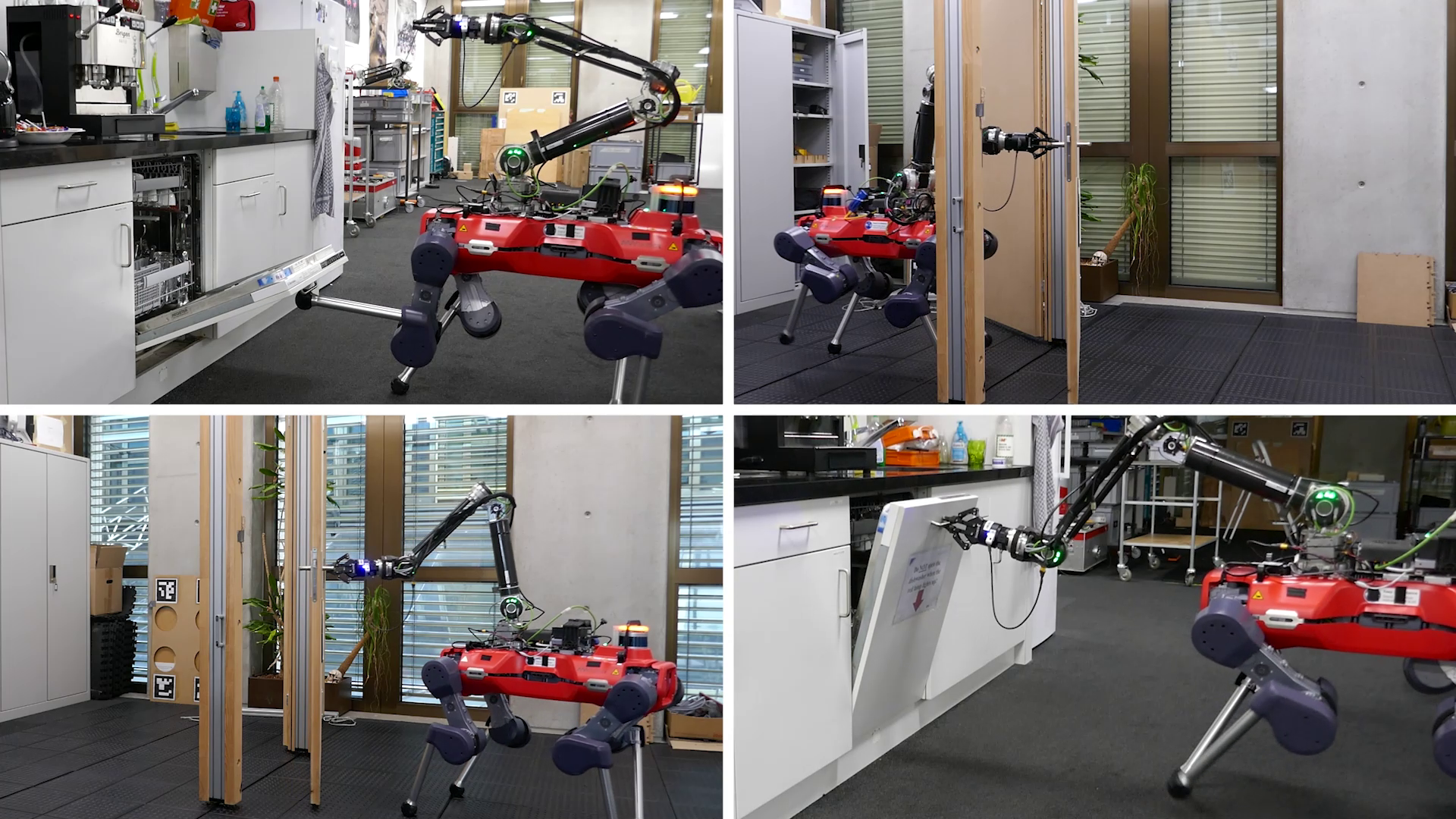
What is the topic of the research in your paper? The research topic focuses on developing a model-based planning and control architecture that enables legged mobile manipulators to tackle diverse loco-manipulation problems (i.e., manipulation problems inherently involving a locomotion element). Our study specifically targeted tasks that would require multiple contact interactions to be solved, rather than pick-and-place applications. To ensure our approach is not limited to simulation environments, we applied it to solve real-world tasks with a legged system consisting of the quadrupedal platform ANYmal equipped with DynaArm, a custom-built 6-DoF robotic arm.
Could you tell us about the implications of your research and why it is an interesting area for study? The research was driven by the desire to make such robots, namely legged mobile manipulators, capable of solving a variety of real-world tasks, such as traversing doors, opening/closing dishwashers, manipulating valves in an industrial setting, and so forth. A standard approach would have been to tackle each task individually and independently by dedicating a substantial amount of engineering effort to handcraft the desired behaviors:
This is typically achieved through the use of hard-coded state-machines in which the designer specifies a sequence of sub-goals (e.g., grasp the door handle, open the door to a desired angle, hold the door with one of the feet, move the arm to the other side of the door, pass through the door while closing it, etc.). Alternatively, a human expert may demonstrate how to solve the task by teleoperating the robot, recording its motion, and having the robot learn to mimic the recorded behavior.
However, this process is very slow, tedious, and prone to engineering design errors. To avoid this burden for every new task, the research opted for a more structured approach in the form of a single planner that can automatically discover the necessary behaviors for a wide range of loco-manipulation tasks, without requiring any detailed guidance for any of them.
Could you explain your methodology? The key insight underlying our methodology was that all of the loco-manipulation tasks that we aimed to solve can be modeled as Task and Motion Planning (TAMP) problems. TAMP is a well-established framework that has been primarily used to solve sequential manipulation problems where the robot already possesses a set of primitive skills (e.g., pick object, place object, move to object, throw object, etc.), but still has to properly integrate them to solve more complex long-horizon tasks.
This perspective enabled us to devise a single bi-level optimization formulation that can encompass all our tasks, and exploit domain-specific knowledge, rather than task-specific knowledge. By combining this with the well-established strengths of different planning techniques (trajectory optimization, informed graph search, and sampling-based planning), we were able to achieve an effective search strategy that solves the optimization problem.
The main technical novelty in our work lies in the Offline Multi-Contact Planning Module, depicted in Module B of Figure 1 in the paper. Its overall setup can be summarized as follows: Starting from a user-defined set of robot end-effectors (e.g., front left foot, front right foot, gripper, etc.) and object affordances (these describe where the robot can interact with the object), a discrete state that captures the combination of all contact pairings is introduced. Given a start and goal state (e.g., the robot should end up behind the door), the multi-contact planner then solves a single-query problem by incrementally growing a tree via a bi-level search over feasible contact modes jointly with continuous robot-object trajectories. The resulting plan is enhanced with a single long-horizon trajectory optimization over the discovered contact sequence.
What were your main findings? We found that our planning framework was able to rapidly discover complex multi- contact plans for diverse loco-manipulation tasks, despite having provided it with minimal guidance. For example, for the door-traversal scenario, we specify the door affordances (i.e., the handle, back surface, and front surface), and only provide a sparse objective by simply asking the robot to end up behind the door. Additionally, we found that the generated behaviors are physically consistent and can be reliably executed with a real legged mobile manipulator.
What further work are you planning in this area? We see the presented framework as a stepping stone toward developing a fully autonomous loco-manipulation pipeline. However, we see some limitations that we aim to address in future work. These limitations are primarily connected to the task-execution phase, where tracking behaviors generated on the basis of pre-modeled environments is only viable under the assumption of a reasonably accurate description, which is not always straightforward to define.
Robustness to modeling mismatches can be greatly improved by complementing our planner with data-driven techniques, such as deep reinforcement learning (DRL). So one interesting direction for future work would be to guide the training of a robust DRL policy using reliable expert demonstrations that can be rapidly generated by our loco-manipulation planner to solve a set of challenging tasks with minimal reward-engineering.
About the author
Jean-Pierre Sleiman received the B.E. degree in mechanical engineering from the American University of Beirut (AUB), Lebanon, in 2016, and the M.S. degree in automation and control from Politecnico Di Milano, Italy, in 2018. He is currently a Ph.D. candidate at the Robotic Systems Lab (RSL), ETH Zurich, Switzerland. His current research interests include optimization-based planning and control for legged mobile manipulation.
A Japanese city plans to use robots to enable pupils to attend classes virtually, as truancy rates surge due to anxiety and bullying, officials said Wednesday.
Acquisition to accelerate Rockwell’s end-to-end autonomous production logistics solutions, providing safer, more efficient manufacturing environments for customers
Recently published research assessed human trust when collaborating with eyed and non-eyed robots of the same type. The data suggest that humans might not need human-like machines to trust and work with them. Instead, they even seem to collaborate better with machine-like, eyeless machines.
As the last days of summer set, one is wistful of the time spent with loved ones sitting on the beach, traveling on the road, or just sharing a refreshing ice cream cone. However, for many Americans such emotional connections are rare, leading to high suicide rates and physical illness. In a recent study by the Surgeon General, more than half of the adults in the USA experience loneliness, with only 39% reporting feeling “very connected to others.” As Dr. Vivek H. Murthy states: “Loneliness is far more than just a bad feeling—it harms both individual and societal health. It is associated with a greater risk of cardiovascular disease, dementia, stroke, depression, anxiety, and premature death. The mortality impact of being socially disconnected is similar to that caused by smoking up to 15 cigarettes a day and even greater than that associated with obesity and physical inactivity.” In dollar terms, this epidemic accounts for close to $7 billion of Medicare spending annually, on top of $154 billion of yearly worker absenteeism.
As a Venture Capitalist, I have seen a growing number of pitch decks for conversational artificial intelligence in place of organic companions (some of these have wellness applications, while others are more lewd). One of the best illustrations of how AI-enabled chatbots are entering human relationships is in a recent article by the New York Times reporter Erin Griffin, who spent five days testing the AI buddyPi. Near the end of the missive, she exclaims, “It wasn’t until Monday morning, after hours of intermittent chatting throughout the weekend, that I had my ‘aha’ moment with Pi. I was feeling overwhelmed with work and unsure of how to structure my day, a recurring hangup that often prevents me from getting started. ‘Good morning,’ I typed into the app. ‘I don’t have enough time to do everything I need to do today!’ With a level of enthusiasm only a robot could muster before coffee, Pi pushed me to break down my to-do list to create a realistic plan. Like much of the bot’s advice, it was obvious and simple, the kind of thing you would read in a self-help article by a productivity guru. But it was tailored specifically to me — and it worked.” As the reporter reflected on her weekend with the bot, she commented further, “I could have dumped my stress on a family member or texted a friend. But they are busy with their own lives and, well, they have heard this before. Pi, on the other hand, has infinite time and patience, plus a bottomless well of encouraging affirmations and detailed advice.”
In a population health study cited by General Murthy, the demographic that is most isolated in America is people over the age of 65. This is also the group that is most affected by physical and cognitive decline due to loneliness. Doctors Qi and Wu presented to Neurology Live a survey of the benefits of AI in their June paper, “ChatGPT: A Promising Tool to Combat Social Isolation and Loneliness in Older Adults With Mild Cognitive Impairment.” According to the authors, “ChatGPT can provide emotional support by offering a nonjudgmental space for individuals to express their thoughts and feelings. This can help alleviate loneliness and provide a sense of connection, which is crucial for well-being.” The researchers further cited ancillary uses, “ChatGPT can also assist with daily tasks and routines. By offering reminders for appointments, medications, and other daily tasks, this AI model can help older adults with MCI (mild cognitive impairment) maintain a sense of independence and control over their lives.” The problem with ChatGPT for geriatric plus populations is the form factors, as most seniors are not the most tech-savvy. This is an opportunity for roboticists.
Last Tuesday, Intuition Robotics announced it scored an additional financing of $25 million for expanding its “AI care companions” to all senior households. While its core product, ElliQ, does not move, its engagement offers the first glimpse of the benefits of social robots at mass. In speaking about the future, I interviewed its founder/CEO, Dor Skuler, last week. He shared with me his vision, “At this time, we don’t have plans to add legs or wheels to ElliQ, but we are always looking to add new activities or conversational features that can benefit the users. Our goal is to continue getting ElliQ into as many homes as possible to spread its benefits to even more older adults. We plan to create more partnerships with governments and aging agencies and are developing more partnerships within the healthcare industry. With this new funding, we will capitalize on our strong pipeline and fund the growth of our go-to-market activities.”
Unlike the stuffed animal executions of Paro and Tombot, ElliQ looks like an attractive home furnishing (and winner of the 2003 International Design Award). According to Skuler, this was very intentional, “We placed very high importance on the design of ElliQ to make it as easy as possible to use. We also knew we older adults needed technology that celebrated them and the aging process rather than focusing on disabilities and what they may no longer be able to do by themselves.” At the same time, the product underwent a rigorous testing and development stage that put its customer at the center of the process. “We designed ElliQ with the goal of helping seniors who are aging in place at home combat loneliness and social isolation. This group of seniors who participated in the development and beta testing helped us to shape and improve ElliQ, ensuring it had the right personality, character, mannerisms, and other modalities of interaction (like movement, conversation design, LEDs, and on-screen visuals) to form meaningful bonds with real people.” He further observed in the testing with hundreds of seniors, “we’ve witnessed older adults forming an actual relationship with ElliQ, closer to how one would see a roommate rather than a smart appliance.”
The results since deploying in homes throughout New York have been astounding in keeping older populations more socially and mentally engaged. As ElliQ’s creator elaborated, “In May 2022, we announced a partnership with the New York State Office for the Aging to bring 800+ ElliQ units to seniors across New York State at no cost to the end users. Just a few weeks ago this year, we announced a renewal of that partnership and the amazing results we’ve seen so far including a 95% reduction in loneliness and great improvement in well-being among older adults using the platform. ElliQ users throughout New York have demonstrated exceptionally high levels of engagement consistently over time, interacting with their ElliQ over 30 times per day, 6 days a week. More than 75% of these interactions are related to improving older adults’ social, physical, and mental well-being.”
To pedestrian cynics, ElliQ might look like an Alexa knockoff leading them to question why couldn’t the FAANG companies cannibalize the startup. Skuler’s response, “Alexa and other digital assistant technology were designed with the masses in mind or for younger end users. They also focus mainly on reactive AI, meaning they do not provide suggestions or talk with users unless prompted. ElliQ is designed to engage users over time, using a proactive approach to engagement. Its proactive suggestions and conversational capabilities foster a deep relationship with the user. Moreover, ElliQ’s integration of Generative AI and Large Language Models (LLMs) enables rich and continuous conversational experiences, allowing for more contextual, personalized, and goal-driven interactions. These capabilities and unique features such as drinking coffee with ElliQ in cafes around the world or visiting a virtual art museum, bring ElliQ and the user close together, creating trust that allows ElliQ to motivate the older adult to lead a more healthy and engaged lifestyle.”
While ElliQ and OpenAI’s ChatGPT have shown promise in treating mental illness, some health professionals are still not convinced. At MIT, professor and psychologist, Sherry Turkle, worries that the interactions of machines “push us along a road where we’re encouraged to forget what makes people special.” Dr. Turkle demures, “The performance of empathy is not empathy. The area of companion, lover therapist, best friend is really one of the few areas where people need people.”
Our goal is to simplify AI so organizations can start deploying new technologies to save time and money. What we offer is a platform of AI and vision-based inspection and traceability apps that are easily customized
Robots made of metal and other solid materials are already widely used in industry. But they are too rigid and cumbersome for fine-motor activities and interaction with people, such as in nursing or medicine. Intensive research is therefore already being carried out into robots made of soft materials: inspiration from nature, such as jellyfish, earthworms, fish or the human body should enable "soft robots" that can move flexibly and adapt to their environment.
Evolutionary robotics is a sub-field of robotics aimed at developing artificial "organisms" that can improve their capabilities and body configuration in response to their surroundings, just as humans and animals evolve, adapting their skills and appearance over time. A growing number of roboticists have been trying to develop these evolvable robotic systems, leveraging recent artificial intelligence (AI) advances.
To assist humans during their day-to-day activities and successfully complete domestic chores, robots should be able to effectively manipulate the objects we use every day, including utensils and cleaning equipment. Some objects, however, are difficult to grasp and handle for robotic hands, due to their shape, flexibility, or other characteristics.
Sai Technologies is an innovative IT company at the forefront of technological innovation. With a passion for delivering exceptional solutions, Sai Technologies specializes in a diverse range of services that cater to the digital needs of businesses across various industries. From web applications to artificial intelligence, IT infrastructure to branding, the company offers comprehensive solutions that empower businesses to thrive in the digital age. With a strategic presence in key Indian cities including Madurai, Bangalore, and Chennai, Sai Technologies is well-equipped to serve a wide clientele with excellence and expertise.
Established In 2009
Source: OpenAI’s DALL·E 2 with prompt “a hyperrealistic picture of a robot reading the news on a laptop at a coffee shop”
Welcome to the 4th edition of Robo-Insight, a biweekly robotics news update! In this post, we are excited to share a range of new advancements in the field and highlight robots’ progress in areas like mobile applications, cleaning, underwater mining, flexibility, human well-being, depression treatments, and human interactions.
Simplified mobile robot behavior adaptations
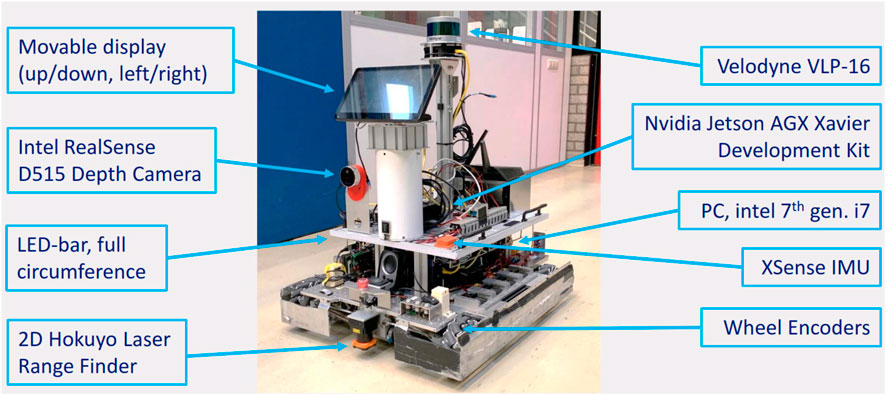
In the world of system adaptions, researchers from Eindhoven University of Technology have introduced a methodology that bridges the gap between application developers and control engineers in the context of mobile robots’ behavior adaptation. This approach leverages symbolic descriptions of robots’ behavior, known as “behavior semantics,” and translates them into control actions through a “semantic map.” This innovation aims to simplify motion control programming for autonomous mobile robot applications and facilitate integration across various vendors’ control software. By establishing a structured interaction layer between application, interaction, and control layers, this methodology could streamline the complexity of mobile robot applications, potentially leading to more efficient underground exploration and navigation systems.
The frontal perspective of the mobile platform (showcases hardware components with blue arrows). Source.
New robot for household clean-ups
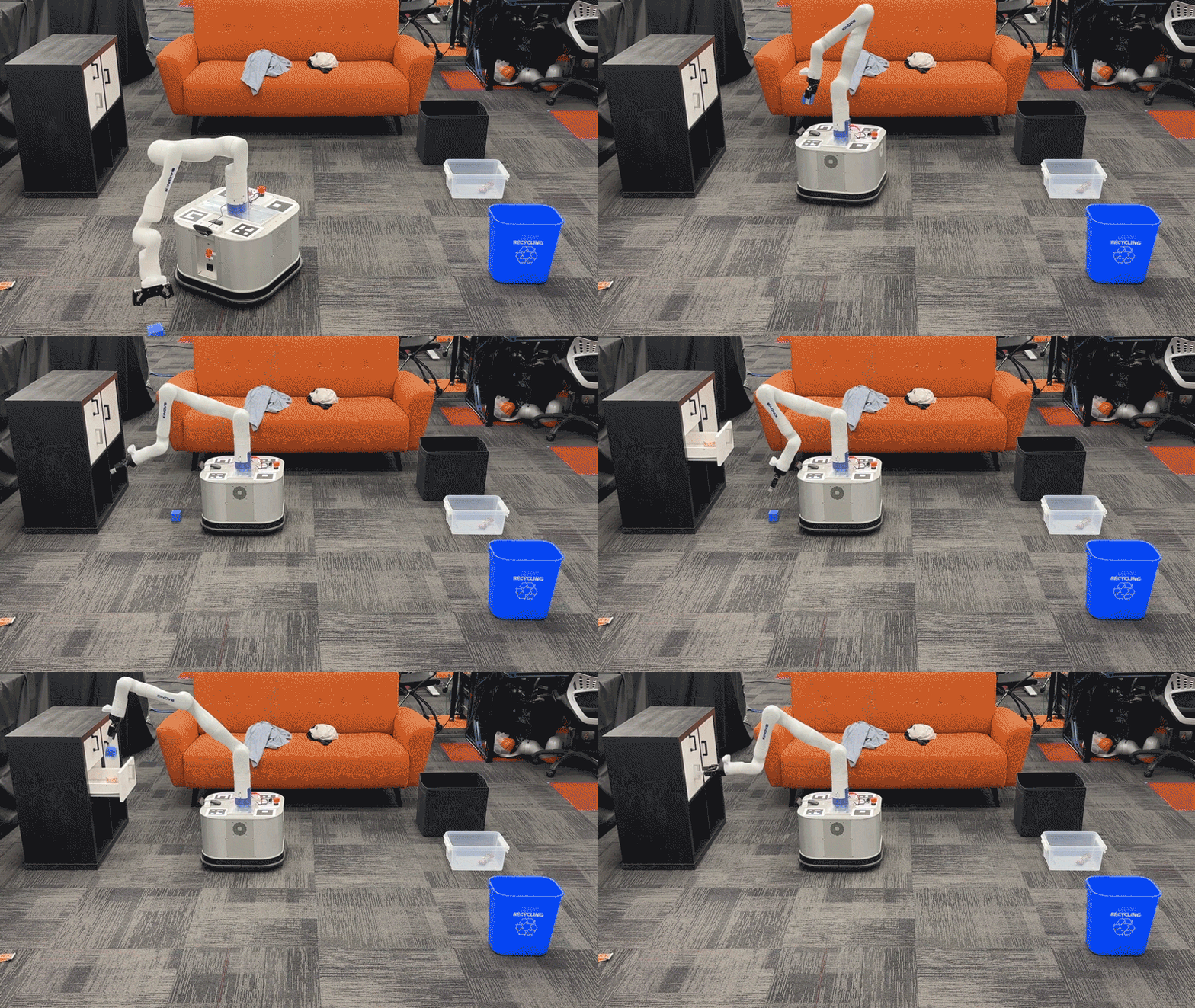
Speaking of helpful robots, Princeton University has created a robot named TidyBot to address the challenge of household tidying. Unlike simple tasks such as moving objects, real-world cleanup requires a robot to differentiate between objects, place them correctly, and avoid damaging them. TidyBot accomplishes this through a combination of physical dexterity, visual recognition, and language understanding. Equipped with a mobile robotic arm, a vision model, and a language model, TidyBot can identify objects, place them in designated locations, and even infer proper actions with an 85% accuracy rate. The success of TidyBot demonstrates its potential to handle complex household tasks.
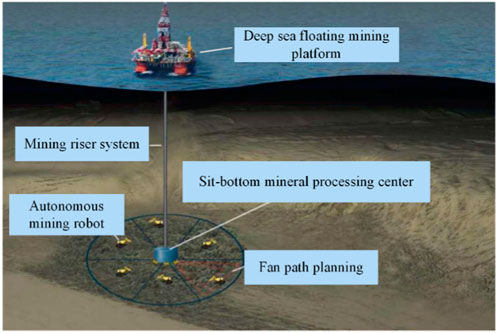
Shifting our focus to underwater environments, researchers are addressing the efficiency hurdles faced in deep-sea mining through innovative path planning for autonomous robotic mining vehicles. With deep-sea manganese nodules holding significant potential, these robotic vehicles are essential for their collection. By refining path planning methods, the researchers aim to improve the efficiency of these vehicles in traversing challenging underwater terrains while avoiding obstacles. This development could lead to more effective and responsible resource extraction from the ocean floor, contributing to the sustainable utilization of valuable mineral resources.
Diagram depicting the operational framework of the deep-sea mining system. Source.
Advanced soft robots with dexterity and flexibility
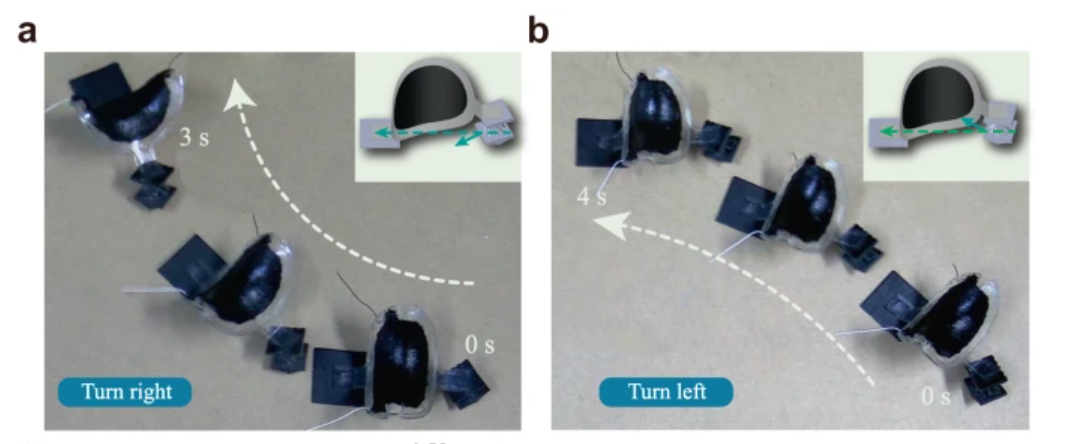
In regards to the field of robotic motion, recently researchers from Shanghai Jiao Tong University have developed small-scale soft robots with remarkable dexterity, enabling immediate and reversible changes in motion direction and shape reconfiguration. These robots, powered by an active dielectric elastomer artificial muscle and a unique chiral-lattice foot design, can change direction during fast movement with a single voltage input. The chiral-lattice foot generates various locomotion behaviors, including forward, backward, and circular motion, by adjusting voltage frequencies. Additionally, combining this structural design with shape memory materials allows the robots to perform complex tasks like navigating narrow tunnels or forming specific trajectories. This innovation opens the door to next-generation autonomous soft robots capable of versatile locomotion.
The soft robot achieves circular motion in either right or left directions by positioning the lattice foot towards the respective sides. Source.
Robotic dogs utilized to comfort patients
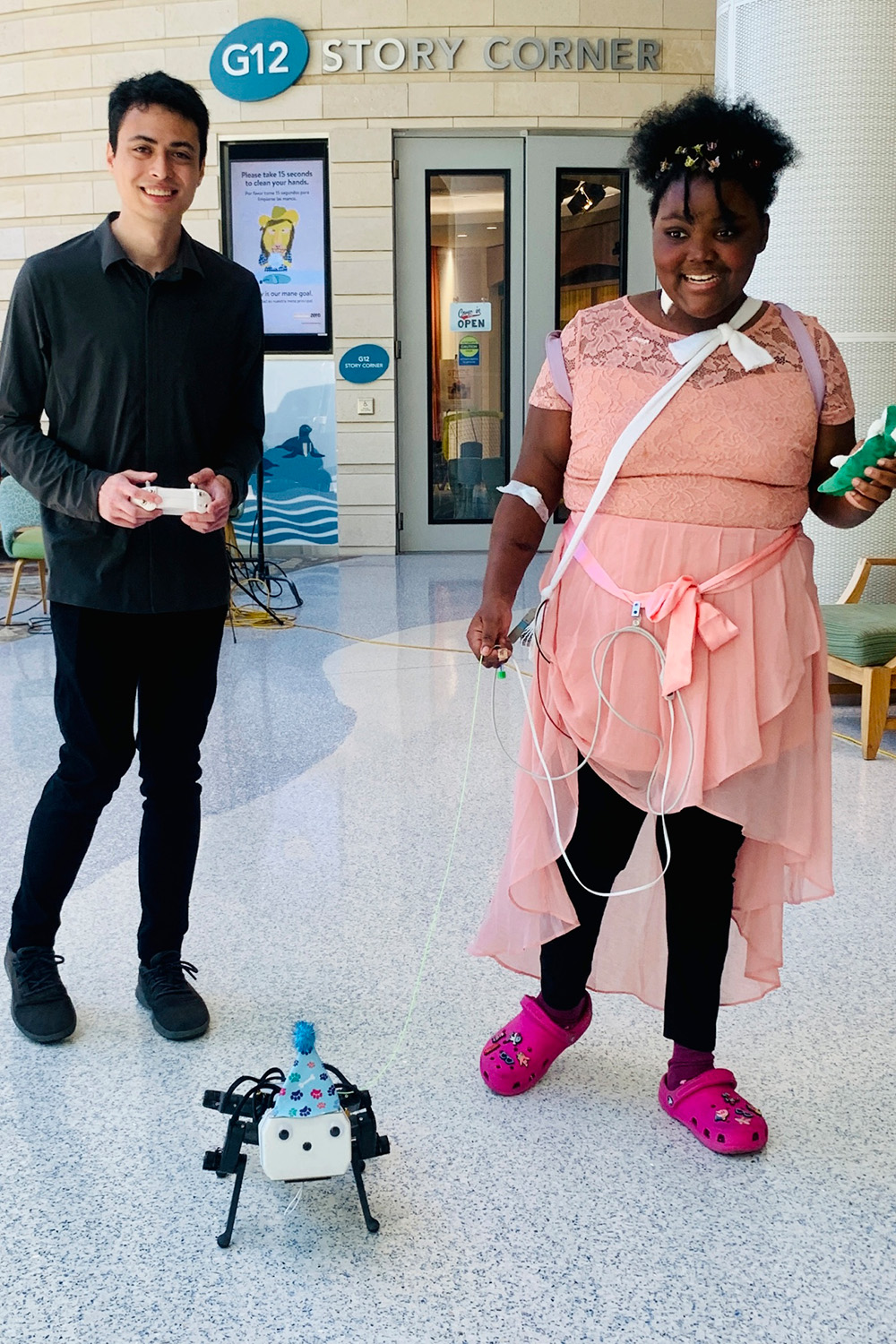
Turning our focus to robot use in the healthcare field, Stanford students, along with researchers and doctors, have partnered with AI and robotics industry leaders to showcase new robotic dogs designed to interact with pediatric patients at Lucile Packard Children’s Hospital. Patients at the hospital had the opportunity to engage with the playful robots, demonstrating the potential benefits of these mechanical pets for children’s well-being during their hospital stays. The robots, called Pupper, were developed by undergraduate engineering students and operated using handheld controllers. The goal of the demonstration was to study the interaction between the robots and pediatric patients, exploring ways to enhance the clinical experience and reduce anxiety.
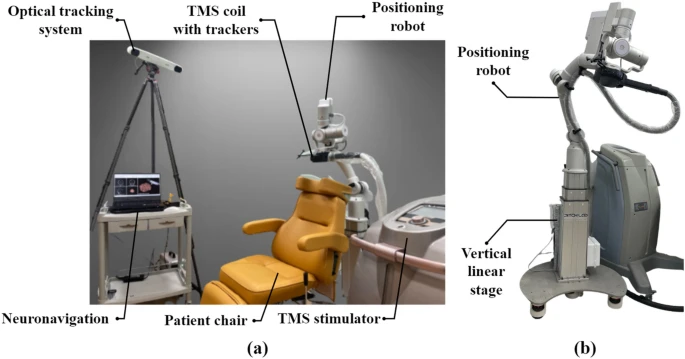
Along the same lines as improving well-being, a recent pilot study has explored the potential benefits of using robotics in transcranial magnetic stimulation (TMS) for treating depression. Researchers led by Hyunsoo Shin developed a custom TMS robot designed to improve the accuracy of TMS coil placement on the brain, a critical aspect of effective treatment. By employing the robotic system, they reduced preparation time by 53% and significantly minimized errors in coil positioning. The study found comparable therapeutic effects on depression severity and regional cerebral blood flow (rCBF) between the robotic and manual TMS methods, shedding light on the potential of robotic assistance in enhancing the precision and efficiency of TMS treatments.
Configuration of the robotic repetitive transcranial magnetic stimulation (rTMS) within the treatment facility, and robotic positioning device for automated coil placement. Source.
Advanced robotic eye research
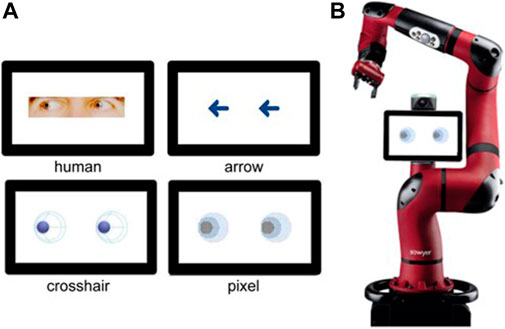
Finally, in the world of human-robot enhancement, a study conducted by researchers from various institutions has explored the potential of using robot eyes as predictive cues in human-robot interaction (HRI). The study aimed to understand whether and how the design of predictive robot eyes could enhance interactions between humans and robots. Four different types of eye designs were tested, including arrows, human eyes, and two anthropomorphic robot eye designs. The results indicated that abstract anthropomorphic robot eyes, which mimic certain aspects of human-like attention, were most effective at directing participants’ attention and triggering reflexive shifts. These findings suggest that incorporating abstract anthropomorphic eyes into robot design could improve the predictability of robot movements and enhance HRI.
The four types of stimuli. The first row showcases the human (left) and arrow (right) stimuli. The second row displays the abstract anthropomorphic robot eyes. Photograph of the questionnaire’s subject, the cooperative robot Sawyer. Source.
The continuous stream of progress seen across diverse domains underscores the adaptable and constantly progressing nature of robotics technology, revealing novel pathways for its incorporation across a spectrum of industries. The gradual advancement in the realm of robotics reflects persistent efforts and hints at the potential implications these strides might hold for the future.
Robots based on soft materials are often better at replicating the appearance, movements and abilities of both humans and animals. While there are now countless soft robots, many of these are difficult to produce on a large-scale, due to the high cost of their components or their complex fabrication process.