Intelligence is Free, Now What? <br> Data Systems for, of, and by Agents
... government of the people, by the people, for the people ...
— Abraham Lincoln, Gettysburg Address (1863)
The cost of AI is dropping rapidly. GPT-4-class capabilities cost roughly $30 per million tokens in early 2023; today the same runs under $1, and some providers are pushing costs below $0.10. Across benchmarks, inference prices have fallen between 9x and 900x per year, with a median decline near 50x. Even frontier models are getting dramatically cheaper each generation, with open-source models following closely behind. And crucially, even if “Nobel-Prize-winning genius-level” intelligence isn’t here yet, the intelligence that suffices for the vast majority of knowledge work is here today, and getting cheaper by the month. At this rate, we are soon entering the era of virtually free intelligence—the kind that is more than enough for everyday knowledge work.
Overcoming Automation Anxiety: The Safety-First Approach to Robot Integration
How Generative AI Speeds Up Drug Discovery and Development?
Pharmaceutical drug discovery and development have long been a laborious, difficult, and expensive process. It can take over a decade, from discovering a drug target to approval by the regulatory authorities, and cost over billions of dollars. Recent advances in Generative AI (Gen AI), a form of Artificial Intelligence (AI), can generate new information based on patterns in existing data and revolutionizing the entire clinical process.
By replicating human imagination and processing big data sets, generative AI applications can propel every step of the pharma pipeline, from molecule design to clinical trials. Let’s take a look at how Generative AI transforming the drug discovery and development industry in 2026 and beyond.
The Role of Generative AI in Pharma
Generative AI systems in pharma are large language generative models, like Generative Adversarial Networks (GANs), which are capable of generating new content, such as, molecular structures, protein sequences, or even scientific hypotheses. Generative AI models can be applied in drug discovery to:
- Predict novel drug-like molecules.
- Predict protein-ligand interactions.
- Generate synthetic biological data.
- Optimize molecular properties (solubility, bioavailability, etc.)
Moreover, the Generative AI models can create new possibilities rather than just decoding available information, transforming traditional R&D pipelines.
Top Use Cases of Generative AI In Pharma
- Target Identification and Validation
Pharmaceutical discovery starts with the identification of a biological target, a protein or a gene, usually disease-causing. The interaction of the target needs to be validated and the structure known.
Generative AI assists with:
- AI models such as GPT extract insights from biomedical literature for predicting novel disease-gene associations.
- AI synthesizes genomic, proteomic, and clinical information to make new disease mechanism predictions.
- AlphaFold and other tools predict protein structures to speed up structure-based drug discovery.
- Drug Design Recommendations
Pharmacists used to sketch molecules by hand based on rules provided. Generative models such as VAEs, GANs, and transformer models can:
- Synthesize molecules that would be bound to a target site with desired properties.
- Optimize for many properties in parallel (e.g., activity, toxicity, solubility).
- Generate virtual libraries of drug-like molecules at scale.
For instance, Insilco Medicine created a cure for idiopathic pulmonary fibrosis through generative AI in 18 months, which would have been done in 3–5 years otherwise.
- Lead Optimization
After potential drug candidates are discovered, they are then optimized to work better. The chemical structure is modified to optimize pharmacokinetics (absorption, distribution, metabolism, excretion) and reduce toxicity.
Generative AI models can:
- Model chemical modifications and predict the impact
- Use reinforcement learning to efficiently search chemical space.
- Propose modifications that increase binding affinity or decrease off-target activity.
- Scientists can select only the most promising candidates, with less expenditure and time.
- Predictive Toxicology and ADMET Profiling
Inadequate ADMET properties (Absorption, Distribution, Metabolism, Excretion, and Toxicity) are a leading reason why drugs fail. Failing to predict these profiles upfront is costly failure later.
Generative AI assists by:
- Training predictive models on vast toxicology databases.
- Modeling the activity of a compound in the human body.
- Hypothesizing fewer toxic analogs of promising leads.
This avoids inappropriate candidates early on and redirect resources into safer, more promising molecules.
- Synthetic Route Planning
Once a molecule is designed, the molecule needs to be synthesized in the lab. Generative AI speeds up drug discovery by creating effective, cost-saving chemical synthesis routes for new compounds. Generative models can:
- AI models propose new reaction routes for complex molecules.
- Forecasts best reagents and conditions to enhance yield and safety.
- Minimizes trial-and-error in lab synthesis, conserving time and resources.
This speeds up the process from virtual molecules to real samples, skipping months of bench work.
- Biological Data Generation and Augmentation
Preclinical and clinical trials are generally not balanced or data-rich. Generative AI has the capability to generate new biological data, such as,
- Simulated patient cohorts for rare diseases.
- Synthetic gene expression profiles.
- Augmented image data for training diagnostic models.
For example, GANs can produce synthetic cell images or synthetic MRI scans based on just a few real samples used for model training. This accelerates model construction in AI drug discovery and diagnostics.
- Clinical Trial Design and Optimization
Even after a lead candidate has been put into clinical trials, generative AI can be helpful, and AI assists in numerous ways:
- Generation of control arms from real-world data.
- Estimation of patient response from genomic and demographic information.
- Identification of optimal dosing regimens and choice of biomarkers for stratifying patients
Reducing the trial duration, raising the success rate, and even customizing the treatments in precision medicine application scenarios is possible with it.
- Knowledge Extraction and Decision Support
Biomedical knowledge doubles every few months. There is no human team capable of keeping up with all this. Generative AI models such as ChatGPT can:
- Summarize recent literature.
- Suggest ideas for new research.
- Support scientific writing and regulatory reporting.
Real-World Impact and Case Studies
Generative AI is already having an impact for other bio techs with stunning outcomes:
- Insilico Medicine: Applied generative models to design IPF drug candidates in days.
- Exscientia applied AI to design drugs that were in human trials within a year.
- Atomwise: Applies deep learning for predicting molecular binding to discover hits at scale.
- Recursion: Applies generative models and high-throughput imaging to select new drug candidates.
Pharma industry leaders like Pfizer, Roche, and Novartis are making significant investments in AI-designed drug discovery platforms, partnering with AI startups, and building in-house capabilities.
Challenges and Ethical Considerations
While promising, generative AI for drug discovery is challenging:
- Data Quality: AI will be as good as training data. Biomedical data could be noisy or biased.
- Interpretability: Some AI-generated compounds will be effective, but the mechanism is unknown.
- Compliance with regulation: The AI-driven approaches will have to be explainable according to the FDA and EMA regulations.
- Ethics Problems: Both SynBio and molecule design impose double-use hazards (e.g., biosecurity).
These will have to be handled by coordinating among scientists, ethicists, regulators, and AI engineers.
Future Outlook of Generative AI in Pharma
It only just began rolling out generative AI in drug discovery. Gen AI models in the future can,
- Shorter turnaround from concept to clinic.
- Enhance success with improved early prediction of diseases.
- Dynamically customize drug development pipelines.
Entire drug development pipelines can be modeled on a computer in advance before one ever creates a molecule in the future.
Conclusion
Generative AI is revolutionizing pharma drug discovery and development with speed, precision, and innovation. From new molecule invention to the optimization of clinical trials, Gen AI’s impact in drug discovery and development is incredible. USM Business Systems, a top AI development company build LLM models that meet your unique needs. Get in touch!
Contact us to know more about Generative AI in Pharma? Book Executive AI Briefing →
[contact-form-7]
#RoboCup2026 – humanoid league knockout stages
This weekend saw the finale of the league competitions at RoboCup 2026 in Incheon, South Korea, with the winners in the small, middle, and large humanoid divisions decided. Congratulations to the following teams, who finished in the top three positions in each size class:
Small division
- Invic, Wuhan University, China
- Hamburg Bit-Bots, Universität Hamburg, Germany
- GeoHBots, School of Artificial Intelligence, China University of Geosciences, China
Middle division
- B-Human, Universität Bremen and German Research Center for Artificial Intelligence (DFKI), Germany
- HTWK Robots, Leipzig University of Applied Sciences, Germany
- Rhoban, University of Bordeaux, France
Large division
- Tsinghua Hephaestus, Tsinghua University, China
- CAU Mountain&Sea, China Agricultural University, China
- Water, Beijing Information Science & Technology University, China
You can watch the action from one of the semi-finals in the middle division, which saw HTWK take on Rhoban.
In the final of the middle division, HTWK took on B-Human:
In addition to the main competitions, there were five league-wide awards:
- Best Customized Humanoid Award: HERoEHS (ALICE 4th version)
- Best Humanoid Software Award: B-Human (Game Controller)
- Open Research Challenge: Ruhrbot Devils (AI Camera Platform for Embedded 2D/3D Game Analysis in RoboCup HSL)
- Best Innovation Award: Bahia Robotics Team
- Best Referee Award: Anastasia Prisacaru (Berlin United)
Hear from Team Hephaestus of Tsinghua University, who won the large division:
Although the competitions have drawn to a close, RoboCup 2026 continues today with a symposium, which brings together researchers and practitioners from around the world to present and discuss innovative research in robotics and artificial intelligence. You can find out more here.
Top Ten Stories in AI Writing, Q2 2026
Most noteworthy about Q2 2026 in AI writing were all the shifting sands kicked up by users of the tech.
Many businesses – once charmed by the magic of AI offered by ChatGPT and its key competitors – decided to switch their loyalties to OpenSource AI alternatives after growing fed-up with the often high prices of U.S. AI.
Key beneficiaries of that trend are DeepSeek and similar OpenSource alternatives from China, which some reviewers maintain are nearly as good as U.S. AI and cost pennies on the dollar.
Meanwhile, some writers and other creators switched their allegiances to OpenSource alternatives, after realizing that ChatGPT and its key competitors have throttled the creativity of the prose they produce to attract more conservative corporate users.
Plus, Gartner predicted that users behind 40% of all projects attempting to cash in on AI agents will ultimately abandon those projects by the close of 2027. Their beef: AI agents simply don’t live up to the hype.
Bottom line: Sophisticated users of AI are at the point that they know ‘what’s what’ when it comes to the tech — and they’ll most likely be a tougher sell in coming years.
Here’s more detail on those – and other stories – that helped shape Q2 2026:
*Still Unpatched: 86% of Software Vulnerabilities Found by Anthropic Mythos: After more than two months of testing by top software and cybersecurity firms, only a handful of security vulnerabilities exposed by new AI model Anthropic Mythos have actually been fixed.
During that time, testing and use of Mythos has been limited to about 200 software makers and cybersecurity companies – Project Glasswing — who are attempting to plug the ever-expanding array of security holes Mythos is finding in everyday software.
*Increasing Number of Businesses Settling for ‘Nearly as Good AI:’ Spooked by what they see as sky-high prices for bleeding-edge AI, many companies are opting for AI that is nearly as good – at greatly reduced prices.
Observes AI expert Brian Armstrong: “Demand for intelligence is near infinite – but 80% of workloads will be running on 99% cheaper models within 12-18 months.”
Most of those models – including DeepSeek – can be found on the OpenSource market.
*China Closing in on US AI: China’s newest, top AI offering, GLM-5.2, is nearly as good as what you can get from US AI titans – at one-sixth the cost, according to writer Luis Blanco.
Observes Blanco: “The (performance) gap between Chinese open models (AI that’s available for download free) and the very top closed US systems has shrunk faster than most industry forecasts had anticipated.”
Moreover, US companies that subscribe to turnkey Chinese AI that runs on Chinese servers can sometimes get that performance for one-tenth the cost as compared to US AI solutions.
*Don’t Pay for Beige Prose: Increasingly Bland Writing From AI Titans Driving Creators to OpenSource: Increasing numbers of professional writers are migrating to OpenSource AI alternatives — disgusted with the fading writing creativity served-up by major players like ChatGPT, Gemini and Claude.
The problem: Major U.S. AI players have decided to specialize in conservative writing — which often does not take chances — to make their AI engines darlings of conservative corporations.
*ChatGPT is Changing the Way Students Write: College application essay editor Liza Libes says the advent of ChatGPT and similar has birthed a generation of student writers who can say absolutely nothing in a grammatically perfect way.
Observes Libes: What’s changed “is the prevalence of students who possess a high degree of technical writing fluency — yet a low level of intellectual competence — resulting in a greater number of students who can produce perfectly structured sentences that say absolutely nothing.”
The upshot: “The same number of students with a natural aptitude for writing will still learn how to write. But they will no longer learn how to write well,” Libes says.
*Only 2% of U.S. Households Have Paid AI Subscriptions: Incredibly, only a tiny fraction of U.S. users are actually paying for the higher-end AI available from ChatGPT, Claude, Copilot and similar.
Instead, everyone else is cruising along on free AI.
That kind of stat can be stupefying to people who use higher-end AI throughout the day – at $20/month — to generally solve virtually every major or minor challenge that comes their way.
Things may change in coming years if the big AI providers decide to scale back on lower-end – and not nearly as bright – free AI and start asking more users to pay up.
*Gartner: 40% of AI Agent Projects Will Be Abandoned by Close of 2027: In another grim outlook for the ‘magic’ of AI agents, tech consultancy Gartner is predicting many test-drives of AI agents among corporate users are headed for the trash bin.
The reason: Despite promise, AI agents too often simply don’t deliver.
Writer Juras Jursenas details how that problem can be turned around in this piece.
*Google Gemini Pro Getting Stingy on Usage Limits: Some users of ChatGPT-competitor Gemini Pro ($20/month) report Google is severely limiting its use.
Essentially, access to the strongest AI model with the subscription — Gemini 3.1 Pro — is getting blocked while users are still in the middle of moderate brainstorming.
Even worse: Once access to the strongest AI model is shutdown, users need to wait five hours before getting access again.
Try explaining that to your boss.
In the meantime, users are stuck using 3.1 Flash-Lite — an extremely unreliable AI.
*Snapshot: The Top AI for Image Generation: Easily one of the most stunningly successful applications for AI during the past few years has been AI image generation.
Incredibly captivating and compelling images can now be created with AI in a minute or two. And if you’re not quite satisfied, AI will keep working to deliver the ultimate for you.
In this piece, writer Alveena Ali serves-up her picks of the top AI in image generators of 2026 – based on specific need.
*AI Bubble Burst? Look for a Modest Correction Instead: Investors fearing that sky-high, AI-driven stock prices will lead the U.S. stock market off a cliff can take heart.
Joe Hipsky, a tech entrepreneur assures the trembling that the oft-predicted burst of the AI bubble will instead play out like a modest correction that will hurt few long-term.
Observes Hipsky: “The irony of this phase is that while the market (for AI services) may be cooling, the importance of AI is not diminishing. If anything, it is becoming more critical. The difference is that we are moving from experimentation to expectation.”

Share a Link: Please consider sharing a link to https://RobotWritersAI.com from your blog, social media post, publication or emails. More links leading to RobotWritersAI.com helps everyone interested in AI-generated writing.
–Joe Dysart is editor of RobotWritersAI.com and a tech journalist with 20+ years experience. His work has appeared in 150+ publications, including The New York Times and the Financial Times of London.
The post Top Ten Stories in AI Writing, Q2 2026 appeared first on Robot Writers AI.
Quantum mechanics once baffled scientists. Now it’s changing the world
#RoboCup2026 – humanoid league day 2
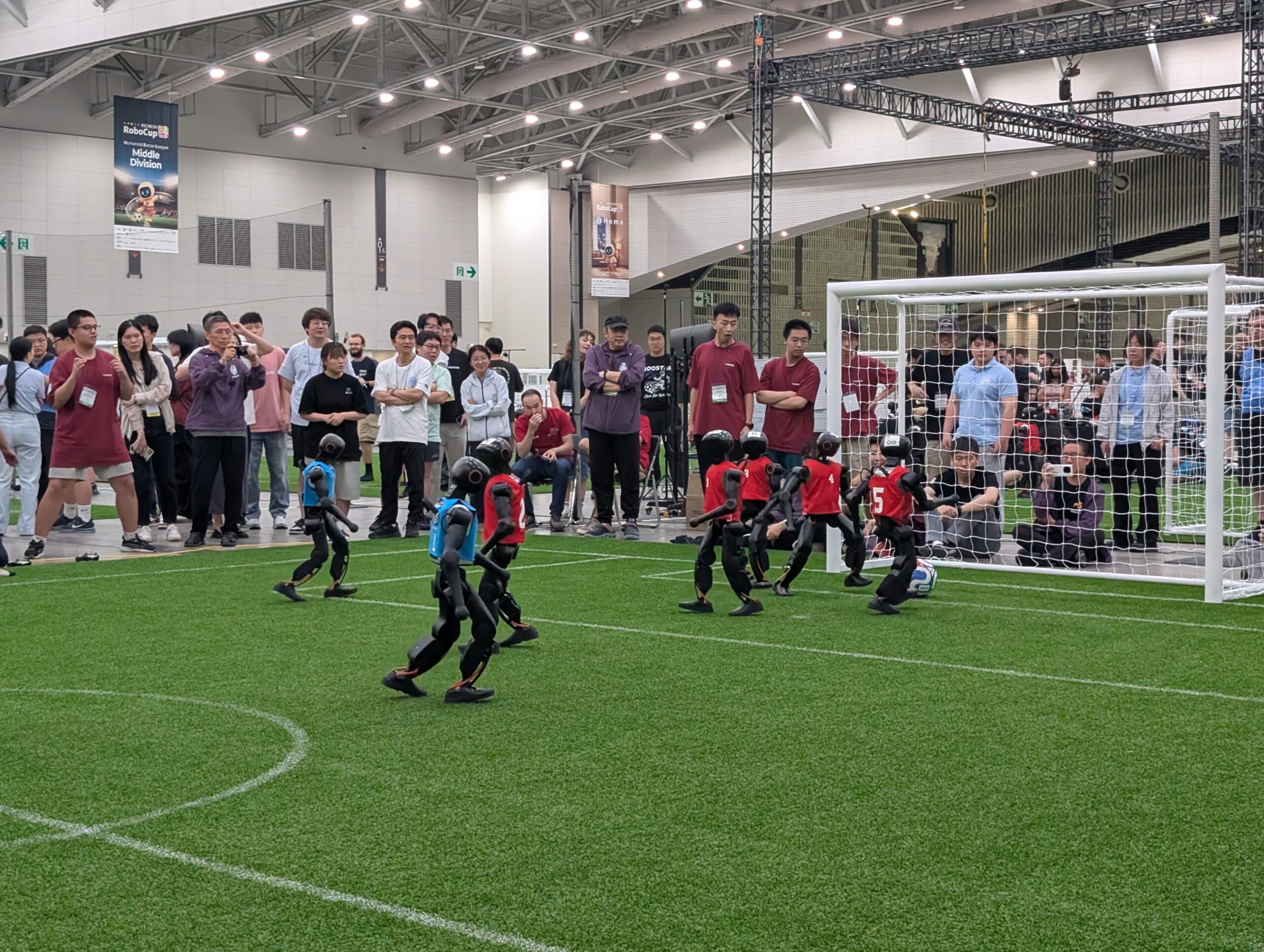
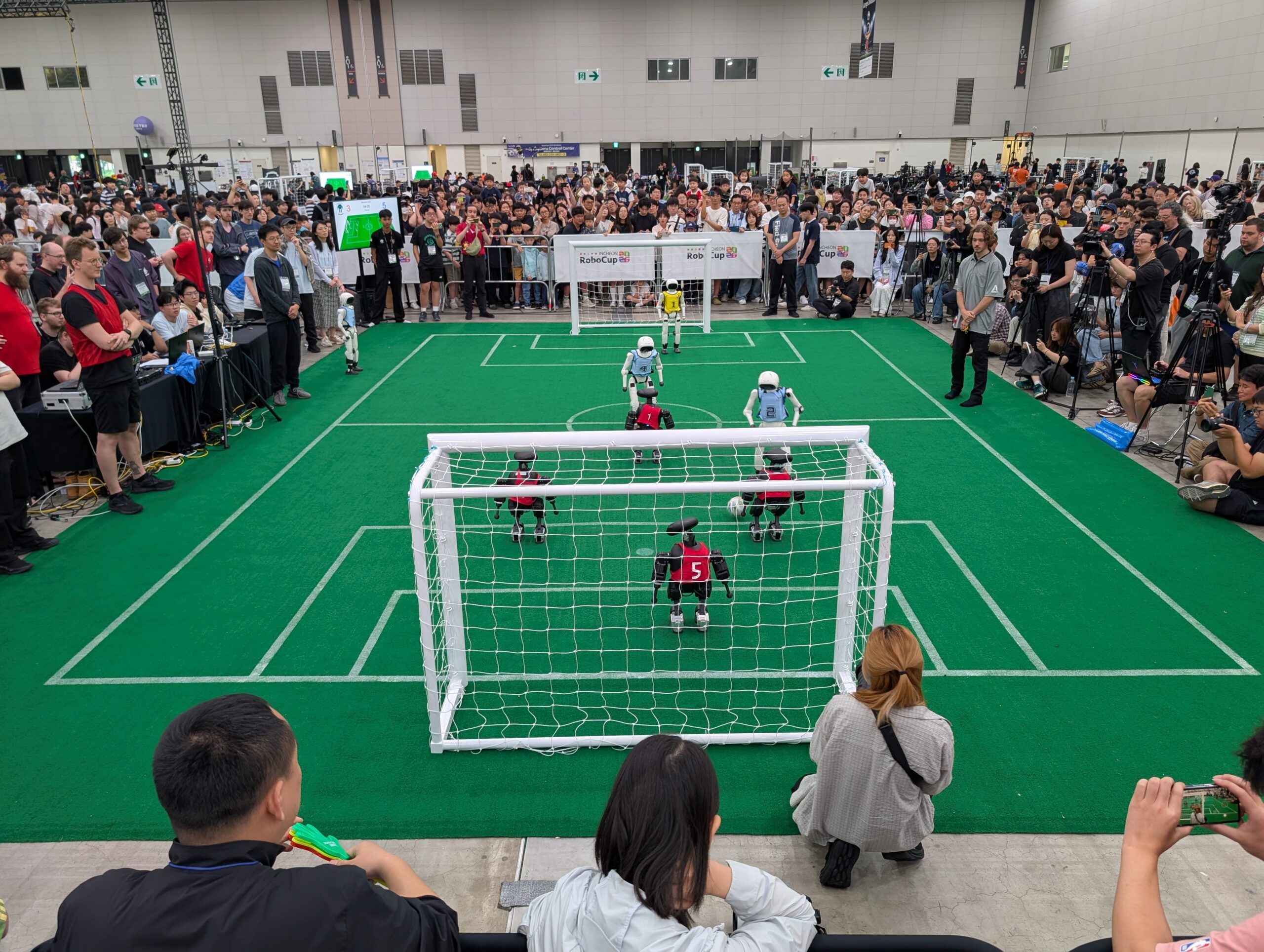
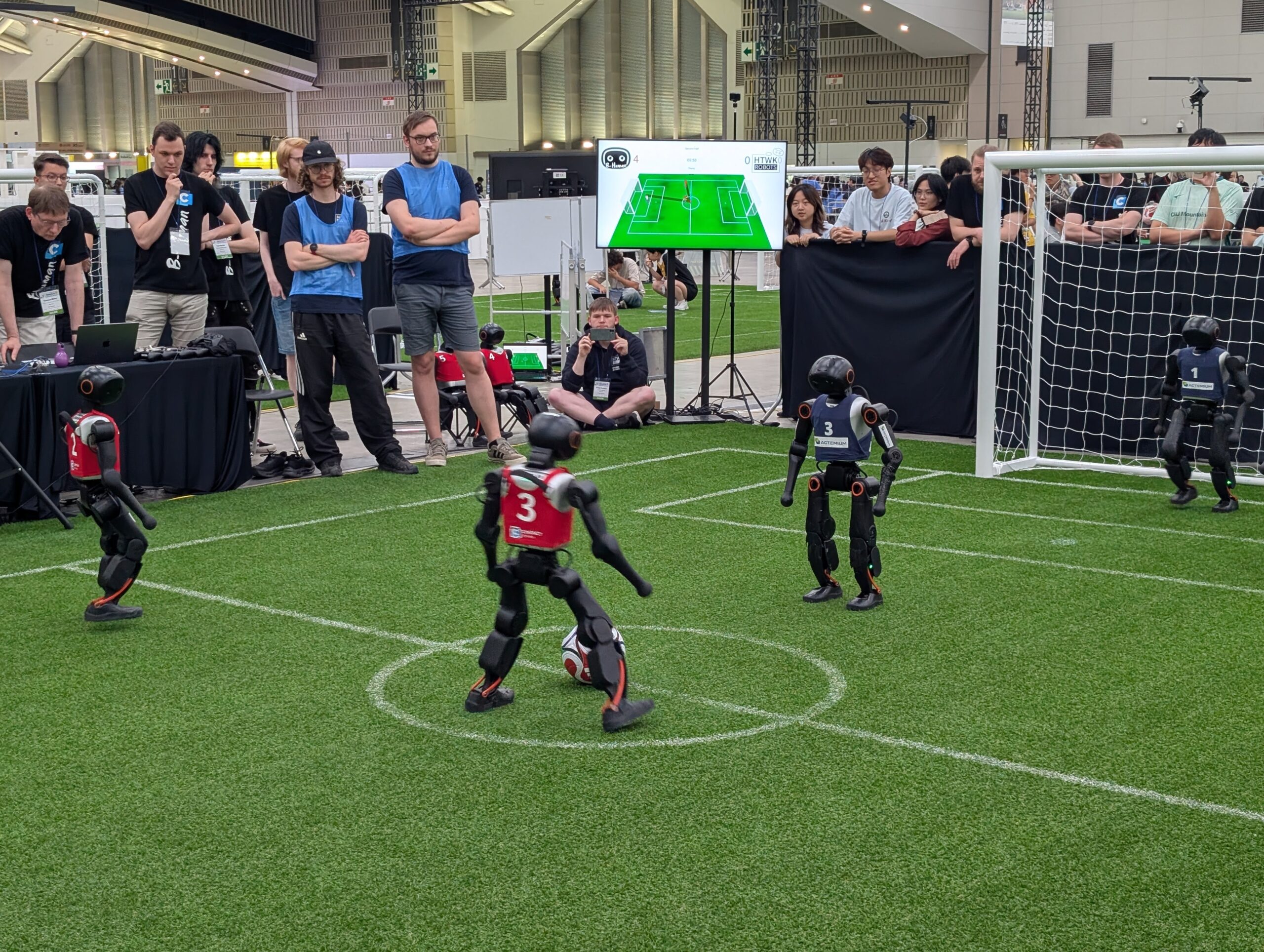
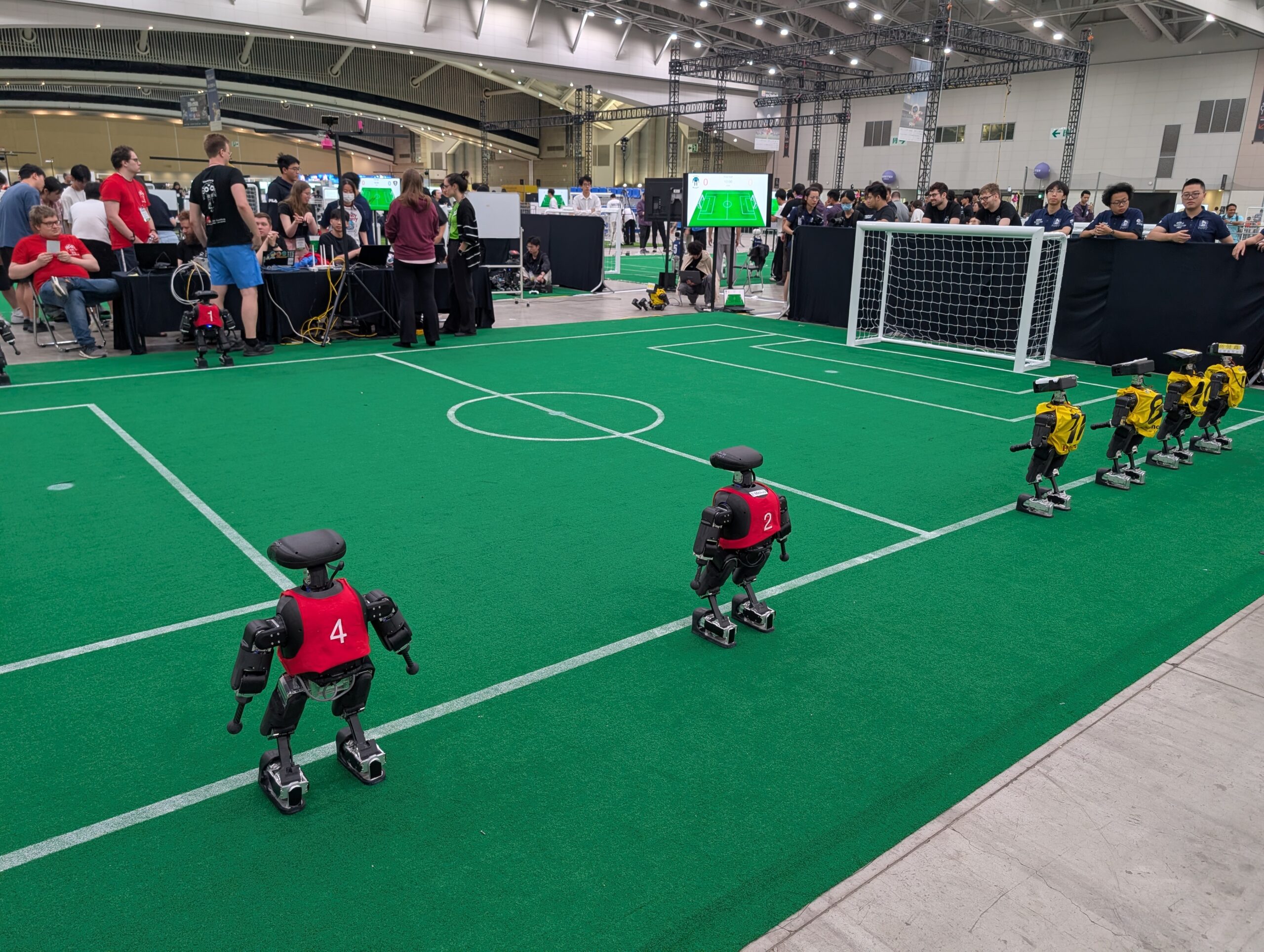
The second day’s play at RoboCup 2026 has drawn to a close with another bumper set of matches. Teams have come from far and wide to take part in the humanoid soccer competition this year, with 17 different countries represented. China is the most represented country, boasting 15 teams across the three divisions. Other countries taking part are geographically widespread, ranging from Colombia to Malaysia, from Germany to Australia.
In advance of the competition, all applying teams provided a video, team description paper, and information about the robots and software that they use. You can see the complete set of these here. As a taster, here is the qualification video from team CAU Mountain&Sea (from China Agricultural University) who are currently leading the small division competition, and are in fourth place in the large division.
Yesterday’s play saw the first issuing of a red card. The robot received two yellow cards for unsafe challenges and was removed from play on safety grounds. You can see a clip of the second foul in question here.
In terms of the vital statistics of the robots, the heaviest and tallest robot is HERoEHS’s ALICE 4 robot, weighing in at 48kg and measuring 160cm tall. There is a big jump down in weight to the second heaviest bot, which is team BigHeroX’s Z4 bipedal humanoid, at 37kg. A number of teams are using the 35kg Unitree G1. At the other end of the spectrum, the lightest and shortest robot is ITAndroids’ Chape, at just 3.8kg and 53cm tall.
With the seeding rounds almost complete (the knockout rounds start tomorrow) the competitions are hotting up nicely. After four competed rounds in the small division, CAU Mountain&Sea is the only team to win all four matches, and sits atop the table with 12 points, and impressively only conceding one goal. Hamburg Bit-Bots and GeoHBots are in second and third place respectively, having both won three games and lost one.
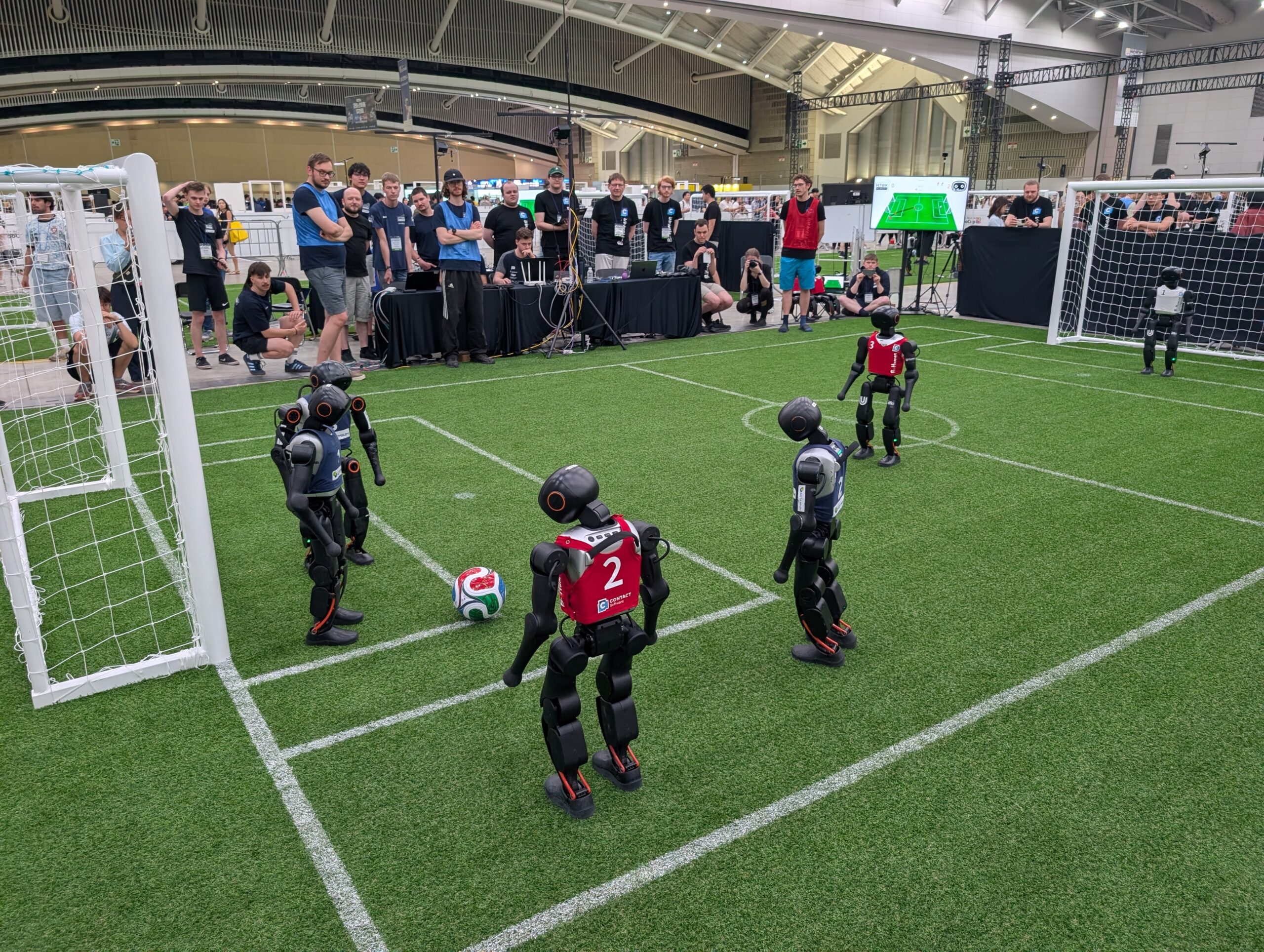
The middle division has fast established itself as one of the most compelling competitions. B-Human has taken a commanding lead, winning all four matches so far with a +35 goal difference. Behind them, there are four teams on nine points: HTWK Robots, Rhoban, whIRLwind Amsterdam, and THMOS.
Over in the large division, teams have completed three rounds of seeding, with just one further round to come tomorrow. At this stage Tsinghua Hephaestus is the only perfect team, sitting on nine points. Behind them, two teams have each won two matches and drawn the third: PCMS-HRG and Robo-Erectus.
Once the seeding rounds have been completed, 12 teams from each division will make it forward to the knockout stages, with the quarter finals taking place in the evening.
Many thanks to JT Genter for providing the photos, videos, and facts for this article.
Robots can now ‘see’ touch thanks to a new color-changing tactile sensor
Google DeepMind and A24 announce first-of-its-kind research partnership
Giving drones a sense of ‘pain’ could help them predict instability before it happens
Dutch launch humanoid robot center to ‘kickstart’ race with China
Reflections from ICRA 2026
From the 1st-5th June, the robots descended on Vienna. The 2026 IEEE International Conference on Robotics & Automation (ICRA) brought together the top minds in robotics for one short week to showcase the latest technologies, form new collaborations, and exchange ideas. Held at the Messe Wien, a stone’s throw from the bank of the Danube, ICRA proved to be equal parts technological marvel and thought-provoking discussion.

The host venue for ICRA 2026: Messe Wien, also known as VIECON.
Workshop on robot ethics
My week at ICRA began with the 2nd ICRA 2026 Workshop on Robot Ethics: Ethical, Legal and User Perspectives in Robotics & Automation (WOROBET). WOROBET provided a space for researchers to share ideas, thoughts, and concerns on the future of robot-human interaction, and how to create ethical frameworks to navigate this rapidly changing technology.
Yasuhisa Hirata, Professor at Tohoku University, began by presenting his vision of a world with physically assistive robots, such as detachable exoskeletons or cycling wheelchairs. These tools can affect people’s sense of self-efficacy and motivation, and there are a host of ethical implications that come with this – how do you help people just enough to build their confidence, without slipping into deception?
We then heard from Prof. Minoru Asada from Osaka University, who discussed his aim to implement pain signals into robots, so they can experience the world as we do. This was a highly interesting and niche proposition that brought up more ethical questions than we have answers for at the moment. Perhaps most pertinent to a technical conference: is a sense of embodied morality necessary for true intelligence?
Alan Winfield, Professor of Robot Ethics at UWE Bristol, presented a vision of robotics that acted as a counterweight to Prof. Asada’s: robots as tools, not potential beings. This also somewhat reflects differing attitudes in Eastern vs Western cultures. Thinking about the practical issues we are likely to face in the near term, he outlined a framework for social robot accident investigation. In his view, robot ethics is not just an engineering problem, but requires appropriate social and governance frameworks, just as we do for aviation. His talk also emphasised the risk that programming ethics into robots runs the risk of removing moral responsibility from the roboticist, and can always give rise to unethical robots via malicious hacking. The theme that we must focus on human morality, as opposed to machine morality, was repeated throughout the day.
After a morning of differing ideas and visions of what robot-human interaction could be, we were invited to ground this into a real robot social care scenario by Praminda Caleb-Solly, Professor of Embodied Intelligence at the University of Nottingham. In this red-teaming exercise, we examined the safety risks and possible mitigations of an assistive robot for a schoolteacher recovering from a stroke at home. Our group discussion circled around human agency: how ethical is it to make design choices for people that take away some of their autonomy, in the name of their best interests? As robots in social care will become a more urgent need in the years to come, these questions may become more salient.
I left WOROBET with plenty to think about, and a renewed sense of appreciation for the ethicists who are already grappling with the problems that are to come. I hope that progress in robot ethics keeps pace with progress in robotics, so that we are well prepared as robots become more of a part of our daily lives.
Welcome to the jungle – the robot exhibition floor
Every time you entered the exhibition hall, you were greeted by one of the child-sized Booster robots, either playing football, dancing, or demonstrating some kung fu. They were always an endearing welcome to the sea of robots.
The robots ranged from the endearing to the uncanny, but the common thread was their technical capabilities were astounding. Veteran attendees consistently remarked on how much the robots had improved year on year.
|
The cute. |
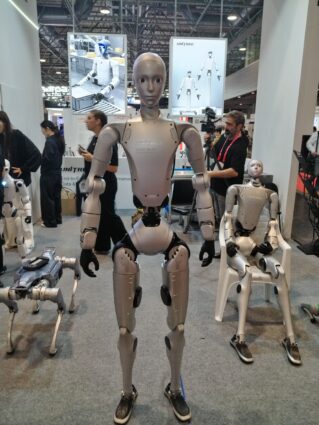
The slightly uncanny. |
The below clips show the robots that most caught my eye. After admiring a phosphorescent, Stranger Things-esque robotic flower display, I was blown away by the D1-modular robot from Direct Drive. Unlike most robot dogs, it can split into two halves, with the ability to jump, twist, and traverse difficult terrain.
Sharpa’s North was always a friendly face, waving and making love-hearts at visitors to its booth. Around the back of the booth, you could even challenge it to a round at blackjack. We saw humanoids zipping up rucksacks and trying to fold laundry. Enchanted Tools’ social care robot, Mirokaï, was an unusual sight among the mass of black and steel, with a bright orange body, feline ears and an orange, furry face. Tesollo’s humanoid spent much of its time at ICRA using its long, wavering arms to pick up fruit and drop it into baskets, with impressive dexterity. Vietnamese company Vinrobotics’ humanoid offering was reminiscent of the Cybermen, with its gently wheezing joints, but the team assured me it was much friendlier. The pint-sized Boosters were almost always playing football, not far from their similarly sized Agibot cousins.
However, humanoids didn’t steal the show this year, as they have done previously. The big trend this year was robotic hands, and the levels of dexterity were truly impressive. Closing the gap between human and robot abilities here would unlock whole new swathes of tasks to automate – and who wouldn’t want a robot folding their laundry?
Industrial challenges: solving dexterity
Tackling the dexterity challenge really defined the industrial talks for me this year. A talk by ARIA’s program director, Prof. Jenny Read, demonstrated how the UK government is already laying the groundwork here.
They outlined their funding proposals as part of their Smarter Robot Bodies program, which is split into two branches: robot locomotion and robot dexterity. The robot locomotion branch aims to enable robots to traverse messy, unpredictable physical environments, while the robot dexterity branch will try to break the bottleneck of adept physical manipulation by robotic hands. With the programme set to launch in early 2027, it’ll be exciting to see what kind of innovations this attracts.
One standout innovation in the realm of dexterity was TARS, a record-setting newcomer in the Chinese robotics market. Co-founded by Dr Ding Wenchao just 18 months ago, TARS has already raised the most funding in angel and pre-seed rounds of any company in the Chinese embodied intelligence sector, and achieved a Guinness World Record for robotic flexible robotic flexible wiring-harness insertion completed in one hour.
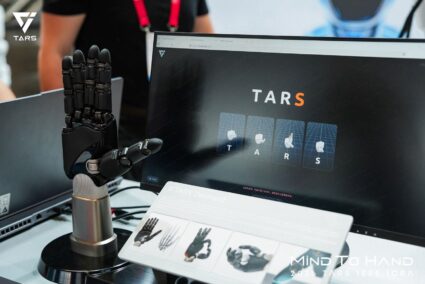
TARS’ DexHand. Image credits: TARS.
DexHand is a 1:1 model of the human hand, even replicating the 21 degrees of freedom we have in the wrist joint and hand. According to TARS, “it can interpret tactile data to distinguish slipperiness, roughness, and hardness in real time and perform 26 English alphabet hand gestures with high-precision finger control.” I was given the chance to control the hand using my own, and was impressed by how well it emulated my own movements. I was also impressed by their humanoid zipping up a backpack – despite the technical abilities of all the robots on the floor, few were able to perform tasks which required such fine motor skills.
TARS robot zipping up a rucksack.
On Thursday, Dr Wenchao Ding delivered an industry keynote where he presented TARS’ roadmap, charting the path from academia to industrial deployment. With an impressive academic team behind them, TARS may be one to watch.
Plenary talks
Aside from the wealth of invention and innovation taking place in the exhibition hall, the breadth and depth of academic research at ICRA was fantastic. The plenaries especially gave an insight into the research trends that are currently defining the field.
Ken Goldberg delivered an electrifying plenary, titled “A Tale of Two Cultures: Can Agentic Coding Close the Gap?” In this talk, he called for a step change to close the data gap faced by robot manipulation. With the rise of diffusion models and LLMs, it is clear that big data has solved computer vision and language. He challenged the audience – when will the ChatGPT moment for robotics come? With state spaces larger than 50 dimensions in robotics, there is not enough training data to close this gap. Currently, the data required to train vision-language models is equivalent to 100,000 years of real physical experience.
According to Goldberg, the 2 dominant cultures in engineering – model free “good old fashioned” engineering (GOFE), and, the currently more popular model based engineering. GOFE encapsulates rigorous engineering methods that pre-date AI, but may have been slightly forgotten about in the AI wave of recent years. He also highlighted how, in his career, he has always been working to bridge the gap between 2 cultures: from science and art; to robotics and automation.
He outlined 4 possible solutions to the data gap:
- Simulations – these work incredibly well for locomotion and body control, but less so for manipulation due to the number of forces and instabilities involved.
- World models – they do not currently properly capture the physics, and hallucinations can be problematic.
- Human teleoperation – this is currently big business and a good way to obtain high quality data. However, the largest dataset is currently only equivalent to a year’s worth of data.
- Real data from functioning robots – this is less commonly used, but can be powerful.
Prof Goldberg described how he used the fourth approach in his robotic delivery packing company, Ambi Robotics, for 22 years. Picking up bags is an example of variational automation – one task is done repeatedly, but with different initial conditions each time. From this rich dataset, they created a generative model to train robots in the best way to pick up bags. Here, they close the gap between model-free and model-based methods – Ambi exploits both to achieve industry-leading results. This plenary served as a call for other researchers to use their own production data to do the same.
During Thursday’s keynote on Robot Learning, Planning & Foundation Models, Stefanie Tellex from Brown University gave a compelling talk titled “Towards Complex Language in Partially Observed Environments”. While current research is bounded in known, predictable scenarios, using action-based language, this does not reflect what the real world is like, nor how people would naturally communicate with robots. Prof. Tellex described her work creating robots that can understand complex, goal-based commands in only partially observed, dynamic environments, and outlined the grounded Turing test – a reimagining of the Turing test for embodied AI.
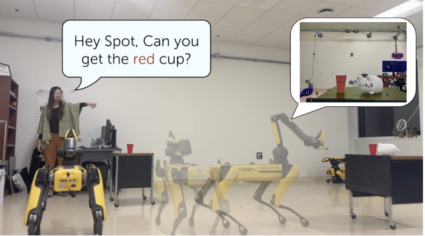
An example of a robot performing a goal-based task in a dynamic environment. Credits: Tellex et al, 2026.
Both plenaries spoke to current pinch points in robotics: data, reasoning, and operating in complex real-world environments. It’ll be interesting to see what solutions are developed in the coming years.
Science communications crash course
One of my favourite parts of ICRA was delivering the Science Communications Crash Course. Along with Robohub Executive Trustee Sabine Hauert, IEEE Spectrum Senior Editor Evan Ackerman, and IEEE Spectrum Community Manager Kohava Mendelsohn, we gave our guidance on effective science communication to an audience of 100 academics. It was encouraging to see so many people interested in communicating their research effectively – it is a crucial skill, especially in the era of AI and robotics when mainstream narratives can be hijacked by doom-mongering, hype, and corporate interests. More academics communicating their work clearly and neutrally will go a long way to grounding our societal discussion in technical reality, not sci-fi futures.
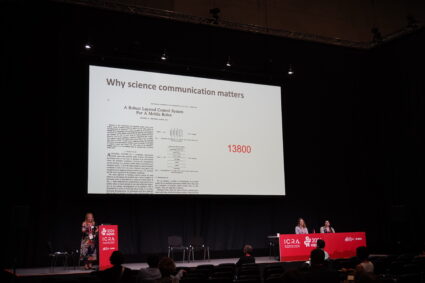
Sabine kicking off the science communications crash course. Image credits: Taraja Arnold
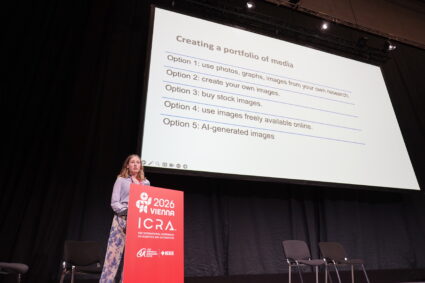
Delivering my part of the course. Image credits: Taraja Arnold
Art and robotics
The arts and robotics section was rich and interesting. There was a lot to visually take in, with constant background music from a robotic saxophone.

Masatoshi Hamanaka’s robotic saxophone. Image credits: ©Denes Erdos – Your Event Photographer
PET – marked by a large “PET ME” sign – was a white and orange mass of connecting, rotating pyramids, that gently pulsed and hummed in response to touch, responding by curling towards or away from you depending on how you touched it, The effect was strangely lifelike.
Rhombus Research presented “Reptile: A Bio-Mimetic Choreography Engine for V2X and A2X Swarms”. This artistic simulation visualises the contracts negotiated within autonomous vehicle and swarm fleets in dreamy blue, browser-based visualisation. Performance artist and former Cirque de Soleil acrobat Silke Grabinger explored human-robot interaction via her piece, AREYOUARE.
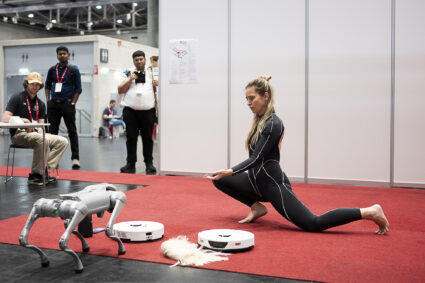
Silke Grabinger performing AREYOUARE. Image credits: ©Denes Erdos – Your Event Photographer
I’d also like to acknowledge some of the video creators I met there. YouTubers Back to Engineering and the. Amazing, PhD are making some fantastic videos about physical AI.
Nothing lasts forever – ending with the robot parade
ICRA 2026 ended with the robot parade, which attracted quite a crowd. See if you can spot the panda, dragon, and headless humanoid!
Seeing all the robots gathered together was a real spectacle. The technology on display was state-of-the-art, and it only improves year on year. What struck me most was the sense that robotics is moving from proving what is possible to tackling the remaining barriers to real-world deployment. Across the exhibition floor, industry keynotes, and plenary talks, the focus was often on the same challenges: dexterity, data, and operating reliably in complex environments. Solving these bottlenecks will open up new avenues to real-world applications of robots.
While workshops such as WOROBET highlighted important questions around ethics, agency, and governance, the overwhelming emphasis at ICRA 2026 was on capability. Researchers and companies alike are working to close the gap between what robots can do in carefully controlled demonstrations and what they can do in the messy reality of the world outside the lab. Judging by the pace of progress on display in Vienna, that gap may be narrowing faster than many of us expected. I hope that the kinds of conversations around human-robot interaction and ethics that were commonplace at WOROBET and in the Arts exhibition space will become more mainstream – we may need to face the questions that they raise sooner than we think.
Note: Where image and video credits are not stated, they belong to Ella Scallan.
#RoboCup2026 – humanoid league day 1
Image credit: RoboCup Federation.
RoboCup 2026 kicked off today in Incheon, South Korea, with the league competitions running until 5 July. It’s an exciting time for RoboCup, as there have been some updates to the leagues and competition format. Most prominently, the soccer leagues will have a primary focus on humanoid robots. In a series of daily updates, we’ll be bringing you the latest results, videos, and news from the humanoid soccer league.
This year, the humanoid league is split into three sizes: large division, middle division, and small division. There are 18 teams participating the small division, 16 in the middle, and an impressive 22 competing in the large division.
The first two days of competition are be devoted to the seeding round. Teams play using the Swiss-system of ranking to decide who gets through to the knockout stages.
Livestreams from the different fields of play can be found here.
At the end of the first day of competition, teams in the small and middle divisions have played two games each, with the large division ending the day part way through the second round. Early leaders in the small division, with the full six points from two games are: GeoHBots, CAU Mountain&Sea, and Hamburg Bit-Bots. There are also three teams in the middle division who have claimed the six point haul: B-Human, RoboRoos, and HTWK Robots.
You can watch a short summary of the first day, including some of the robots in action, from KBS News:
This short video from RoboCup gives a flavour of the day’s happenings, which also featured the opening ceremony.
We will be back tomorrow with further updates on competition results, some highlights from the day, and insights into how the event is progressing.


The slightly uncanny.