Whether it’s a mezzanine system or a ground-floor concrete slab, full replacement often means extended downtime, lost productivity, and significant labor costs.
How Natural Language Processing is Turning the Healthcare Industry in the USA?
The United States’ healthcare sector is experiencing a revolutionary change, and Natural Language Processing (NLP) is at its center. An Artificial Intelligence (AI) arm, NLP is revolutionizing the way clinicians engage with information, documents, and even individuals. From relieving the pain of manual works to enhancing the accuracy of diagnoses and automating billing, NLP is transforming healthcare to make it faster, smarter, and more human. In this article, we’ll explore how NLP is reshaping the way care is delivered, and why it’s quickly becoming a game-changer for healthcare systems across the country.
Transforming Clinical Language into Data that Matters: NLP Is Reading Between the Lines
Previously, it has been challenging for hospitals to manage their data, including doctor notes, discharge summaries, radiology reports, and even call transcripts without proper technology in place. NLP flips that on its head by converting unstructured text into structured, actionable information. Now, rather than manually reading through thousands of words, AI systems can notify:
Missed drug interactions
Early warning signs of rare diseases
Predict the risk factors from the historic data
Use case: Mayo Clinic used NLP to identify suicide risk in teenagers’ months ahead of any intervention that would traditionally occur.
NLP Is the Secret Weapon Behind Smarter Virtual Health Assistants
“Siri, what’s my diagnosis?
With the AI chatbot and telemedicine, NLP drives virtual care in real time. Imagine giving a medical degree to Alexa, but she’s HIPAA-compliant and educated from millions of de-identified patient histories.
Key functions:
Patient symptom understanding
Layman-clinical and clinical-layman translation
Clinician-automated chart notes generation
Triaging and appointment scheduling support
This is not convenience; this is life-saving automation in rural or underprivileged communities where there is a thin pickup of doctors on the ground.
NLP Is Cracking Down on Fraud and Billing Nightmares
“Killer Robots for Insurance Claims”
The American billing process is famously a tangle of ICD-10 codes and confusing forms. NLP technology is now revolutionizing this space by automating claims generation, detecting fraudulent schemes, and ensuring equitable insurance reimbursements. With the expertise of app development companies, these advanced NLP-driven solutions are being integrated into healthcare systems, making billing faster, more accurate, and far less stressful for both providers and patients.
NLP Is Reading Medical Literature Faster Than Any Human Could
New research studies are being published every 26 seconds. No physician can ever hope to keep up with that rate, but NLP can.
AI models are already reading thousands of daily studies today, mining trends, drug interactions, trial outcomes, and guidelines and delivering live feeds into clinical decision aids. It informs physicians in real time and rescues them from ignorance errors.
10 Top NLP Trends in Healthcare
Generative AI for Clinical Documentation
Physicians are applying AI-driven instruments such as ambient scribe tech to generate clinical notes automatically from dictations, preventing burnout and enabling them to spend more time with patients.
Unstructured Data Mining
Physicians are investing in NLP to make inferences from unstructured data — like EHR narratives, radiology reports, and pathology reports — to support diagnosis and care planning.
Voice-Activated Assistants
NLP-powered virtual assistants are being trained to assist with real-time engagement of patients and staff, answer questions, handle scheduling, and assist treatment decision-making.
Clinical Decision Support with AI
NLP is being utilized to gather relevant medical history, symptoms, and laboratory results to support physicians with evidence-based, real-time decision-making during patient interactions.
Patient Sentiment and Emotion Analysis
Hospitals are applying NLP to process patient feedback, surveys, and even SMS to identify dissatisfaction, anxiety, or risk, leading to better patient experience and mental healthcare.
Population Health & Social Determinants Analysis
NLP solutions are able to identify concealed social or behavioral health illnesses (e.g., housing instability or substance abuse) in free-text reports to inform public health practitioners to anticipate threats in communities.
Monitoring Bias and Fairness
New NLP models are coming in with bias detection features to treat all on par, regardless of race, gender, or language community, a good step by regulators and stakeholders in health equity.
EHR System Integration
NLP is being increasingly embedded in top Electronic Health Record systems (such as Epic and Cerner) to enable search, workflow automation, and usability of data for clinicians.
Multilingual NLP Models
Multilingual NLP solutions are being utilized in multicultural-population hospitals to enable Spanish, Mandarin, Arabic, and other language-speaking patients, bridging communication care gaps.
Real-Time Clinical Analytics
Real-time NLP dashboards are increasingly being deployed in ICUs and ERs to monitor symptoms, risk, and treatment outcomes to enable teams to respond more quickly during emergencies.
These innovations are delivering more care, fewer mistakes, and lower bills — and they illustrate how NLP is emerging as an integral part of intelligent, data-based medicine.
How Much Does NLP Development for Healthcare Cost?
Developing Natural Language Processing (NLP) healthcare solutions in the US is a fairly costly based on numerous things, from the size of a project and the data complexity to requirements like suitability with HIPAA guidelines. A few factors that have an impact of NLP development cost are mentioned below:
Creating an NLP system for American medicine can be expensive, based on what the system has to do. A simple tool, like one that helps doctors write automatically or transcribe, can cost $100,000 to $300,000.
Sophisticated systems that look at medical records or help with clinical decisions can range from $500,000 to millions of dollars.
Compliance with HIPAA is a big reason for the expense. Healthcare data is confidential, and hence any software developed must be subject to very strict regulations to protect patient confidentiality. That costs extra in terms of security, legal effort, and regular system testing.
Cloud computing, software licenses, and supercomputers utilized in training AI models may run into thousands of dollars per month. Once the system is established, it has to be serviced and upgraded from time to time, generally 15–25% of the project cost annually.
Generally, NLP app development companies can cost from $150,000 to $500,000. It can be expensive, but it saves time, decreases medical errors, and enhances patient care in the end.
Conclusion
NLP Isn’t the Future of Healthcare, It’s the Now.
From translating complex EHRs to helping patients schedule appointments, NLP is woven into the healthcare sector. It is cost- and time-efficient and picks up issues around privacy, accuracy, and equity. If you have plans of developing NLP applications for healthcare, connect with us.
In horror movies, music is a dead giveaway. Tension builds with each note, and you brace for the inevitable jump scare. The same sense of anticipation has taken a leading role in an unlikely venue: a Georgia Tech robotics lab.
A decade of open source at DataRobot: from predictive AI to the agent lifecycle
Every era of DataRobot has shipped open source. The latest open-source contributions from DataRobot map directly onto where agents actually break in production.
Building an agent has never been easier. Pick a framework, wire up a model and a retriever, add a few tools, and a demo is running by lunch. The trouble starts after the demo. The workflow you guessed at turns out to be neither the most accurate option nor the cheapest one. The agent has to make a judgment call under uncertainty and has no fast way to reason about risk. And the moment more than one team starts using it, the inference bill and the latency both go sideways.
These are not framework problems. They are lifecycle problems, and they surface at three distinct stages: designing the workflow, reasoning under uncertainty at runtime, and serving the result to real users at scale.
None of this is new territory. Open source at DataRobot has never been a side quest. It has tracked the platform’s evolution stage by stage: teaching predictive AI in the open, then giving teams programmatic ownership of AutoML, and now shipping the actual infrastructure for each place agents go to production.
A decade of showing the work
The habit goes back to 2014, when the team open sourced its top-finishing code from the KDD Cup, alongside blog tutorials on gradient boosting, scikit-learn, and regression in statsmodels. The tutorials for data scientists repository, and later a run of generative AI accelerators, grew out of the same instinct: the only way to really understand AI is to build it, so hand people working code instead of a white paper. All of it sat on top of the R and Python SDKs, which is what turned a trial account into something people could script against instead of just click through.
Education answers “how do I learn this.” The next question is “how do I trust what got built,” and the answer was orchestration. The Pulumi provider and the accompanying CLI let a workflow be defined as code and rerun on someone else’s machine with the same result, turning AutoML from a black box into an exportable, auditable record. Blueprint Workshop, a Python client for constructing and editing blueprints programmatically, extended the same idea to the modeling layer itself: preprocessing, algorithms, and post-processing as code, not just as nodes in a UI.
Ownership was the logical next step after orchestration. Custom Models and Custom Tasks, built on the open-source DRUM framework, let teams bring their own pretrained models and preprocessing steps into a deployment and get monitoring, governance, and a leaderboard for free. Composable ML on top of Custom Tasks meant a blueprint could mix the platform’s own algorithms with a team’s proprietary preprocessing, without forcing a choice between the two.
The connective tissue between that era and this one is Pulumi. The same declarative pattern that once documented a predictive pipeline now provisions agent infrastructure: agent templates for CrewAI, LangGraph, and LlamaIndex ship with Pulumi wired in by default. The tools changed. The commitment to a code path instead of a walled garden didn’t.
The agent lifecycle, and where it breaks
It helps to name the stages before naming the tools. An agent moves through a predictable arc. You design the workflow that defines how it retrieves, reasons, and responds. At runtime, it has to reason about an uncertain world well enough to act. And the platform has to serve that agent to many tenants without breaking service level objectives or the budget. Each stage has a hard question attached, and three shipped projects, plus one still in review, exist to answer them.
syftr: design the workflow before you guess
The first decision in any RAG or agentic build is also the one teams skip: which configuration to use. Which synthesizing LLM, which embedding model, which retriever, what chunk size, whether to add reranking, whether the flow should be agentic at all. The space runs past ten to the twenty-third unique configurations, and every choice trades accuracy against latency against cost. Most teams pick a reasonable-looking default and never find out how far it sits from the frontier.
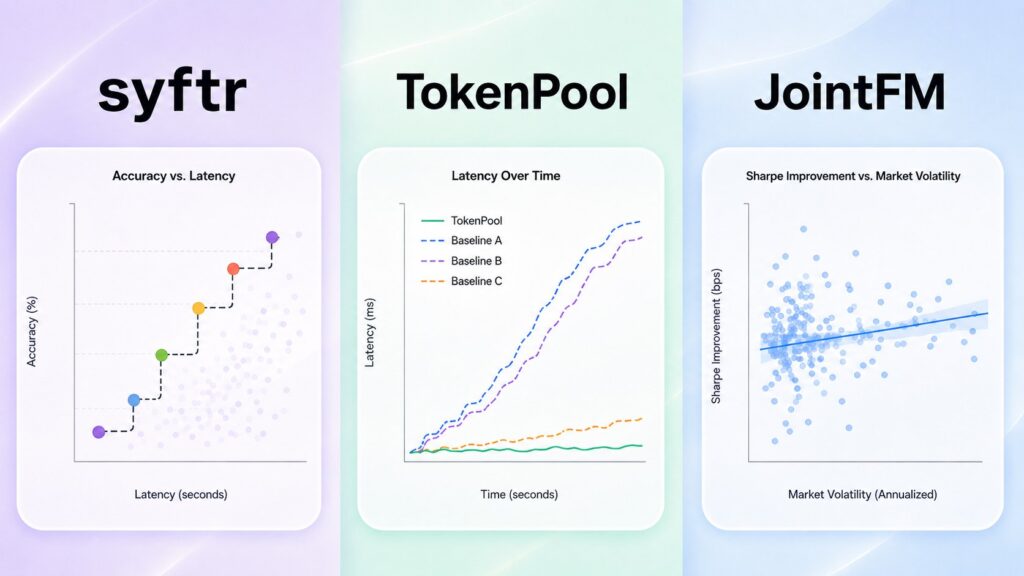
syftr searches that space instead of guessing. It uses multi-objective Bayesian optimization to find Pareto-optimal flows: the configurations where accuracy cannot improve without paying more, and cost cannot drop without losing accuracy. A domain-specific early-stopping mechanism prunes clearly suboptimal candidates before they burn through an evaluation budget, cutting search compute by 60 to 80%. On industry-standard RAG benchmarks, it identifies workflows that cut cost by up to 13 times with only marginal accuracy trade-offs.
syftr doesn’t replace judgment. It gives a data-driven way to navigate a design space too large to reason about by hand, searching across 10 proprietary and open-source LLMs, 13 embedding models, four prompt strategies, three retrievers, and four text splitters, and it produces production-ready pipeline code at the end.
JointFM: give the agent a quant for runtime decisions
Designing the workflow gets an agent built. It doesn’t help the agent make a hard call at runtime. Rebalancing a portfolio, hedging a supply chain, dispatching energy on a grid: these are decisions under uncertainty that depend on the full joint distribution of many coupled outcomes, including how they move together in the tails. Classical quantitative methods model this well but are slow and brittle. Standard time-series foundation models are fast but forecast each series in isolation, missing the cross-variable dependencies that define systemic risk.
JointFM, a foundation model from DataRobot Research, closes that gap. Pretrained on a stream of synthetic stochastic differential equations rather than fit to one dataset, it learns the underlying physics of stochastic dynamics and predicts the full joint distribution of future outcomes in a single forward pass: 10,000 samples across 10 targets and 63 horizons in roughly 10 milliseconds on a single GPU, with a 21.1% reduction in energy loss against the strongest classical baseline in zero-shot evaluation.
That speed is what makes it relevant to agents. When a decision-making agent can resimulate the future in milliseconds, risk-aware reasoning becomes something it does inline, on every decision, instead of a nightly batch job a person waits on. An initial finance application matched the risk-adjusted returns of a classical benchmark while replacing an overnight process with a real-time one. The model is domain-agnostic by construction, so the same capability extends to energy and logistics.
Token Pool: serve every tenant without starving the ones that matter
A well-designed agent with sharp runtime reasoning still has to run somewhere, usually alongside everyone else’s. Multi-tenant inference hits a wall here. Dedicated endpoints strand GPU capacity on idle models. Rate limits treat every token as equal, even though one request can cost an order of magnitude more GPU time than another. Neither approach lets idle capacity be borrowed, and both fall apart under the bursts that characterize real inference traffic. The familiar result: one team’s batch job floods the endpoint, and everyone’s production latency spikes.
Token Pool fixes this at the API gateway, without touching the inference runtime underneath. It expresses capacity in inference-native units, token throughput, KV cache, and concurrency, rather than machine or pod counts. Tenants hold entitlements to a share of a pool, and service classes (dedicated, guaranteed, elastic, spot, and preemptible) set the protection ordering during contention. A debt-based fairness mechanism gives temporarily throttled workloads compensatory priority later, so no tenant is starved and none monopolizes the pool. It runs as a Kubernetes-native layer above vLLM or TensorRT-LLM.
In overload testing, Token Pool held sub-1.2 second P99 time-to-first-token for guaranteed workloads by selectively throttling spot traffic, while a baseline with no admission control degraded past 19 seconds across every workload. For anyone responsible for consumption-based economics or API governance, this is the missing primitive: capacity expressed in units that match what inference actually costs.
The three shipped projects operate as separate links today. Design-time search runs once. Runtime reasoning runs blind to how the serving layer is performing. The serving layer enforces policy without feeding anything back upstream. The workflow syftr found last quarter isn’t necessarily optimal against this month’s traffic, models, and prices.
The next open-source project connects production telemetry, the real cost, latency, and quality signals coming off the serving layer, back to the optimization layer, so workflows get re-evaluated against production reality instead of a single offline benchmark. It’s still in review, so it isn’t named yet, but it’s the natural fourth stage after design, reason, and serve.
Get started
Build: install syftr with pip install git+https://github.com/datarobot/syftr.git and run the starter search
Build: stand up Token Pool against a local Kind cluster, no GPU required
A hands-on guide for each follows next in this series: running a first syftr search and reading the Pareto frontier, calling JointFM for real-time forecasts inside an agent, and standing up Token Pool to protect a production workload from a noisy neighbor. Start with whichever stage of the lifecycle is hurting most.
Their metallic frames covered in supple, lifelike skin, a posse of new Chinese robots meant for companionship can offer users AI-generated conversation or a hand to hold, complete with manicured nails.
While the industry debates models, parameters, and computer architectures, a more consequential story is unfolding at the signal level. Every autonomous system, no matter how sophisticated its software, must sense the real world, respond to it, and act within it.
Congratulations to the Berkeley Artificial Intelligence Research (BAIR) Lab class of 2026! This year, BAIR celebrates another remarkable group of Ph.D. graduates whose curiosity, creativity, and perseverance have pushed the frontiers of artificial intelligence and machine learning.
Their work spans the breadth of modern AI — robotics and embodied intelligence, large language models and reasoning, computer vision, generative modeling, AI safety, human-AI interaction, AI for science and healthcare, and much more. Along the way, they have published influential research, built systems with real-world impact, mentored their peers, and shaped the BAIR community for the better.
Now they are headed everywhere ideas travel: to faculty and postdoctoral positions, to industry research labs, and to startups of their own founding — and several are still exploring what comes next and would love to hear from you.
Please join us in celebrating the achievements of these wonderful graduates. We are proud of everything they have accomplished at Berkeley, and we can’t wait to see what they do next!
WebRTC gets robotics teams to a demo fast. It also breaks the moment the robot leaves the lab. If you are running WebRTC today, the question is not whether you will outgrow it but when, and what the next six months of engineering will be spent on while you do.
A new AI-powered framework could transform how astronomers measure the expansion of the Universe. By analyzing images of Type Ia supernovae and modeling their environments in unprecedented detail, researchers can estimate cosmic distances with near-spectroscopic accuracy. The technique is designed for the flood of data expected from the upcoming Vera C. Rubin Observatory and may greatly improve our understanding of dark energy.
The researchers teach the packaging machine what is up and down on a snack carrot. The program runs on a small, local PC—not on huge servers in some faraway cloud. The goal: to pack quickly, cheaply and attractively—so that consumers like us are tempted by locally sourced, healthy snacks.
Scientists from NTU Singapore and Waseda University have developed a flexible "diving suit" for cyborg cockroaches, enabling the insects to survive and move underwater and in low-oxygen environments for up to three hours. Published today in Nature Communications, the study could expand the use of cyborg insects in search-and-rescue missions, especially in disaster zones where flooded rubble, puddles or partially submerged spaces can block access for conventional robots.
Sensor specifications are only the starting point. Depth accuracy, range, field of view, and frame rate matter because they determine whether a robot can see what it needs to see.
How to Integrate AI with EHR/EMR Systems for healthcare operations?
AI integration with modern Electronic Health Records (EHR) and Electronic Medical Records (EMR) systems will revolutionize healthcare by enhancing clinical decision-making, reducing administrative burden, and allowing for more focused, effective care services delivery. Yet, this revolution is not merely technical; it extends to regulatory, ethical, and organizational concerns soon. Here are the most significant benefits of AI integration with medical systems, possible threats, and best practices for embedding AI in healthcare.
Introduction to EHR/EMR Systems and AI
Electronic Medical Records (EMR) and Electronic Health Records (EHR) are computerized health data recording systems that allow easier access to medical history, diagnoses, treatments, and laboratory findings. While EMRs are typically limited to the records of a single provider, EHRs give a wider picture from a number of different healthcare facilities.
Why Integrate AI with EHR/EMR Systems?
The integration of Artificial Intelligence (AI) into these systems is transforming the healthcare practice, enabling smarter clinical choices, automating time-consuming administrative tasks, and making personalized medicine a reality. By analyzing vast amounts of patient information, AI has the capacity to recognize patterns, predict results, and provide timely, evidence-based interventions, making the coupling of EHR/EMR systems with AI an increasing force in contemporary healthcare.
Key AI Integrations with HER/EMR systems
Data Interoperability
There is a need for smooth data interoperability to enable AI functioning in harmony with EHR/EMR systems. Organized or unorganized data from different sources, such as clinical notes, lab results, radiology reports, and patient-entered data must be populated to the AI models to ensure process efficiency.
Natural Language Processing (NLP)
Data stored in EHRs is unstructured. NLP enables AI programs to read and comprehend significant results from those documents. For example, NLP can extract symptoms, medication details, and test results to input into predictive algorithms and clinical decision support systems.
Predictive Analytics and Machine Learning
Big data may be utilized to train ML models such that healthcare professionals can predict diseases, treatment effectiveness, or risk for complication. These models may be incorporated into the EHR interface to aid in real-time decision-making during the period of patient encounters.
Computer Vision
Computer vision algorithms could be used to read radiology images, pathology slides, or skin photographs. The findings could then automatically be inserted into the patient record.
Best Practices for AI Integration in EHR/EMR
Assess Needs and Goals
Identify what problems you want AI to solve, e.g., reducing readmissions, charting automation, or improving diagnosis accuracy.
Choose the Proper AI Solution
Choose an AI solution that is suitable for your purposes and can be readily integrated with your existing EHR/EMR system. Ensure that it meets healthcare data standards and regulations (e.g., HIPAA).
Guarantee Data Quality and Security
Adequate, clean, and well-organized data are essential for AI to work successfully. Provide privacy, security, and legal compliance.
Engage Clinicians and Staff
Enlist doctors, nurses, and administrative personnel early on. Their input helps ensure the AI system accommodates real workflows and encourages adoption.
Integrate into Existing Systems
Work with IT groups and vendors to incorporate the AI tool into your EHR/EMR. Enable seamless data flows and immediate access to patients’ information.
Train Users
Provide hands-on training on how users must use the AI features properly. Clear out issues and build confidence in the technology.
Test and Validate
Pilot test the start by testing how AI works in reality. Watch for accuracy, fairness, and usability.
Deploy Gradually
Deploy the AI system on phased basis by making changes based on feedback. Do not switch everything at once.
Monitor Performance
Track the performance of the AI system at all times. Is it committing fewer errors? Is it saving time? Is it improving patient care? Analyze every factor.
Update and Maintain
Regularly update the system with new medical guidelines, AI breakthroughs, and data changes to ensure long-term efficiency.
AI Integration with EHR/EMR Use Cases
Clinical Decision Support
Artificial intelligence can provide evidence-based advice in patient consultation. IBM Watson for Oncology, when employed along with EHRs, provides cancer treatment according to clinical guidelines and patient data.
Risk Stratification
Prognostics using algorithms identify high-risk patients who are most likely to develop sepsis, heart failure, or readmission. Notifying alerts can trigger early treatment and care coordination.
Computerized Documentation
NLP tools can capture and document physician-patient conversations with minimal human intervention, auto-fill the fields in the EHR to maintain low documentation time and allow clinicians to focus on high-level patient care.
Population Health Management
AI can be trained from population-level information to identify patterns, monitor chronic disease management, and maximize resource usage.
Revenue Cycle Management
AI technology helps with coding and billing by using clinical documentation intelligence and generating precise billing codes with fewer denials and better revenue capture.
Key Challenges and Considerations
Data Standardization and Completeness: EHR data could be incomplete, inconsistent, or fragmented. Data quality diminishes model performance. Completeness and standardization of data are paramount.
Interoperability Issues: Many EHR vendors use proprietary formats, which create issues with integration. Implementation of standards such as FHIR mitigates such problems.
Compliance with Regulation: Use of AI in EHR systems must be in accordance with health care regulation like HIPAA for the US or GDPR for Europe. Data privacy, patient consent, and audit trails should be implemented compulsorily.
Bias and Fairness: AI models trained on biased datasets can perpetuate or exacerbate disparities in healthcare. Ongoing auditing and fairness assessments are necessary to ensure equitable care delivery.
Clinician Trust and Adoption: Clinicians may be skeptical of AI recommendations, especially if the models are “black boxes.” Transparency, explainability, and clinical validation are crucial for gaining trust.
Cybersecurity Risks: Adding AI components increases the system’s complexity and vulnerability to cyberattacks. Robust cybersecurity measures must be implemented to protect sensitive patient information.
The Future AI in EHR/EMR Systems
As AI and EHR/EMR integration matures, the focus will shift toward more advanced capabilities such as real-time predictive alerts, personalized treatment recommendations based on genomics and social determinants of health, and closed-loop systems that autonomously trigger interventions. Federated learning, where models are trained across decentralized data sources without sharing raw data, offers promising solutions for data privacy and collaboration across institutions. Furthermore, the emergence of explainable AI (XAI) tools will help demystify complex models and increase clinician confidence in AI-driven insights.
Conclusion
Integrating AI with EHR/EMR systems presents a transformative opportunity for healthcareorganizations to improve clinical and operational efficiency, enhance patient outcomes, and reduce costs. While the path to integration is fraught with technical and organizational challenges, adopting a strategic, user-centered, and ethically grounded approach can ensure successful implementation. As the healthcare landscape continues to evolve, the synergy between AI and EHR systems will play an increasingly central role in delivering smarter, safer, and more personalized care.
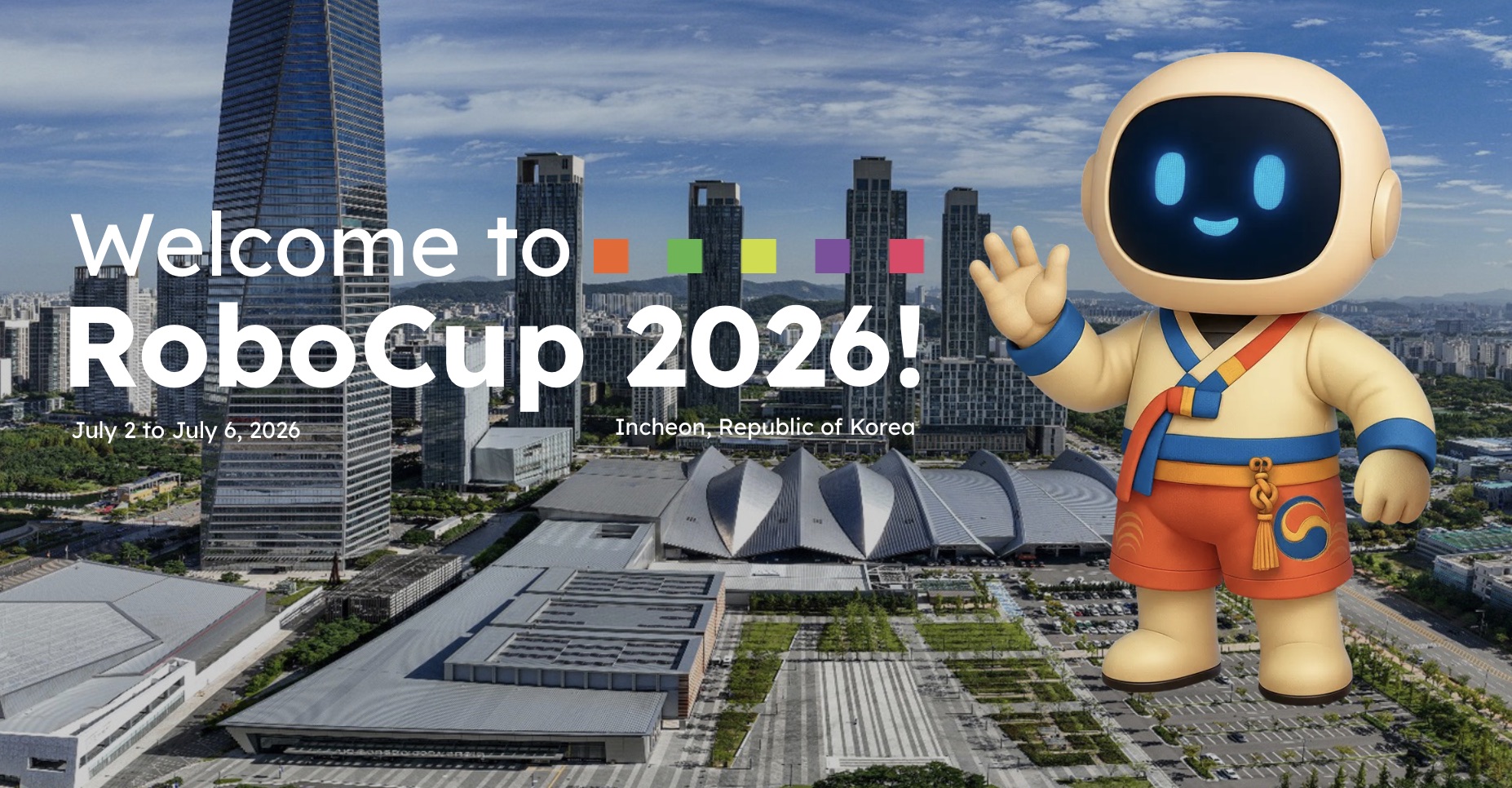
It’s an exciting time for RoboCup, as there have been some updates to the leagues and competition format. Most prominently, the soccer leagues will have a primary focus on humanoid robots.
The leagues and their competitions
You can find out more about the different leagues and the competition schedules and details at these links:
A workshop focused on sharing projects, experiences, and innovations in educational robotics. This session is geared towards students, mentors, and educators. Find out more here.
Symposium
The RoboCup symposium will take place on 6 July. More information can be found here.
There will be two keynote talks:
Hyun Myung, Spatial Intelligence for Autonomous Robot Navigation in the Wild
Gentiane Venture, From function to meaning: Making robots that understand and belong