Google handed ICE a student journalist's data without warning, breaking a decade-long promise. Here's what happened and what it means for your privacy.
The post Google Broke Its Privacy Promise — Now ICE Has Your Data appeared first on 1redDrop.
Google handed ICE a student journalist's data without warning, breaking a decade-long promise. Here's what happened and what it means for your privacy.
The post Google Broke Its Privacy Promise — Now ICE Has Your Data appeared first on 1redDrop.
Allbirds is ditching shoes for GPUs. Here's what the NewBird AI pivot actually means — and whether the 600% stock surge is justified.
The post Allbirds Pivots to AI: Inside the NewBird AI Transformation appeared first on 1redDrop.
A Manhattan jury ruled Live Nation-Ticketmaster an illegal monopoly. Here's what the verdict means, what a breakup could look like, and why it matters.
The post Live Nation-Ticketmaster Found Guilty: An Illegal Monopoly appeared first on 1redDrop.
Most mid-market supply chain leaders have already looked at the big platforms. SAP Integrated Business Planning. Blue Yonder. o9. They have seen the demos. The capabilities look right. The implementation timelines look long, the price tags look like enterprise budget, and the fit to their actual data environment looks questionable.
So the question becomes: what do you actually build, and what do you buy?
USM Business Systems works with mid-market operations teams in manufacturing, distribution, and logistics to answer exactly that question. What follows is the framework we use.
The first thing that determines your stack is not your budget or your timeline. It is your data environment.
If your ERP is clean, your WMS is current, and your supplier data is structured and reliable, you have more platform options. If you are managing two ERPs from a merger, a WMS that exports to spreadsheets, and supplier lead times that live in email threads, most platforms will underdeliver.
The reason is simple. Enterprise supply chain platforms are calibrated to enterprise data infrastructure. Mid-market infrastructure is almost always messier. That is not a failure of the ops team. It is a function of how mid-market companies grow.
A platform that assumes a clean data model will give you clean outputs on the demo and noisy outputs in production. The question to ask in every vendor evaluation: what does this platform do with dirty data?
Off-the-shelf supply chain AI platforms are strong when:
For companies where those conditions hold, a platform makes sense. The vendor handles the model maintenance, the infrastructure, and the roadmap.
A custom supply chain AI agent is the right architecture when:
The tradeoff is that custom builds require an engineering partner with supply chain domain understanding. Generic AI development shops can build the software. They often miss the operational logic that determines whether the outputs are actually useful.
The framework USM uses with every new supply chain engagement is a three-question filter:
First: Is the problem standard or specific? A demand forecasting problem at a food manufacturer with heavy seasonality and short shelf life is not a standard problem. A platform built for median demand forecasting will give median results.
Second: How clean is the underlying data? If significant data cleanup is required before a platform can run, that cleanup cost goes into the build-vs-buy calculation. Custom agents can be built to work with imperfect data.
Third: What is the decision speed requirement? If you need visibility improvements in 8-12 weeks, a platform with a 9-month implementation is not the right answer regardless of long-term fit.
Most mid-market supply chain teams land in a hybrid. They buy infrastructure at the commodity layer (ERP, WMS, TMS) and build custom at the intelligence layer, the agent that sits on top and synthesizes the signals into decisions.
That is the architecture USM deploys. The agent connects to existing systems via API or data export. It does not require an ERP migration or a WMS upgrade. It meets the data where it is and builds the visibility layer on top.
Deployment timeline: 8-12 weeks from scoping to first output. ROI measurement starts at week one.
USM offers a no-cost architecture consultation for supply chain and logistics leaders evaluating AI options. Book a session at usmsystems.com.
[contact-form-7]
Snap is cutting 16% of its workforce and crediting AI for making it possible. Here's what the numbers say and what it means for the industry.
The post Snap Layoffs: 1,000 Jobs Cut as AI Takes Over appeared first on 1redDrop.
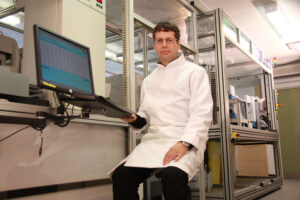
AIhub is excited to launch a new series, speaking with leading researchers to explore the breakthroughs driving AI and the reality of the future promises – to give you an inside perspective on the headlines. The first interviewee is Ross King, who created the first robot scientist back in 2009. He spoke to us about the nature of scientific discovery, the role AI has to play, and his recent work in DNA computing.
Automated science is a really exciting area, and it feels like everyone’s talking about it at the moment – e.g. AlphaFold sharing the 2024 Nobel Prize. But you’ve been working in this field for many years now. In 2009 you developed Adam, the first robot scientist to generate novel scientific knowledge. Could you tell me some more about that?
So the history goes back to before Adam. Back in the late 1990s, I moved from a postdoc at what was then the Imperial Cancer Research Fund – now Cancer Research UK – and got my first academic job at the University of Wales, Aberystwyth. That’s where I had the original idea of trying to automate scientific research.
Our first publication on this was in 2004. It was a paper about robot scientists, published in Nature. That was the start. We showed that the different steps in the scientific method – forming hypotheses, determining experiments to test them, analysis of the results – could all be individually automated. But the whole cycle wasn’t fully automated, and the AI system didn’t do any novel science at that point.
In 2009, we built the Adam system. Adam was a (physically) large laboratory automation system, combined with AI that could perform full cycles of scientific research, and had knowledge about yeast functional genomics. Adam hypothesised and experimentally confirmed novel scientific knowledge about yeast metabolism, which we manually verified in the lab.
How has the field evolved since then?
For many years, not much happened. Funding was difficult due to the financial crisis, which made the British Research Councils much more conservative. Before that period, panels would choose the most exciting science. Afterwards, they focused more on what would help Britain financially in the near term.
We couldn’t get funding for many years, and few others were interested. There was some work in symbolic regression – finding interpretable mathematical models to fit phenomena – but not much automation of science. What changed was the general rise of AI. As AI became more prominent, interest picked up, especially after 2017.
What are the potential upsides and downsides of AI scientists?
I’ll start with the big picture: I think that science is positive for humanity. I think our lives in the 21st century are better than those of kings and queens in the 17th century, when modern science started. We have better food from around the world, beautiful fruits for breakfast, and much better healthcare – a 17th-century dentist was not pleasant. My mobile phone can communicate with billions of people at the touch of a button, and I can fly around the world. These are unbelievably good standards of living for billions of people, not just elites. The application of science to technology has provided this. Of course there are downsides – pollution, environmental damage – but generally, for humans, I think life is better than in the 17th century.
However, we still have huge problems. We can’t stop global warming or many diseases, and a billion people still live with food insecurity. I think we have sufficient technology to solve these problems if the nations of the world collaborated and shared resources. But I see no prospect of that happening in the current world situation, and I see no examples from history where these things have happened. So my only hope is that science becomes more efficient. If AI can help achieve that, then perhaps we can overcome these challenges. If we have better technology and we treat people badly after that, then it’s not down to constraints in the world, it’s down to human beings.
As for having AI scientists as colleagues: AI systems don’t understand the big picture. They can’t do really clever things, like Einstein seeing space and time as a four-dimensional continuum as opposed to quite separate things. If you read the 1905 paper by Einstein, it starts off with this philosophical problem about electricity and magnets – AI systems are nowhere near as clever as being able to do anything like that. They can’t see deep analogies or connections, but they are brilliant at other parts of science. They can literally read everything – they have read every paper in the world 1000 times. If you have a small amount of data, machine learning systems can analyze it better than humans would. In this sense, they have superhuman powers.
One interesting thing now is that if you’re a working scientist and you’re not using AI, in almost all fields you’re not going to be competitive anymore. AI on its own is not better than humans – yet. But a human plus AI is better than a human alone. Human scientists need to embrace AI and use it to do better science.
Do you think we’ll reach a point where autonomous AI will be able to generate the research questions and direct the movement of research?
Yes, I think so, although we’re not close to that at the moment. They can generate new ideas in constrained spaces, often better than humans, but they don’t really have the big picture yet.
I think that will come sooner or later. I’m involved in a project called the Nobel Turing Challenge. The goal of that is to build an AI robotic system able to do autonomous science at the level of a Nobel Prize winner, by the year 2050. And if you can do that, we can build two machines, a hundred machines, a million machines – and we’d transform society.
Do you think that’s feasible by 2050?
Just before the pandemic and during the pandemic, I thought the probability of hitting that target was dropping. But then there was the breakthrough of large language models, which are amazing in many ways – often remarkably stupid too, but generally very clever. I think that they alone will not be enough to beat the Nobel Turing Challenge, but I think they’ve made the probability of hitting that target much more likely.
What is interesting – and I don’t know the answer to this – is whether you need to solve AI in general to solve science, or whether it’s more like chess, where you can build a special machine which is genius at chess but not anything else. Imagine some machine which is a genius at physics but doesn’t know anything about poetry or history. Would that be enough?
My instinct would be to say that it’s not, because everything’s so interlinked – poetry has rhythm, music contains mathematical structures. I think an AI scientist would need a broader understanding of reality than just its specific domain.
People used to think that we needed those things to solve chess, so our human intuition is not very good at these things. For example, I didn’t expect LLMs to work so well, just by building a bigger network and putting in more data. I assumed they’d need some deep internal model of the world, or even that they would need a body to really understand how things move around in the world.
LLMs raise some interesting questions – are they just mimicking intelligence, as they lack internal models?
I think AI must have, in some sense, some internal model inside. It’s just we don’t really understand why they work. It’s purely empirical, which is very unusual. I don’t remember a case where we have such an important technology, but we have so little understanding of it.
It is quite mysterious. Especially because science is always asking “what’s the mechanism?” With AI, it’s the opposite. The question is “does it work?” We don’t know what the mechanism is.
It’s not even clear what the theory to explain it is. Coming from machine learning, I assumed it would be some sort of Bayesian inference or something. But the mathematicians say no, it’s all to do with function mapping in some high dimensional space. These don’t seem to be the same, so it’s not even clear what framework we should use to explain it.
And, mapping in a high dimensional space is something that’s fundamentally not intuitively understandable to humans.
Yes, so it’s a mystery. So why do they do so well, and why do they not overfit over so many parameters. How do they manage to come to a reasonable answer? Generally, it’s easy to understand why they make mistakes, but it’s not so easy to understand why they actually work so well.
Can you speak about your work in DNA computing, and how it relates to automated science?
With automated science, we’re using computer science to understand, for instance, biology or chemistry. With DNA computing we’re using technology from biology and chemistry to improve computer science. With DNA, you have the potential to have many, many orders of magnitude greater computing density than with electronics. This is because the bases in DNA are roughly the same size as the smallest transistors, but you can pack DNA in three dimensions, whereas transistors can only be in two dimensions. In our design for DNA, every DNA strand is a tiny computer.
And the beautiful thing with DNA is that it can replicate itself – nature has made ways of copying DNA which are very effective. That’s how we as humans and all animals and plants and bacteria replicate, whereas electronic computers don’t replicate themselves – they’re built in factories costing billions. We can piggyback on top of this wonderful technology which nature has given us.
How does a DNA computer work?
One of the greatest discoveries ever made was by Alan Turing, who discovered, or invented, the concept of the universal Turing machine. So this is an abstract mathematical object which can essentially compute anything which any other computer can compute. You can’t make a more powerful computer, in the sense that it can compute a function which that universal Turing machine can’t compute.
And there’s many different ways of physically implementing a universal Turing machine. The most common one is to build an electronic computer. But you could, in principle, build a Turing machine out of tin cans, for instance – the only difference is how fast they go and how much memory they have. The reason that your computer can do multiple tasks is because it can be programmed to do.
The beautiful thing which you can do with DNA is you can make a non deterministic universal Turing machine. These compute the same functions as normal universal Turing machines, but they do so exponentially faster – every time there is a decision point in the program, rather than having to explore only one path, it can go both ways simultaneously. So you can make a computer which, like an organism (think rabbits), can replicate and replicate and replicate until we solve the problem, or you run out of space. So space becomes the limiting factor rather than time.
You can imagine that if you wanted to search through a tree to find something, you could put down all the branches in parallel, whereas a normal computer would go down one branch at a time. If you do the sums for DNA computing, you could have more memory and more compute on a desktop than all the electronic computers on the planet, which seems incredible. That’s just because of the density of compute.
That would be an incredible scale-up – like how a modern smartphone is so much more powerful than NASA’s supercomputers in the 60s. But computing isn’t improving at the same rate as it used to.
Yes. Computers are not improving like they used to for many decades (Moore’s law). That’s why these big tech companies are building big compute farms the size of Manhattan or soon maybe Texas. So the world does need more efficient ways of doing compute.
If we had a lot of compute, what kinds of scientific problems or areas do you think AI-enabled science could best be applied to? Are there any low-hanging fruits?
What’s very important is to integrate AI systems with actual experiments and laboratories. You can’t just think about science and get the right answer. We need to actually go into the labs and test things, but a lot of AI people and AI companies don’t really appreciate that. They’ve been so successful in science with AI plus simulation that they don’t realize simulation is only so good as something that’s testable.
Areas with low-hanging fruit include materials science, as we need better battery materials, better solar panels, and lots more. There’s something of a gold rush happening there right now, with many startup companies getting huge valuations.
The other area of automation, which is in some sense easier, is drug design, because it’s much easier to move liquids around than solid phase materials. Closed-loop automation has sort of transformed early-stage drug design, and there are lots of companies in that space now.
The big picture is that the economic cost of science is dropping. A lot of the actual thinking involved in science can now be done by AI systems, and the experimental work can be done very well by lab automation. You don’t need to employ people to move things around, and people aren’t as accurate and don’t record things as well as automation does. So that’s the big picture: what can we do if we can make science much cheaper?
Where do you think AI science is headed next?
I think there’s an analogy with computer games like chess and Go. In my lifetime, computers went from playing chess pretty poorly to being able to beat the world champion. I think it’s the same in science. There’s a continuum of ability from what current technology can do, from the average human, to grandmasters of science like Newton, Einstein, Darwin and others. If you agree there is no sharp cutoff on that path, then I think that with faster computers, better algorithms, and better data, there’s nothing stopping them getting better and better at science. Whereas there’s evidence that humans are getting worse at science – the average economic benefit per scientist is decreasing. I think they’ll get better and better and sooner or later overtake humans in science. We shall see, but I’m optimistic. If we get through this period, better science can improve the standard of living and happiness of humanity, and save the planet at the same time.
And now we have so much data, we need that raw power and intelligence to look at it all.
Yes, we need factories doing a lot of automation to scale things up. There’s no point in AI having brilliant ideas if we can’t test them in the lab. In my mind, science is still at the pre-industrial level. A PI with some post-docs and a few students is like a cottage industry, as opposed to a factory of science. I think humans will still be doing science, but we won’t be actually pipetting things in the future. It’s one reason we chose the name Adam (Adam Smith), we want to change the economics of science.
And Eve?
Eve was a system we developed some years ago to look at early-stage drug design. Eve optimises a process, rather than doing pure science. Most systems don’t actually do hypothesis-driven science, they optimise something, e.g. find a better material for batteries, which is useful, but not necessarily science.
Our new system is called Genesis. There we’re trying to scale up the experiments we can do and build up a lot of data. We’re using a continuous flow bioreactor, which enables you to control the growth rate of microorganisms. This is important if you want to understand their internal workings.
And you’re beginning with microorganisms because they’re a fundamental unit of life?
Yes, we want to understand the eukaryotic cells. There are three branches of life, and the other two are bacteria. Eukaryotes evolved more than 1 billion years ago. We are eukaryotes. Biology is conservative, so the design of yeast and human cells is pretty much the same, but yeast cells are much simpler than human ones. To understand how we work, first we need to understand yeast, then human cells. Once we understand how human cells work, we can understand how organs work, then how humans work, and then we can solve medicine. It’s a reductionist approach to science – we understand something simple first, and then build from there.
I like the progression, that approach makes sense.
Unfortunately, it doesn’t make sense to our funders. They generally want to fund practical work on human cells now. They don’t easily fund research on fundamental questions.
That’s the problem with the funding system. Most great discoveries in science over the last few centuries would not have been funded – they happened because people were doing the most impractical things for the most impractical reasons. And maybe a century later they were found to have a practical purpose.
Exactly. Some years ago in the UK you had to write a 2-pages for every Research Council grant on how your research was going to make Britain richer or healthier. What would Alan Turing have written on his grant application for the Entscheidungsproblem?
Thank you. This has been a very interesting conversation.
Thank you, happy to discuss this. It’s a very interesting topic.
 |
Ross King is a Professor with joint positions at the University of Cambridge, and Chalmers Institute of Technology, Sweden. He originated the idea of a ‘Robot Scientist’: integrating AI and laboratory robotics to physically implement scientific discovery. His research has been published in top scientific journals – Science, Nature, etc. – and received wide publicity. His other core research interest is DNA computing. He developed the first nondeterministic universal Turing machine, and is now working on a DNA computer that can solve larger NP complete problems than conventional or quantum computers. |