Robots that can see beyond human vision, build live 3D maps of unknown environments and identify what objects are made of are being developed by researchers at the University of Surrey, opening new possibilities for applications in nuclear inspection, rail and building safety, and search and rescue in combat zones.
Researchers at Adelaide University have developed a new type of robotic system inspired by bees and ants that could make mining safer, more efficient and more sustainable.
Growing economic activity in the ocean space is increasing the need for more regular monitoring and inspection of underwater infrastructure and its surroundings. Autonomous underwater vehicles capable of monitoring and inspecting pipelines, cables and underwater installations are becoming increasingly important in an uncertain global security situation. In addition, we need more knowledge about the seabed and the ocean space.
Embodied AI-enabled robotics helps companies address the “great margin squeeze” head-on and shift to a high-mix manufacturing approach with faster changeovers and fewer exceptions that stop the line — without adding engineering bandwidth.
Robots with increasingly precise dexterity are becoming essential in everyday life and industrial settings, from assembling tiny smartphone components to assisting doctors in surgery. However, teaching robots delicate human movements has traditionally required collecting vast amounts of data at extremely fine time intervals, resulting in significant costs and time burdens.
Robots with increasingly precise dexterity are becoming essential in everyday life and industrial settings, from assembling tiny smartphone components to assisting doctors in surgery. However, teaching robots delicate human movements has traditionally required collecting vast amounts of data at extremely fine time intervals, resulting in significant costs and time burdens.
An inchworm has provided the inspiration for a robot that can move without any rigid parts. The robot mimics a flexing muscle and can be used to inspect sewer pipes or as an explorer on the planet Mars, according to a thesis from the University of Gothenburg. The research is published on the arXiv preprint server.
More and more robots are assisting workers in factories. However, human-robot collaboration is still far from seamless. Researchers from Prof. Lorenzo Masia's team at the Technical University of Munich (TUM) have now developed a solution that enables a factory worker wearing an exoskeleton to work closely and, above all, safely, with a robotic arm. This reduces the physical strain on workers and improves production processes.
When 3-year-old Cameron arrived at the UC Davis MIND Institute for a recent medical appointment, she was in for a surprise: cuddly, social AI robots visiting from Japan were in the waiting room. "We both melted when we saw them," said Cameron's mom, Caroline Nguyen. "They're so adorable, and the little sounds they make—I mean, she took to them right away."
Autonomous drones could deliver packages, inspect bridges and skyscrapers, monitor emergencies like wildfires and, eventually, ferry people. But the airspace still lacks the testing and coordination infrastructure needed to prove drones can operate safely around people, buildings, aircraft and each other.
Imitation learning is changing how industrial robots are trained, shifting from rigid programming to learning through real-world interaction. Anders Billesø Beck explains why data quality, force and production-grade hardware matter.
DataRobot now supports the Agentic Resource Discovery Specification, making DataRobot Agent Skills and MCPs easier for AI clients, registries, and developers to find.
Agents are only as useful as the capabilities they can reach.
A coding agent can write code. A workflow agent can call tools. An enterprise agent can reason across systems. But all of that depends on the same basic question: when the agent needs a capability, how does it find the right one?
Until now, the answer has mostly been manual. Developers wire in MCP servers, install skills, point agents at docs, and maintain long lists of tools that may or may not be relevant to the task at hand. That works for a small number of hand-picked integrations. It breaks down when every platform, team, and community is publishing new agentic resources.
DataRobot now publishes an ARD-compatible AI catalog for DataRobot Agent Skills and MCP Servers, making those skills and MCPs discoverable from our domain through the standard .well-known/ai-catalog.json path at https://datarobot.com/.well-known/ai-catalog.json
Why ARD matters
Agentic Resource Discovery is an open specification for publishing, discovering, and verifying agentic resources across the web. Those resources can include skills, MCP servers, APIs, agents, tools, workflows, and other capabilities.
The model is simple: providers publish a catalog of available resources under their own domain. Discovery services and AI clients can then find, index, and resolve those resources when an agent needs them.
That matters because the agent ecosystem is moving from static wiring to dynamic discovery.
Instead of asking developers to preload every possible tool and skill into an agent’s context, ARD gives agents and registries a standard way to discover the right capability for the task. The agent can search, select, and connect to relevant resources without carrying every integration by default.
For enterprises, that discovery layer is especially important. Teams need agents that can find useful capabilities, but they also need control over what gets surfaced, where it comes from, and how it is governed.
What DataRobot is publishing
DataRobot’s ARD catalog currently points to DataRobot Agent Skills and MCPs.
This includes skills for:
Model training
Model deployment
Predictions and batch scoring
Feature engineering
Model monitoring
Model explainability
Data preparation
App Framework CI/CD
External agent monitoring
Agent Assist
These skills package DataRobot platform knowledge into task-scoped context that coding agents can use directly. They help agents understand DataRobot workflows, SDK patterns, deployment steps, validation checks, and observability practices.
In other words, they teach agents how to use DataRobot correctly.
With ARD support, those skills are not only available in repositories and agent environments. They are also published in a standard catalog that discovery tools can crawl, index, and resolve.
From installable skills and MCPs to discoverable platform context
We have been investing in DataRobot Skills and MCPs because agents need more than documentation. They need operational context.
A human developer can read docs, infer missing steps, ask a teammate, and recover when an API call fails. An agent needs the right context at the right moment. Otherwise, it guesses.
Skills and MCPs reduce that guesswork by giving agents precise instructions for common platform workflows. ARD takes the next step by making those resources easier to find.
That shift matters for developer experience. It also matters for platform teams.
If you are building agents on DataRobot, you should not have to manually teach every tool where DataRobot skills and MCPs live. If you are building an AI client or registry, you should have a standard way to discover DataRobot resources. If you are governing agentic AI inside an enterprise, you should be able to decide which catalogs and registries your agents can use.
Agentic discovery is still early, and the specification is moving quickly. That is exactly why we wanted DataRobot to participate now.
The agentic web will not be built from one marketplace, one vendor catalog, or one hard-coded tool list. It will need open discovery, clear ownership, and resources that agents can actually use.
DataRobot’s role is to make enterprise AI agents easier to build, operate, monitor, and govern. Supporting ARD is another step toward that future: DataRobot platform context that is not just available, but discoverable.
Agents should not have to guess where the right capability lives.
A new chip developed by MIT researchers could help tiny, low-power UAVs avoid obstacles as they zip around tight corners inside an industrial HVAC system to check for gas leaks. The chip allows small autonomous robots and other battery-limited devices to construct detailed 3D maps of their environments in real time using only about as much power as a single LED. A robot could use such a map to plan a collision-free path to reach its goal.
This research from the NeuroAI Lab of Martin Schrimpf, part of EPFL’s Schools of Computer and Communication Sciences and Life Sciences, uses AI models to predict exactly where to stimulate the brain to evoke images of faces and specific objects in the users instead of simply evoking spots of light. The models developed at EPFL were used by Dutch researchers for live trials on sighted monkeys. The preliminary results, presented in April at the International Conference on Learning Representations, show very promising implications for vision in humans as well.
“The motivation for this project is that there are many people with visual deficits that are irreparable, in the sense that somewhere along the visual processing stream, starting with the retina, there is a deficit which cannot be repaired,” says Johannes Mehrer, a scientist in the NeuroAI lab who led the research. “One way of tackling this problem is to develop a visual prosthesis.”
There are multiple kinds of visual prosthetics including retinal, optical nerve, and cortical. Retinal prosthetics are placed somewhere on the retina, and optical nerve prosthetics are used when the retina is too damaged for an implant and the optical nerve can be stimulated instead. When neither the retina nor optical nerve can be implanted, cortical prosthetics are used. These bypass the retina and optical nerve entirely and work instead by stimulating the visual cortex, using electrodes to “draw” images onto it. However, thus far, this approach is limited in that it targets lower-level regions of the brain where it is only possible to project light flashes and simple shapes. There are also hardware constraints because multiple electrodes are needed to stimulate different areas at the same time, but only a certain number of electrodes can be used in one area.
“The images they can elicit, in this case simple symbols, are really limited in their complexity,” Mehrer explains. “At the moment, existing approaches to visual prostheses couldn’t elicit the percept of a more complex visual object such as a house or a car.”
Higher-level visual regions of the brain underlie the processing of more complex objects and could thus serve as a target for a new generation of visual prostheses allowing for eliciting images of faces, houses, and other objects. However, these higher-level regions are less accessible, because it is not known exactly where and how to stimulate them. This is where the AI model comes in.
Towards restoring meaningful sight
“We had the idea to use an artificial neural network, in this case a specific type called a topographic neural network, to test various patterns of brain stimulations in these higher-level regions of the brain and simulate their outcomes,” Mehrer says. “We can then run all sorts of simulations using different combinations of different parameters that would otherwise take up a lot of experimental time and would cost a lot of money.”
The EPFL researchers, working entirely on computers, set up a model to select the best combination of images with the specific pattern of stimulation. Following their results, a team of resarchers in Amsterdam decided to test the model’s prediction on two of their monkeys who already had implants for other experiments not involving EPFL.
“Our model turned out to be quite efficient in predicting which stimulation pattern would yield a strong effect on the monkeys’ behavior with respect to visual object recognition,” says Martin Schrimpf, head of the NeuroAI Lab. “Our models can do the image selection, but the more crucial part is that given an image, it can tell us what the optimal stimulation pattern for a particular desired behavior is.”
What the researchers have been able to show so far with this work is that they can shape object perception, meaning that if a visual stimulus is presented, they can bias its representation in the brain. However, they cannot yet create object perception out of nothing. Stimulating the cortex while there is no visual stimulus presented would be their next step towards restoring meaningful sight to the blind.
“The monkey saw an image already, and then we were able to basically distort it to change the perception in somewhat predictable ways,” says Schrimpf. “The bigger goal will be to evoke a percept from scratch: to make someone see something meaningful even when their eyes aren’t delivering a usable image.”
This work showing that model-guided brain stimulation could lead to more advanced visual prosthetics could also be applied to hearing prosthetics. Through a grant from the Horton Health Foundation, Schrimpf and his team will next investigate if this kind of modeling works for auditory stimulation.
“Cochlear implants are great, but they are also not perfect in many ways, and they don’t really fully restore auditory processing,” says Schrimpf. “Our idea is to develop these kinds of topographic models that can predict what stimulation does to neural activity for auditory processing as well.”
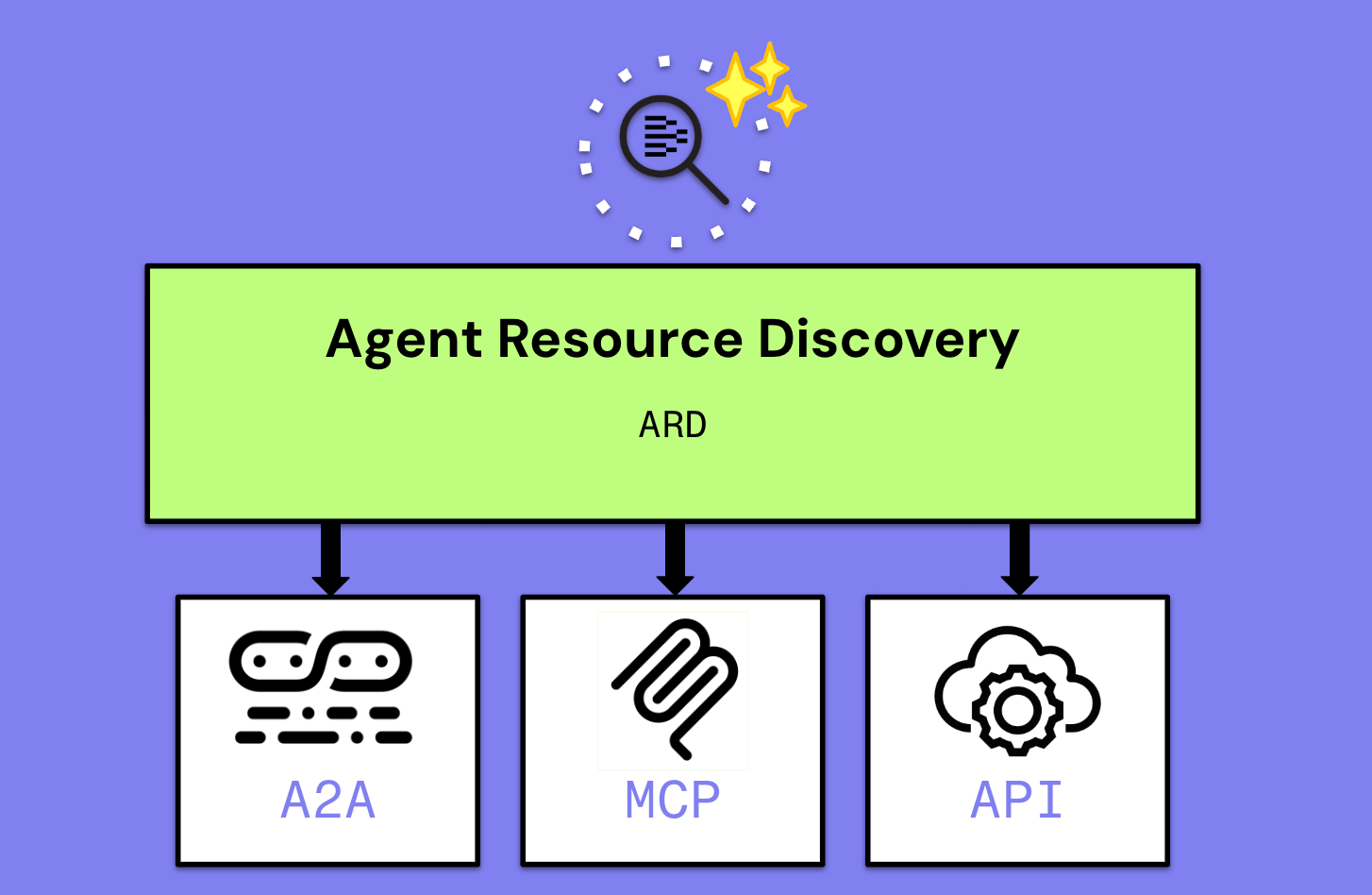
 Image credit: By