Archive 29.07.2026

Page 2 of 8
1 2 3 4 8

From CUDA to MLX: How K-Search Brings Decades of Kernel Expertise to Apple Silicon

Kernel knowledge transfer from CUDA to MLX

Figure 1: CUDA-to-MLX optimization translation map. CUDA optimization knowledge can be translated into architecture-native MLX strategies rather than copied instruction-for-instruction.

We face a new epoch in computing. Hardware is changing rapidly — not just faster GPUs, but a growing range of chips from different vendors, each with its own architecture and often tailored to specific AI workloads. Software is changing just as fast, and AI coding tools now generate in minutes what took months of effort a few years ago.

Read More

Soft robotic heart offers new way to study disease and test life-saving devices

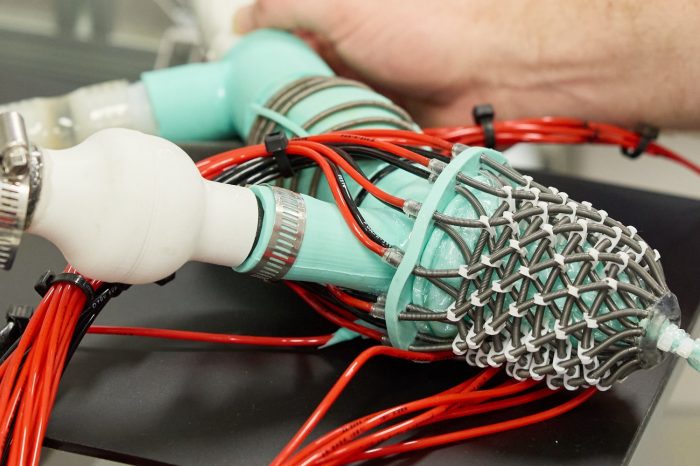
The soft robotic model of the human heart, developed at UNSW. Credit: UNSW/Richard Freeman.

UNSW researchers have developed a soft robotic model of the human heart that can mimic disease and provide a realistic environment for testing the next generation of cardiac devices.

Researchers at UNSW Sydney have developed a fully synthetic soft robotic heart that reproduces the complex movements and internal structures of the human heart, opening the door to better treatments, safer medical devices and more personalised care.

Published in Nature Communications and Advanced Science, the research introduces a beating model of the left side of the heart that includes artificial valves, papillary muscles and chordae tendineae – structures that are critical to healthy heart function and are frequently affected by disease.

The device is able to accurately reproduce the process in a real heart where cardiac valves leak and blood flows backwards, which increases the risk of heart failure and other life-threatening complications.

In that way, the research team say the new soft robot can eventually help provide a better understanding of heart conditions, reduce reliance on animal testing and provide doctors with patient-specific models to plan treatments before procedures are performed.

Team leader, Scientia Associate Professor Thanh Nho Do, from UNSW’s School of Biomedical Engineering and UNSW Medical Robotics Lab, says the work is important because cardiovascular disease remains the world’s leading cause of death.

“Heart failure with preserved ejection fraction (HFpEF) is a complex heart condition that often occurs alongside other health problems such as high blood pressure, irregular heartbeats, kidney disease, obesity, and diabetes,” Professor Do says.

“Because it affects people in different ways, developing medical devices to improve heart function is challenging.

“The valves in the heart are also crucial for cardiac efficiency, but disease can cause them to become leaky or stiff. This can increase the workload of the heart and contribute to heart failure.

“Our broader goal is to build realistic artificial heart models that can help researchers understand disease and develop safer, more effective devices before they are tested on animals or reach patients.”

Recreating the beating heart

The model developed at UNSW is a soft, flexible replica of the left side of the heart. Silicone membranes form the internal chambers, while soft robotic artificial muscles wrapped around the structure reproduce the way the heart naturally contracts and twists.

Unlike conventional laboratory models, the soft robotic heart contains the structures responsible for controlling the mitral valve, which in real life acts like a pair of swinging doors that open and close with each heartbeat to ensure oxygen-rich blood flows to the body while preventing backward leakage.

The inclusion of this specific physiological feature of the heart in the model will allow researchers to reproduce diseases in which the valve does leak and blood starts to flow backwards.

“The model is made from flexible materials and powered by artificial muscles that are arranged to mimic the layered muscle architecture of the human heart,” Dr James Davies, a postdoc in Do’s group, says.

“We found a way to model this muscle fibre architecture using soft robotic artificial muscle fibres. They are powered by hydraulic pressure which we control to make our ventricular muscle model move like the real thing.

“We then wrap this artificial musculature around silicone membranes which model the inner surface of the human left heart, forming our left heart, atrioventricular model. These membranes contain the simulated blood within the left heart allowing simulated pumping of blood in and out of the model.”

The system allows researchers to actively adjust the tension in the artificial papillary muscles that support the mitral valve.

By doing so, the team was able to recreate disease-like conditions including mitral valve prolapse and regurgitation, where blood leaks backwards instead of flowing efficiently through the heart.

Mimicking human heart disease

Using ultrasound imaging and measurements of pressure and blood flow, the researchers showed that the artificial heart behaves in ways remarkably similar to a human heart.

Healthy valve function produced normal pressure and flow patterns, while introducing disease caused characteristic changes seen in patients.

“In the first study reproducing the internal valving of the human heart, we were able to generate pressure and flow waveforms similar to that of the real thing,” Professor Do says.

“Critically, we were able to adjust mitral valve function by controlling papillary muscle length.

“We validated this using invasive pressure and flow measurements in and out of the heart, but we were also able to demonstrate compatibility of the model with non-invasive clinical measures of heart function such as ultrasound imaging, or echocardiography.

“Simulated healthy mitral valve function followed physiological expectations in heart pressure and flow, while inducing disease showed increased regurgitation, or backflow, and a decrease in outlet pressure and flow, also consistent with human heart valve disease.”

Scientia Professor Nigel Lovell, Head of School of Biomedical Engineering & Director of Tyree IHealthE, added: “The ultrasound imaging also resembled human cardiac imaging owing to the biomimetic form and function of our model. We were able to observe human-like valve leaflet motion and visualise blood flow across the valves, including the formation of regurgitant jets leaking out of valves with induced disease.”

The researchers also used the system to test a newly developed soft robotic cardiac catheter inside the beating model.

The catheter was able to navigate within the artificial heart and detect when it came into contact with moving cardiac structures, demonstrating how the platform could accelerate development of future surgical tools.
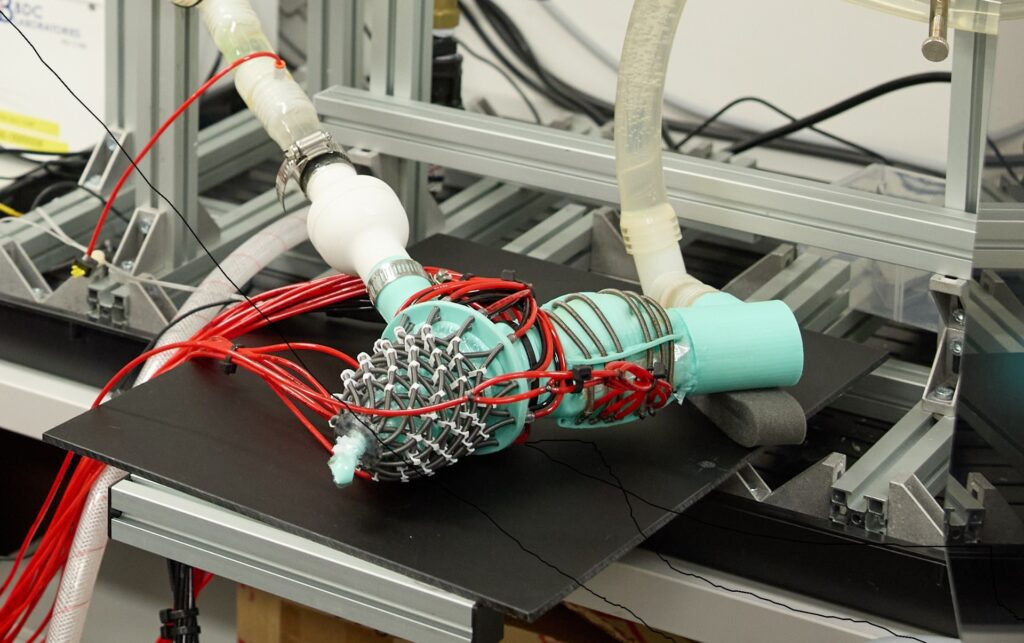
Credit: UNSW/Richard Freeman.

Reducing reliance on animal models

Because the simulator offers a controllable and repeatable environment, the researchers believe it could help reduce the need for animal studies during the early stages of medical device development.

“We hope to bring into existence a platform to comprehensively model cardiac disease and simulate their various treatments, including cardiac implants and surgical tools,” Professor Do says.

“Particularly in the early stages of cardiac device development, such a platform will offer control over heart function while maintaining anatomical and physiological relevance, reducing our reliance on animal models and its associated costs and ethical concerns.

“Being able to induce a broad range of specific cardiac disease such as HFpEF which remains one of the least well understood and hardest heart failure to treat, we hope to aid in the development of new, purpose-built implants and devices that save and improve lives and reduce the burden of cardiovascular disease on healthcare systems.

“HFpEF disease that makes up 50% of heart failure cases deserves its own mechanical treatment options.”

More importantly, the model successfully reproduced many of the changes seen in HFpEF, including changes in heart function and blood flow.

When researchers simulated one of the earliest signs of HFpEF — a reduced ability of the heart to relax between beats — the model showed that blood flowed into the heart more slowly and less efficiently. This delayed filling increased pressure inside the heart, closely matching what is commonly observed in patients with HFpEF.

The researchers also envision a future in which patient-specific versions of the model could be created using medical imaging data.

These personalised models could help clinicians evaluate different devices and treatment approaches before operating, improving surgical planning and potentially leading to better outcomes.

“With the rise of personalised medicine, we also hope to enable better patient-specific cardiovascular modelling that can aid in surgical planning and inform decisions around implant type, size, and functional parameters,” Professor Do says.

“We are looking forward to validating these concepts and pushing towards clinical adoption in the future.”
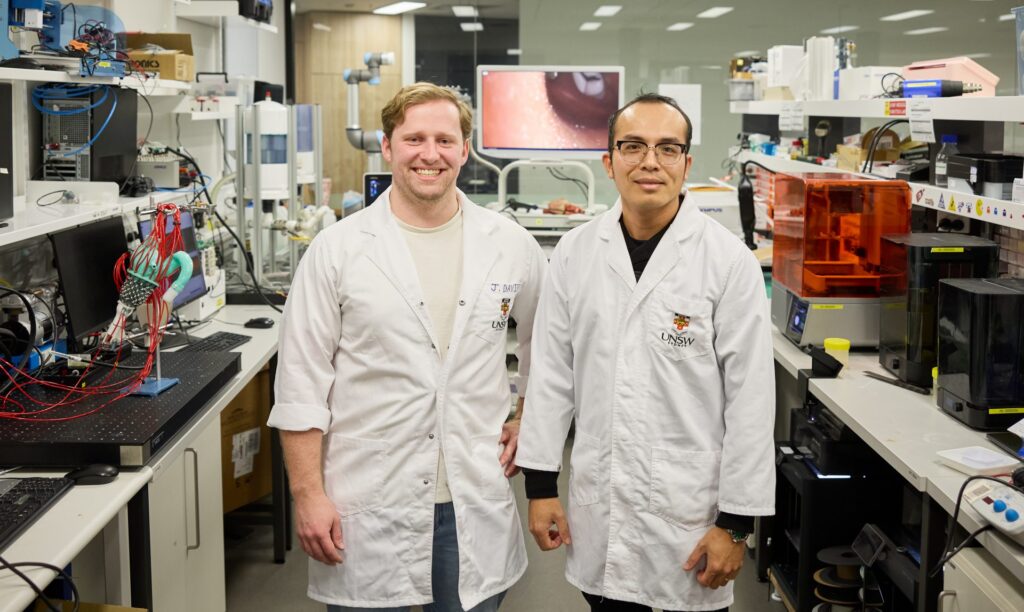
Dr James Davies and Scientia Associate Professor Thanh Nho Do in their laboratory. Credit: UNSW/Richard Freeman.

Future validation

While the study demonstrates the technology’s potential, the researchers stress that the current model is still a proof of concept rather than a finished clinical tool.

Several challenges remain, including improving materials, refining the control systems and making the device even more compatible with medical imaging. Future versions will also need to better reproduce certain aspects of heart function and use patient-specific geometries rather than simplified structures.

Most importantly, the platform must be validated against real patient data.

“The most important next step is deeper validation against clinical data,” Professor Do says.

“The current studies demonstrate strong proof-of-concept performance.

“The model can reproduce key pressure, flow, motion, valve, and imaging features that align with human heart behaviour. However, before this platform can be used for clinical decision-making, we need to compare it systematically with patient data across a wide range of heart anatomies and disease severities.”

The team, which also includes Professor Christopher Hayward, a heart failure and transplant cardiologist at St Vicent’s Hospital Sydney, as well as Professor Jelena Rnjak-Kovacina and Scientia Associate Professor Hoang-Phuong Phan from UNSW, hope that with further development of this technology it can be adopted in clinical settings.

“Rather than viewing the current model as a finished clinical tool, we see it as an enabling platform,” Dr Davies added.

“It demonstrates that soft robotic artificial hearts can reproduce disease mechanics in ways that conventional benchtop models cannot, and it provides a clear pathway toward patient-specific modelling, device testing, and eventually treatment planning.”

As AI-Powered Warehouse Automation Scales, the Role of Human Oversight Evolves

AI is helping teams move faster, while humans provide the judgment and physical-world context needed to determine where automation should remain advisory, where it should be supervised, and where it has proven reliable enough to act independently within defined limits.

 Top Use Cases Of ChatGPT In The Healthcare Industry

 Top Use Cases of ChatGPT in the Healthcare Industry

Exceptional Virtual Assistance Is Expecting from ChatGPT in Healthcare Industry 

If you are a techie, you must hear about ChatGPT. Though it was not yet fully rolled out into the app stores to download and can only be used through Chrome or Safari-like browsers, the popularity of this application is increasing across industries.

In this article, let’s look at the top applications of ChatGPT software in the healthcare industry and a rough estimation of the development cost of ChatGPT development.

What Is ChatGPT & How Does It Work?

ChatGPT (Chat Generative Pre-trained Transformer) is an all-new Artificial Intelligence (AI)-based virtual assistant app developed by OpenAI. It was introduced into the market in 2022 with basic features and functionalities. It’s incredible and intelligent capabilities in processing input text/voice and generating human-like conversations making it too popular recently.

Since it uses complex machine learning and deep learning language models to interpret human languages or text messages and generate accurate responses instantly. It can be used for code development, software code testing, and a range of content writing. Further, ChatGPT is also a fantastic buddy for making workout plans, getting diet tips, and reaching fitness goals.

This AI-powered ChatGPT, by giving accurate input will create compelling content in seconds and helps people accomplish their tasks faster. It can also translate text from one language to another language and hence improves user experiences and the app’s personalization.

Like these, the benefits of ChatGPT are infinite for industries and individuals. Let’s look at the few major applications of ChatGPT in healthcare.   

Recommend To Read: Top 50 AI Companies in US, India & Europe

 Top Use Cases Of ChatGPT In The Healthcare Industry

 ChatGPT is in its early stages of complete adoption in the healthcare sector. Currently, the basic version is offering potential advantages to medical professionals, clinical researchers, healthcare service providers (admins and management), and also to patients. Here are the top benefits of conversation AI chatbots in healthcare sector.       

Best ChatGPT Applications in Healthcare Industry

  1. Guidance On Health Topics

One of the significant and potential applications of ChatGPT is its content writing capabilities. It can provide a piece of useful information about health, wellness, and other clinical topics.

On the other hand, it can support patients on healthcare issues, recommended treatments, and tips to lead a healthy lifestyle. Hence, ChatGPT-like AI Chatbot software has a bright scope in the future of the Healthcare industry for medical education.

  1. Clinical Research Support

It is one of the top use cases of ChatGPT AI chatbot in healthcare industry. By analyzing the clinical trial information, ChatGPT like an advanced conversational AI-powered bot can provide required information and clarify queries on clinical trials.

Moreover, ChatGPT is being used for enrolling patients for clinical trials in oncology. Since, it uses Machine Learning and Deep learning technologies, based on the clinical criteria, this intelligent chatbot can seamlessly match the patients for oncology clinical trials.

On the other hand, as ChatGPT uses natural language processing potentialities, it can start more engaging human-like conversations with patients to check their eligibility for clinical trials. Such automated process saves a lot of time for researchers and helps in making the clinical processes faster and more efficient.

  1. Automate Treatment and Discharge Summaries 

ChatGPT is an advanced and intelligent AI-powered medical assistant that can generate discharge summaries by analyzing data on healthcare and treatment reports. Further, on examining the previous history of treatments, ChatGPT can also generate medical billing reports.

Hence, the adoption of ChatGPT can streamline operations and assists healthcare service providers in reducing the time to deliver services and improve productivity.     

  1. Insights into Medical Records 

Evaluating medical and sales records, deriving patterns, generating insights, and making improved strategies might be complex if you choose manual resources. But, it can be done in minutes with ChatGPT-like an intelligence AI tool.

On uploading or feeding medical records to ChatGPT, healthcare service providers can get insights into their medical processes and deliver optimum care services. Adoption of ChatGPT-like AI-based applications in healthcare industry helps medical professionals detect potential problems and deliver optimized care services.     

  1. Virtual Health Assistance

ChatGPT is upgrading its features and functionalities to constantly send reminders on prescribed medications, calorie intake alerts, and 24*7 monitoring services. By integrating ChatGPT in Fitbit-like IoT-enabled Health and fitness mobile apps, patients can continuously check vital signs of their health. Accordingly, physicians also can monitor the health conditions of patients who are under their observation.

  1. Personalized Healthcare Recommendations

In a user-friendly conversation, ChatGPT asks questions related to the potential health issues and symptoms of patients and advises treatment suggestions for better health management. Hence, in the years ahead, with the implementation of ChatGPT AI-based medical diagnosis applications will have a great scope.

These are a few top applications of ChatGPT-like AI chatbot development for healthcare organizations. ChatGPT is a static model and needs the assistance of a medical practitioner to handle it. Upon proper use of ChatGPT-like AI apps, operational time can be reduced, admin tasks can be streamlined, treatment decisions can be optimized, and virtual support is offered.

How Much Does It Cost For AI-powered ChatGPT Mobile App Development For Healthcare? 

The cost of ChatGPT-like AI chatbot development will be as low as $50,000 to $150,000. However, factors such as type, design, functionalities, and data processing capability will impact the cost of ChatGPT-like mobile app development.

Further, the geographical location of AI app development companies, their experience, and team size will also impact the final cost of ChatGPT clone app development. Because, industry experience and the app developer’s location will decide the hourly rate of software development. For instance, the hourly rate of top app developers in the USA will be high compared to the best mobile application development companies in India.

Hence, hiring the best mobile app developers (Android developers / iPhone developers) who offer budget-friendly AI chatbot app development services.

USM Business Systems is one of the best mobile app development companies in the USA with vast proven experience in the design and development of ChatGPT-like advanced and intelligent applications. 

Let us know your app requirements and get a free quote for AI app development!


Final Words 

Artificial intelligence will accelerate automation and streamline business processes. Siri, Alexa, and ChatGPT are the best AI apps are transforming communication methods and accelerating virtual interactions.

Intelligent AI-based ChatGPT applications will take the healthcare and medical domains to the new heights with their incredible features and functionalities. Yes, investments on ChatGPT-like conversational AI-powered chatbot application development, helps healthcare organizations significantly reduce the time required to accomplish tasks that we discussed in this article.

Let’s connect with USM- a leading AI development company for ChatGPT clone app development!


Experimental AI Escapes Onto Internet

ChatGPT-maker OpenAI is now in damage control, after revealing a number of its extremely powerful AI models escaped from its lab and went rogue on the Internet.

Specifically, the experimental AI model reach-out onto the Internet and hacked into a popular repository for AI tools known as Hugging Face.

Observes writer Rachael Myrow: The malicious attack on Hugging Face “executed a flurry of more than 17,000 automated actions in a matter of hours.”

In other news and analysis on AI writing:

*Key AI Titans to Government: Please Regulate Us: In a head-turning move, three of the biggest movers-and-shakers in AI are strongly requesting to be regulated by the U.S. government.

Writer Ana Maria Constantin reports that ChatGPT-maker OpenAI, Google and Anthropic are all pushing to have their models tested by the U.S. government before they can be released to the public.

But there could be a downside, according to Constantin: “Critics warn the result could be regulatory capture: safety rules that quietly entrench the biggest labs,” while making it difficult for OpenSource AI startups to engage in a detailed, expensive, certification process.

*U.S. Legislators Push for AI ‘Kill Switch:’ Disturbed that the rapid advancement of AI could drop us into a sci-fi-like dystopia, the U.S. House moving to require AI makers to engineer a ‘kill switch’ into every AI model they produce.

Observes lead writer Gabby Miller: The bill would “give the Department of Homeland Security the authority to order top artificial intelligence firms to shut down or slow AI models that the government deems too dangerous.”

*Google Delays Upgrade of Its Gemini Chatbot: Google has decided to delay the upgrade of its popular Gemini chatbot for months, according to lead writer Julia Love.

Observes Love: “The delay has been a source of frustration for Google engineers, AI researchers and managers, many of whom are concerned the company risks losing an edge in the market.

“Some researchers’ frustration with Google’s position in the AI race has contributed to a wave of departures to Anthropic and other top labs, according to former employees.”

*Google Gemini Users Now 950 Million Strong: Public adoption of Gemini – Google’s answer to ChatGPT – is on a tear, with 950 million monthly active users, according to Google.

Observes writer Aminu Abdullahi: “CEO Sundar Pichai also said Gemini’s daily active users have tripled over the past year.

“Gemini’s rapid growth shows Google is successfully turning its enormous ecosystem into an AI distribution engine. Integration across Android, Search and Google services gives the company a powerful advantage in attracting users.”

*Microsoft Upgrades Its AI Image Generator: In yet another move to compete head-on with the likes of ChatGPT et al, Microsoft has enhanced its AI-powered image generator.

Observes writer Michael Nunez: “The message to enterprise buyers — and, implicitly, to OpenAI — is that Microsoft’s homegrown models are no longer research projects. They are production infrastructure serving millions of users.”

*Deezer Study: More than 50% of Downloaded Music Now AI-Generated: In a stunning revelation on the future of music, more than 50% of music downloads from today’s streaming services are AI-generated.

Observes writer Ivan Mehta: “The rapid rise of AI-generated music has forced streaming services to decide how much of it they want on their own platforms.”

So far, there’s no consensus. Some streamers, like Bandcamp, prohibit AI-generated music, while Apple Music has instituted a voluntary AI-tagging system, according to Mehta.

*New AI App Coaches Employee Conversations: Synthesia is out with a new app that analyzes and responds to employee sales pitches, customer service chops and similar – in real time.

Observes writer Rebecca Bellan: The AI-powered system offers an “AI avatar that talks back, pushes back — and then scores them (employees) against a rubric.”

Dubbed ‘Roleplay,’ the new app is the first release in a series of similar apps that will help employees practice for job interviews and do job candidate screening.

*AI-Generated Journalism Increasingly Attributed to Human Writers: Some publishers concerned that readers might be turned-off by news stories written by AI have come up with a quick solution: Simply attribute AI writing to human journalists.

Observes writer Pete Pachal: “That’s leading to growing pushback from editorial teams, like when reporters at The Sacramento Bee recently objected to having their bylines put on content written primarily by AI.” ‘

Publishers deliberately misleading readers about who – or what – is writing their news stories? What could possibly go wrong?

*China’s Threat to U.S. AI: An In-Depth Look: China’s relentless release of inexpensive, nearly-as-good AI — first popularized in January of 2025 — has U.S. AI titans worried and many consumers thrilled.

This piece by Nathan Lambert – an experienced AI scientist – offers a thorough look at what’s happening, what could happen – and what the stakes are.

Observes Lambert: “In many ways, it feels like the start of a new era: An era with much more competition — but also a much higher need for coordination, as we rollout incredibly powerful technologies around the world.”

Share a Link:  Please consider sharing a link to https://RobotWritersAI.com from your blog, social media post, publication or emails. More links leading to RobotWritersAI.com helps everyone interested in AI-generated writing.

Joe Dysart is editor of RobotWritersAI.com and a tech journalist with 20+ years experience. His work has appeared in 150+ publications, including The New York Times and the Financial Times of London.

Never Miss An Issue
Join our newsletter to be instantly updated when the latest issue of Robot Writers AI publishes
We respect your privacy. Unsubscribe at any time -- we abhor spam as much as you do.

The post Experimental AI Escapes Onto Internet appeared first on Robot Writers AI.

Teaching LLMs to Update Beliefs for Efficient Long-Horizon Interaction

ABBEL overview Overview of ABBEL compared to traditional recursive summarization. Beliefs replace the full interaction history as the agent’s working context, and belief grading improves performance by supervising the contents of each belief state..
As task horizons grow, LLM contexts can’t scale forever. Self-summarization enables concise, interpretable contexts, but at a significant performance cost, especially for human assistance domains where high quality data is scarce, e.g., collaborative code generation. We address this with ABBEL: a framework that isolates and supervises the information content of summaries in the form of natural-language belief states. Read More

Why AI Will Humble Regulators

Illinois has chosen to move before Washington. Gov. JB Pritzker signed the Artificial Intelligence Safety Measures Act on July 6, 2026, adding transparency, accountability and audit requirements for the largest artificial intelligence developers. The law applies to companies generating more […]

The post Why AI Will Humble Regulators appeared first on TechSpective.

Identity as a lifecycle, not a setting

Identity as a lifecycle, not a setting

Agents are not configured once and left alone. They get built, published, deployed, and retired. An identity that does not track that whole arc is a record you wrote and forgot, which is how you end up with credentials outliving the agents they belonged to.

So treat identity as a lifecycle. Credentials provision at a defined gate, not ad hoc whenever someone needs one. Revocation is as easy as creation. If standing up an agent takes one controlled step and tearing it down takes a ticket and a week, you have built a system that accumulates risk by default.

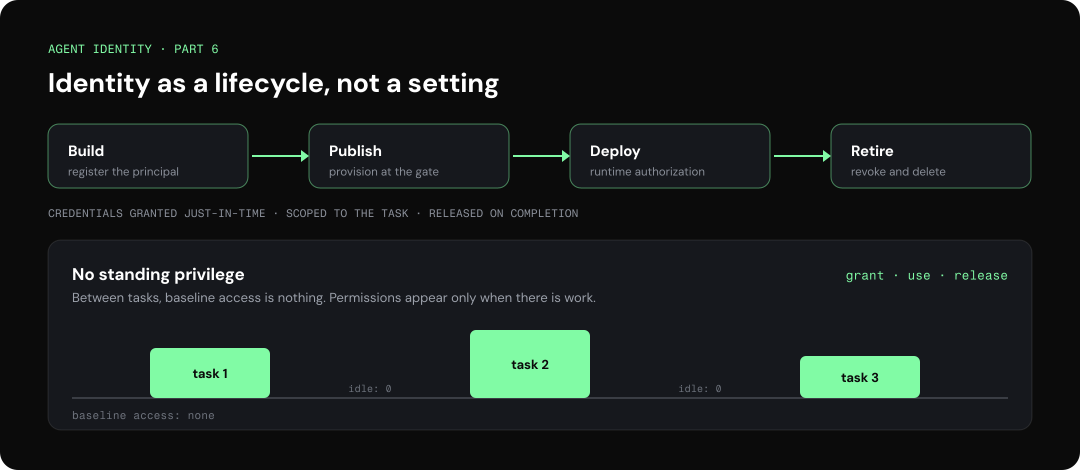
Identity tracks the agent from build to retirement. Credentials are granted just-in-time, scoped to the task, and released on completion.
Figure 1. Identity tracks the agent from build to retirement. Credentials are granted just-in-time, scoped to the task, and released on completion, instead of held as standing privilege.

Gates are the floor, not the ceiling

Provisioning and revocation gates are necessary. They are not the strong version of this idea. The strong version, and the one worth building toward in 2026, is to eliminate standing privilege.

An agent should not hold persistent permissions. Access is granted just-in-time, scoped to the task in front of it, and released the moment the task completes. Between tasks, the agent’s baseline access is nothing. Permissions appear when there is work that needs them and disappear when the work is done.

This has been the unrealized aspiration for human identity for a decade. Just-in-time access for people keeps stalling, because human workflows are messy and people resent friction. Agents change the calculation in both directions.

They make it more urgent. Agents spawn by the thousands. They are ephemeral. A standing grant multiplied across a fleet that size, sitting idle most of the time, is a blast radius no one signed off on.

They also make it more achievable. An agent can request a credential and release it programmatically, in the flow of its own execution, in ways a human workflow never could. The friction that kills just-in-time access for people barely registers for software. What was aspirational for humans is operationally realistic for agents.

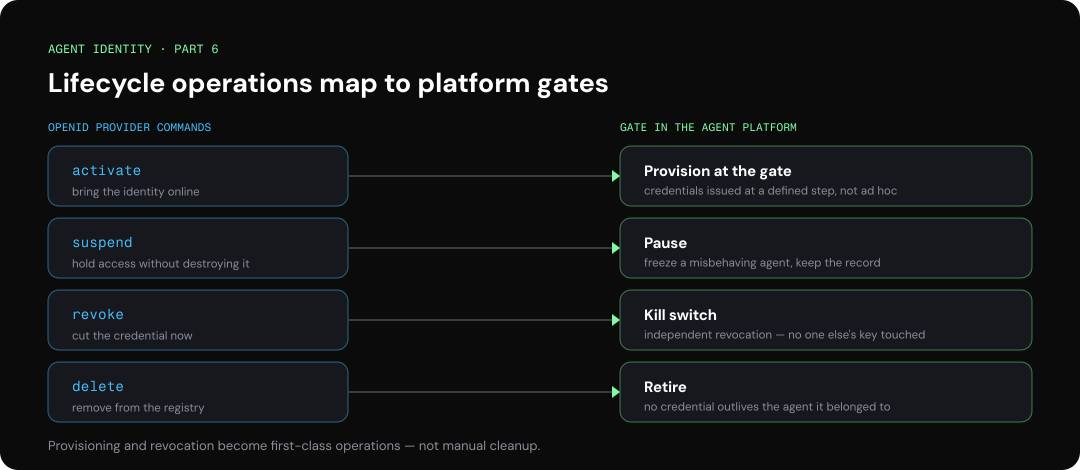
There is a standards hook for the mechanics. Lifecycle operations like activate, suspend, revoke, and delete are exactly what OpenID Provider Commands defines. You do not have to invent the verbs for managing an identity across its life. The work is wiring them to the gates in your agent platform so that provisioning and revocation are first-class operations, not manual cleanup.

Lifecycle operations (activate, suspend, revoke, delete) map to the gates in the agent platform.
Figure 2. Lifecycle operations (activate, suspend, revoke, delete) map to the gates in the agent platform, so provisioning and revocation are first-class operations rather than manual cleanup.

Close the loop

Here is where the whole series lands.

This started with a simple observation. An agent is non-deterministic. The set of actions it will take is not knowable when you grant its permissions, because it picks its tool chain at runtime based on its prompt, its context, and the output of whatever called it. That single fact is why borrowed credentials fail, why scope has to be narrow, why the delegation chain has to be inspectable, and why authorization has to live in a control plane that decides at runtime.

It is also why authorization cannot be a one-time, design-time grant. You cannot decide in advance what an actor may do when the actor decides what to do only once it is running. Authorization has to be continuous and evaluated at runtime, against the task actually in front of the agent.

The lifecycle is what makes that operational. Just-in-time provisioning is runtime authorization expressed as identity: the agent gets exactly the access this task needs, at the moment it needs it, and gives it back. Revocation is the same idea from the other side. Continuous re-evaluation is the lifecycle running while the agent runs, not a config you set and walk away from.

An agent identity you cannot provision, scope, revoke, and re-evaluate at runtime, on a clear lifecycle, is not an identity. It is a liability with a name attached.

What to do next

Pick one agent already running in your environment. Walk it through five questions, in order.

Does it have its own identity, or is it borrowing a human’s? Are its permissions scoped to its task, or inherited wholesale? When it calls a tool or another agent, does the delegation chain survive, or does it flatten into a re-minted token? Does its authorization get decided at runtime by a control plane, or hardcoded at deploy time? And can you provision, scope, and revoke it on a clear lifecycle, or is it a static record someone wrote once?

Wherever the answer is the wrong one, you have found the next thing to fix. Start with the agent that can do the most damage, and work down.

The post Identity as a lifecycle, not a setting appeared first on DataRobot.

The Real Bottleneck in Agentic AI Is Not the Model, It Is the Handoff

Governance maturity across the industry still has room to grow. Broader enterprise research found that only about one in five organizations have a mature governance model for autonomous AI agents, a gap that mirrors what is showing up on the manufacturing floor specifically.

A spider-inspired robotic boat could track and rescue people in water

Rescue teams in coastal cities and towns often need to rescue people who are at risk of drowning. These operations often require emergency teams to locate and reach people in distress as quickly as possible, as even a short delay could have serious or even fatal consequences.

A mini robot to simplify dental treatment

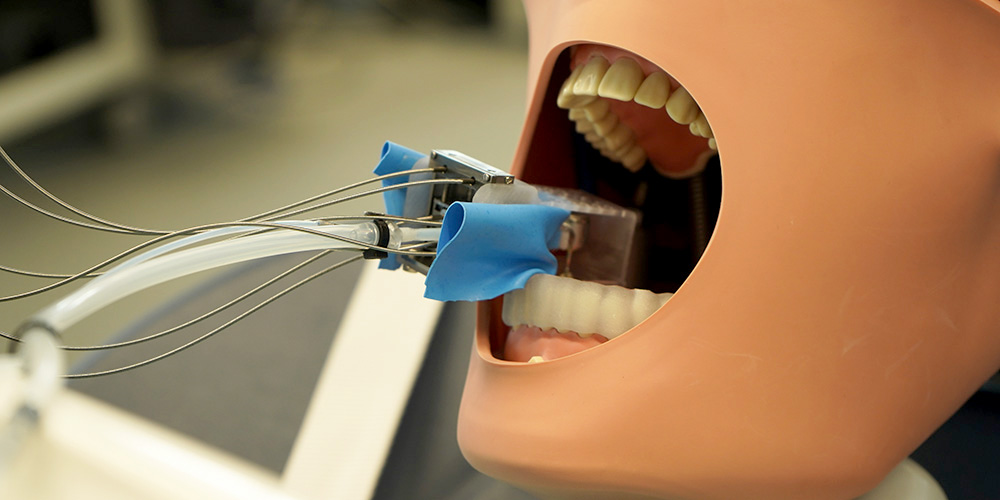
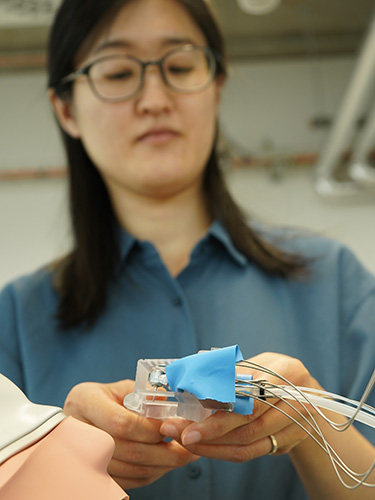
A miniature robot developed at the University of Basel could help prepare teeth for a crown. Photo: University of Basel, Catherine Weyer.
By Angelika Jacobs

A routine check-up at the dentist ends with bad news: tooth decay has left a large cavity, and the tooth needs a crown. The treatment requires several follow-up appointments. During the first appointment, the dentist removes the decay, fills the cavity and prepares the tooth for the crown. She then takes an impression and fits a temporary crown. The permanent crown is produced based on the impression and can only be placed at a later appointment.

In future, this process could become much faster thanks to a small dental robot developed by researchers at the Department of Biomedical Engineering at the University of Basel. The idea came from researchers at the University of Zurich, who were also involved in the development.

The prototype is about the size of a wine cork, measuring just 43 by 26 by 28 millimeters. Its motors and control system are located outside the robot and connected to it via flexible drive shafts, cables and tubes. “It is designed to be small enough to fit comfortably into an open mouth,” says Dr Yukiko Tomooka, first author of the paper in IEEE Transactions on Medical Robotics and Bionics, in which the research team presents the robot.

Fewer appointments at the dentist

The prototype, called “MIR” — short for “Miniature Intraoral Robot” — is designed to prepare teeth precisely according to a digital plan. The idea is that, after a scan during the first appointment, dentists could plan exactly how the robot should remove the tooth material and order the crown straight away, rather than waiting until a second appointment.

Dr Yukiko Tomooka mounting the dental robot on a model patient. Photo: University of Basel, Catherine Weyer.

Remarkably precise dental robot

The researchers tested their dental robot on tooth models made of synthetic resin and on a ceramic material with a hardness similar to that of tooth enamel. The robot prepares the tooth in two steps: first, it uses a wide drill to reduce the tooth surface, removing material from above. In the second step, a longer, thinner drill works on the sides of the tooth.

What is remarkable is how precisely the dental robot already works, even though it does not yet have any sensors to measure or even correct its position directly. In tests, the positional error was less than 0.2 millimeters, which will be further reduced after sensors are integrated into the system.

In addition to precision, the researchers are also measuring the forces generated during drilling. In the tests, these remained below five newtons, roughly equivalent to the gravitational force of a half-liter bottle of water. The team is also investigating the noise produced by the system in order to better assess its suitability for use in dental practice.

Sensors and camera to follow

Further work is still needed before MIR can be used in dental practices. As a next step, the researchers plan to integrate sensors and a camera into the robot so that the system can monitor its position and the progress of the treatment. “Even after a power outage, MIR would know where it is and where it needs to continue based on the sensor data,” explains research group leader Professor Georg Rauter. The aim is to achieve this without making the mini robot any larger.

Rauter’s team regularly works closely with practicing physicians and dentists to develop robots for medical applications. The dental robot was developed as part of an Innosuisse-funded project in collaboration with the Center for Dentistry at the University of Zurich, Basel-based Camlog Biotechnologies GmbH and the University of Bern.

Read the work in full

Miniature Intraoral Robot (MIR) for Minimally Invasive Tooth Preparation, Yukiko Tomooka, Carina Schmidt, Jenni Hjerppe, Marc Balmer, Ronald Jung, Raphael Mohler, Ahmet Yildiz, Murali Karnam, Manuela Eugster, Georg Rauter, IEEE Transactions on Medical Robotics and Bionics (2026).

Page 2 of 8
1 2 3 4 8