The Silicon Six avoided $278bn in US taxes over a decade. Here's how Amazon, Apple, Meta, Google, Netflix & Microsoft did it — and why it keeps happening.
The post Silicon Six: How Big Tech Avoided $278 Billion in Tax appeared first on 1redDrop.
The Silicon Six avoided $278bn in US taxes over a decade. Here's how Amazon, Apple, Meta, Google, Netflix & Microsoft did it — and why it keeps happening.
The post Silicon Six: How Big Tech Avoided $278 Billion in Tax appeared first on 1redDrop.
Publishers allege Zuckerberg personally authorized Meta's AI copyright infringement. What the Llama lawsuit means for AI and creators.
The post Meta AI Copyright Lawsuit: Zuckerberg Personally Authorized It appeared first on 1redDrop.
Peter Thiel just backed Panthalassa with $140M to build wave-powered ocean data centres. Here's how the tech works and why it matters for AI infrastructure.
The post Wave-Powered Ocean Data Centres: Inside Panthalassa’s $140M Bet appeared first on 1redDrop.
For decades, the technology industry lived and breathed by the cadence of a few select “can’t-miss” events. We remember the peak of COMDEX, the frenzy of early Macworlds, and, most importantly for the silicon world, the Intel Developer Forum (IDF). […]
The post The Coming AI Storm and Why AMD’s coming July Event Is the New Industry North Star appeared first on TechSpective.
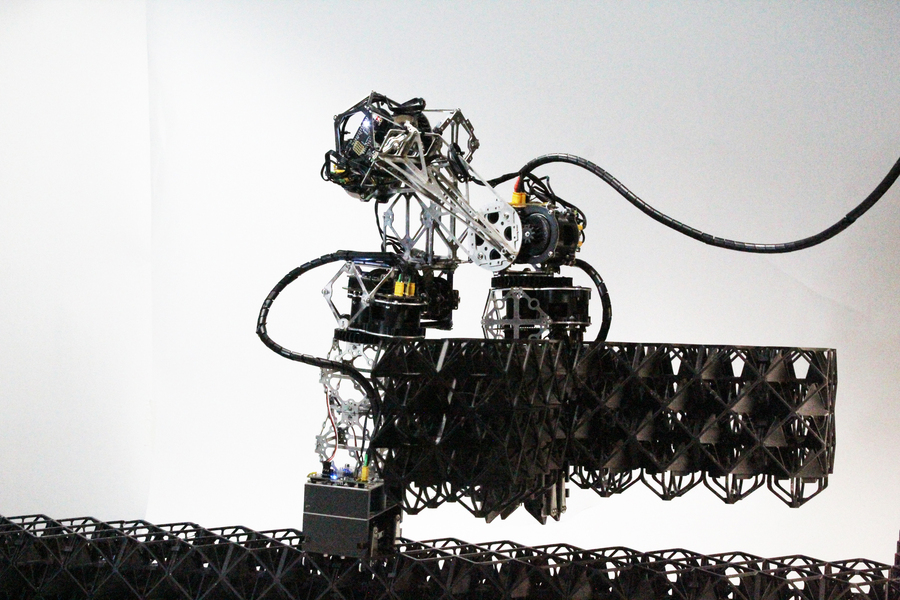 A robot carries three voxels as it walks across a voxel structure. Modular Inchworm Lattice Assembler robots, or MILAbots, use grippers on each end to place voxel building blocks and engage the snap-fit connections. Credit: Courtesy of the researchers.
By Adam Zewe
Robotically assembled building blocks could be a more environmentally friendly method for erecting large-scale structures than some existing construction techniques, according to a new study by MIT researchers.
The team conducted a feasibility study to evaluate the efficiency of constructing a simple building using “voxels,” which are modular 3D subunits that assemble into complex, durable structures.
After studying the performance of multiple voxels, the researchers developed three new designs intended to streamline building construction. They also produced a robotic assembler and a user-friendly interface for generating voxel-based building layouts and feeding instructions to the robots.
Their results indicate this voxel-based robotic assembly system could reduce embodied carbon — all of the carbon emitted during the lifecycle of building materials — by as much as 82 percent, compared with popular techniques like 3D concrete printing, precast modular concrete, and steel framing. The system would also be competitive in terms of cost and construction time. However, the choice of materials used to manufacture the voxels does play a major role in their carbon footprint and cost.
While scalability, durability, long-term robustness, and important considerations like fire resistance remain to be explored before such a system could be widely deployed, the researchers say these initial results highlight the potential of this approach for automated, on-site construction.
“I’m particularly excited about how the robotic assembly of discrete lattices can enable a practical way to apply digital fabrication to the built environment in a way that can let us build much more efficiently and sustainably,” says Miana Smith, a graduate student in the Center for Bits and Atoms (CBA) at MIT and lead author the study.
She is joined on the paper by Paul Richard, a graduate student at École Polytechnique Fédérale de Lausanne in Switzerland and former visiting researcher at MIT; Alfonso Parra Rubio, a CBA graduate student; and senior author Neil Gershenfeld, an MIT professor and the director of the CBA. The research appears in Automation in Construction.
Designing better building blocks
Over the past several years, researchers in the Center for Bits and Atoms have been developing voxels, which are lattice-structured building blocks that can be assembled into objects with high strength and stiffness, like airplane wings, wind turbine blades, and space structures.
“Here, we are taking aerospace principles and applying them to buildings. Why don’t we make buildings as efficiently as we make airplanes?” Gershenfeld says, based on prior work his lab has done on voxel assembly with NASA, Airbus, and Boeing.
To explore the feasibility of voxel-based assembly strategies for buildings, the researchers first evaluated the mechanical performance and sustainability of eight existing voxel designs, including a cuboctahedron made from glass-reinforced nylon and a Kelvin lattice made from steel.
Based on those evaluations, they developed a set of three voxels using a new geometry that could be more easily assembled robotically into a larger structure. The new design, based on a high-strength and high-stiffness octet lattice, mechanically self-aligns into rigid structures.
“The interlocking nature of these voxels means we can get nice mechanical properties without needing to have a lot of connectors in the system, so the construction process can run a lot faster,” Smith says.
To accelerate construction, they designed a robotic assembly system based on inchworm-like robots that crawl across a voxel structure by anchoring and extending their bodies. These Modular Inchworm Lattice Assembler robots, or MILAbots, use grippers on each end to place voxel building blocks and engage the snap-fit connections.
“The robots can assemble the voxels by dropping them into place and then stepping on them to have the pieces interlock. We can do precise maneuvers based on the mechanical relationship between the robots and the voxels,” Smith explains.
The team studied the embodied carbon needed to fabricate their new voxel designs using three materials: plastic, plywood, and steel. Then they evaluated the throughput and cost of using the robotic assembly system to build a simple, one-story building. The researchers compared these estimates with the performance of other construction methods.
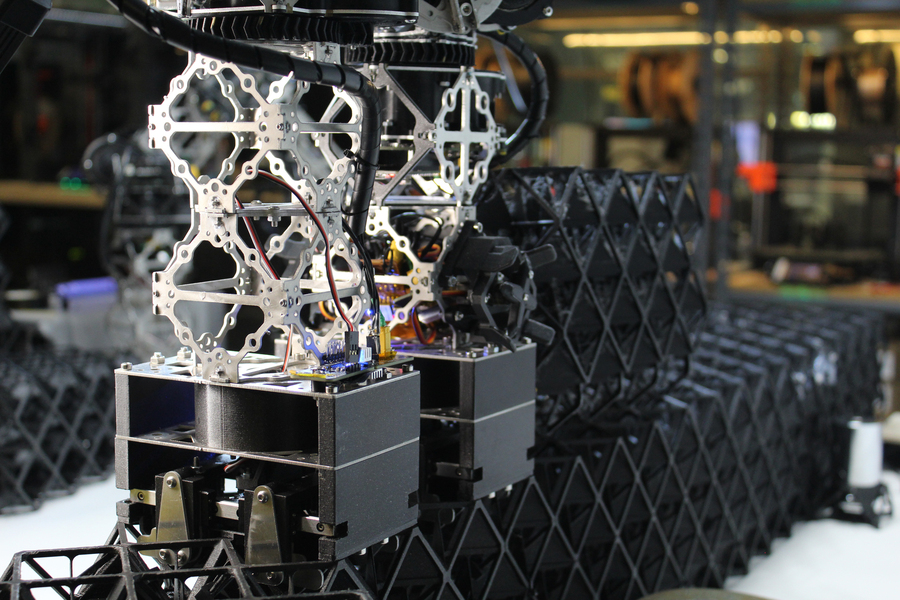 The MILAbot’s unique legs, seen here in close up. “The robots can assemble the voxels by dropping them into place and then stepping on them to have the pieces interlock,” Miana Smith explains. Credit: Courtesy of the researchers.
Potential environmental benefits
They found that most existing voxels, and especially those made from plastics, performed poorly compared to existing methods in terms of sustainability, but the steel and wood voxels they designed offered significant environmental benefits.
For instance, utilizing their steel voxels would generate only 36 percent of the embodied carbon required for 3D concrete printing and 52 percent of the embodied carbon of precast concrete. The plywood voxels had the lowest carbon footprint, requiring about 17 percent and 24 percent of the embodied carbon needed, respectively.
“There is still a potential viable option for a plastics-based voxel approach, we just have to be a bit more strategic about which types of plastics, infills, and geometries we use,” Smith says.
In addition, projected on-site assembly time for the steel and wood voxel approaches averaged 99 hours, whereas existing construction methods averaged 155 hours.
These speed benefits rely on the distributed nature of voxel-based assembly. While one MILAbot working alone is far slower than existing techniques, with a team of 20 robots working in parallel, the system catches up to or surpasses existing automation methods at a lower cost.
“One benefit of this method is how incremental it is. You can start building, and if it turns out you need a new room, you can just add onto the structure. It is also reversible, so if your use changes, you can dissemble the voxels and change the structure,” Gershenfeld says.
The researchers also developed an interface that enables users to input or hand-design a voxelized structure. The automatic system determines the paths the MILAbots should follow for construction and sends commands to the assemblers.
The next step in this project will be a larger testbed in Bhutan, using the “super fab lab” that CBA helped set up there to replicate the robots to test construction for a planned sustainable city, Gershenfeld says.
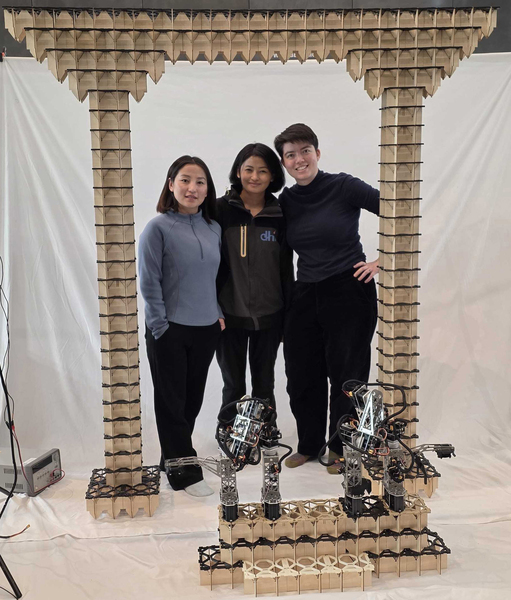 Left to right: Yeshey Wangmo Lepcha, Tshering Wangzom, and Miana Smith stand under an arch created with voxels, as part of a working visit from the Bhutanese team to MIT. Credit: Courtesy of the researchers.
Additional areas of future work include studying the stability of voxel structures under lateral loads, improving the design tool to account for the physics of the system, enhancing the MILAbots, and evaluating voxels that have integrated sheeting, insulation, or electrical and plumbing routing.
“Our work helps support why doing this type of distributed robot assembly might be a practical way to bring digital fabrication into building construction,” Smith says.
This work was funded, in part, by the MIT Center for Bits and Atoms Consortia.
The question we get most often in the first conversation with a healthcare operations leader is not ‘can AI do this?’ It is ‘what exactly does it do, and what does it replace?’
That is the right question. And the answer is specific.
A clinical operations AI agent replaces the manual work that happens before the judgment. The reconciling, the assembling, the waiting-for-the-report work that consumes hours every week and still produces outputs that are stale by the time anyone reads them.
USM Business Systems builds clinical operations AI agents for mid-market health systems, specialty pharmacy groups, and pharma and CRO organizations. Here is what those agents actually do.
Most clinical operations teams reconcile data manually. Prior auth statuses from payer portals. Prescription intake status from the pharmacy management system. Patient eligibility from the clearinghouse. Claim status from the EHR billing module. All of it arriving at different cadences, in different formats, from different systems.
The agent handles all of that continuously. Authorization statuses update when payer decisions come through. Prescription intake positions update as processing completes. Eligibility verification updates as clearinghouse responses arrive. The team opens the dashboard and the picture is current.
The most expensive clinical operations problems are the ones nobody noticed until they became denials or delays. A prior auth that has been sitting in a payer queue for eight days. A specialty drug with a procurement constraint that is not visible in the formulary system. A patient eligibility issue that will generate a claim denial 30 days from now.
The agent monitors the operation continuously and surfaces exceptions automatically. It does not wait for the weekly review. It flags the situation when the threshold is crossed.
When a clinical operations problem occurs, the investigation typically takes longer than the resolution. Where did the breakdown start? Which payer? Which authorization type? Which upstream data signal was the leading indicator?
The agent traces disruptions backward through the data and presents the cause with supporting evidence. The operations director does not spend Monday morning running the investigation. They receive the analysis and move to the response.
Healthcare operations decisions under uncertainty require modeling. What happens to authorization approval rates if Payer A changes their criteria next quarter? What does adding a second specialty drug to the formulary do to procurement timelines and patient wait times? What is the revenue exposure if denial rates on this service line hold at the current pace through Q3?
Historically, running those scenarios required an analyst, a spreadsheet, and time that is usually not available before the decision needs to be made.
The agent accepts plain-language questions and returns modeled answers. The revenue cycle director or pharmacy director asks the question and gets the output in minutes. The decision is made with the modeling, not in spite of the absence of it.
Weekly ops reviews, payer scorecards, and executive summaries do not disappear when a clinical operations agent is deployed. What changes is who builds them.
The agent generates those reports automatically, from the live data it is already reconciling. The narrative is written. The tables are populated. The anomalies are flagged.
The clinical operations team does not spend Thursday building Friday’s report. Reporting becomes a byproduct of operations, not a project with a deadline.
The teams that get the most out of clinical operations AI identify one specific problem and run a contained build on it first.
USM scopes every healthcare AI engagement in two weeks. We identify the one or two problems with the clearest ROI and the fastest measurement cycle. We build to that scope. We measure from week one.
Most first deployments are live within 8–12 weeks. The team starts using the output before the quarter is out.
Request a 30-minute Clinical Operations AI walkthrough at usmsystems.com. See the live system, not the slide deck.
[contact-form-7]Four of the ‘Magnificent Seven’ leading the AI industry reported extremely healthy earnings for Q1 2026, calming some investors concerned by what they see as overally exuberant AI investing.

Specifically: Amazon, Alphabet, Microsoft and Meta Platforms all reported a very successful Q1 2026.
Observes writer Nick Robins-Early: “The industry has for years faced questions about when its immense spending and fevered focus on the technology would pay off, while public concerns about AI’s impact on jobs and society has continued to grow.
“Wednesday’s earnings reports seemed to provide a unanimous answer: AI will pay off in revenue from cloud computing.”
In other news and analysis on AI writing:
*Hollywood: No AI-Written Script Will Ever Win an Oscar: If you’re looking to take home an Oscar with an AI-written script, forget it, according to the Academy of Motion Picture Arts and Sciences.
The organization just decreed that all movies looking for the coveted Oscar statue must be written by humans.
Score one for mere mortals.
*Gemini Chatbot Now Auto-Creates Downloadable PDFs, Word Docs and More: Writing work product generated in Google Gemini can now be easily downloaded in commonly used text and similar files.
The conversion is as simple as requesting in your prompt that Gemini render the response you’re looking for in the file format you prefer.
File formats that can now be easily rendered and downloaded with Gemini include Google Workspace files (docs, sheets and slides), PDF, DOCX, XLSX, CSV, LaTeX, TXT, RTF and MD (Markdown).
*Chinese Firm DeepSeek Releases ‘Nearly as Good AI’ for Fraction of Cost: Already known for triggering worries from U.S. competitors OpenAI, Google, Anthropic and similar, DeepSeek is at it again — this time with the release of its latest AI chatbot/model, DeepSeek-V4.
The big selling point: DeepSeek-V4 can nearly match the performance of bleeding edge AI from U.S. AI titans – for one-sixth the cost.
The only big downside: DeepSeek is a Chinese-based company. As such, it includes coding that could be used to route your data to the Chinese Communist Party.
*Google Rolls-Out Deep Research Max for Non-Chatbot Users: Google has released a new research tool it says is much more powerful than the Deep Research that comes with the Gemini chatbot.
The catch: You need to access Google Gemini via API – or an application programming interface that links your computer directly with Google’s Gemini AI computers.
The pay-off, according to the Google blog on the release: “Deep Research Max delivers highly comprehensive reports, rigorous factuality and expert-grade analysis cheaper and more efficiently than ever before.”
*Free ‘AI for Writers Summit’ Slated for May 7: The Marketing Artificial Intelligence Institute is hosting a free virtual meeting for writers looking for the latest on AI and writing.
A number of key experts in AI marketing will be speaking.
But also scheduled to present is Jen Leonard, founder, Creative Lawyers.
*Implementing AI the Right Way: An Insider’s Guide for Marketers: AI marketing service provider NinjaCat is out with a new guide promising a step-by-step look at how to adopt AI correctly.
The problem with many AI initiatives is that companies grasp the inherent benefits of the tech, but struggle to adopt AI on the task level.
In a phrase, the NinjaCat guide is perfect for marketing firms sporting teams that still run on manual reports, spreadsheet reconciliation and human handoffs between tools.
*Microsoft Legal Agent: Now You Can Bang-Out Contracts and Work-Up Legal Negotiations in Word: Attorneys who prefer working in Word may want to try-out this new AI agent, designed to handle legal work for you in the word processor.
Observes writer Richard Tromans: “This is really a legal tech tool, designed by experts who actually used to work at a legal tech company.”
So far, the jury is out on lawyer reaction to the new AI.
*AI Backlash Growing in U.S.: The unrelenting stream of news reports predicting years of job loss ahead triggered by AI is beginning to take its toll.
A new study from Stanford University finds that only 38% of Americans are “excited” about AI products and services. And only 31% believe the U.S. has the chops to regulate AI properly.
Observes writer Rina Chandran: “There are very real concerns about the impact of AI on jobs, the environment and our lives.”

*AI Big Picture: AI Brain Implant Trial Gets Green Light from FDA: The U.S. Food and Drug Administration has given the okay for an experiment that will implant AI in the human brain – a first.
The implant – no bigger than a blueberry – is designed to cure patients who don’t respond to traditional remedies for depression.
Observes writer Aamir Khollam: “The technology builds on more than a decade of research from teams at Rice and collaborating institutions. Federal agencies, including the National Institutes of Health and the Defense Advanced Research Projects Agency, supported early work.”

Share a Link: Please consider sharing a link to https://RobotWritersAI.com from your blog, social media post, publication or emails. More links leading to RobotWritersAI.com helps everyone interested in AI-generated writing.
–Joe Dysart is editor of RobotWritersAI.com and a tech journalist with 20+ years experience. His work has appeared in 150+ publications, including The New York Times and the Financial Times of London.
The post AI Beats Back Bubble Fears appeared first on Robot Writers AI.
Ask.com officially closed May 1, 2026. Here's what the Ask Jeeves shutdown means for search history — and what the butler got right all along.
The post Ask.com Shuts Down: The End of Ask Jeeves appeared first on 1redDrop.