Archive 08.07.2026

Page 7 of 8
1 5 6 7 8

#RoboCup2026 social media round-up

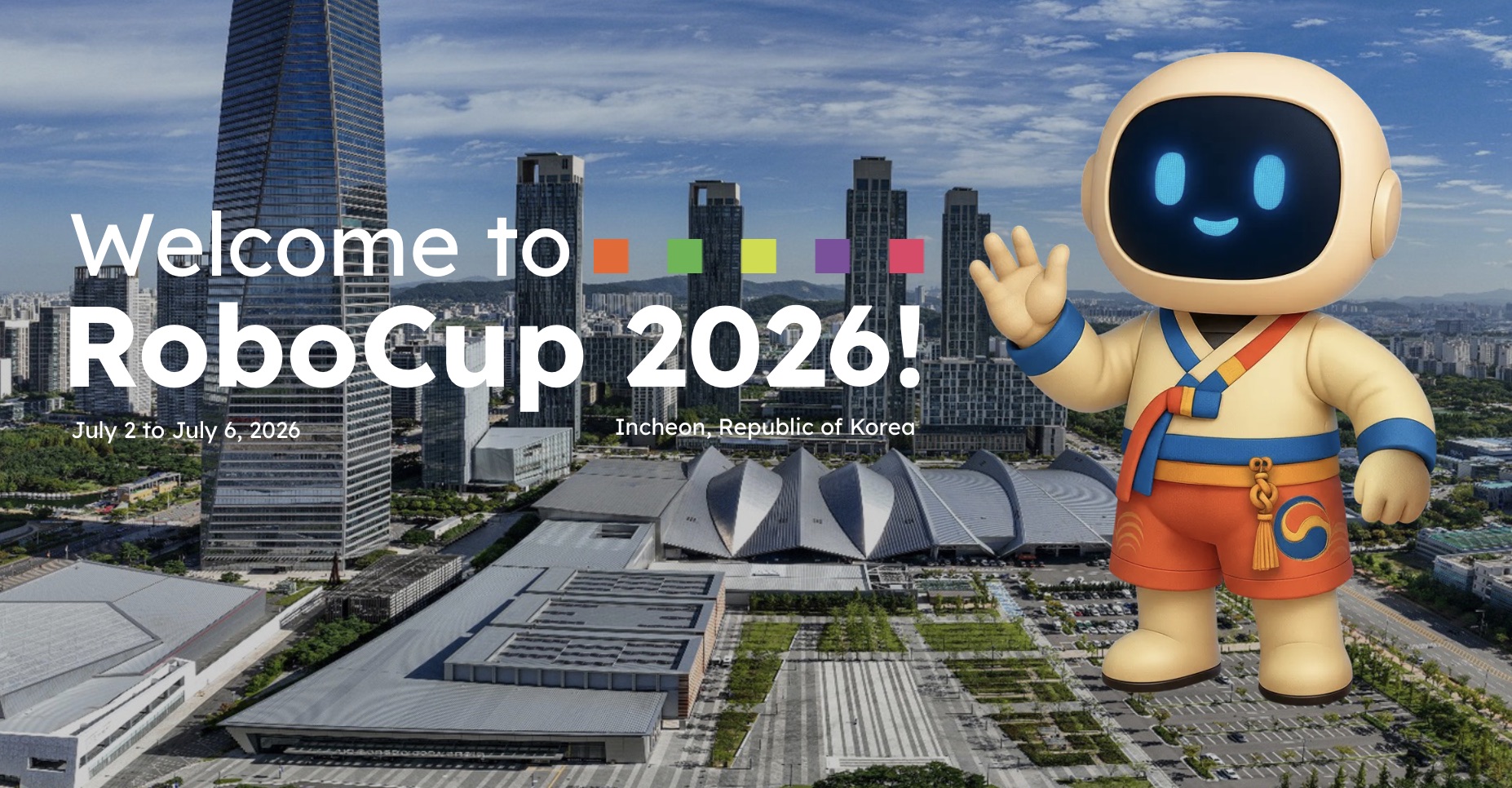
This year, RoboCup took place in Incheon, South Korea, from 2-6 July. The event saw teams take part in competitions, training sessions, and a symposium. Take a look at what the participants got up to in our round up from social media.

Little Booster K1, trying to get up after falling mid football game!
#robocup2026

[image or embed]

— Raghav Arora (@ra-aurora.bsky.social) 6 July 2026 at 05:05

Straight from RoboCup 2026, at Incheon, Korea.
We added an external lidar, and a literal backpack to the booster T1 to achieve accurate indoor localisation and navigation.
@texasrobotics.bsky.social #Robocup2026

[image or embed]

— Raghav Arora (@ra-aurora.bsky.social) 6 July 2026 at 05:01

New AI model reveals how neutron star mergers forge heavy elements

Researchers have created an AI-based simulation that makes it much faster to model how neutron star mergers produce many of the universe's heaviest elements. The new tool could improve predictions of these powerful explosions while helping scientists better connect observations in space with experiments on Earth.

An AI-powered control system for robots with legs

Walking robots, such as quadruped robotic dogs, must be able to move safely through rough, often changing environments. Today, there are two main ways to program these walking, or legged, robots. The first is called model predictive control. This technique optimizes the robot's behavior but relies on accurate dynamics models, which are challenging to achieve in real-world settings and often require simplifying assumptions. The second is model-free reinforcement learning, which allows the robot to learn reliable but fixed behaviors, making them difficult to adapt after training.

Agentic Computers Redefine the Enterprise Workspace as AMD Initiates the Next Hardware Revolution

We are standing on the precipice of a monumental shift in how humans interact with machines. For over four decades, the personal computer has been a fundamentally passive device. It waits for a keystroke, a mouse click, or a touch […]

The post Agentic Computers Redefine the Enterprise Workspace as AMD Initiates the Next Hardware Revolution appeared first on TechSpective.

A soft exoskeleton could restore hand function in people with motor impairments

Recent technological advances have opened valuable possibilities for supporting people with motor impairments or who are recovering from injuries to the brain, spinal cord or nerves. Millions of people worldwide currently experience difficulty moving their hands or other parts of their body. Some of these motor impairments are associated with progressive neurodegenerative diseases, such as amyotrophic lateral sclerosis (ALS), while others are the result of neurological damage caused by an injury or a stroke.

The Two Mistakes Slowing Down AI Adoption (and How to Overcome Them)

Companies are investing in AI at record levels, yet most are still struggling to translate it into measurable business value. The well-known MIT study, State of AI in Business 2025, concludes that 95% of enterprise GenAI pilots have failed to […]

The post The Two Mistakes Slowing Down AI Adoption (and How to Overcome Them) appeared first on TechSpective.

EleTac: An elephant-inspired soft robotic gripper with a sophisticated sense of touch

Soft grippers, which are built from flexible materials that can bend and deform, are attracting a lot of attention from robotics researchers worldwide. Unlike conventional robots made from rigid metal or plastic, soft grippers can grasp items more gently while naturally adapting to different shapes. This makes them uniquely suitable for delicate tasks such as handling fruit, baked goods, lab samples and medical supplies.

Intelligence is Free, Now What? <br> Data Systems for, of, and by Agents

... government of the people, by the people, for the people ...
    — Abraham Lincoln, Gettysburg Address (1863)

The cost of AI is dropping rapidly. GPT-4-class capabilities cost roughly $30 per million tokens in early 2023; today the same runs under $1, and some providers are pushing costs below $0.10. Across benchmarks, inference prices have fallen between 9x and 900x per year, with a median decline near 50x. Even frontier models are getting dramatically cheaper each generation, with open-source models following closely behind. And crucially, even if “Nobel-Prize-winning genius-level” intelligence isn’t here yet, the intelligence that suffices for the vast majority of knowledge work is here today, and getting cheaper by the month. At this rate, we are soon entering the era of virtually free intelligence—the kind that is more than enough for everyday knowledge work.

A cartoon database character and an AI robot agent holding hands

Read More

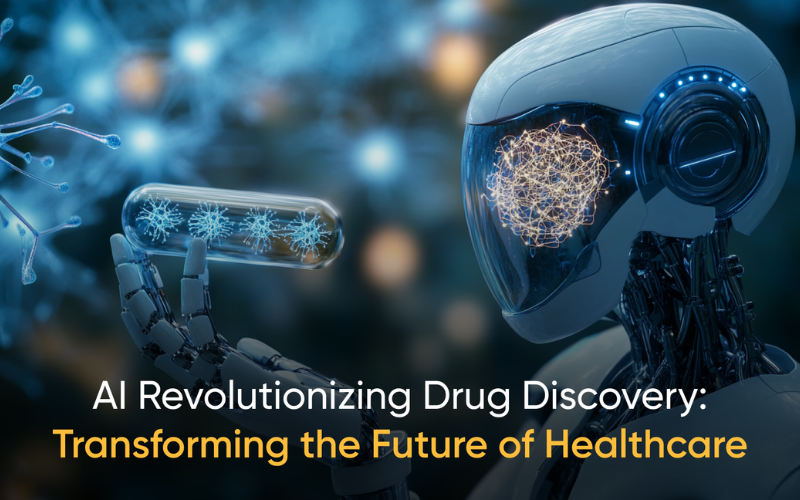
How Generative AI Speeds Up Drug Discovery and Development?

How Generative AI Speeds Up Drug Discovery and Development?

Pharmaceutical drug discovery and development have long been a laborious, difficult, and expensive process. It can take over a decade, from discovering a drug target to approval by the regulatory authorities, and cost over billions of dollars. Recent advances in Generative AI (Gen AI), a form of Artificial Intelligence (AI), can generate new information based on patterns in existing data and revolutionizing the entire clinical process.

By replicating human imagination and processing big data sets, generative AI applications can propel every step of the pharma pipeline, from molecule design to clinical trials. Let’s take a look at how Generative AI transforming the drug discovery and development industry in 2026 and beyond.

The Role of Generative AI in Pharma 

Generative AI systems in pharma are large language generative models, like Generative Adversarial Networks (GANs), which are capable of generating new content, such as, molecular structures, protein sequences, or even scientific hypotheses. Generative AI models can be applied in drug discovery to:

  • Predict novel drug-like molecules.
  • Predict protein-ligand interactions.
  • Generate synthetic biological data.
  • Optimize molecular properties (solubility, bioavailability, etc.)

Moreover, the Generative AI models can create new possibilities rather than just decoding available information, transforming traditional R&D pipelines.

Top Use Cases of Generative AI In Pharma

  1. Target Identification and Validation

Pharmaceutical discovery starts with the identification of a biological target, a protein or a gene, usually disease-causing. The interaction of the target needs to be validated and the structure known.

Generative AI assists with:

  • AI models such as GPT extract insights from biomedical literature for predicting novel disease-gene associations.
  • AI synthesizes genomic, proteomic, and clinical information to make new disease mechanism predictions.
  • AlphaFold and other tools predict protein structures to speed up structure-based drug discovery.
  1. Drug Design Recommendations

Pharmacists used to sketch molecules by hand based on rules provided. Generative models such as VAEs, GANs, and transformer models can:

  • Synthesize molecules that would be bound to a target site with desired properties.
  • Optimize for many properties in parallel (e.g., activity, toxicity, solubility).
  • Generate virtual libraries of drug-like molecules at scale.

For instance, Insilco Medicine created a cure for idiopathic pulmonary fibrosis through generative AI in 18 months, which would have been done in 3–5 years otherwise.

  1. Lead Optimization

After potential drug candidates are discovered, they are then optimized to work better. The chemical structure is modified to optimize pharmacokinetics (absorption, distribution, metabolism, excretion) and reduce toxicity.

Generative AI models can:

  • Model chemical modifications and predict the impact
  • Use reinforcement learning to efficiently search chemical space.
  • Propose modifications that increase binding affinity or decrease off-target activity.
  • Scientists can select only the most promising candidates, with less expenditure and time.
  1. Predictive Toxicology and ADMET Profiling

Inadequate ADMET properties (Absorption, Distribution, Metabolism, Excretion, and Toxicity) are a leading reason why drugs fail. Failing to predict these profiles upfront is costly failure later.

Generative AI assists by:

  • Training predictive models on vast toxicology databases.
  • Modeling the activity of a compound in the human body.
  • Hypothesizing fewer toxic analogs of promising leads.

This avoids inappropriate candidates early on and redirect resources into safer, more promising molecules. 

  1. Synthetic Route Planning

Once a molecule is designed, the molecule needs to be synthesized in the lab. Generative AI speeds up drug discovery by creating effective, cost-saving chemical synthesis routes for new compounds. Generative models can:

  • AI models propose new reaction routes for complex molecules.
  • Forecasts best reagents and conditions to enhance yield and safety.
  • Minimizes trial-and-error in lab synthesis, conserving time and resources.

This speeds up the process from virtual molecules to real samples, skipping months of bench work.

  1. Biological Data Generation and Augmentation

Preclinical and clinical trials are generally not balanced or data-rich. Generative AI has the capability to generate new biological data, such as,

  • Simulated patient cohorts for rare diseases.
  • Synthetic gene expression profiles.
  • Augmented image data for training diagnostic models.

For example, GANs can produce synthetic cell images or synthetic MRI scans based on just a few real samples used for model training. This accelerates model construction in AI drug discovery and diagnostics.

  1. Clinical Trial Design and Optimization

Even after a lead candidate has been put into clinical trials, generative AI can be helpful, and AI assists in numerous ways:

  • Generation of control arms from real-world data.
  • Estimation of patient response from genomic and demographic information.
  • Identification of optimal dosing regimens and choice of biomarkers for stratifying patients

Reducing the trial duration, raising the success rate, and even customizing the treatments in precision medicine application scenarios is possible with it.

  1. Knowledge Extraction and Decision Support

Biomedical knowledge doubles every few months. There is no human team capable of keeping up with all this. Generative AI models such as ChatGPT can:

  • Summarize recent literature.
  • Suggest ideas for new research.
  • Support scientific writing and regulatory reporting.

Generative-AI-Speeds-Up-Drug-Discovery

Real-World Impact and Case Studies

Generative AI is already having an impact for other bio techs with stunning outcomes:

  • Insilico Medicine: Applied generative models to design IPF drug candidates in days.
  • Exscientia applied AI to design drugs that were in human trials within a year.
  • Atomwise: Applies deep learning for predicting molecular binding to discover hits at scale.
  • Recursion: Applies generative models and high-throughput imaging to select new drug candidates.

Pharma industry leaders like Pfizer, Roche, and Novartis are making significant investments in AI-designed drug discovery platforms, partnering with AI startups, and building in-house capabilities.

 Challenges and Ethical Considerations

While promising, generative AI for drug discovery is challenging:

  • Data Quality: AI will be as good as training data. Biomedical data could be noisy or biased.
  • Interpretability: Some AI-generated compounds will be effective, but the mechanism is unknown.
  • Compliance with regulation: The AI-driven approaches will have to be explainable according to the FDA and EMA regulations.
  • Ethics Problems: Both SynBio and molecule design impose double-use hazards (e.g., biosecurity).

These will have to be handled by coordinating among scientists, ethicists, regulators, and AI engineers.

Future Outlook of Generative AI in Pharma

It only just began rolling out generative AI in drug discovery. Gen AI models in the future can,

  • Shorter turnaround from concept to clinic.
  • Enhance success with improved early prediction of diseases.
  • Dynamically customize drug development pipelines.

Entire drug development pipelines can be modeled on a computer in advance before one ever creates a molecule in the future.

Conclusion

Generative AI is revolutionizing pharma drug discovery and development with speed, precision, and innovation. From new molecule invention to the optimization of clinical trials, Gen AI’s impact in drug discovery and development is incredible. USM Business Systems, a top AI development company build LLM models that meet your unique needs. Get in touch!


Contact us to know more about Generative AI in Pharma? Book Executive AI Briefing →


[contact-form-7]


#RoboCup2026 – humanoid league knockout stages

This weekend saw the finale of the league competitions at RoboCup 2026 in Incheon, South Korea, with the winners in the small, middle, and large humanoid divisions decided. Congratulations to the following teams, who finished in the top three positions in each size class:

Small division

  1. Invic, Wuhan University, China
  2. Hamburg Bit-Bots, Universität Hamburg, Germany
  3. GeoHBots, School of Artificial Intelligence, China University of Geosciences, China

Middle division

  1. B-Human, Universität Bremen and German Research Center for Artificial Intelligence (DFKI), Germany
  2. HTWK Robots, Leipzig University of Applied Sciences, Germany
  3. Rhoban, University of Bordeaux, France

Large division

  1. Tsinghua Hephaestus, Tsinghua University, China
  2. CAU Mountain&Sea, China Agricultural University, China
  3. Water, Beijing Information Science & Technology University, China

You can watch the action from one of the semi-finals in the middle division, which saw HTWK take on Rhoban.

In the final of the middle division, HTWK took on B-Human:

In addition to the main competitions, there were five league-wide awards:

  • Best Customized Humanoid Award: HERoEHS (ALICE 4th version)
  • Best Humanoid Software Award: B-Human (Game Controller)
  • Open Research Challenge: Ruhrbot Devils (AI Camera Platform for Embedded 2D/3D Game Analysis in RoboCup HSL)
  • Best Innovation Award: Bahia Robotics Team
  • Best Referee Award: Anastasia Prisacaru (Berlin United)

Hear from Team Hephaestus of Tsinghua University, who won the large division:

Although the competitions have drawn to a close, RoboCup 2026 continues today with a symposium, which brings together researchers and practitioners from around the world to present and discuss innovative research in robotics and artificial intelligence. You can find out more here.

Top Ten Stories in AI Writing, Q2 2026

Most noteworthy about Q2 2026 in AI writing were all the shifting sands kicked up by users of the tech.

Many businesses – once charmed by the magic of AI offered by ChatGPT and its key competitors – decided to switch their loyalties to OpenSource AI alternatives after growing fed-up with the often high prices of U.S. AI.

Key beneficiaries of that trend are DeepSeek and similar OpenSource alternatives from China, which some reviewers maintain are nearly as good as U.S. AI and cost pennies on the dollar.

Meanwhile, some writers and other creators switched their allegiances to OpenSource alternatives, after realizing that ChatGPT and its key competitors have throttled the creativity of the prose they produce to attract more conservative corporate users.

Plus, Gartner predicted that users behind 40% of all projects attempting to cash in on AI agents will ultimately abandon those projects by the close of 2027. Their beef: AI agents simply don’t live up to the hype.

Bottom line: Sophisticated users of AI are at the point that they know ‘what’s what’ when it comes to the tech — and they’ll most likely be a tougher sell in coming years.

Here’s more detail on those – and other stories – that helped shape Q2 2026:

*Still Unpatched: 86% of Software Vulnerabilities Found by Anthropic Mythos: After more than two months of testing by top software and cybersecurity firms, only a handful of security vulnerabilities exposed by new AI model Anthropic Mythos have actually been fixed.

During that time, testing and use of Mythos has been limited to about 200 software makers and cybersecurity companies – Project Glasswing — who are attempting to plug the ever-expanding array of security holes Mythos is finding in everyday software.

*Increasing Number of Businesses Settling for ‘Nearly as Good AI:’ Spooked by what they see as sky-high prices for bleeding-edge AI, many companies are opting for AI that is nearly as good – at greatly reduced prices.

Observes AI expert Brian Armstrong: “Demand for intelligence is near infinite – but 80% of workloads will be running on 99% cheaper models within 12-18 months.”

Most of those models – including DeepSeek – can be found on the OpenSource market.

*China Closing in on US AI: China’s newest, top AI offering, GLM-5.2, is nearly as good as what you can get from US AI titans – at one-sixth the cost, according to writer Luis Blanco.

Observes Blanco: “The (performance) gap between Chinese open models (AI that’s available for download free) and the very top closed US systems has shrunk faster than most industry forecasts had anticipated.”

Moreover, US companies that subscribe to turnkey Chinese AI that runs on Chinese servers can sometimes get that performance for one-tenth the cost as compared to US AI solutions.

*Don’t Pay for Beige Prose: Increasingly Bland Writing From AI Titans Driving Creators to OpenSource: Increasing numbers of professional writers are migrating to OpenSource AI alternatives — disgusted with the fading writing creativity served-up by major players like ChatGPT, Gemini and Claude.

The problem: Major U.S. AI players have decided to specialize in conservative writing — which often does not take chances — to make their AI engines darlings of conservative corporations.

*ChatGPT is Changing the Way Students Write: College application essay editor Liza Libes says the advent of ChatGPT and similar has birthed a generation of student writers who can say absolutely nothing in a grammatically perfect way.

Observes Libes: What’s changed “is the prevalence of students who possess a high degree of technical writing fluency — yet a low level of intellectual competence — resulting in a greater number of students who can produce perfectly structured sentences that say absolutely nothing.”

The upshot: “The same number of students with a natural aptitude for writing will still learn how to write. But they will no longer learn how to write well,” Libes says.

*Only 2% of U.S. Households Have Paid AI Subscriptions: Incredibly, only a tiny fraction of U.S. users are actually paying for the higher-end AI available from ChatGPT, Claude, Copilot and similar.

Instead, everyone else is cruising along on free AI.

That kind of stat can be stupefying to people who use higher-end AI throughout the day – at $20/month — to generally solve virtually every major or minor challenge that comes their way.

Things may change in coming years if the big AI providers decide to scale back on lower-end – and not nearly as bright – free AI and start asking more users to pay up.

*Gartner: 40% of AI Agent Projects Will Be Abandoned by Close of 2027: In another grim outlook for the ‘magic’ of AI agents, tech consultancy Gartner is predicting many test-drives of AI agents among corporate users are headed for the trash bin.

The reason: Despite promise, AI agents too often simply don’t deliver.

Writer Juras Jursenas details how that problem can be turned around in this piece.

*Google Gemini Pro Getting Stingy on Usage Limits: Some users of ChatGPT-competitor Gemini Pro ($20/month) report Google is severely limiting its use.

Essentially, access to the strongest AI model with the subscription — Gemini 3.1 Pro — is getting blocked while users are still in the middle of moderate brainstorming.

Even worse: Once access to the strongest AI model is shutdown, users need to wait five hours before getting access again.

Try explaining that to your boss.

In the meantime, users are stuck using 3.1 Flash-Lite — an extremely unreliable AI.

*Snapshot: The Top AI for Image Generation: Easily one of the most stunningly successful applications for AI during the past few years has been AI image generation.

Incredibly captivating and compelling images can now be created with AI in a minute or two. And if you’re not quite satisfied, AI will keep working to deliver the ultimate for you.

In this piece, writer Alveena Ali serves-up her picks of the top AI in image generators of 2026 – based on specific need.

*AI Bubble Burst? Look for a Modest Correction Instead: Investors fearing that sky-high, AI-driven stock prices will lead the U.S. stock market off a cliff can take heart.

Joe Hipsky, a tech entrepreneur assures the trembling that the oft-predicted burst of the AI bubble will instead play out like a modest correction that will hurt few long-term.

Observes Hipsky: “The irony of this phase is that while the market (for AI services) may be cooling, the importance of AI is not diminishing. If anything, it is becoming more critical. The difference is that we are moving from experimentation to expectation.”

Share a Link:  Please consider sharing a link to https://RobotWritersAI.com from your blog, social media post, publication or emails. More links leading to RobotWritersAI.com helps everyone interested in AI-generated writing.

Joe Dysart is editor of RobotWritersAI.com and a tech journalist with 20+ years experience. His work has appeared in 150+ publications, including The New York Times and the Financial Times of London.

Never Miss An Issue
Join our newsletter to be instantly updated when the latest issue of Robot Writers AI publishes
We respect your privacy. Unsubscribe at any time -- we abhor spam as much as you do.

The post Top Ten Stories in AI Writing, Q2 2026 appeared first on Robot Writers AI.
Quantum mechanics once baffled scientists. Now it’s changing the world

Quantum mechanics has journeyed from a strange and controversial idea to the foundation of some of humanity’s most advanced technologies. Now researchers are pushing its boundaries even further, with potential breakthroughs in energy, medicine, computing, and our understanding of the universe.
Page 7 of 8
1 5 6 7 8