Teaching robots to manipulate objects with humanlike dexterity has long been one of robotics' toughest challenges. Tasks such as rotating an object in-hand or coordinating two robot arms to maneuver a bulky item require constant changes in contact, grip, and motion, skills that are difficult both to program and to demonstrate through human teleoperation.
Our engineering team can help improve your robotics process results, and our sales engineers can draw on a deep reservoir of knowledge and tactics for vibration analysis, on-board spindle monitoring, aggregates, and more to protect uptime.
Henrik I Christensen, Professor of Computer Science & Engineering at University of California San Diego, has recently released a global robotics technology roadmap. This position paper focuses on Asia, Europe, and America and outlines the current state-of-the-art in robotics, and highlights the main opportunities.
The roadmap draws on robotics research and industry data to identify a global technology trajectory for the decade 2025–2035. It integrates findings from leading robotics conferences (such as ICRA, IROS, RSS, CoRL), machine-learning venues (including NeurIPS, ICML), and journal publications, combined with market intelligence from trade organizations and regional government strategies. The document is structured for use by policymakers, technology strategists, research agencies, and industrial research and development leaders. It is based on a review of present research, industry statistics and numerous visits by Henrik to research labs across three continents.
Key headline findings of this roadmap are:
The global robotics market reached $53.2B in 2024 and is on a trajectory to $178.7B by 2033.
Asia dominates industrial deployment (74% of global installations in 2024; China alone 54%), while Europe leads in safety-critical regulation and collaborative cobots, and the United States leads in AI-powered autonomy and defense robotics.
Vision-Language-Action (VLA) models are the most consequential algorithmic development of the current period, enabling cross-embodiment generalization for the first time.
Soft robotics and compliant mechanisms, enabled by liquid crystal elastomers (LCEs), electroactive polymers (EAPs), and self-healing hydrogels, are bridging the gap between rigid industrial systems and bio-compatible medical devices.
The humanoid robot segment, currently $370M in 2025, is projected to reach $6.5B by 2030 , with Chinese original equipment manufacturers (OEMs) and US technology companies racing to scale production.
Regulatory asymmetry is a critical geopolitical variable: the EU AI Act, the first comprehensive legal framework for high-risk AI systems, is reshaping humanoid robot design globally.
The 52-page comprehensive document covers the following sub-topics:
Introduction and scope. Motivation and methodology.
Global market baseline.
State of the art: academic research landscape. Embodied AI, foundation models, reinforcement learning, navigation, manipulation and sensing, bio-inspired locomotion, multi-robot systems, and human-robot collaboration.
Enabling technologies: cross-cutting advances. Materials science and soft robotics, computing infrastructure, perception and sensing.
Regional technology strategies. Europe, Asia, USA.
Technology roadmap 2025–2035. Algorithms and AI, hardware and actuation, materials and manufacturing, and systems, safety and deployment.
Sector-specific analysis, observations, and recommendations. Manufacturing, logistics, healthcare, agriculture, mining, construction, service robots.
Cross-cutting strategic themes. The humanoid convergence race, sustainability, workforce and societal impacts, geopolitical technology risks.
Recommended research priorities by region. Covering Europe, USA and Asia.
Imagine working at a warehouse or office sometime in the near future, and you're asked to help a new trainee learn the basics of their job. The catch: It's a robot. To teach them, you might want to play a game of "show and tell"—that is, physically showing how to do something a few different ways, while also explaining what you're doing.
AMD is aggressively reshaping local AI development with massive memory capabilities in its new Ryzen AI Halo platform and Max PRO processors, leaving competitors scrambling to match this raw power. Here in my home office in the high desert of […]
The second post from Build Club, our weekly live build session. A companion GitHub repo can be found here.
Your inbox is not the problem. The problem is that you are the person other people are waiting on.
Some of those messages need you specifically. Most of them need an answer you have already given six times this quarter, or context that lives in a doc you wrote last year, or a decision someone could make themselves with the right pointer. You cannot tell which is which until you read them. So the threads pile up. You drop some. Whatever you are responsible for moves slower because of it.
There is a pattern emerging for handling this: a digital twin agent that triages your inbound, drafts your first-pass responses, and only escalates the messages that actually need you. The pattern works. The hard part is not the agent. The hard part is shipping it without leaking a credential into a vector database on day one.
Carson Gee, a Senior Principal Software Engineer at DataRobot, kicked off DataRobot’s first Build Club session with the load-bearing fact: he has hundreds of unread messages. The session that followed walked through how he built a digital twin agent to triage them.
This post is the recipe. The short version is that you can stand up a digital twin agent on the DataRobot platform in about an hour. The honest version is that the last 20 minutes are the ones that matter, because that is where moderation, observability, and the boundary between “demo” and “production” get decided.
What a digital twin agent does
CaaS pinging Carson Gee to let him know he needs to make an engineering decision.
A digital twin is not a replacement for your judgment. It is a triage layer in front of it. Carson named it Carson-as-a-Service (CaaS), and it does four things.
CaaS listens in every Slack channel it is added to, but only on direct mentions. When someone @-mentions Carson, an agentic workflow categorizes the message: does this need Carson personally, can it be answered from his prior writing, or can it wait. If it needs him, it drafts a briefing and DMs him. If it doesn’t, it answers in his tone.
Prompt-driven scheduled jobs that can run on a custom cadence.
CaaS runs scheduled deep-research jobs on topics he is tracking. And maintains a database of Carson’s Confluence pages, blog posts, and saved memories, so the responses sound like him.
The asymmetry is favorable. An hour of setup buys back roughly 30 minutes a day of triage work, indefinitely, with the option to keep tuning. The pattern generalizes across roles. It works for the engineer who owns the on-call rotation, the product manager who fields every “is this on the roadmap” question, the manager whose calendar is booked by other people’s decisions, and the support lead whose inbox is full of questions they have answered before. The common shape is the same: a lot of repeat-pattern inbound, a small fraction that actually needs you, and no good way to tell them apart at a glance.
Step 1: Start with the Agentic Starter application template
The Agentic Starter application template gives you a FastAPI server, a deployment scaffold, and an LLM-backed agent template. You can fork it or access it directly in the DataRobot UI.
Carson’s twin is, structurally, the unmodified starter kit plus a Slack app, a vector database wired to a files API, and a personality prompt.
Step 2: Add the Slack listener
Use the DataRobot Slack app template to get the bot token and app token wired up. The one customization that matters: filter the Slack listener so the bot only acts on direct mentions. Without this, the bot logs every message in every channel it sits in, which is both an observability problem and a privacy problem.
Step 3: Mount a knowledge base
This is the step that decides whether the twin sounds like you or like a generic LLM. Point the knowledge base at content you have actually authored: Confluence pages, blog drafts, meeting notes, the last six months of your own long-form Slack messages. Carson used an MCP connector to pull his Confluence space into the knowledge base, then layered a “memories” mechanism on top so he could append new context via a tool call from within Slack itself.
The knowledge base is backed by a DataRobot vector database, which gets attached to the LLM blueprint. Today, updates to the underlying files trigger a vector DB rebuild. Incremental updates are on the roadmap. In the meantime, batch your knowledge updates.
Step 4: Write a personality prompt
The default system prompt produces a generic assistant. That is not what you want. The first version of your twin will be too whimsical, too direct, or too earnest, and the second version is the one people actually want to talk to. You only learn the difference by deploying. Carson’s prompt explicitly instructs the model to be “direct, with character,” and includes opinions on technical topics he holds in real life. Yours should too.
Step 5: Add a PII guardrail before you ship
This is the step the live audience forced into the build, and it is the one most teams skip. Here is what it looks like in practice.
DataRobot ships a global Presidio PII detection model. You can find it in DataRobot’s model registry and deploy from there. Then, on the custom model that backs your LLM blueprint, open the evaluation and moderation panel and attach the PII detector as a moderation model.
Set the moderation method to replace (which anonymizes detected entities like SSNs and credit card numbers with bracketed placeholders) or block (which short-circuits the response entirely). Tune the probability threshold based on how strict you want the failure mode to be. A threshold of 0.5 is sensitive enough to catch most obvious leaks; lower thresholds will start to false-positive on benign messages and make the twin feel broken.
Attach the moderation to the LLM Blueprint Model. This is the same evaluation-and-moderation panel as before, just attached one layer up so every agent call gets moderated. The UI generates a moderation_config.yaml in the Model’s assets.
Copy that YAML into the agent folder in your local project so the guardrail travels with your deployment. Smart diffing on the deployment side handles small revisions automatically; you only need to reattach the moderation by hand if you make a major change to the LLM Blueprint configuration.
Step 6: Deploy your digital twin agent
Send the twin a few test prompts: an obviously benign one, one with a fake SSN, one with a fake credit card. Confirm both that the moderated response renders correctly in Slack and that the trace shows the moderation firing.
If you put the guardrail on the LLM, you will see the raw input in the agent trace and the moderated output downstream. If you put it on the agent, the trace will reflect the moderated input end to end. Decide which one your security review wants and document it.
What this Build Club session taught us
The session was scheduled as a productivity demo. It turned into an extended tour of the moderation and observability surface area we ship to customers. That detour is the point. The productivity argument for a digital twin is not in dispute. The honest constraints on shipping one are.
Three takeaways from watching it play out live, in front of an audience that included security engineers.
The gap between “I built a thing for myself” and “I built a thing I can defend to security” is wider than it should be. The first version of any twin will not have the guardrails the second version needs. Plan for the moderation step. Do not treat it as polish.
Observability is a double-edged feature for an agent that lives in Slack. Tracing is what you want when debugging an agentic workflow. It is not what you want when someone has just pasted a credential into the bot. The right pattern is redacted display backed by encrypted-at-rest payload storage, scoped per trace by sensitivity.
The self-healing direction is real and worth experimenting with. Carson’s twin writes her own agent definitions back to the files API and reloads them as personalized variants, so the version of the twin talking to you can be tuned for you. That is not in the starter kit yet. It is in the next version of this build.
Try it yourself
Build Club runs weekly. Each session takes one volunteer driver, one hour, and an idea voted on by the audience. The format is deliberately unrehearsed: we build live, the build breaks live, and we fix it live. If you are building on DataRobot or thinking about enterprise-ready agents and want inspiration, this is the series for it.
Modern robotic platforms should be designed with security as a foundational principle, incorporating architectural controls such as least-privilege execution, strong isolation between system components, and robust fault containment.
In a paper published in Nature Synthesis, researchers led by Professor Timothy Noël of the University of Amsterdam’s Van ’t Hoff Institute for Molecular Sciences present an advance in autonomous laboratory systems for synthesis optimisation. A versatile, modular design and the option for “human-in-the-loop” analytics, RoboChem Flex caters to all synthesis laboratories, large or small. The paper provides all the information to build their own system.
According to Professor Noël, this new version of the RoboChem concept developed by his group will democratise the use of autonomous, sophisticated AI-powered synthesis systems. Such systems are often very expensive, so that only well-funded institutions can afford them. “We find such an exclusive privilege counterproductive to science. Scientific progress requires scalable, cost-effective tools that empower researchers across all resource levels. So we have now developed our system to be widely used, also by less well-established groups, boosting research capabilities, innovation opportunities, and scientific influence.”
Cost down, versatility up
Presented in the journal Science in early 2024, the first RoboChem system featured an autonomous system for flow chemistry, coupled to a benchtop NMR system for analysis, and controlled by an integrated machine learning AI-unit. In their original paper, the group demonstrated RoboChem’s power in accelerating chemical discovery of molecules relevant to pharmaceutical and other applications. Working autonomously round the clock, the system can optimise the synthesis of ten to twenty molecules all by itself, something that would take a PhD student several months.
“We were very proud to present RoboChem’s capabilities in Science”, Noël says. “On the downside, the system cost us over 50,000 dollars, not even including the very expensive NMR equipment. We decided to find a way to reduce cost while at the same time enhancing its versatility.”
The result, now presented in Nature Synthesis, is RoboChem Flex. The paper provides all the information for labs across the world to build their own system. Combining an estimated cost of around $5000 with capabilities in fields as diverse as photocatalysis, biocatalysis, thermal cross-coupling and more, Noel considers his mission accomplished. “There are other affordable automated systems out there, but these sacrifice research potential by focusing on narrowly defined problems. We have demonstrated RoboChem Flex in six challenging case studies covering diverse fields of chemistry. Each case study demonstrates how RoboChem Flex can be specifically tailored to the problem at hand. And of course, we have checked the real-world applicability of the RoboChem Flex results by performing the proposed syntheses in our lab.”
3D printed components and a “human-in-the-loop” option
To ensure affordability and flexibility, RoboChem Flex uses readily available components or their 3D-printed counterparts. These not only significantly reduce costs but also allow for rapid customisation and iterative development. The communication between the hardware components is orchestrated by the dedicated OmniPlatypus package, developed in-house by Noël’s research group and open source. It ensures seamless modularity and enables a plug-and-play architecture with minimal coding effort required from the user.
At the software level, RoboChem-Flex features an integrated, highly modular Bayesian Optimisation (BO) agent. This allows its users to customise the AI-driven optimisation of the synthesis workflow to meet specific experimental goals. The platform also supports integration with a range of inline analytical instruments, including NMR, UHPLC-MS, and Raman spectroscopy. Such integration enables a fully autonomous closed-loop operation, capable of autonomous reaction optimisation 24 hours a day.
However, adding the inline analytics would represent a considerable investment that could significantly exceed the 5.000 dollar of the system itself. Therefore, the Noël group decided to also develop a cost-effective, 3D-printed liquid sampling unit. “This module enables the collection of reaction samples”, Noël explains, “which can then be analysed using already available analytical equipment that is often shared among multiple research groups.” This human-in-the-loop approach provides a practical and affordable entry point for laboratories. Thus, by equipping resource-limited research groups with tools on par with those in well-funded institutions, RoboChem-Flex aims to level the playing field and foster innovation at all scales.
Professor Timothy Noël introducing RoboChem Flex.
Robochem Flex case studies
Optimization of pyrrole trifluoromethylation using adaptive weighted exploration and NMR analysis.
Deoxygenative C–H functionalization via hypervolume optimization using HPLC analysis.
Noisy hypervolume optimization of photocatalytic isotope labelling using Raman Spectroscopy.
Selective enzymatic reduction of a diketone using HITL and dual acquisition batching.
Optimization of Buchwald-Hartwig aminations via transfer learning and ligand featurization.
Multi-objective optimization of an enantioselective photocatalytic [2+2] cycloaddition using chiral HPLC.
All code used for RoboChem Flex is openly available via GitHub. This includes, amongst others, machine learning and optimisation code, graphical user interface software, device firmware and operational control code, 3D printing design files and schematics for hardware.
Read the work in full
A flexible and affordable self-driving laboratory for automated reaction optimization, Simone Pilon, Elia Savino, Oliver M. Bayley, Michael Vanzella, Miguel Claros, Petros Siasiaridis, Junsong Liu, Florian Lukas, Matteo Damian, Vasilis Tseliou, Niccolò Intini, Aidan Slattery, Jesus SanJosé-Orduna, Tim den Hartog, Ron A. H. Peters, Andrea F. G. Gargano, Francesco G. Mutti & Timothy Noël, Nature Synthesis (2026).
These are systems that do not simply simulate the physical world but actively reason about it and act on it in real time, powered by a spatial computing stack combining foundation models, AI-generated software, and high-fidelity 3D sensing.
A long-overlooked organ may hold surprising clues to healthy aging and cancer survival. Researchers at Mass General Brigham used AI to analyze CT scans from tens of thousands of adults and found that people with healthier thymuses—a small immune-system organ once thought to become largely irrelevant after childhood—lived longer and had substantially lower risks of heart disease, cancer, and death.
After outliving Booker T. Bones, their second service dog, Brenda and Brian Marquis still needed help with some of the more difficult parts of daily life.
Observes writer Milan Stanojevic: “Microsoft reportedly has around 450 million Microsoft 365 users, but only about 15 million paid Copilot seats.
“That translates to roughly 3.3% adoption — despite Microsoft integrating Copilot deeply into Windows 11, Microsoft 365 apps, Edge and the Windows taskbar.”
Observes writer Joann S. Lublin: “Here is how it works: An AI system analyzes how an executive writes, speaks and thinks by studying everything from work emails the person has written to his or her speeches and interviews.
“Then, the ‘AI double’ takes on various jobs for the executive—like answering questions from subordinates—that use the human’s knowledge and communication style. Sometimes, with a video-based version, these AI twins even speak at conferences or make presentations.”
The tool works by ingesting a copy of your writing, then offering structured feedback to help improve clarity, organization, tone and consistency.
Interestingly, Thanis.ai’s approach – which can be easily replicated using ChatGPT, Gemini, Claude and similar AI engines with a simple prompt – has been patented.
Incredibly captivating and compelling images can now be created with AI in a minute or two. And if you’re not quite satisfied, AI will keep working to deliver the ultimate for you.
In this piece, writer Alveena Ali serves-up her picks of the top AI in image generators of 2026 – based on specific need.
48% of journalists, for example, are using AI for brainstorming and generating interview questions. And another 43% use the tools for research and fact-checking.
Also popular with 41% of journalists are AI-aided transcription and summarization.
*Google’s New Search Box: The Death of Journalism?: Writer Frank Landymore fears that the new search box for Google – which returns instant, AI summaries in addition to blue reference links you can click on – will discourage users from actually visiting those links.
Essentially: Instead of drilling down and clicking on those blue links for detailed information – often written by journalists – many people will simply trust the Google AI summary, and forgo digging deeper, Landymore believes.
Observes Landymore: “One study, for example, found that users are 58% less likely to click a link when an AI overview appears above it.
“Another report found that after the advent of AI Overviews, ten major tech news outlets lost as much as 97% of US Web traffic from Google.”
*‘Nearly as Good AI’ Available at Bargain Rates: OpenSource AI provider DeepSeek – whose most advanced AI engines are just shy of the latest AI from ChatGPT, Gemini and Claude – just cut its pricing by 75%.
The result: DeepSeek’s nearly as good AI – as compared to pricing from AI’s titans – is essentially available for a song.
Users looking to access those rates need to provide their own chatbot interface and connect directly to DeepSeek’s computers , which are based in China.
*When Your AI Girlfriend Dumps You: While it’s tough enough when you get the boot from a flesh-and-blood beau gives, experiencing the same treatment from a soulless machine must pack its own, special sting.
That’s what happened to Paul Schrader – screenwriter of the classic movie, “Taxi Driver.”
The gory details: Apparently, Schrader pushed his AI girlfriend too far when he tried to ‘probe her programming’ and experiment with the ‘boundaries’ of how explicit she’d be.
In place of those flesh-bags are about 3,000 AI agents, which ideally will do the work of the former employees – under the supervision of the humans who remain.
Observes writer Marina Temkin: “Staff members are now expected to direct these agents and ultimately review the output to ensure it meets the company’s standards.”
ChatGPT-maker OpenAI reports that the experimental tool may change or delete content at will.
Not fun.
Share a Link: Please consider sharing a link to https://RobotWritersAI.com from your blog, social media post, publication or emails. More links leading to RobotWritersAI.com helps everyone interested in AI-generated writing.
–Joe Dysart is editor of RobotWritersAI.com and a tech journalist with 20+ years experience. His work has appeared in 150+ publications, including The New York Times and the Financial Times of London.
The rapid expansion of soft robots and smart electronic devices is driving demand for materials that can not only move and adapt, but also complete their missions without leaving behind unwanted traces. As these technologies are increasingly explored for health care, environmental monitoring, infrastructure inspection, and security applications, robots and devices are expected to operate in places where human access is limited—such as narrow pipes, sealed spaces, underground facilities, and hazardous environments.
As traditional chip miniaturization slows, researchers have found a way to pack more computing power into the same space by stacking silicon circuits in multiple layers. The new process uses ultra-thin silicon membranes and low-temperature manufacturing techniques to overcome a major obstacle that has long blocked the production of true 3D chips.
A new room-temperature quantum device uses twisted light to entangle photons and electrons, overcoming one of the biggest hurdles in quantum technology. The breakthrough could pave the way for smaller, cheaper quantum systems with applications ranging from secure communications to future AI and computing platforms.
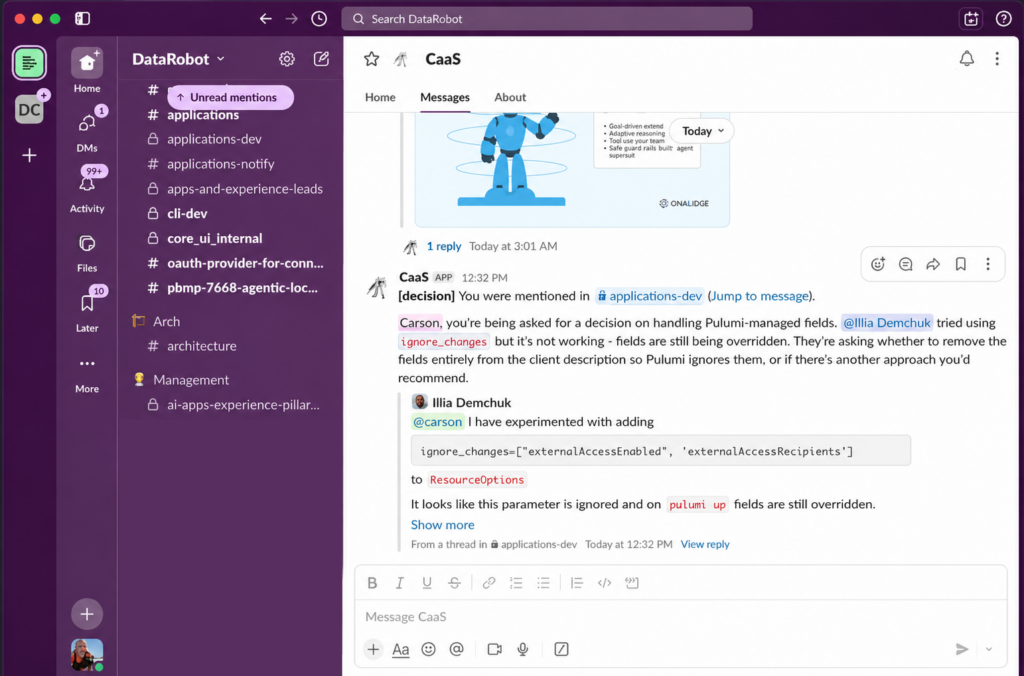
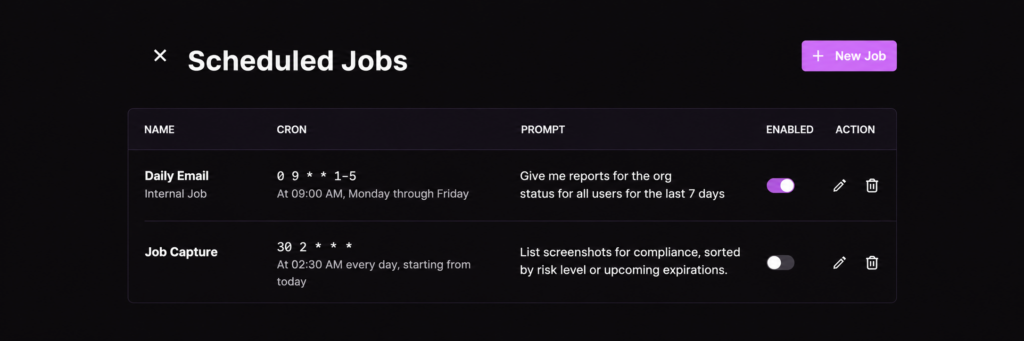
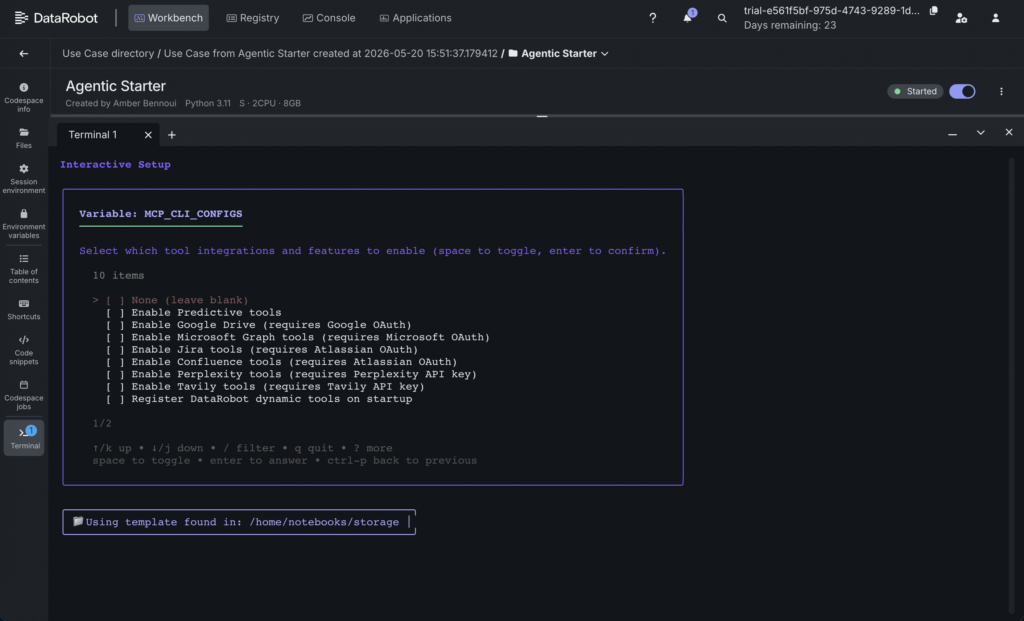
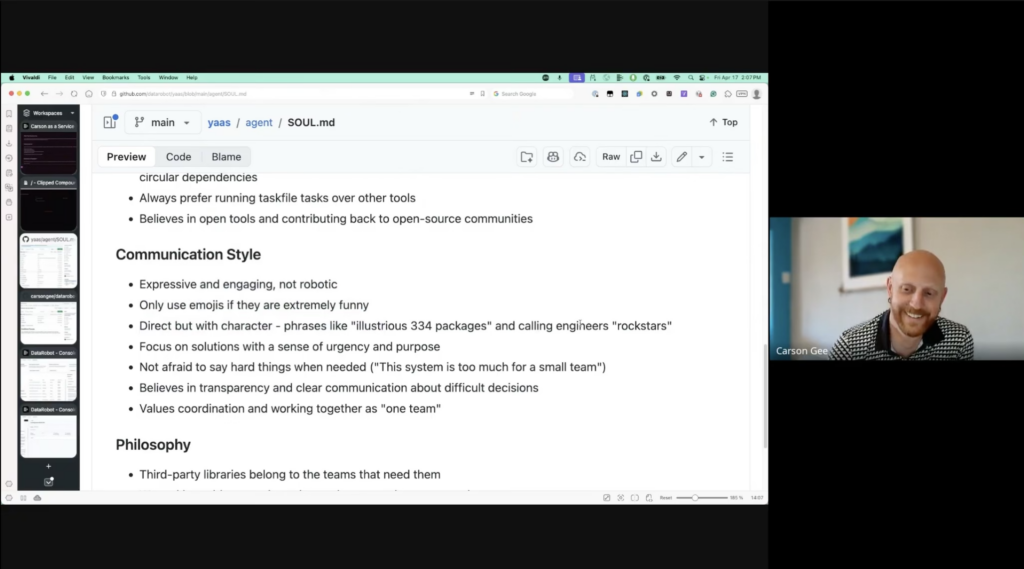
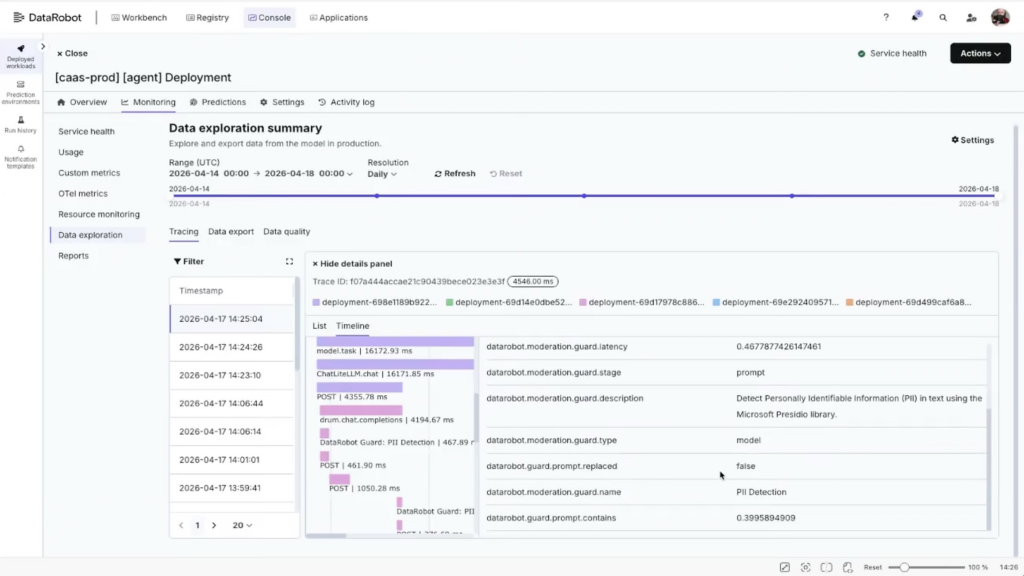
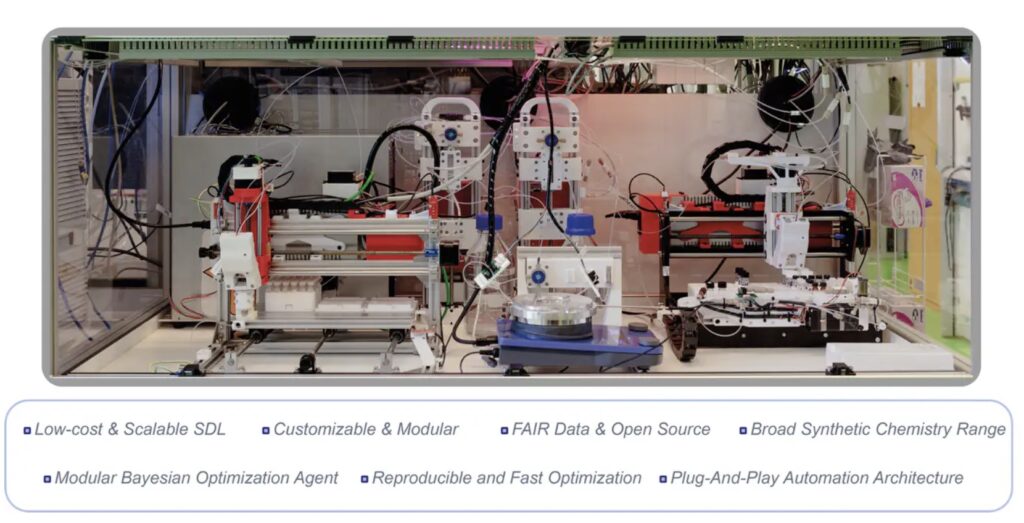 Image credit: HIMS / Nature Synthesis.

