Archive 29.05.2026

Page 27 of 66
1 25 26 27 28 29 66

The Roboteon Difference

Roboteon has a highly differentiated solution, leading the way in the warehouse automation market: Interoperability across various WMS and Robotic platforms; The sector's most complete and functionally-rich platform, from core integration to advanced execution, optimization and orchestration of work; Broad use of AI and advanced simulation to improve decision-making and execution; Deep domain expertise, with special insight into integration of robots to Warehouse Management Systems and existing automation

Robot Talk Episode 158 – Autonomous robot deliveries, with Ahti Heinla

Claire chatted to Ahti Heinla from Starship Technologies about their AI-powered delivery robots that operate independently on streets and pavements.

Ahti Heinla is the co-founder and CEO of Starship Technologies, the world’s leading autonomous delivery company building AI-powered robots that operate fully independently in real-world environments. One of the original engineers behind Skype’s billion-dollar success, Ahti later made a quiet pivot into robotics, spending the past decade advancing practical, consumer-facing AI. Under his leadership, Starship has completed more than 10 million autonomous deliveries with a fleet of over 2,700 robots navigating streets, pavements, weather, and people, without human intervention.

Applications Of Artificial Intelligence In Pharma Industry

AI in Pharma Industry

AI in Pharma: Innovations and Challenges

Artificial Intelligence (AI) is a rapidly growing technology that is used for a wide range of applications across industries. Small, mid-sized, mid-sized, and multinational companies are using AI technology and enhancing their capabilities to work smart in this digital sphere.

Like retail, e-commerce, and manufacturing sectors, AI is gaining prominence across healthcare and pharma sectors. Leveraging the power of this modern Artificial Intelligence in Pharma Industry, the companies are finding innovative ways to resolve some of the significant issues that the pharma sector is facing today.

Yes. AI-powered apps using machine learning, deep learning, predictive analytics, and big data have brought a radical shift in the paradigm of pharma.

Artificial intelligence in Pharmaceutical Industry has the potential to promote innovation, while at the same time increasing productivity and providing better results. In addition, Artificial Intelligence in Pharma Industry offers a value proposition to the companies by creating new and latest business models.

You can observe AI implementation in almost every aspect of the pharmaceutical field. From drug discovery and development to drug manufacturing to supply chain and marketing, AI has its impact. Hence, AI in Pharmaceuticals and Healthcare ensures cost-effectively operations, business efficiency, and hassle-free approvals for new drugs. We learn more about benefits of artificial intelligence in pharmaceutical industry as well.
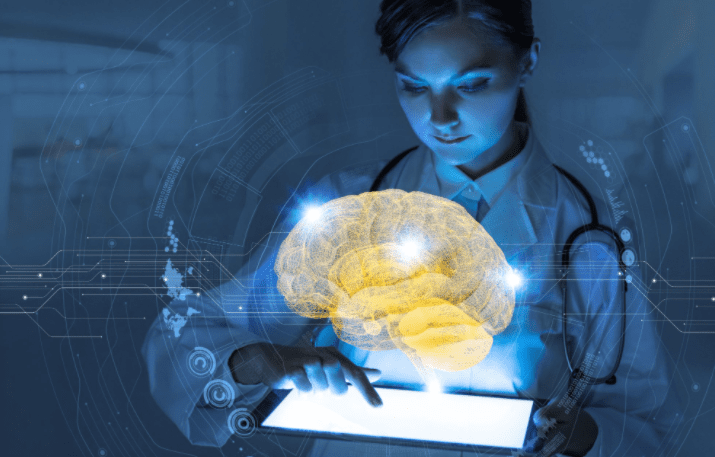
Applications-of-AI-in-Healthcare


In this article, we would like to give you a brief overview of the top 10 AI applications in the pharmaceutical sector. These best AI trends & use cases in pharma will let you understand the rapid AI adoption in pharma.

Let’s discuss

[contact-form-7]

The Best Applications Of Artificial Intelligence In Pharmaceutical Industry

#1 Drug Discovery Process and Design

The use of AI in the pharmaceutical industry for the design and development of drugs is increasing. From making small molecules to determining novel biological targets, AI plays a prominent role in drug target identification and validation. It is widely used for multi-target drug innovation and biomarker identification in an efficient way with great accuracy.

A major benefit of the pharma industry is that when AI is administered during drug testing, it minimizes the drug development time. Artificial Intelligence in Pharma Industry will also benefit drug developers to accomplish clinical trials faster and launch their products into the market for use. It leads to a cost and time-saving development process and also makes the innovative drugs available for improving patient care without side effects.

For example, researchers in pharmaceutical can identify and verify novel cancer drugs using data such as longitudinal EMR records (Electronic Medical Records) and other omic data. The AI systems using ML and other data analytics algorithms will extract insights from EMR data and creates the best formulations to design and develop drugs that cure tumors well.

#2 R&D

Pharma companies across the globe are using advanced AI-powered tools and ML algorithms to smoothen the drug research, development, and innovation process. These technology tools are designed to detect complex patterns in large datasets. Therefore, AI in pharma industry can be used to resolve problems associated with the research and development process.

This ability to study patterns of various diseases and to determine which composite formulations are best suited for the treatment of specific symptoms of a particular disease is excellent. Pharma industries can invest in the R&D of such drugs that are more likely to treat a disease or medical condition successfully.

#3 Disease Prevention

Pharmaceutical organizations can use Artificial intelligence to develop medicines Parkinson’s and Alzheimer’s and very rare diseases.

As per Global Genes, it is a fact that almost 95% of rare diseases do not have more drugs to treat and cure faster. However, thanks to the innovative capabilities of AI and ML. The use of AI in the pharmaceutical industry will completely transform this scenario and ensure the most-advanced models for detecting hazardous diseases in the early stage and improve patient outcomes.

#4 Next-Level Diagnosis 

Physicians can use advanced machine learning systems to gather, process, and analyze patient health care data. Healthcare professionals across the globe are using deep learning and ML to securely store patient data in the centralized storage system or cloud. It is called Electronic Medical Records (EMR).

Physicians may refer to these health records when they need to understand the effect of a specific genetic trait on a patient’s health or how medicine treats it. Machine Learning systems can use data stored in EMRs to generate real-time estimates for diagnostic purposes and to indicate appropriate treatment for the patient.

As ML technologies are capable of processing and analyzing large amounts of data quickly, they can help speed up the diagnostic process, thereby saving millions of lives.

#5 Epidemic Prediction

Pharma companies and healthcare industries are using ML and AI technologies to monitor and assess the spread of infections worldwide. These modern technologies are used for consuming data collected from various resources, analyzing several environmental, biological, and geographical factors on the population health of diverse geographical regions, and deriving data insights to reduce the impact of epidemics in the future.

Artificial intelligence and machine learning models are particularly beneficial for underdeveloped economies that lack medical infrastructure and financial framework to combat the spread of infection.

A good example of this is the ML-based malaria outbreak prediction model, which serves as a warning tool for malaria outbreaks and helps health care providers take the best action to combat it.


#6 Identifying Clinical Trials 

It is one of the key pharmaceutical use cases for embracing AI into existing models. The use of AI in the pharmaceutical industry for identifying drug candidates which are under final clinical trials from vast clinical data is on the rise.

Artificial Intelligence in Pharmaceutical Industry will help companies in analyzing thousands of samples in minutes and automatically logs data related to how patients are responding during clinical trials.

Here are a few advantages of using AI in pharma industry for clinical trials:

  • AI applications or systems analyze historic clinical data
  • AI apps help in monitoring drug performance and evaluating drug responses
  • With the integration of speech recognition technologies, AI apps for pharma will be helpful for recording patients’ oral text during drug trial phases. It means that AI applications will record patients’ responses.

Hence, the use of artificial intelligence in clinical trials has the potential in fastening clinical trials and introduce the safest drugs into the market. It is also one of the top use cases for Machine Learning in Pharma. Speech analysis and real-time patient and drug monitoring activities will be done accurately using ML, deep learning, and natural language processing technologies.


#7 Drug Adherences and Dosage

The adoption of AI in Pharmaceuticals and Healthcare is increasing at a rapid pace for identifying the right amount of drug intake to ensure the safety of drug consumers. AI technology will monitor patients during clinical trials and suggest the right amount of dosage at regular intervals.

These are all key pharmaceutical use Cases for Embracing AI. AI in Pharmaceuticals and Healthcare will definitely accelerate automation in processes and drive more accuracy than ever before.

These AI trends & use cases in pharma will assist drug development and healthcare companies in ensuring efficacy across end-to-end production lines and delivering top-notch performance in front of the FDA.


Conclusion

The scope of Artificial intelligence and machine learning in the Pharma industry looks very promising in the future. AI opportunities for pharma companies are unmeasurable.

The use of AI applications in pharma will ensure operational excellence across drug structure design, drug development processes, selecting patients for clinical trials, monitoring drug performance, identifying proper dosage, etc.

Are you looking to hire an AI Development Company for your AI application?

Our AI consultants and developers will guide you on the right path!


Let’s discuss
[contact-form-7]

The War on Deepfakes: How Google’s C2PA Integration at I/O 2026 is Fighting Back to Protect Our Reality

At this year’s Google I/O, the atmosphere at the Shoreline Amphitheatre was electric as the CEO laid out a vision for a world deeply intertwined with agentic AI. We heard about the sheer computing muscle of the new TPU 8i […]

The post The War on Deepfakes: How Google’s C2PA Integration at I/O 2026 is Fighting Back to Protect Our Reality appeared first on TechSpective.

Robot learns to play music by ear, opening new possibilities in medicine and therapy

Scientists at the USC Viterbi School of Engineering have developed a robotic hand that can hear a melody once and play it back after just two minutes of self-taught practice on a keyboard, without relying on sheet music or preprogrammed scores.

AI listens to insect body signals to guide cyborg cockroaches

Cyborg insects have long been studied as bio-hybrid systems that combine living organisms with small electronic devices. These systems may one day support tasks such as disaster search and rescue, environmental monitoring, and sensing in spaces too small or dangerous for conventional robots. However, most existing systems control insects based mainly on externally visible behavior, such as whether the insect is walking or stopping.

Light-activated gel could impact wearables, soft robotics, and more

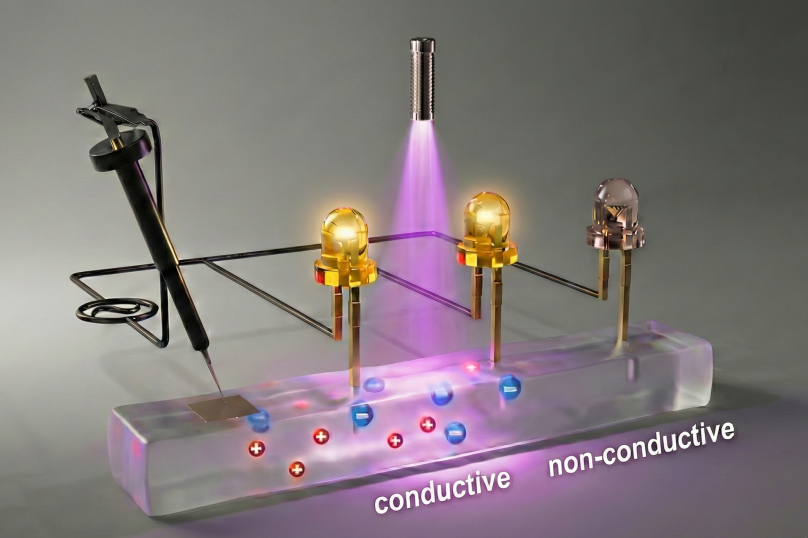
MIT engineers and colleagues have developed a soft, flexible gel that dramatically changes its conductivity upon the application of light. This figure shows a soft, stretchable circuit created with a rectangular bar of the gel. A copper electrode is attached to the left. A stylus and associated metal network connects the electrode to three “stations” on the bar. Light has been shone on the first two stations, creating conductivity that turns on each station’s lightbulb. Because the third station has not been exposed to light it is nonconductive and the bulb is off. Credits: Image courtesy of the Wallin lab.
Consider the chief difference between living systems and electronics: The first is generally soft and squishy, while the latter is hard and rigid. Now, in work that could impact human-machine interfaces, biocompatible devices, soft robotics, and more, MIT engineers and colleagues have developed a soft, flexible gel that dramatically changes its conductivity upon the application of light.

Enter the growing field of ionotronics, which involves transferring data through ions, or charged molecules. Electronics does the same, with electrons. But while the latter is well established, ionotronics is still being developed, with one huge exception: living systems. The cells in our bodies communicate with a variety of ions, from potassium to sodium.

Ionotronics, in turn, can provide a bridge between electronics and biological tissues. Potential applications range from soft wearable technology to human-machine interfaces

“We’ve found a mechanism to dynamically control local ion population in a soft material,” says Thomas J. Wallin, the John F. Elliott Career Development Professor in MIT’s Department of Materials Science and Engineering and leader of the work. “That could allow a system that is self-adaptive to environmental stimuli, in this case light.” In other words, the system could automatically change in response to changes in light, which could allow complex signal processing in soft materials.

An open-access paper about the work was published online recently in Nature Communications.

A growing field

Although others have developed ionotronic materials with high conductivities that allow the quick movement of ions, those conductivities cannot be controlled. “What we’re doing is using light to switch a soft material from insulating to something that is 400 times more conductive,” says Xu Liu, first author of the paper and former MIT postdoc in materials science and engineering who is now an incoming assistant professor at King’s College London.

Key to the work is a class of materials known as photo-ion generators (PIGs). These can become some 1,000 times more conductive upon the application of light. The MIT team optimized a way to incorporate a PIG into polyurethane rubber by first dissolving a PIG powder into a solvent, and then using a swelling method to get it into the rubber.

Much potential

In the material reported in the current work, the change in conductivity is irreversible. But Liu is confident that future versions could switch back and forth between insulating and conducting states.

She notes that the current material was developed using only one kind of PIG, polymer (the polyurethane rubber), and solvent, but there are many other kinds of all three. So there is great potential for creating even better light-responsive soft materials.

Liu also notes the potential for developing soft materials that respond to other environmental stimuli, such as heat or magnetism. “We’re inspired to do more work in this field by changing the driving force from light to other forms of environmental stimuli,” she says.

“Our work has the potential to lead to the creation of a subfield that we call soft photo-ionotronics,” Liu continues. “We are also very excited about the opportunities from our work to create new soft machines impacting soft wearable technology, human-machine interfaces, robotics, biomedicine, and other fields.”

Additional authors of the paper are Steven M. Adelmund, Shahriar Safaee, and Wenyang Pan of Reality Labs at Meta. 

Read the work in full

Soft photo-ionotronics, Xu Liu, Steven M. Adelmund, Shahriar Safaee, Wenyang Pan & Thomas J. Wallin, Nature Communications (2026).

Pea-size liquid-metal pump runs robot butterfly on under 0.1 V

Engineers have invented an ingenious liquid-metal pump that could make future soft robotics and wearable devices much more portable and agile. The innovation, led by the University of Bristol and published in the journal Nature Communications, presents a low-voltage power source with the potential to transform robotic systems for a wide range of applications, from robotic legs to haptic gloves used in medical and industrial settings.

It looks like a sea urchin, but this strange 20-legged machine is rewriting what robots can do

Symmetry is everywhere in nature, from the bilateral form of vertebrates to the radial geometry of starfish. For decades, roboticists have tried to copy these shapes and their abilities with bodies that look like humans, dogs or insects.

Handle with care: Soft robot gripper picks ripe fruit without bruising

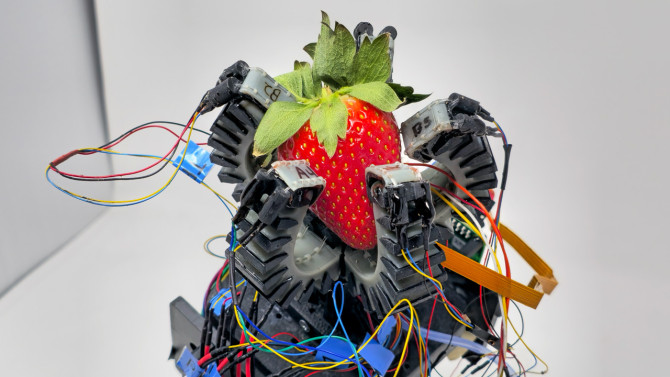
Cornell researchers used stretchable fiber-optic sensors to create a soft robot gripper that can predict the ripeness of strawberries by touch. Credit: Anand Mishra.
By David Nutt

When assessing the ripeness of fruit, sight and smell can tell you a lot, but the best indicator is often how the fruit feels.

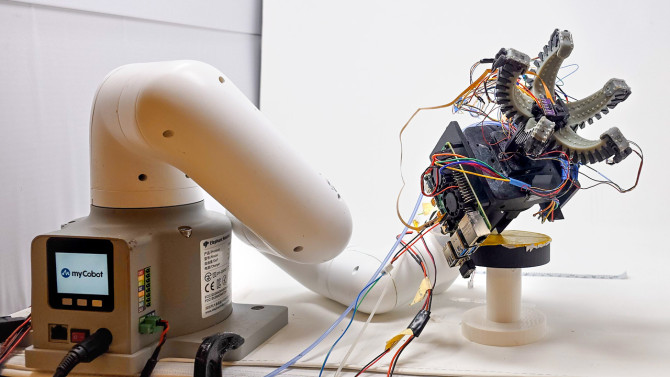
Cornell researchers used stretchable fiber-optic sensors to create a soft robot gripper that can predict the ripeness of strawberries by touch, then gently twist them off their branch or vine without causing any damage.

The technology, developed in the lab of Rob Shepherd, the John F. Carr Professor of Mechanical Engineering in the Cornell Duffield College of Engineering, could lead to more resilient and ecological food production and increase the availability of fruit species that are difficult to cultivate.

Shepherd’s Organic Robotics Lab previously demonstrated the potential of stretchable fiber-optic sensors to give soft robotic systems the ability to feel the same dynamic, tactile sensations that enable humans to navigate the natural world. In recent years, the team has expanded into agriculture, designing a soft robotic gripper that injects living plant leaves with sensors that help it detect and communicate with its environment.

“The great thing about Cornell is we’re a really great agriculture school, and a lot of avenues are opening up because of it,” Shepherd said. “It really allows us to uniquely combine our robotics expertise with our agricultural prominence.”

To develop a way to evaluate and handle fruit with care, Shepherd’s team partnered with Marvin Pritts, professor of horticulture and global development in the College of Agriculture and Life Sciences, who specializes in developing sustainable production methods for berry crops.

In order to train and test their gripper, they needed a model fruit. And for that, they turned to the strawberry.

“You can accurately tell when strawberries are ripe by their color,” Shepherd said. “So we could train our model to know if it’s ripe based on touch, then validate our model by looking at the color. And Anand was able to accurately estimate whether it was the right time to pick strawberries based off of the stiffness he measured.”

The soft robot gripper has an equally soft touch. The gripper is equipped with two different fiber-optic sensors, one to measure the curvature of the finger, and the other to measure the pressure at the fingertip. This way the robot can estimate the shape of an object and adjust its grip accordingly to grasp the ripe fruit without bruising it.

“The fiber-optic strain gauges have the same mechanical properties as the grippers that are using them. So it’s kind of like the flesh feels the fruit, rather than having separate sensors,” Shepherd said.

The researchers also included a planetary gear mechanism so, once the fruit is grasped, the robot wrist can rotate and twist the strawberry off its vine, instead of pulling or plucking it, which can strain and damage the fruit.

This soft-gripping technology, developed in the Organic Robotics Lab, could lead to more resilient and ecological food production and increase the availability of fruit species that are difficult to cultivate. Credit: Anand Mishra.

For cases in which touch isn’t enough, the researchers installed a camera in the gripper’s palm to find fruit that are occluded by leaves or other vegetation. However, the device will be particularly handy when ripeness can’t be detected visually, such as for avocadoes, pineapples or – Shepherd’s favorite – pawpaws.

“The problem with pawpaws is you can’t see when they’re ripe, and they ripen so fast that if you’re not there at the right time, you just miss them,” he said. “And you can’t harvest and ship them, because they don’t survive shipping very well, either. That’s one reason we don’t have pawpaws in grocery stores. But this can help with that.”

The technology could have an even greater impact on sustainable farming practices.

“Robots will allow us to do things we cannot do economically right now. We have row crops because row crops fit our machines. But if we have a larger amount of smaller robots, we can have mixed cropping of different species that support each other,” Shepherd said. “Instead of having soy one year and corn the next, you can have them both. Or you could have interspersed species that are resistant to pestilence, that help block infestations and reduce the amount of pesticides and fertilizer. You can have drought resistance from canopy species.

“It’s very complicated to manage a farm that way,” he said, “and robots could allow us to do that.”

The research was supported by the National Science Foundation Center for Research on Programmable Plant Systems (CROPPS) and the Cornell Institute for Digital Agriculture.

Page 27 of 66
1 25 26 27 28 29 66