News

Page 88 of 718
1 … 86 87 88 89 90 … 718

AURA Foresight Reaches Global XPRIZE Wildfire Finals in Alaska

One of only four teams remaining from more than 130 competitors worldwide, our team AURA Foresight is developing autonomous technology to stop wildfires before they grow out of control.

AURA Foresight has been selected as a finalist in the prestigious XPRIZE Wildfire Autonomous Wildfire Response competition, emerging as one of just four teams remaining from more than 130 teams from around the world.
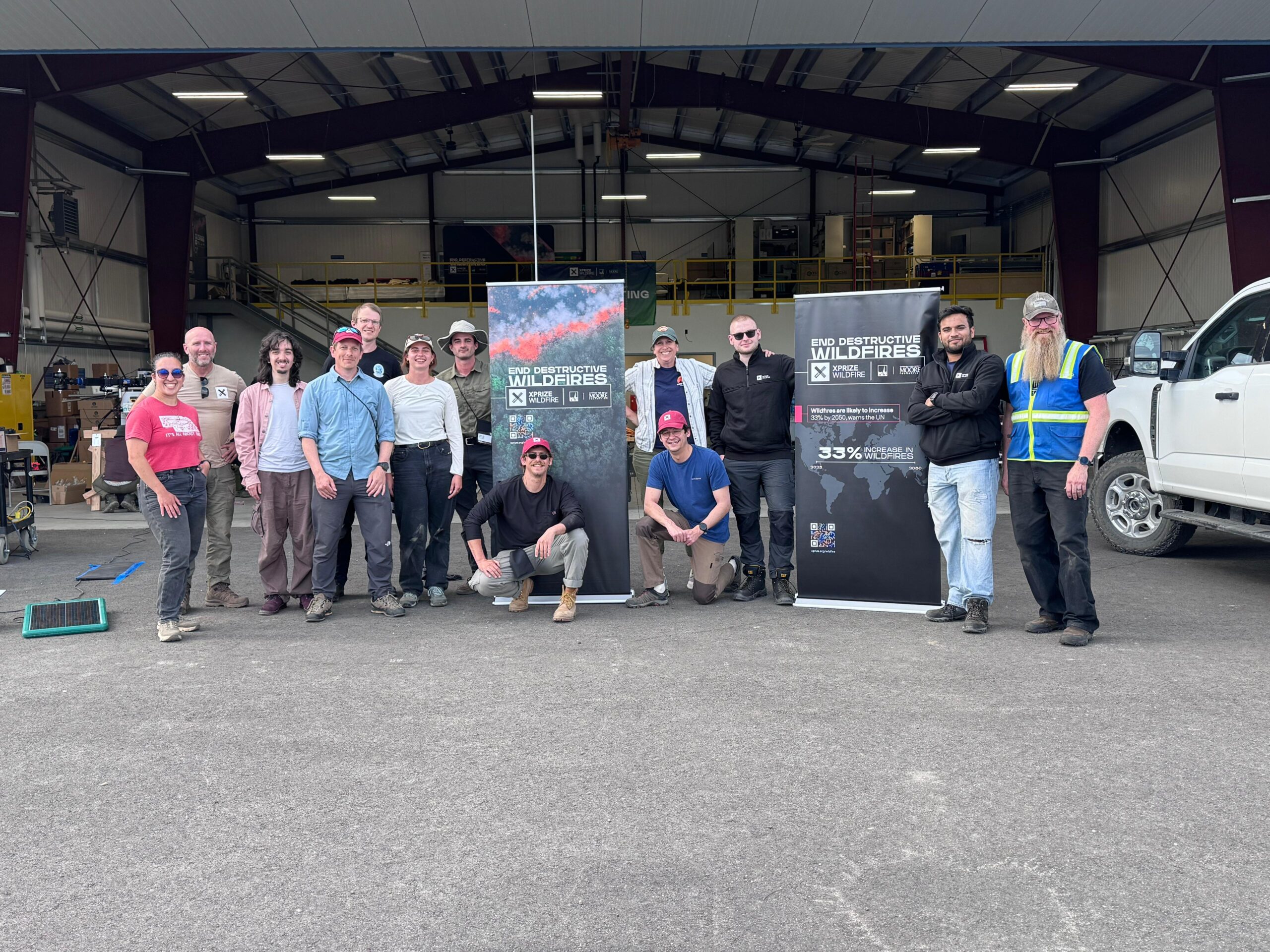
XPRIZE Wildfire is a four-year, US$11 million global competition designed to accelerate breakthrough technologies capable of ending destructive wildfires. The Autonomous Wildfire Response track, worth US$5 million, challenges teams to autonomously detect, verify and respond to wildfire ignitions across a 1,000 km² landscape within just ten minutes. The finals will take place in Nenana, Alaska, where teams will demonstrate their technologies in realistic wildfire response scenarios.

Being selected as a finalist places AURA Foresight among a small group of innovators developing the next generation of tools to help communities, land managers and firefighters respond to wildfires faster and more effectively.

As wildfires become more frequent and severe worldwide, AURA Foresight is developing technology that helps stop fires before they become disasters. The team’s autonomous wildfire intelligence and intervention system is designed to detect ignitions within minutes and coordinate a rapid response while fires are still small and manageable.

Detect Early. Verify Quickly. Intervene Immediately.

AURA Foresight combines fixed sensors, artificial intelligence and swarms of autonomous flying robots into a seamless detect–verify–act capability.

Rather than fighting large wildfires after they have taken hold, the system is designed to identify potential ignitions, verify threats and intervene at the earliest possible stage, when a small spark can still be safely contained before becoming a major incident.

The platform continuously monitors landscapes using optical and thermal sensors, automatically identifies potential ignitions using AI, dispatches flying robots to verify threats, and coordinates rapid intervention before small fires can grow into destructive wildfires.

Unlike many wildfire technologies that rely on specialised infrastructure or proprietary hardware, AURA Foresight has been designed from the outset to be practical, affordable and easy to deploy.

Key advantages include:

  • Out-of-the-box deployment with minimal setup requirements.
  • Adaptability to any environment, from forests and remote wilderness to critical infrastructure corridors.
  • Scalability from a handful to dozens of flying robots, depending on operational needs.
  • Compatibility with different aircraft and robot platforms, avoiding vendor lock-in.
  • Built on commercially available technologies, making advanced wildfire protection accessible and achievable for organisations of all sizes.

The result is a system that can help agencies move from passive monitoring and delayed response to proactive, automated intervention.
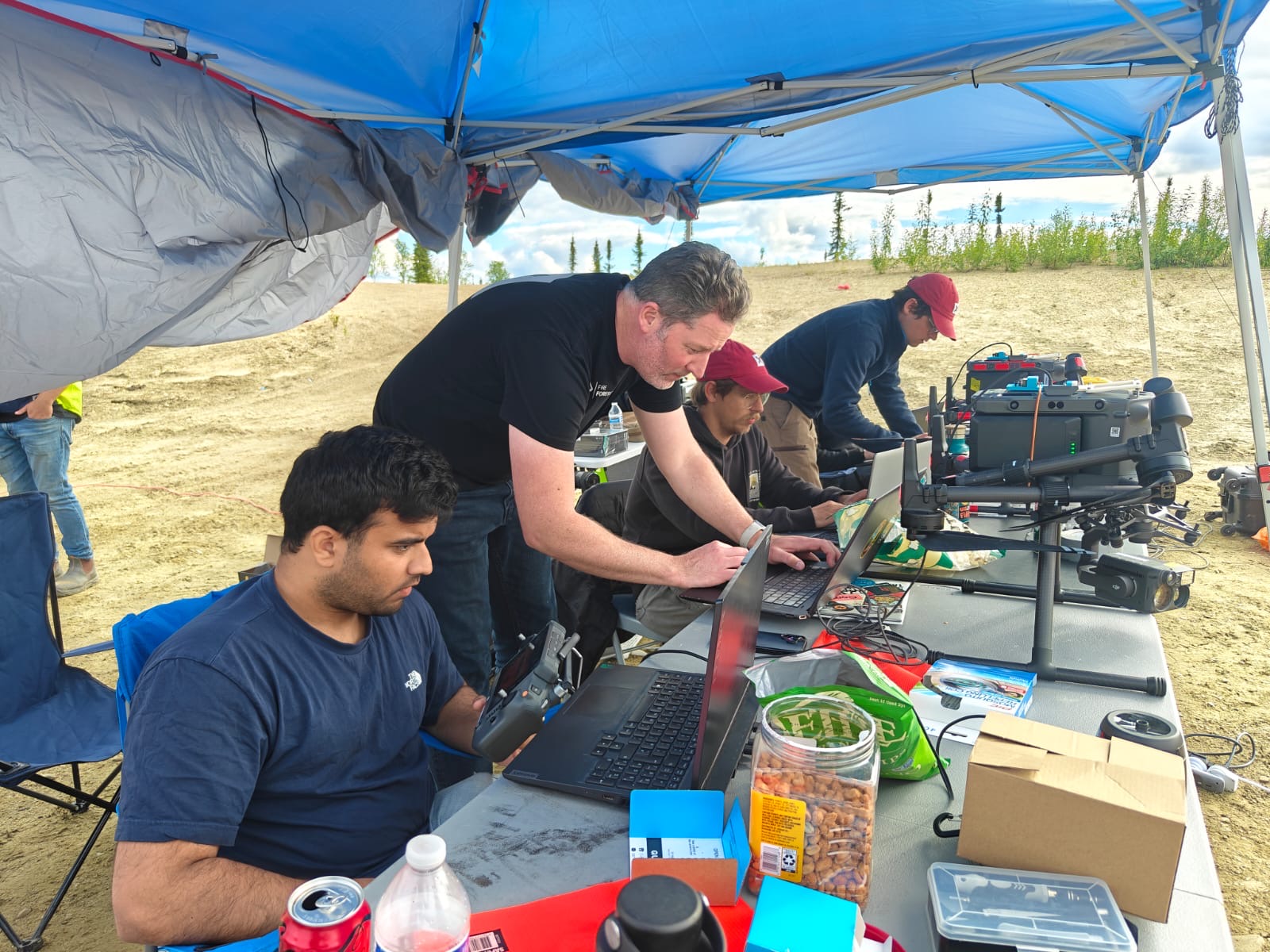

Developed With Firefighters, For Firefighters

AURA Foresight’s approach is shaped by close collaboration with firefighters and emergency response professionals. The consortium works directly with Lancashire Fire and Rescue Service in the United Kingdom and with wildfire response experts in Canada and Australia to ensure the technology addresses real operational challenges and integrates effectively into existing emergency response workflows.

This combination of frontline expertise and advanced robotics helps ensure that the technology remains focused on supporting firefighters and enhancing their capabilities in the field.

“It’s amazing what can be achieved when great people come together around a shared purpose,” said Dr Georgios Tzoumas, Team Co-Lead of AURA Foresight and Research Fellow at the University of Bristol.

“Our team has been working on autonomous wildfire detection and intervention technologies for more than six years. Reaching the XPRIZE finals is an exciting milestone because it feels like the solution is finally within reach. By combining AI, swarm robotics and close collaboration with firefighters, we’re showing that it’s possible to tackle wildfires while they’re still small, before they grow out of control. We can’t wait to demonstrate our technology in the field in Alaska.”
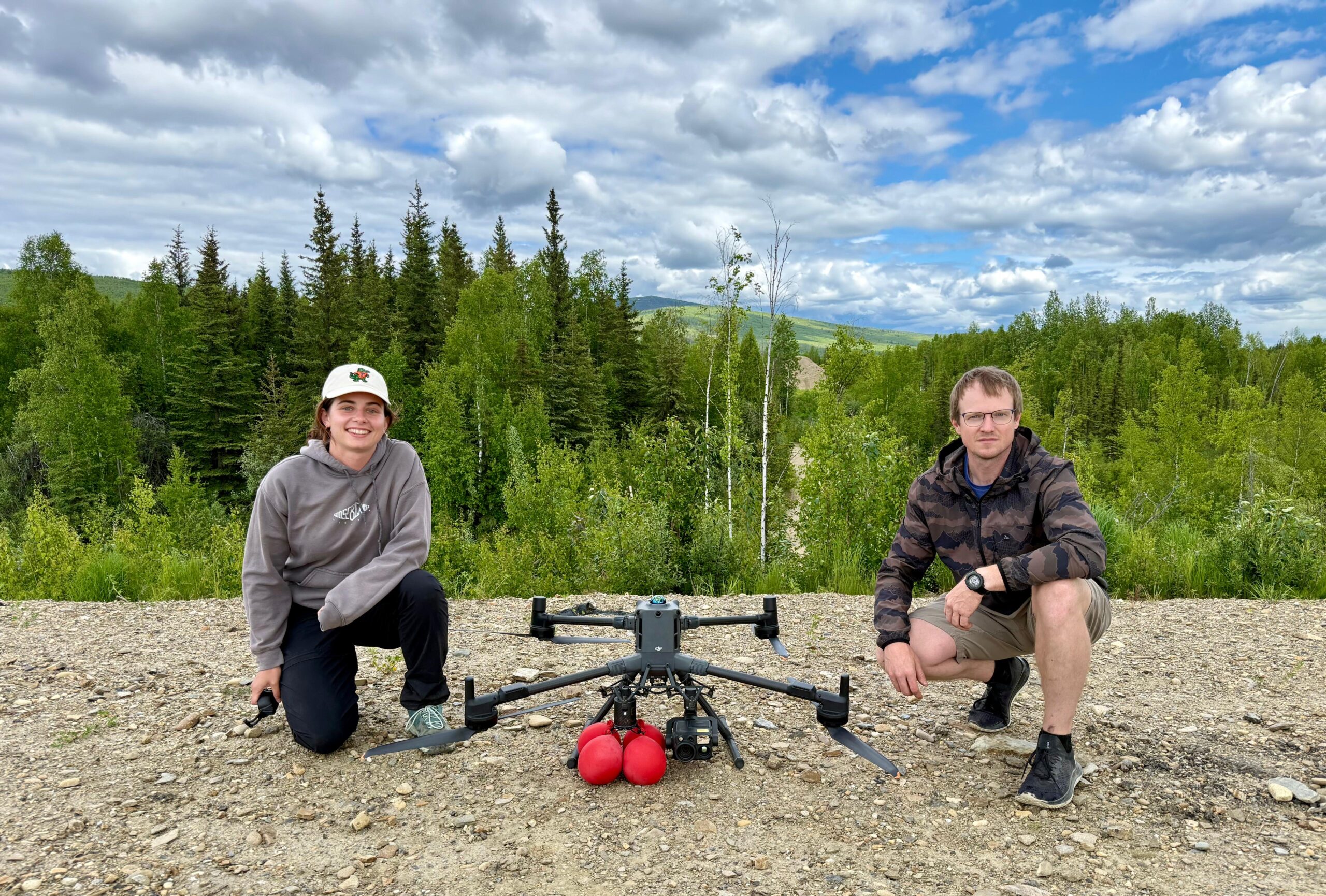
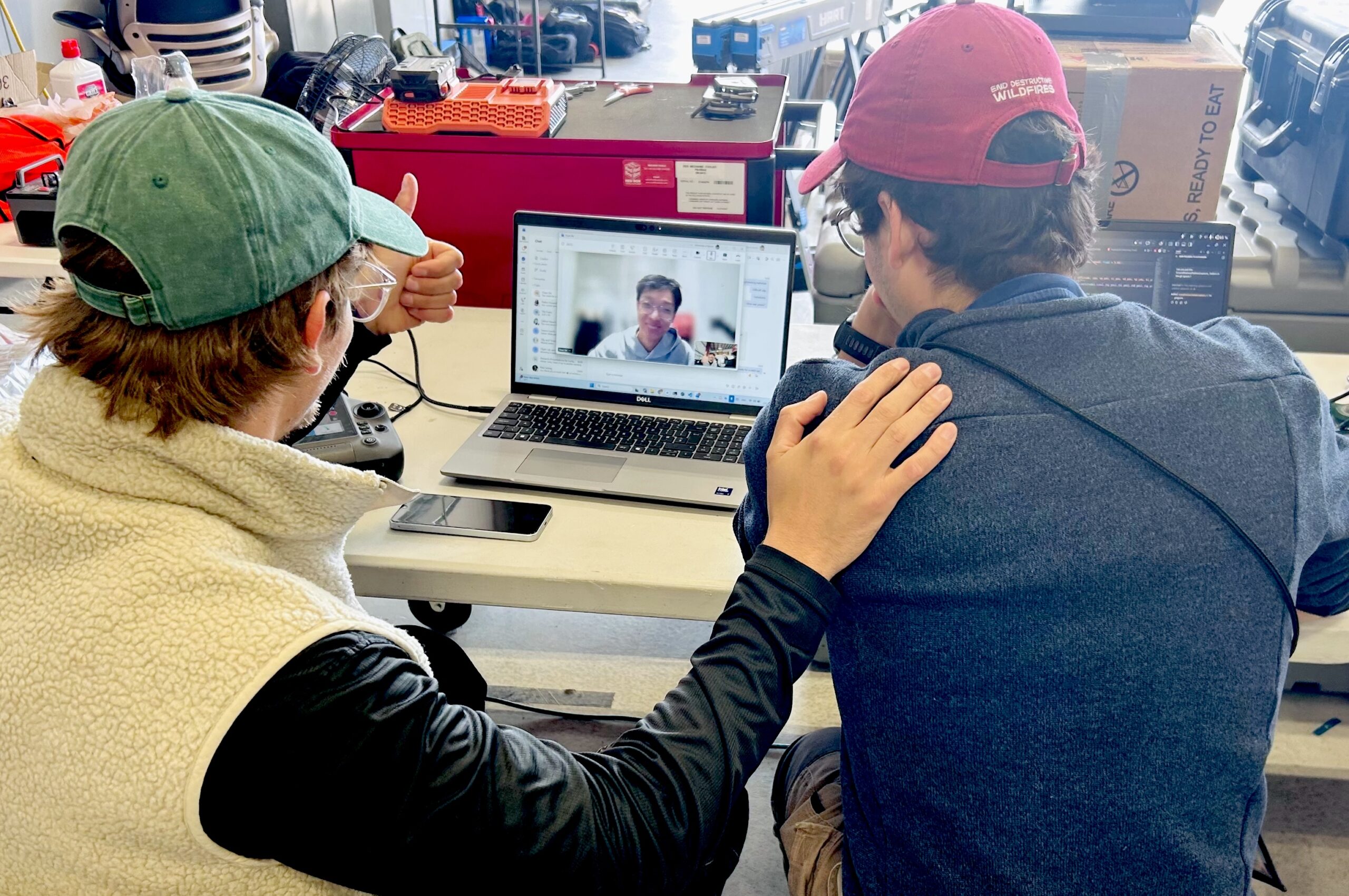
A Global Consortium Combining Expertise from the UK and Australia

AURA Foresight is a unique international collaboration bringing together AURA in the United Kingdom and Fire Foresight in Australia.

The consortium includes the University of Bristol, Bristol Robotics Laboratory, the University of Sheffield, Lancashire Fire and Rescue Service, Fire Foresight, SkyFly Drones, Southern Denmark University, Manchester University, Indicium Dynamics, Robotic Cats, Taz Drone Solutions and Little Place Labs.
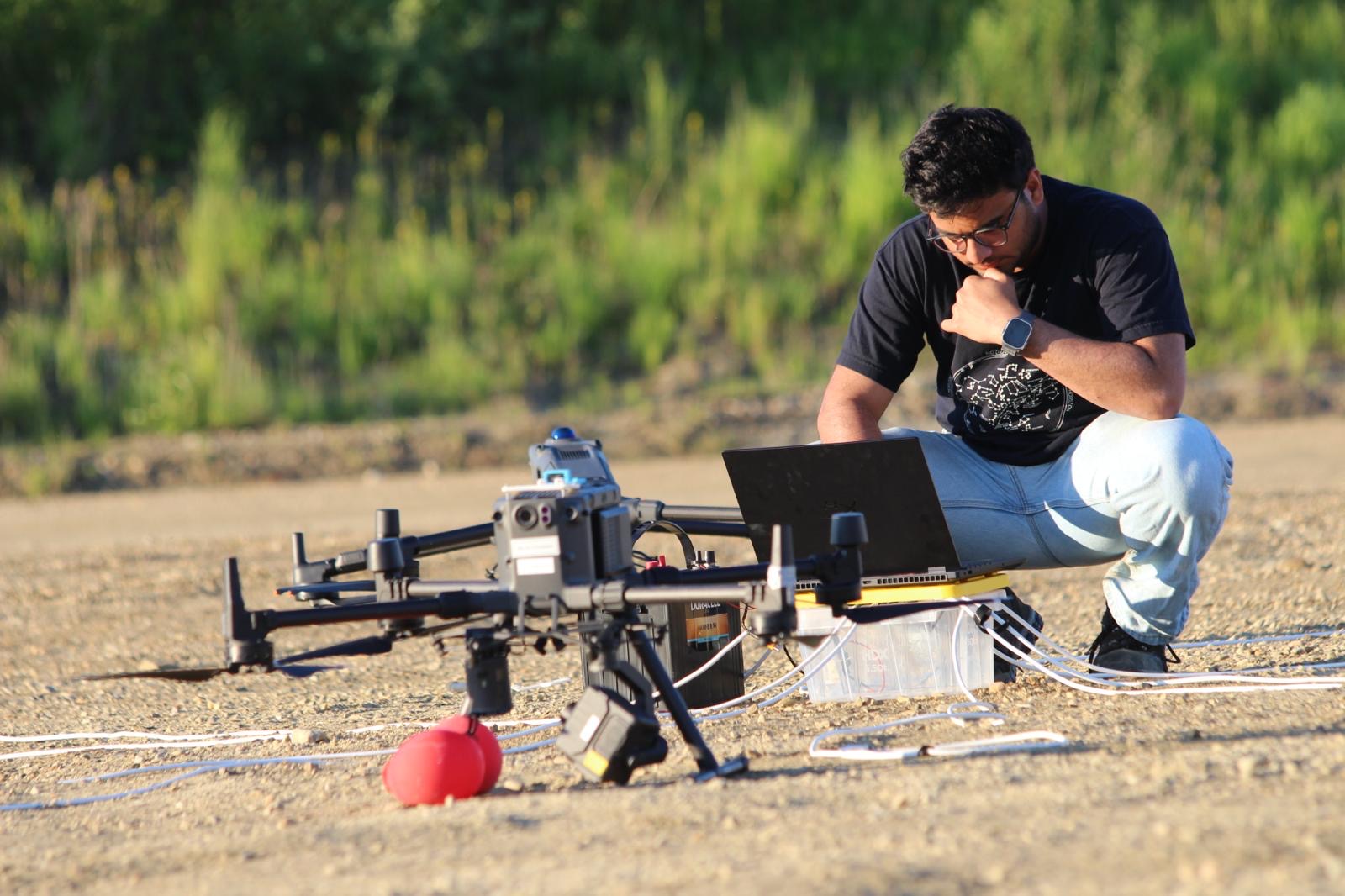
Fire Foresight CEO Rob Vernon commented, “Our approach with the XPRIZE competition has been to bring all the pieces of the wildfire jigsaw puzzle together, and that capability only truly scales when it’s done with partners from around the world and on the ground. In Australia, we have been building the largest network of bushfire detection capabilities and the partnerships that we’ve formed, and continue to form, through this competition allow us to focus our attention on the autonomous mitigation and suppression capabilities, so desperately need to address the challenges faced by wildfire and climate change”.
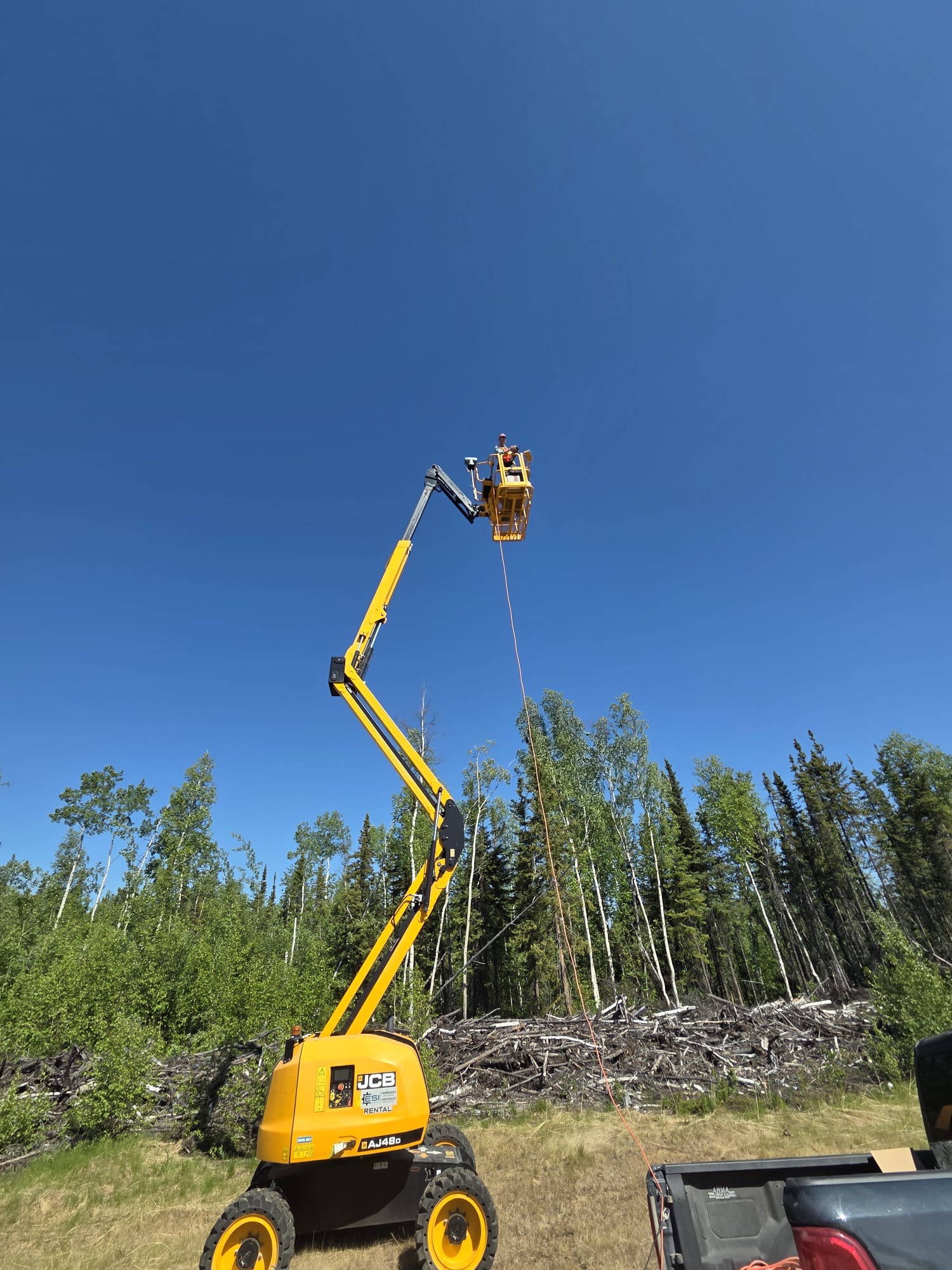

Together, these partners combine world-leading expertise in swarm robotics, autonomous systems, artificial intelligence, computer vision, aerial robotics, wildfire operations and field deployment.

By bringing together researchers, engineers, firefighters and technology innovators from across two continents, AURA Foresight is demonstrating how international collaboration can accelerate solutions to one of the world’s most pressing climate challenges.
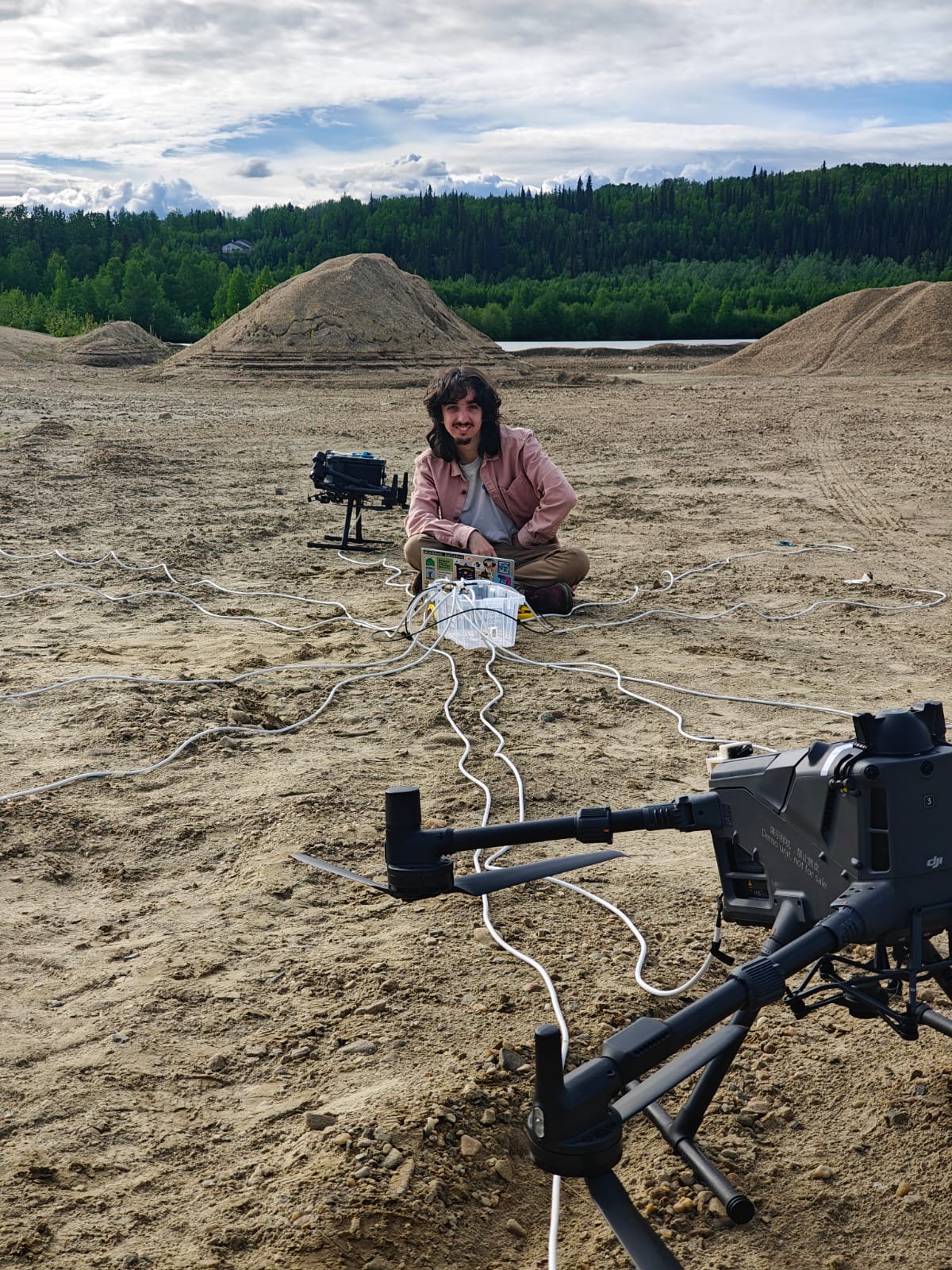
As destructive wildfires continue to increase in frequency and severity around the world, AURA Foresight’s progression to the XPRIZE Wildfire finals highlights a new approach to wildfire management: tackling fires in their earliest moments, before they can grow out of control and threaten communities, ecosystems and critical infrastructure.
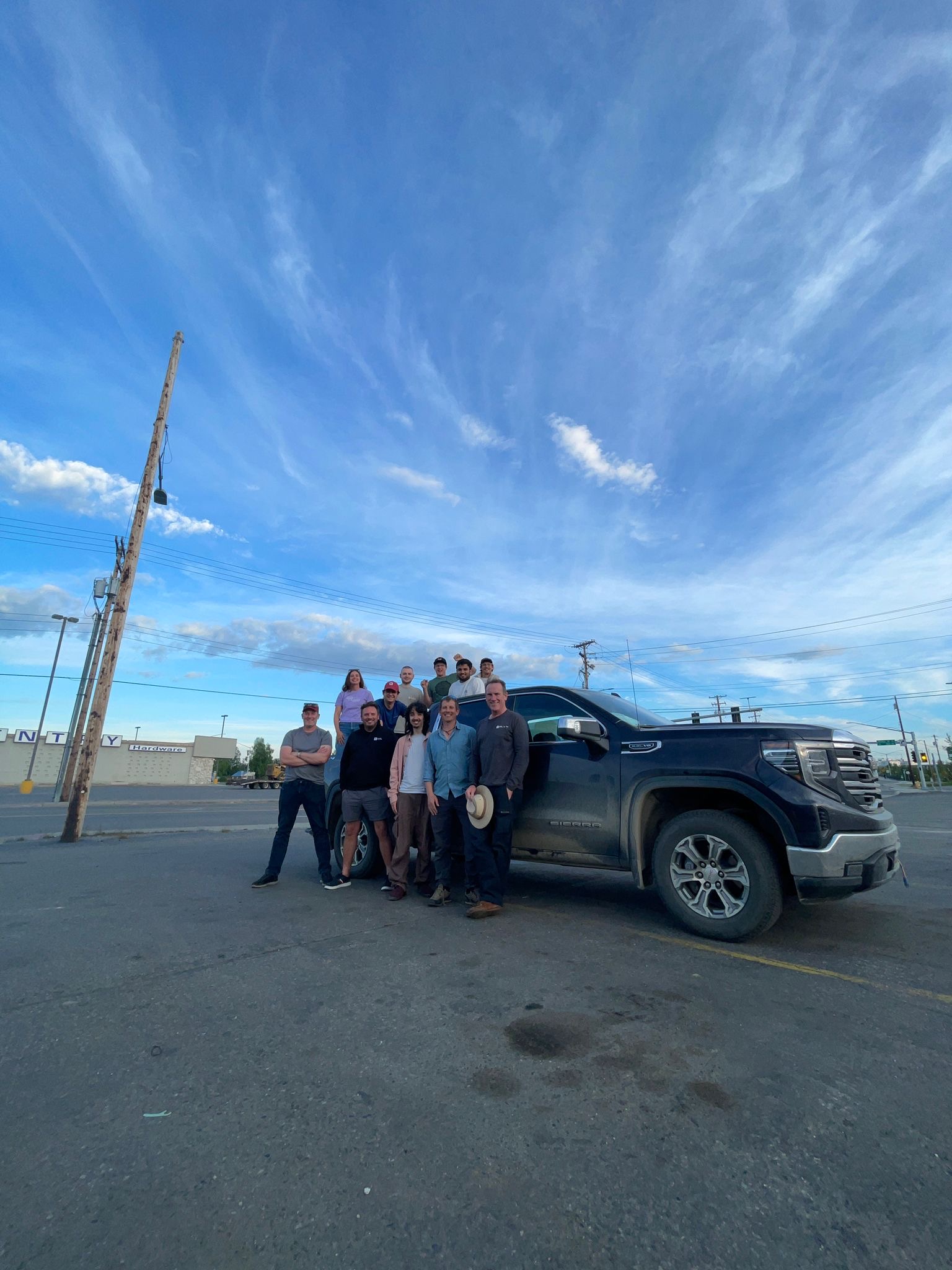
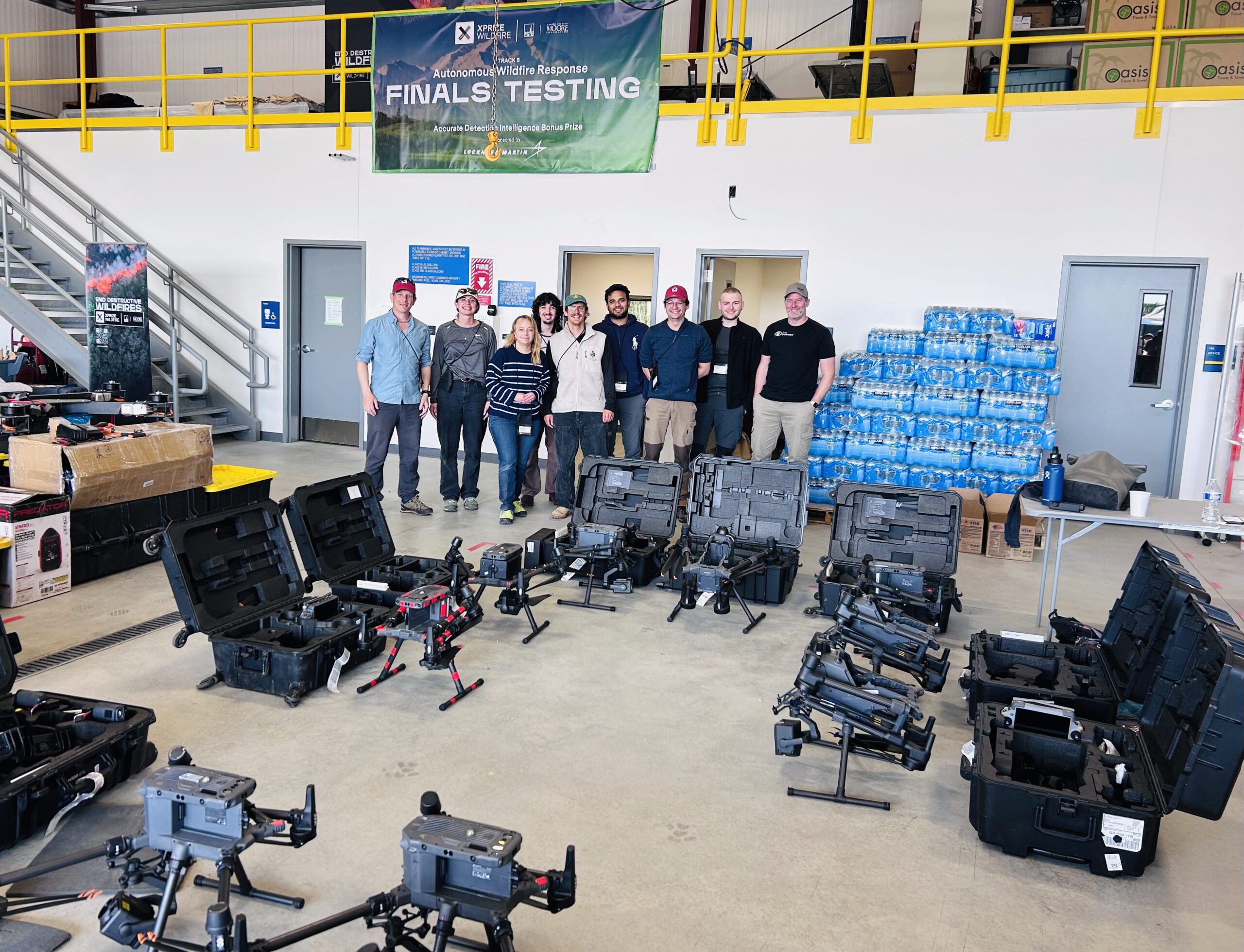
Detect early. Verify quickly. Intervene immediately. Stop wildfires before they become disasters.


Drones learn to squeeze through narrow gaps using onboard AI control

Unmanned aerial vehicles (UAVs), commonly known as drones, are now widely used for various purposes, ranging from filmmaking and aerial photography to industrial inspection, precision farming and reaching obstructed areas during emergency response missions. While many existing drones can move swiftly in their surroundings and circumvent large obstacles, most still struggle in cluttered environments. In addition, they are often unable to execute maneuvers that would allow them to safely pass through small gaps or reach secluded areas.

Three-armed Sashimi-Bot learns to slice and serve fish like a pro

If you ever need help in the kitchen cutting fish into appetizing bites, a new three-armed robot may be able to help. And that's no easy feat for robots. While they are generally good at picking up rigid objects, something slippery that can change shape when touched, such as a fish, poses a range of challenges. Then, if you add slicing into the mix, it becomes even more difficult because the robot has to cope with the fish changing shape as it is handled and cut.

Robot Talk Episode 161 – Collaborative haptic systems, with Allison Okamura

Claire chatted to Allison Okamura from Stanford University about developing advanced robotic systems for haptic (touch) interaction.

Allison Okamura is the Richard W. Weiland Professor of Engineering at Stanford University. Her academic interests include haptics, teleoperation, virtual reality, medical robotics, soft robotics, rehabilitation, and education. Allison is Director of Graduate Studies for Mechanical Engineering at Stanford University, a deputy director of the Wu Tsai Stanford Neurosciences Institute, a Science Fellow of the Hoover Institution and a founding faculty member and executive committee member of the Stanford Robotics Center.

SpaceX wants to build AI data centers in space. Will it work?

The race to build data centers in space is gaining momentum as AI drives unprecedented demand for computing power. Orbital facilities could tap into abundant solar energy and avoid many of the environmental challenges faced on Earth. Yet space remains a harsh and expensive place to operate, with major hurdles including cooling, maintenance, radiation exposure, and orbital debris.

Humanoid robots: How human-like machines could change our daily lives

Humanoid robots are no longer science fiction: They can take on tasks that challenge humans and have the potential to play an important role in industry, services or private households in the future. At Friedrich-Alexander-Universität Erlangen-Nürnberg (FAU), researchers are working on hardware and software for human-like robots. Dr. Sebastian Reitelshöfer from the FAU Chair of Manufacturing Automation and Production Systems explains in an interview how humanoid robots could support us in the future and why this future technology on two legs could be an opportunity for northern Bavarian industry.

How AI is Revolutionizing Supply Chain and Logistics?

How AI is Revolutionizing Supply Chain and Logistics?

Artificial Intelligence is becoming highly explosive in terms of global AI in logistics and supply chain. Many logistics officials feel that these areas are likely to experience a great transformation.

It has the potential to disrupt the continuous development of advanced and digital technologies such as machine learning, artificial intelligence, natural language processing (NLP), etc. and promote advancements in these sectors.

Computers can deal with massive data at a time, it is difficult to take it physically in a single decision making procedure. Applying AI algorithms and utilizing various data sets, a machine will analyze unlimited prospects which lead to compelling planning.

Artificial Intelligence reduces the human errors and helps in doing tedious tasks. So, with the assistance of AI, operational effectiveness can be boosted and expenses can be limited.

The growth of AI has fundamentally changed many sectors of the logistics and supply chain industry. Whether it is logistics management, consumer support, or inventory management, the contribution of the new era, Artificial Intelligence-based solutions are undeniable.

According to the reports of McKinsey, AI technology in supply chain management is expected to reach 3.3 trillion dollars in the coming next 20 years.

Let’s discuss

[contact-form-7]

Click on the link to learn the Definition of Artificial Intelligence? And what are the Examples of AI?

In this blog, we will be discussing how Artificial Intelligence is impacting the supply chain and logistics industry.
So, without late, let’s look into the

Top 7 Ways AI in logistics and supply chain Management

  • Inventory Management

I think businesses cannot work properly without a well-maintained inventory. Both understocking and overstocking are really harmful. With a proper inventory management system, a company can focus on selling their products instead of managing its inventory.

A key requirement of AI technology in inventory management is the ability to assess demand, rather than the ability to ensure stock management. Algorithms can now study consumer demands across vast data and understand which materials will be in demand soon and which fail to generate enough sensation.

This is called ‘demand estimation’ and is widely used in and businesses across the globe. So instead of depending on real time demand, a company can be ready in advance and stock up accordingly. It is undoubtedly the best revolutionary aspect of Artificial Intelligence in logistics.

  • Warehouse Management

As facial recognition is becoming popular in AI, machine can handle security. It can be easily secured by tracking the customers who enter and exit the unmanned warehouse. In addition, machines can track the items kept on the product shelves and the customers leaving the warehouse after reading product barcode and then updating the inventory accordingly.

  • Shipping Process Optimization

The effect of Artificial Intelligence does not diminish when the product is left out of the list. It is also used to estimate the best possible shipping route. Intelligent Machines utilize graph theory to evaluate the fastest and most cost-effective shipping routes for business.

AI software can also handle peak hours and traffic conditions. These are the significant factors that badly affect the shipping time of a company. By ignoring peak hours and scheduling delivery during light traffic, their delivery boys can spend less waiting time on roads and deliver the products to customers as soon as possible. Thus, the impact, and in turn, the benefits are increased.

  • Supplier Relationship Management

I would certainly say that supplier is one of the significant aspects of any logistics businesses. Finding the perfect supplier and creating a list of each item is tailored to those suppliers. According to the demand, when refilling recalibrating product, the engagement with one’s suppliers is a major factor that describes how smoothly the transaction runs.

Artificial Intelligence can manage various supplier parameters including delivery speed, cost, and credit score and prepare a list of best suitable options for any circumstances. It indirectly says that business process runs effectively and the supplier relationship with them is friendly and loyal.

Also Read about AI in Supply Chain: Uses Cases of AI in Supply Chain Management

  • Transportation Management

It is common for many enterprises to contract with shipping firms to deliver their products. Some of the largest companies, like Alibaba, Amazon, and Flipkart have their own shipping department. As discussed earlier, Artificial Intelligence makes the whole experience very smooth when it comes to efficiency and time management for goods shipping.

Whenever drivers are in delivery vehicles, they have only limited time to reach the destination. Hiring multiple drivers for the same vehicle to cater the requirement for a 24*7*365 delivery system can be costly. In logistics, AI going to prove as a lifesaver soon by automating the entire driving function. You know? Amazon has shown confidence recently in automated delivery trucks.

  • Foreign Language Decoder

Every country in the world has its own national language. As business is happening from around the globe, you should cater to a global audience. But, miss communication due to different languages is a major problem. Along with the miss-conversation between customers and business, understanding other countries market trends and goods can be a big problem.

Don’t worry! This barrier will not exist longer with AI technology. In addition, AI-powered chatbots and customer support systems are also very good at managing foreign consumers without the hassle of hiring many offshore support executives. All over, Artificial Intelligence makes the employment easier.

  • Reduced Customer Response Time

Ultimately, businesses are leveraging AI solutions to provide excellent customers support. Using AI Chatbots, businesses can reduce consumer response time and also decreased the need for customer service executives.

In addition to being polite and practical, chatbots are also beneficial when dealing with foreign customers who do not speak the languages ​​supported by the business locally. AI technology ensures very efficient and fast customer service.


Final Verdict

AI technology will continue the fantastic journey of digitization development and will definitely become a significant part of everyday business. In industries such as supply chain and logistics, Obtaining Artificial Intelligence from expertise in fields such as supply chain and logistics is a useful tool to find out critical issues. AI plays a vital role in paving the way for proactive, predictive and personalized opportunities for supply chain and logistics.

Choosing Right AI Solution for Your Business is the First Step towards Success

USM Business Systems is one of the leading AI Solutions providers in India, the USA and the UK.

With more than a decade of expertise in AI application development, we deliver intelligent solutions that help businesses optimize operations, accelerate growth, and gain a competitive edge.

Contact us to know more about How AI is Revolutionizing Supply Chain and Logistics? Book Executive AI Briefing →

Let’s discuss

[contact-form-7]

Upsampling method sharpens AI vision with up to 16 times less GPU memory

From facial recognition on smartphones to humanoid robots, computer vision technology, which serves as the eyes of artificial intelligence (AI), is widely used in daily life. A joint research team from KAIST and international institutions has developed a technology that allows AI to see the world more clearly with minimal memory, increasing GPU (Graphics Processing Unit) memory efficiency by up to 16 times. The achievement is seen as a core technology that could accelerate the era of humanoid robots and on-device AI.

DataRobot for Developers — integrating with the Google Antigravity CLI

Antigravity CLI is the newest agentic coding CLI from Google, replacing the now-deprecated Gemini CLI. It inherits the asynchronous subagent model that makes Antigravity stand out from the field, syncs bidirectionally with Antigravity Desktop, and is optimized for speed on Gemini 3.5 Flash.

DataRobot ships a full plugin for Antigravity CLI directly from the same open source repository that powers our Cursor, Claude Code, and Gemini CLI integrations. One install gives you the complete DataRobot skill set inside Antigravity’s agent and slash-command interface.

Getting the skills into Antigravity CLI

Install the DataRobot plugin with a single command:

agy plugin install https://github.com/datarobot-oss/datarobot-agent-skills.git

If you’re still on Gemini CLI, the same repository installs there too:

gemini extensions install https://github.com/datarobot-oss/datarobot-agent-skills.git

Already using the DataRobot extension in Gemini CLI and switching to Antigravity? Migrate it directly:

agy plugin import gemini

Once installed, the full DataRobot skill set is available including datarobot-setup and datarobot-agent-assist and can be invoked with slash commands like /datarobot-skills:datarobot-agent-assist

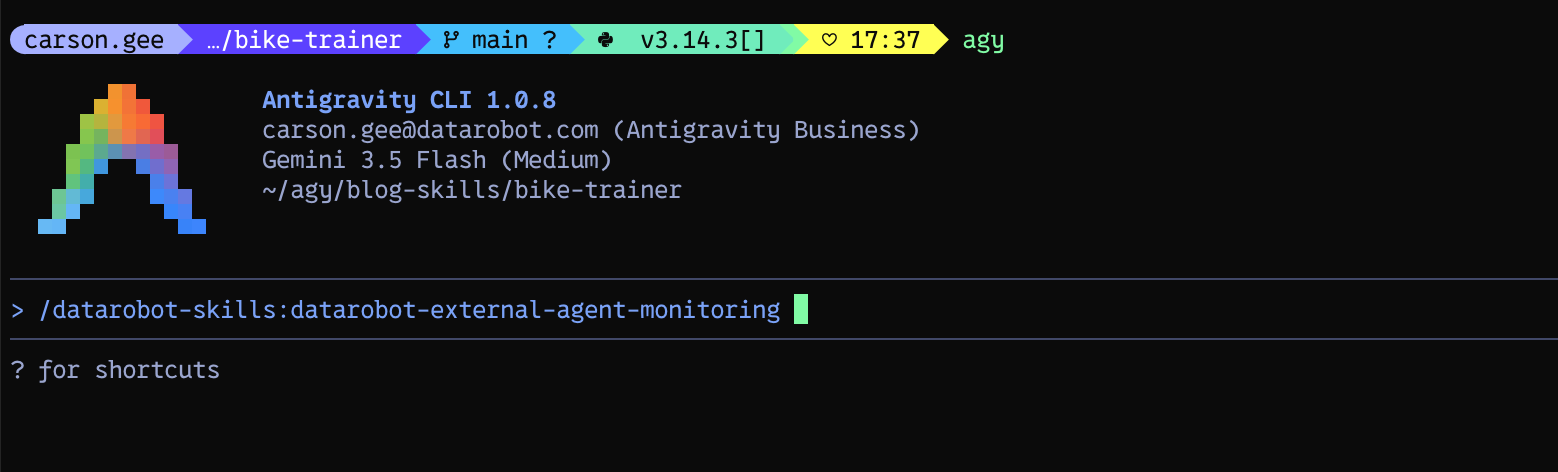
Antigravity CLI autocompleting the DataRobot skills slash commands

Adding DataRobot tracing to a local agent

Debugging agents is hard. LLM calls return plausible-sounding output even when something has gone wrong, tool calls fail silently, and latency problems are invisible in the final response. Without structured trace data, the only option is log-hunting and guesswork.

To show how the DataRobot tracing skill works in practice, here’s a concrete example: a LangGraph agent in a single main.py file that manages bike workouts. It has several tools, produces inconsistent answers, and the root cause isn’t obvious from the conversational output alone.

Adding production-grade tracing to this agent takes a single skill invocation: /datarobot-skills:datarobot-external-agent-monitoring.

Invoking the datarobot-external-agent-monitoring skill in Antigravity CLI

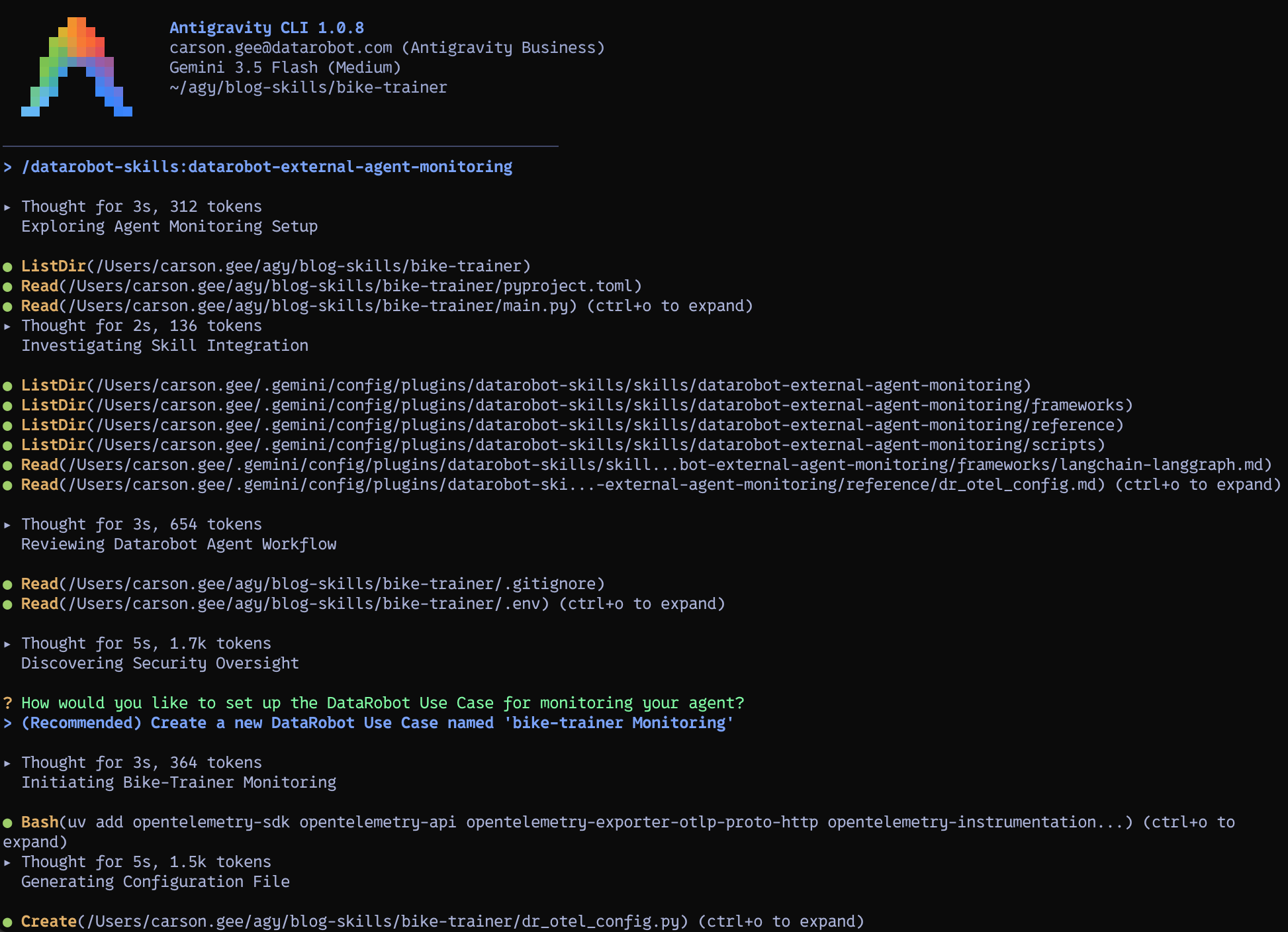
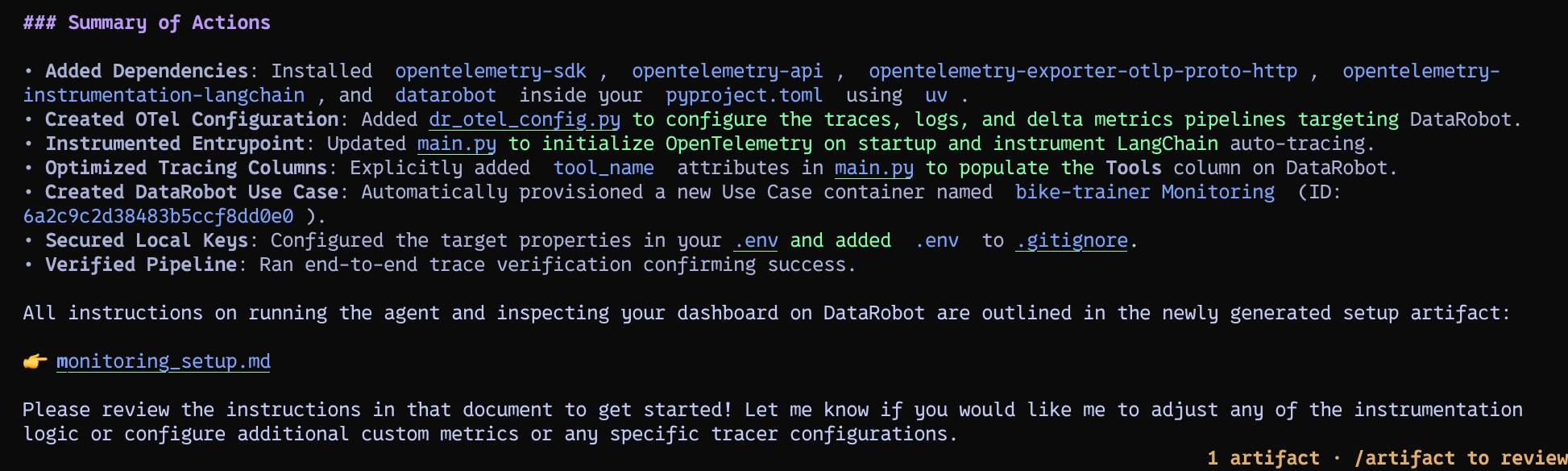
The skill provisions a new DataRobot Use Case, instruments the agent to emit traces via OpenTelemetry, and writes a monitoring_setup.md artifact with the runtime configuration steps.

The monitoring skill inspecting the project and provisioning a DataRobot Use Case
Summary of actions the skill completed, including the monitoring_setup.md artifact

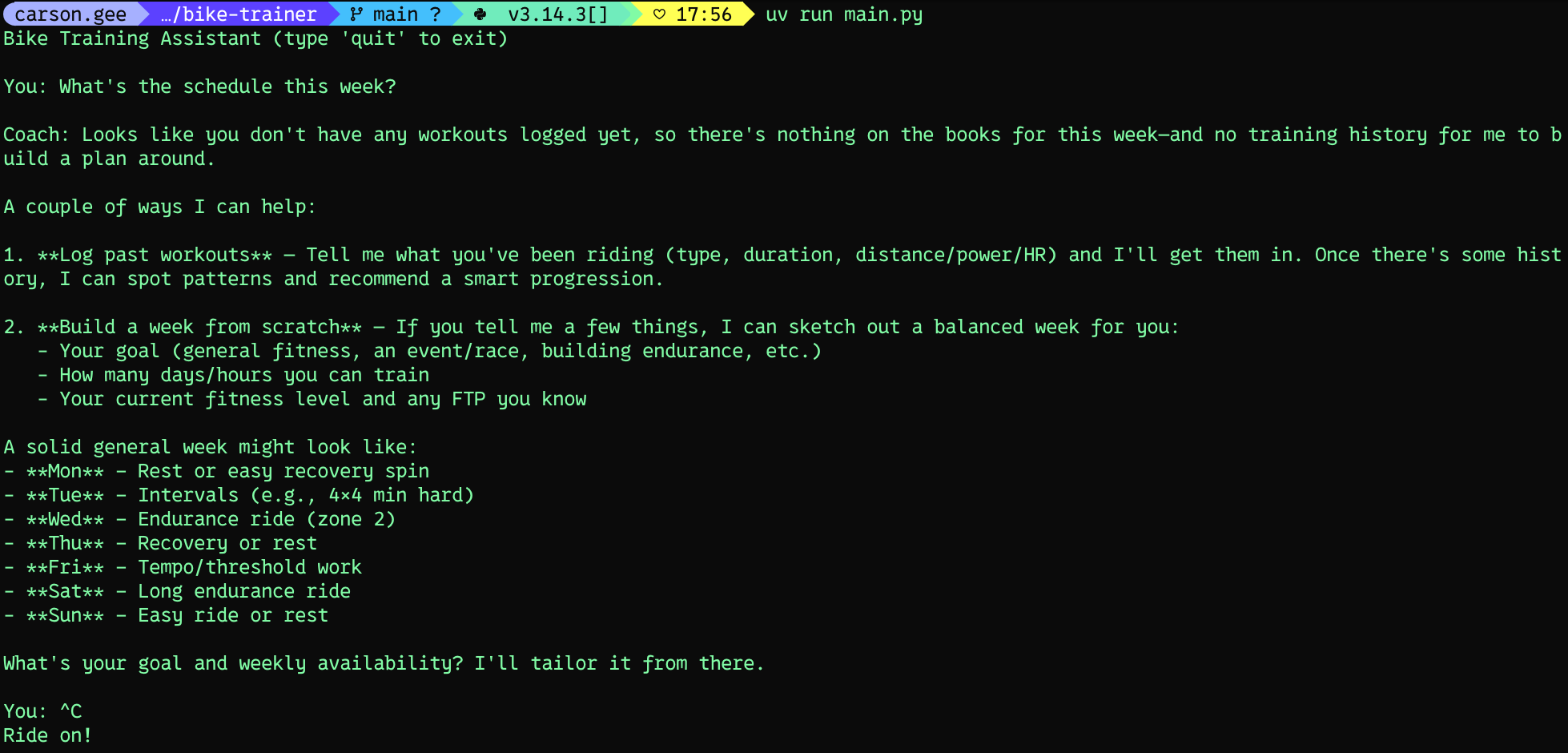
With instrumentation in place, run the agent and send it a question — in this case, “What’s the schedule this week?”

Running the bike training agent and asking for the week's schedule

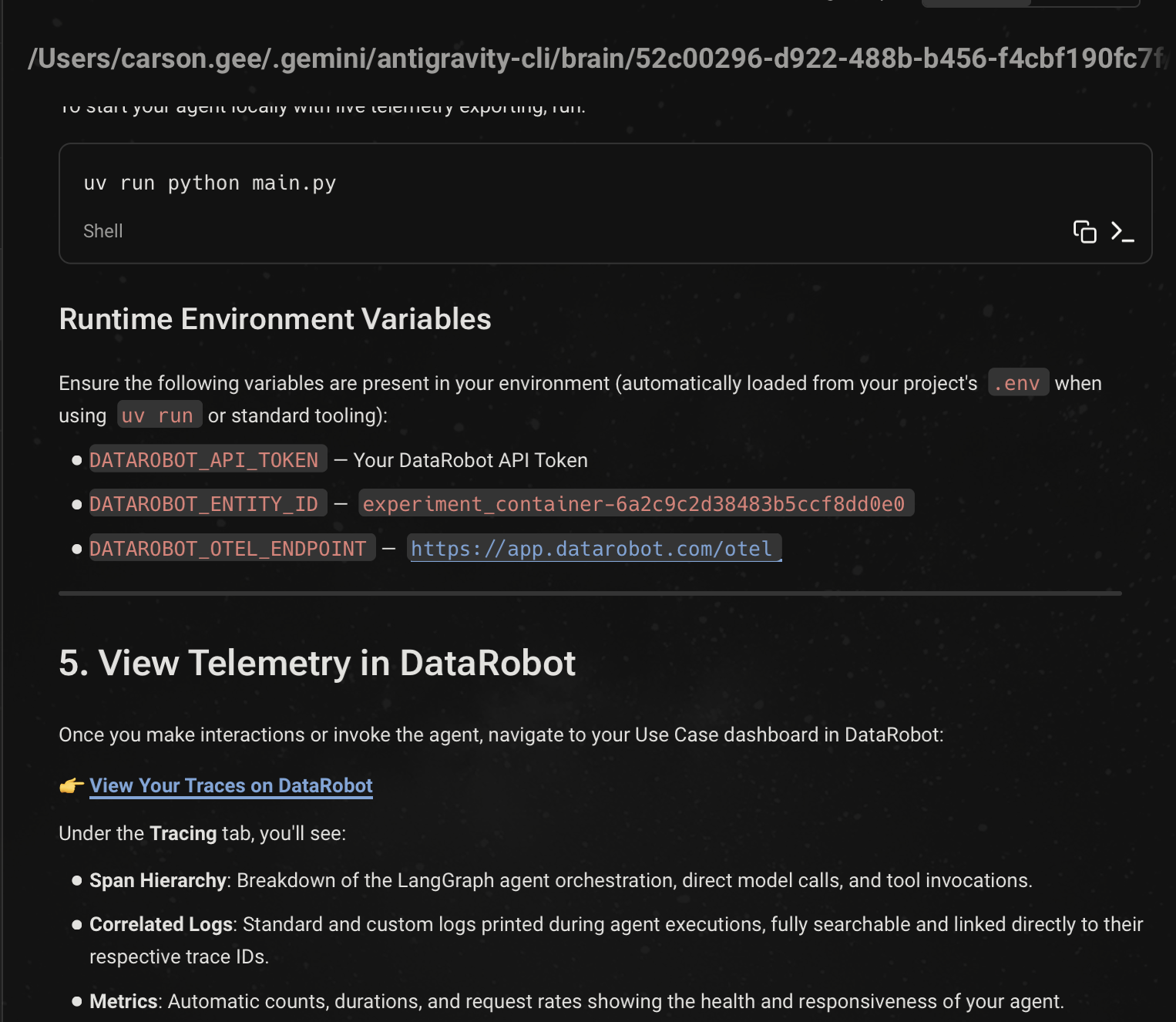
The skill generates setup instructions that include the Use Case entity ID and the environment variables needed to route traces to DataRobot:

The generated monitoring setup instructions with runtime variables and telemetry steps

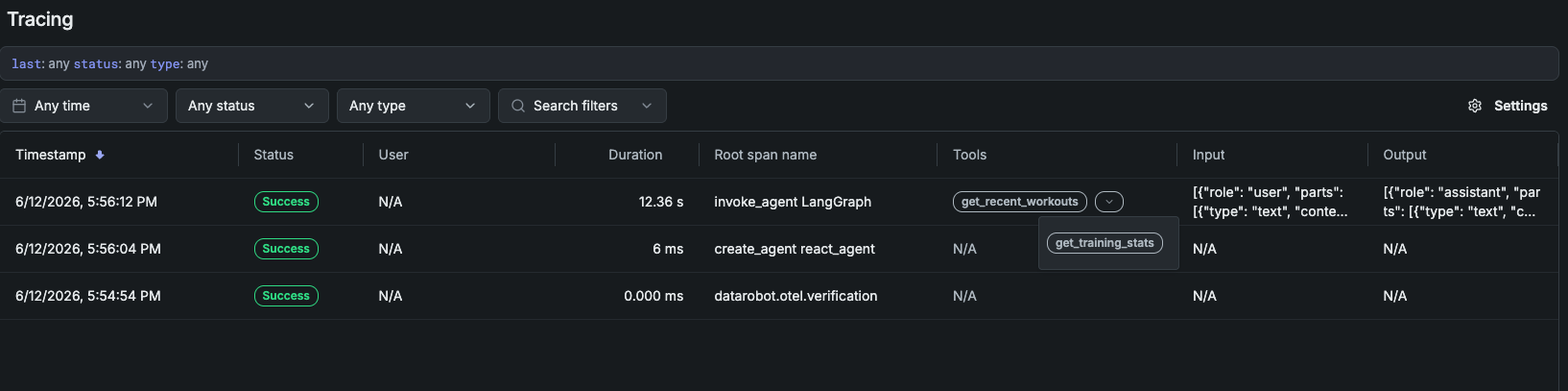
The DataRobot tracing interface surfaces the full request history. Each trace shows end-to-end latency, total token consumption, and the complete span tree:

The DataRobot tracing interface listing the agent's traced requests

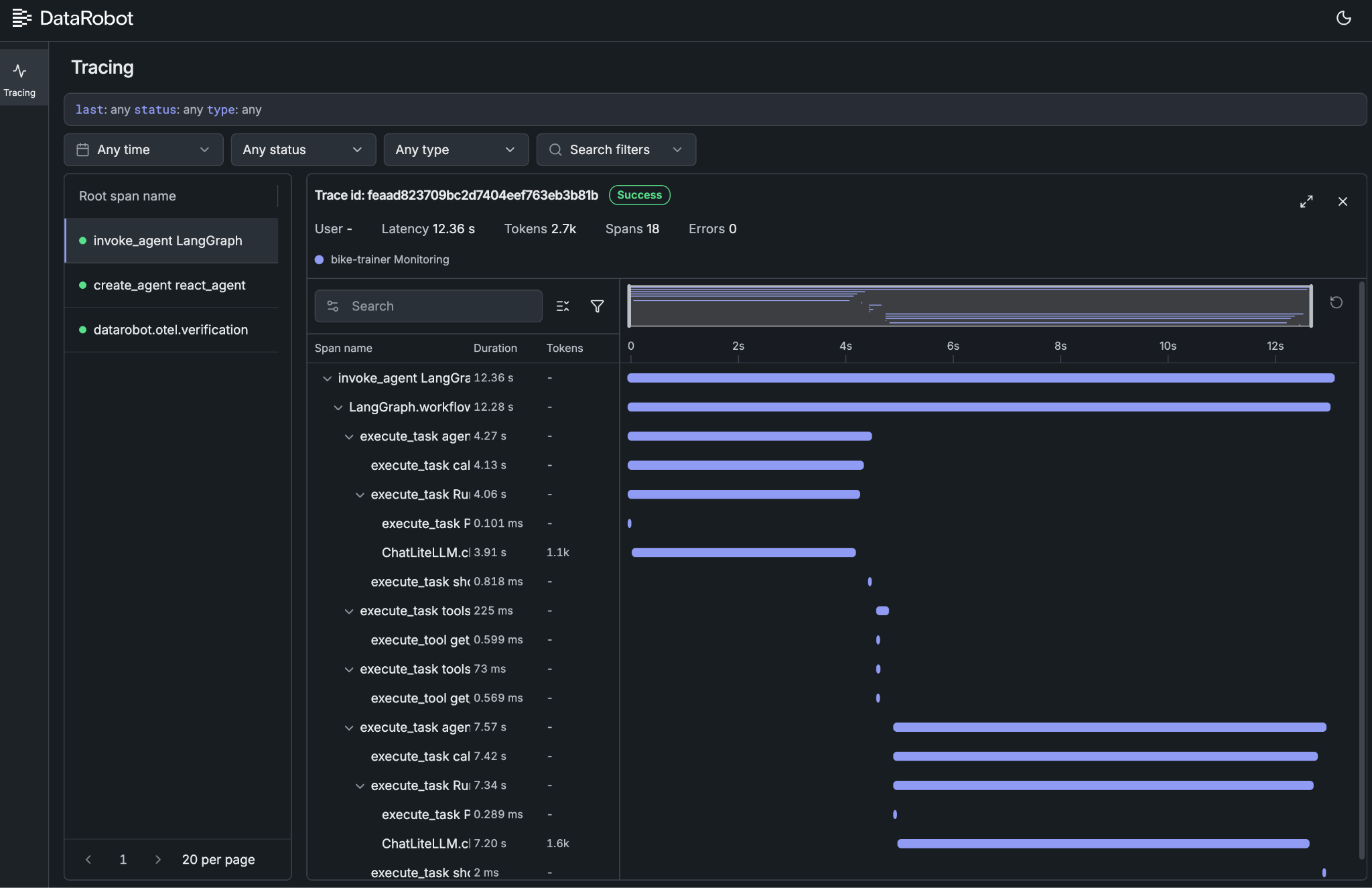
Drilling into the “schedule this week” request reveals the full picture: 2,700 tokens consumed, tool-level latency for each call, LLM invocation count, and any custom attributes emitted via standard OTel instrumentation. This is the data that makes debugging tractable, not inference from final output.

The trace detail view showing span hierarchy, latency, and token counts

For local development, the DataRobot CLI surfaces trace updates in real time: dr plugin install xp followed by dr xp --entity-id=<use_case_id>. This creates a tight iteration loop — run the agent, inspect the trace, fix the issue, repeat.

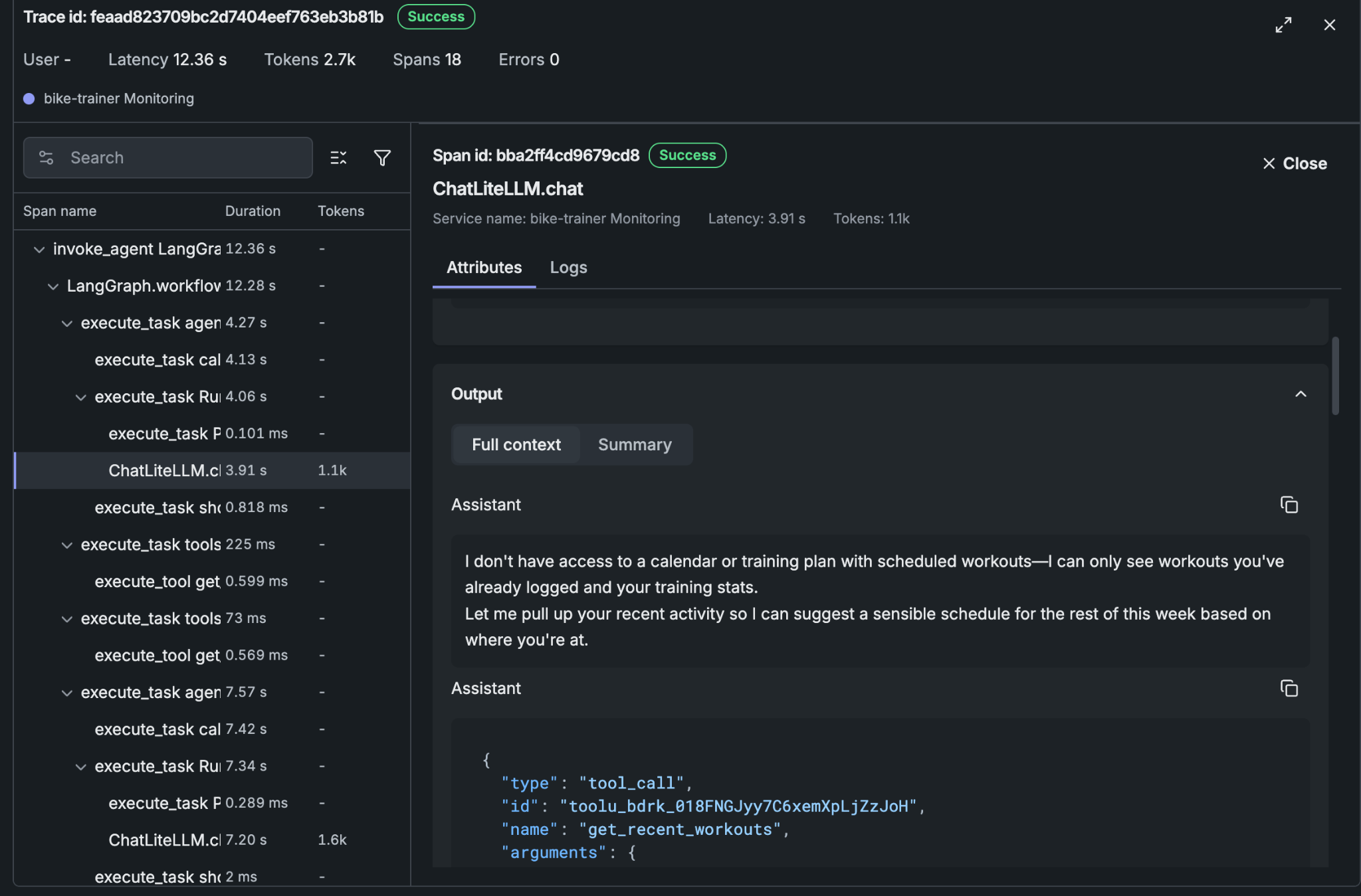
In this case, the span output makes the root cause explicit: the agent lacks calendar access, which is why it couldn’t answer the scheduling question. That failure wasn’t surfaced in the agent’s conversational response:

A span's output showing the agent explaining it lacks calendar access

Instead, the agent responded with generic guidance:

2. **Build a week from scratch** - If you tell me a few things, I can sketch out a balanced week for you:

   - Your goal (general fitness, an event/race, building endurance, etc.)
   - How many days/hours you can train
   - Your current fitness level and any FTP you know

A solid general week might look like:

- **Mon** - Rest or easy recovery spin
- **Tue** - Intervals
- **Wed** - Endurance ride (zone 2)
- **Thu** - Recovery or rest
- **Fri** - Tempo/threshold work
- **Sat** - Long endurance ride
- **Sun** - Easy ride or rest

The trace made the gap between expected and actual agent behavior immediately actionable. This same pattern applies at enterprise scale: whether the agent is running on a laptor or in production on a cloud provider, DataRobot traces the full execution tree and surfaces what the agent actually did — not just what it said.

Get started

The gap between an agent prototype and an agent in production is mostly operational context. Your coding agent writes the code. DataRobot supplies the observability layer and the governed deployment target. One plugin install, one skill execution — and you have production-grade trace data from the first run.

The post DataRobot for Developers — integrating with the Google Antigravity CLI appeared first on DataRobot.

Could AI tell you where you left your keys?

An auto factory worker can remember the storage bin where she left a partly assembled component the night before and quickly return to that spot to pick it up. But robots that may work side by side with her would struggle to develop and access this same type of "spatiotemporal" memory.
Page 88 of 718
1 … 86 87 88 89 90 … 718